
No products in the cart.
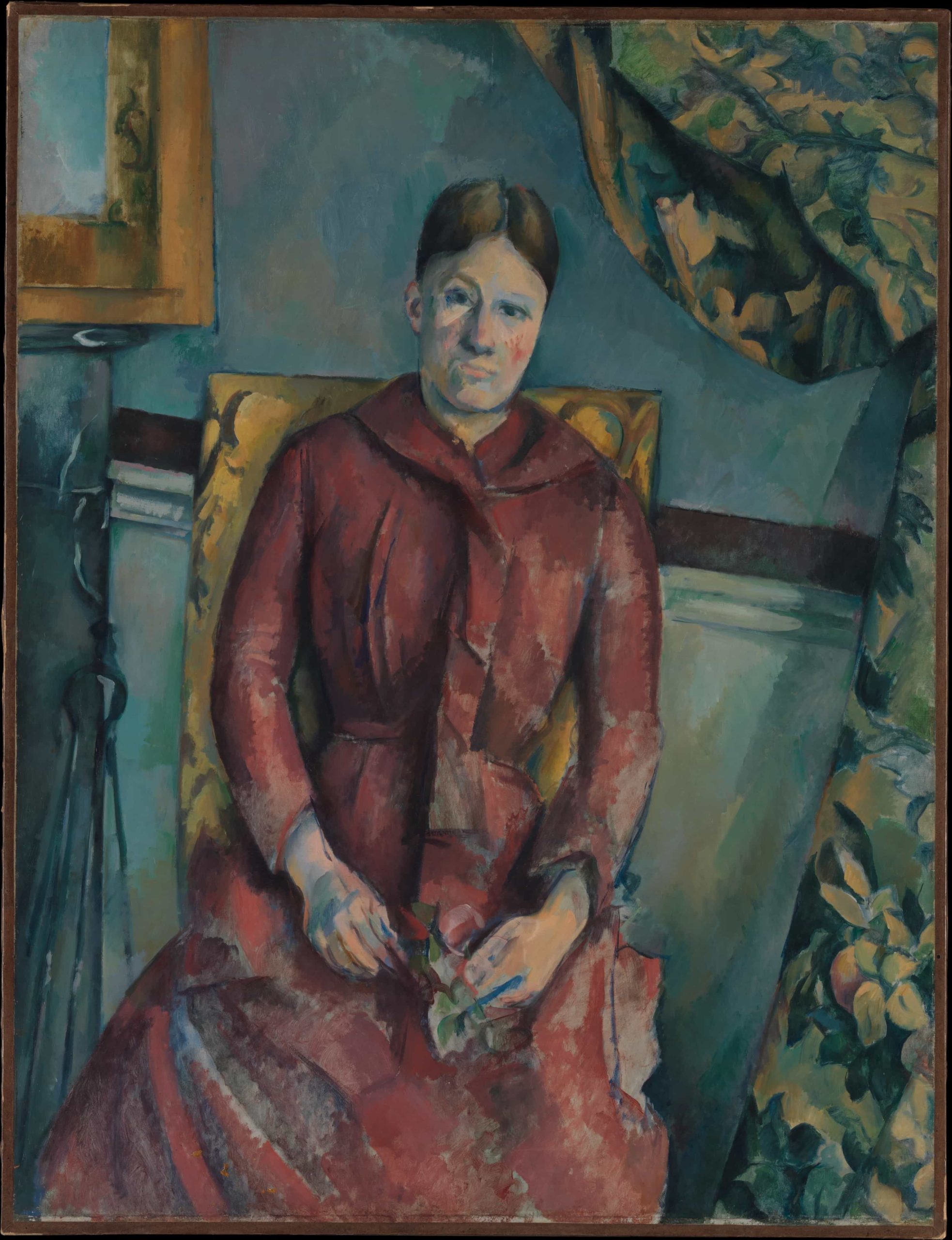
Figurative Art Explained – What It Means and Why It Still Matters
Figurative Art is one of those terms that sounds straightforward until you start looking closely.
A portrait is figurative. A painting of a crowded street can be figurative. A sculpture of the human body is figurative. A loosely painted figure made from only a few brushstrokes can still be figurative. Even a painting that seems close to abstraction may belong to figurative art if enough of the visible world remains for us to recognise.
At its simplest, figurative art represents something we can identify.
Most commonly, the term is associated with the human figure. People, faces, bodies, groups and portraits have been central to art for thousands of years. But figurative art can also include animals, landscapes, interiors, still lifes and other recognisable subjects.
What makes the term particularly useful today is that figurative art does not require realism. An artist can stretch a body, flatten a face, change natural colours, leave parts unfinished or push a figure close to abstraction and still remain within figuration.
That freedom explains why figurative art continues to matter.
After photography, abstraction, conceptual art, digital imagery and now AI-generated pictures, artists still return to the visible world. They paint people sitting in rooms, figures walking through landscapes, faces seen through screens, bodies remembered from photographs and ordinary scenes drawn from daily life.
The question is no longer simply whether an artist can make something look real.
The more interesting question is what happens when an artist takes something recognisable and changes it through paint, drawing, material, colour and personal interpretation.
This guide looks at what figurative art means, where it came from, how it differs from realism and abstract art, the artists who changed it, and why figuration still has such a strong place in contemporary art.
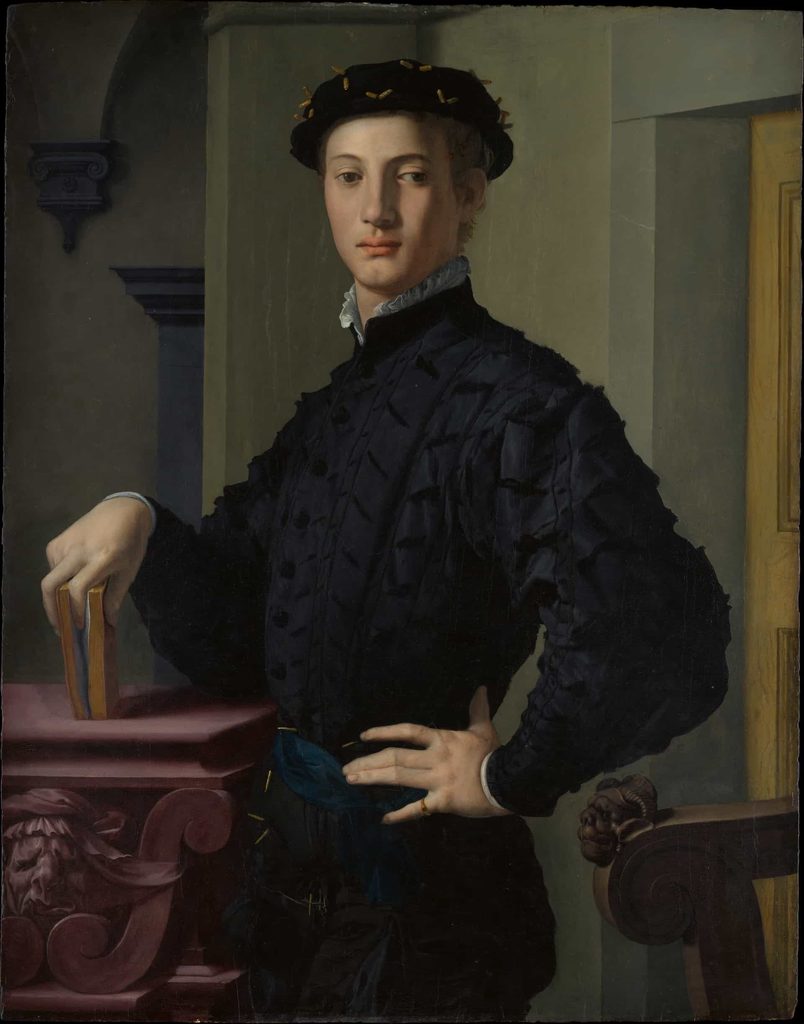
What Is Figurative Art? A Simple Definition
Figurative Art is art that retains a recognisable connection with the real world.
The term can describe painting, drawing, sculpture, printmaking, photography and other forms of art in which we can identify something represented.
That might include:
- A person
- A face
- A human body
- An animal
- A landscape
- A building
- A room
- A group of figures
- A still life
- A recognisable object
- In everyday art discussion, however, figurative art is often used more specifically to describe art centred on the human figure.
This is why searches for figurative art frequently lead to paintings and sculptures of people.
A useful definition is:
Figurative art represents recognisable subjects from the visible world, particularly the human figure, but it does not have to represent them realistically.
That final point is important.
A photographically precise portrait can be figurative art.
So can a distorted Picasso figure.
So can a stretched Alberto Giacometti sculpture.
So can a Francis Bacon figure whose body appears to dissolve.
Recognition matters more than accuracy.
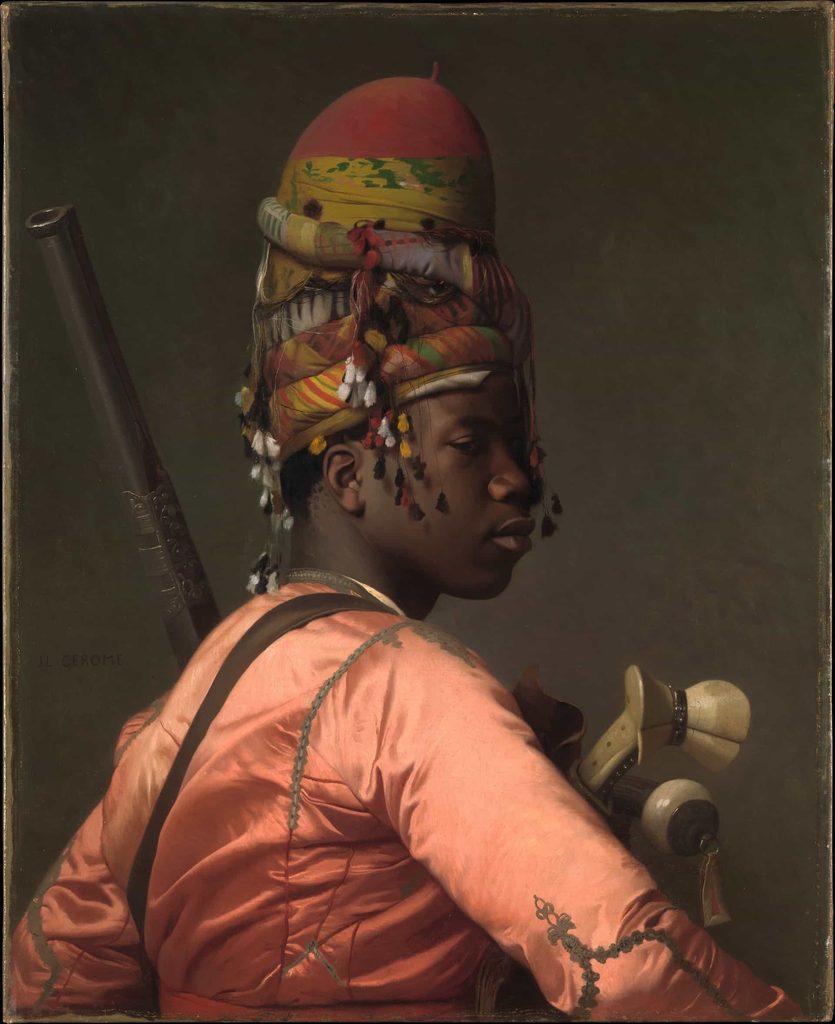
Is Figurative Art the Same as Representational Art?
Figurative art and representational art overlap so heavily that the terms are often used interchangeably.
Representational art is any art that represents something recognisable from reality.
A painting of apples is representational.
A landscape is representational.
A portrait is representational.
A sculpture of a horse is representational.
Figurative art can mean the same thing in this broad sense. However, modern art writing often uses “figurative” more specifically when discussing the human body and artists who continued to work with recognisable figures after abstraction became important in the twentieth century.
This gives the term an interesting historical role.
Before abstraction, most Western art was representational anyway. Artists did not necessarily need a special label for it.
Once artists began making paintings without recognisable subjects, the distinction became useful.
Art could now be described as figurative or abstract.
That division is not always clean, but it gives us a helpful starting point.

Does Figurative Art Have to Be Realistic?
No.
This is probably the most important thing to understand about figurative art.
Figurative art can be realistic, but realism is only one possibility.
An artist can distort a body while keeping it recognisable.
A face can be painted green, blue or red.
Hands can be exaggerated.
Perspective can be flattened.
A figure can be reduced to an outline.
A body can dissolve into brushstrokes.
A painting can sit somewhere between figuration and abstraction.
The viewer only needs enough visual information to recognise the connection with something real.
Henri Matisse is a useful example. His figures can be greatly simplified. Bodies become curves and colour. Faces may contain very little detail. Yet we immediately recognise the human presence.
Egon Schiele took another route. His figures are unmistakably human, but he elongated limbs, sharpened angles and exaggerated awkward poses.
Pablo Picasso repeatedly dismantled and reconstructed the human figure without abandoning it.
Francis Bacon blurred and distorted bodies so violently that they seem unstable, yet the figure remains central.
Figurative art is therefore not about copying.
It is about representation.
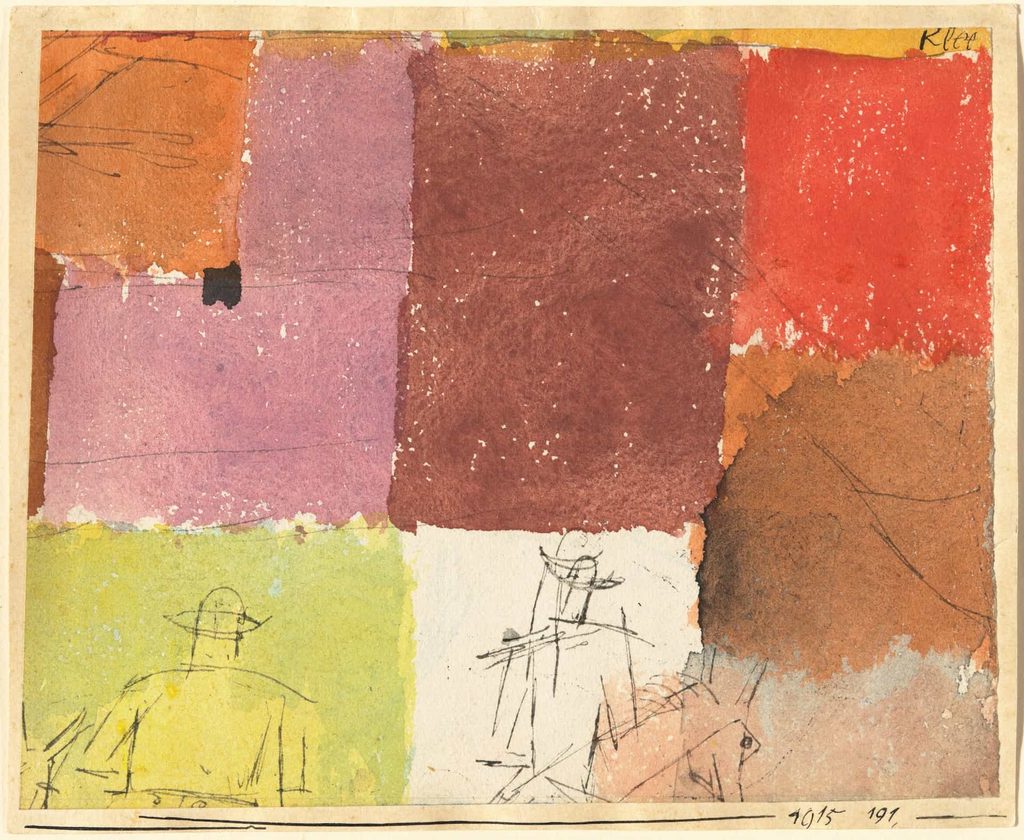
Figurative Art vs Abstract Art
The easiest way to understand figurative art is often to compare it with abstract art.
Figurative art contains recognisable references to the visible world.
Abstract art does not need to.
An abstract painting may communicate through:
- Colour
- Shape
- Line
- Texture
- Gesture
- Surface
- Rhythm
- Space
- Material
There may be no person, landscape or object that the viewer is expected to identify.
A figurative painting may use all of those same elements, but they are connected to something recognisable.
This distinction sounds clear until you look at real artworks.
Many paintings sit somewhere between the two.
A landscape may be simplified so heavily that it becomes a set of coloured shapes.
A figure may emerge from an almost abstract field of paint.
A face may appear only after you have looked for several seconds.
This middle ground is sometimes called semi-figurative, semi-abstract or figurative abstraction.
For many contemporary painters, this border between representation and abstraction is one of the most interesting places to work.
They do not have to choose one side completely.
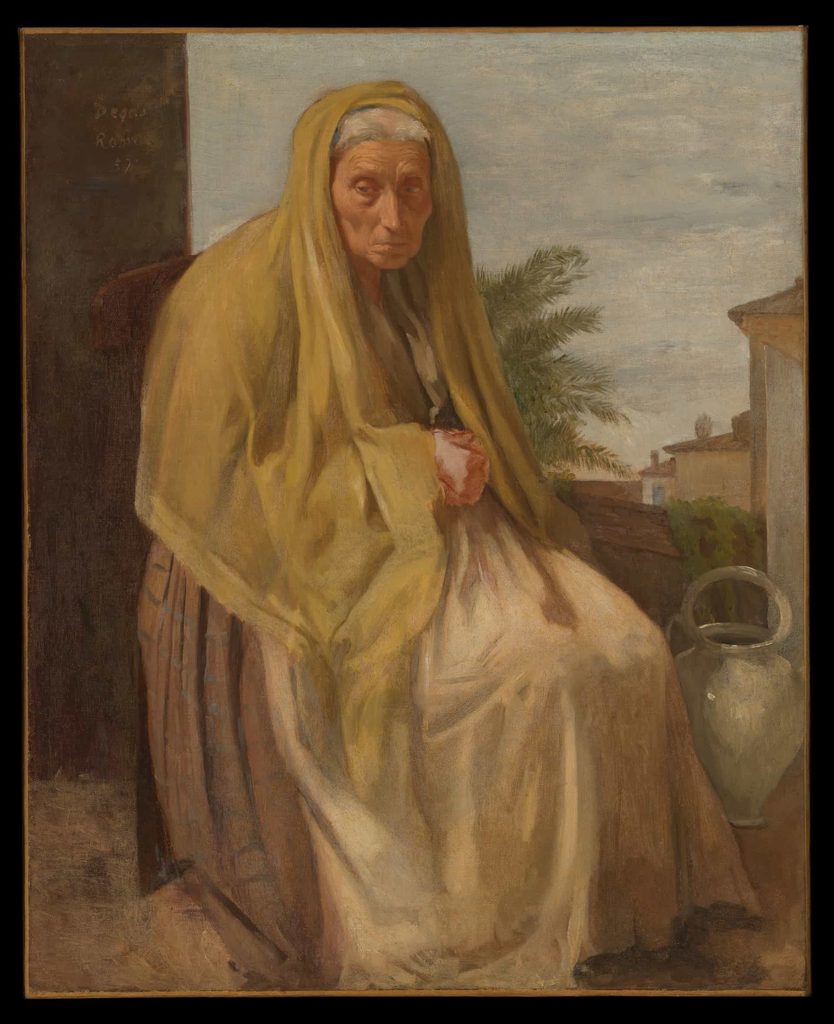
Figurative Art vs Realism
Figurative art and realism are not the same thing.
Realism generally tries to represent subjects in a believable or naturalistic way.
Figurative art simply needs to retain a connection with recognisable reality.
A realist painter may carefully describe skin, fabric, light and proportion.
A figurative painter may distort all of those things.
For example, Lucian Freud is strongly associated with figurative painting and often painted bodies with intense observation. Yet his paintings are not straightforward photographic realism. His flesh is built from heavy paint, unusual colour and relentless looking.
Francis Bacon is also figurative, but his figures can be violently distorted.
Matisse is figurative, but his use of colour can be completely unnatural.
Picasso is figurative in many periods despite breaking faces and bodies into reconstructed forms.
Realism is therefore one approach within the much wider territory of figurative art.
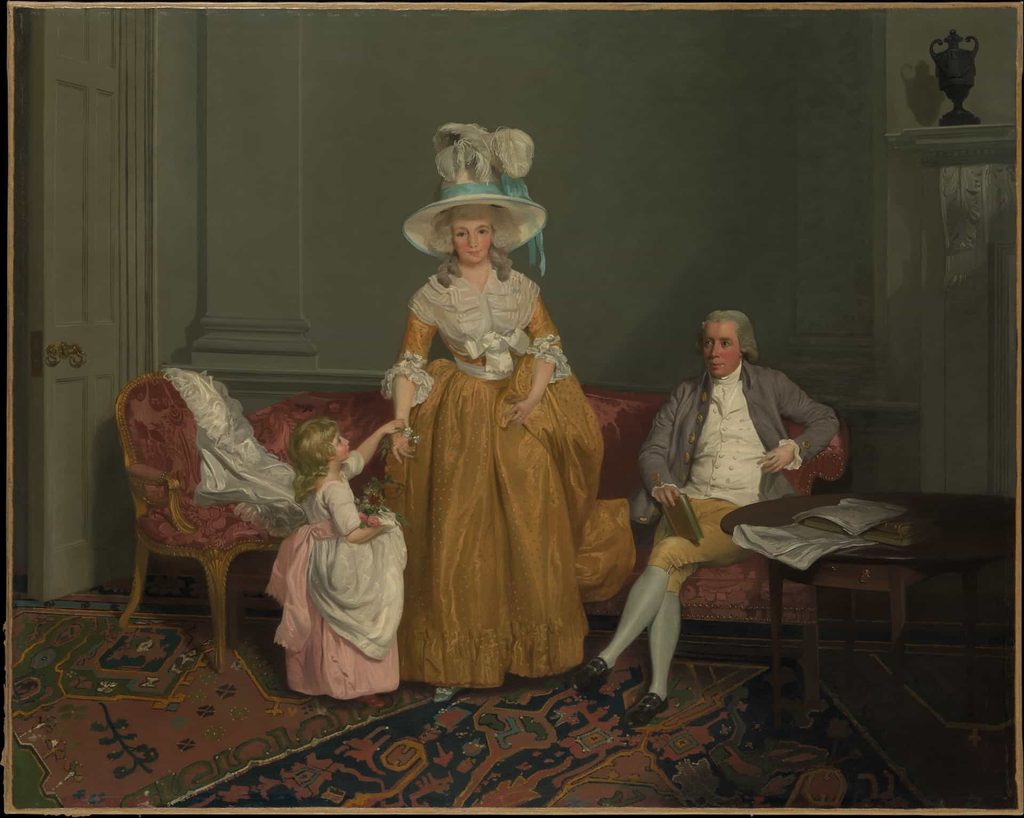
Figurative Art vs Portraiture
Portraiture is another term closely related to figurative art.
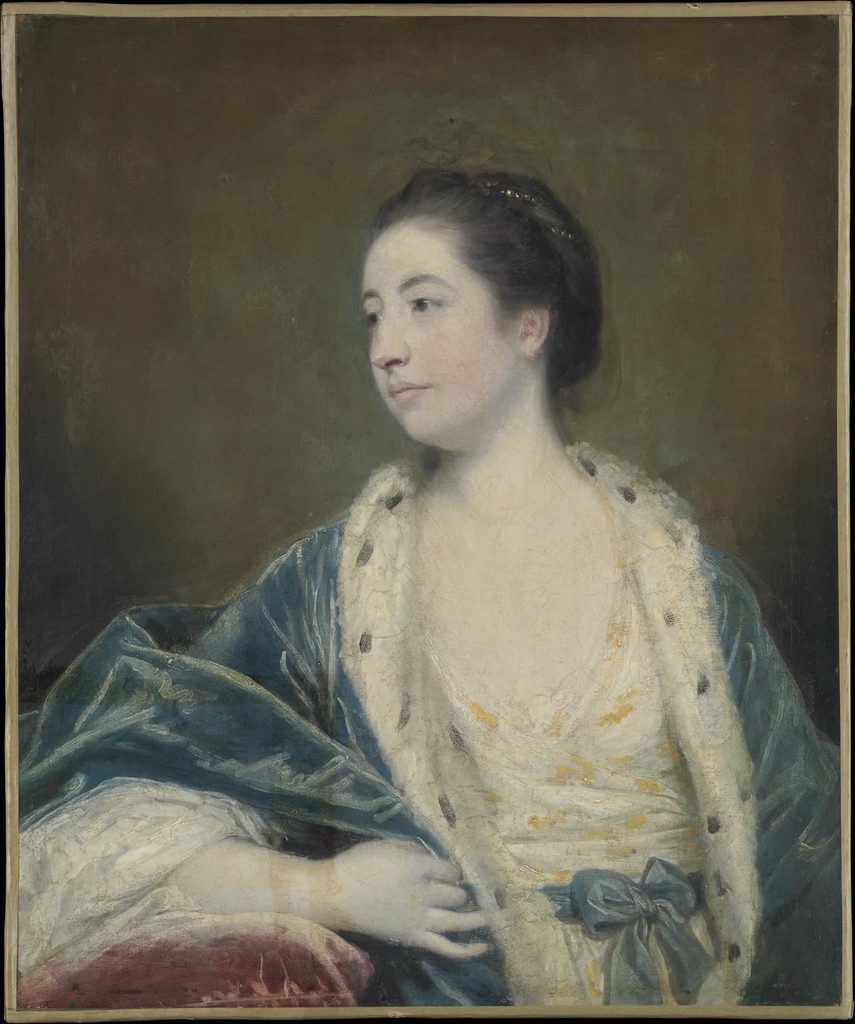
A portrait represents a particular person or sometimes a specific group. Traditionally, likeness and identity are important.
Figurative art can include portraiture, but it does not have to identify anyone.
A painter might invent a figure.
A body might be shown without a face.
A group of people may represent a social scene rather than individual sitters.
A figure may simply provide a human presence within a landscape.
A portrait asks us to consider who this person is.
Figurative art may ask a broader question: what does this body, gesture, pose or presence mean?
There is a large overlap, but the intentions can be different.
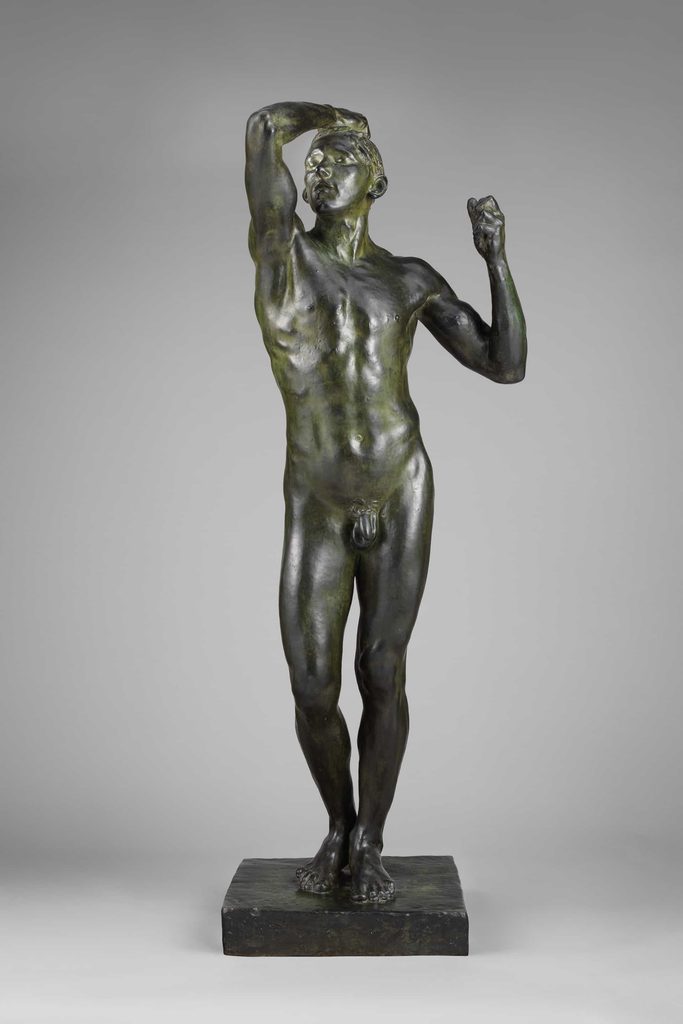
A Brief History of Figurative Art
Figurative art is much older than the term itself.
Human beings have represented people and animals for thousands of years.
Prehistoric cave paintings contain recognisable animals and occasional human forms. Ancient Egyptian art used figures to tell stories about power, religion, daily life and the afterlife. Greek and Roman artists studied the human body through sculpture, wall painting, pottery and mosaics.
In medieval Europe, figures were central to religious art. Bodies were not always intended to look naturalistic. Scale and position could indicate spiritual importance rather than physical reality.
During the Renaissance, artists studied anatomy, perspective, proportion and classical sculpture. Leonardo da Vinci, Michelangelo and Raphael helped make the human body one of the central intellectual and artistic subjects of European art.
Later painters continued to reinvent the figure.
Caravaggio used dramatic light and ordinary human models.
Rembrandt brought psychological depth to portraiture.
Velázquez examined power and looking.
Goya used the figure to explore society, violence and fear.
Manet challenged traditional ideas about modern bodies and modern life.
The arrival of photography in the nineteenth century changed the role of figurative art considerably.
Painting no longer had to be the primary way to record what somebody looked like.
Artists were free to ask what painting could do that photography could not.
That question helped lead towards modern figurative art.
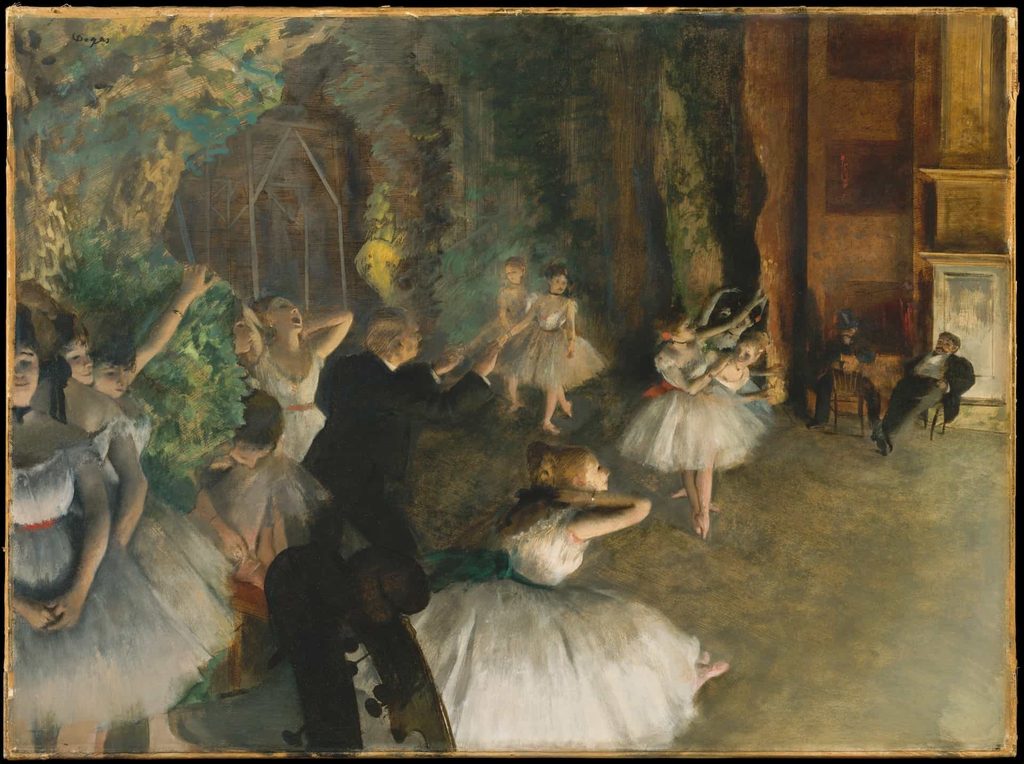
How Impressionism Changed Figurative Painting
Impressionism is often associated with landscape and changing light, but figures were also important.
Artists such as Edgar Degas, Berthe Morisot, Édouard Manet, Pierre-Auguste Renoir and Mary Cassatt painted people in cafés, theatres, homes, parks and private moments.
Their figures were part of modern life.
Brushwork became more visible. Scenes could feel cropped or momentary. The painting no longer needed to hide the fact that it was made from paint.
This influenced later figurative artists because representation could now be looser.
The artist did not have to finish every surface perfectly.
A figure could be suggested.
A face could be built from a handful of marks.
A crowd could dissolve into colour.
The painted figure was becoming less fixed.
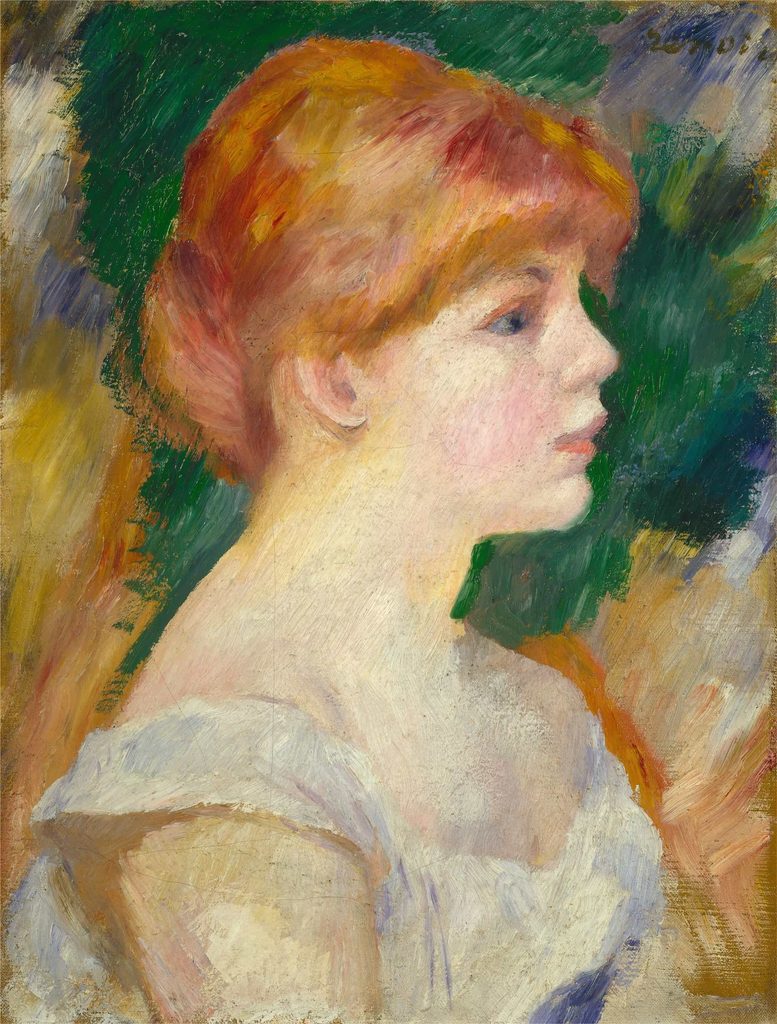

Van Gogh, Gauguin and the Expressive Figure
Post-Impressionist artists pushed the human figure further away from straightforward realism.
Vincent van Gogh used colour and brushwork to give portraits emotional intensity. Faces and clothing could be constructed through visible strokes, strong outlines and heightened colour.
Paul Gauguin simplified bodies and spaces, using flattened colour and symbolic settings.
Neither artist needed accurate natural colour to make a figure convincing.
This was an important change.
Colour could describe emotion rather than appearance.
Shape could express character.
Brushwork could become part of the human feeling of the painting.
These ideas fed directly into Fauvism and Expressionism.
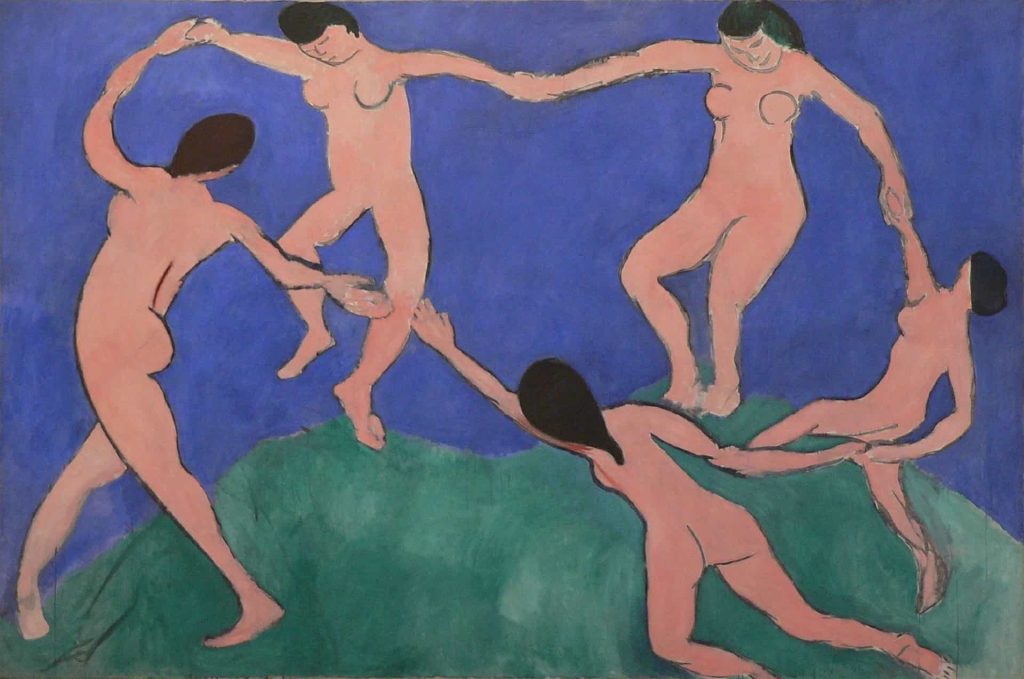
Matisse and the Simplified Figure
Henri Matisse showed how much of the human body could be removed while the figure remained alive.
His paintings often reduce bodies to outlines, shapes and colour relationships.
Rather than modelling the body through careful light and shadow, Matisse might create it through a curve, a patch of blue, a red outline or a flattened silhouette.
His late cut-outs pushed this even further.
A body could be reduced to coloured paper and still carry movement, weight and recognition.
Matisse is important to figurative art because he proved that simplification does not necessarily remove humanity.
Sometimes reducing detail makes gesture clearer.

Picasso and the Broken Figure
Pablo Picasso spent much of his career taking the figure apart and putting it back together.
During Cubism, faces and bodies were fragmented into multiple viewpoints and geometric planes.
Elsewhere, Picasso distorted scale, rearranged facial features and exaggerated limbs.
Yet the figure never disappeared from his work for long.
This is one reason he is so important to modern figurative art.
Picasso demonstrated that representation could survive radical distortion.
A face did not have to follow normal anatomy.
A body could be structurally impossible.
Recognition could remain even when realism had been abandoned.
That idea opened enormous possibilities for later artists.
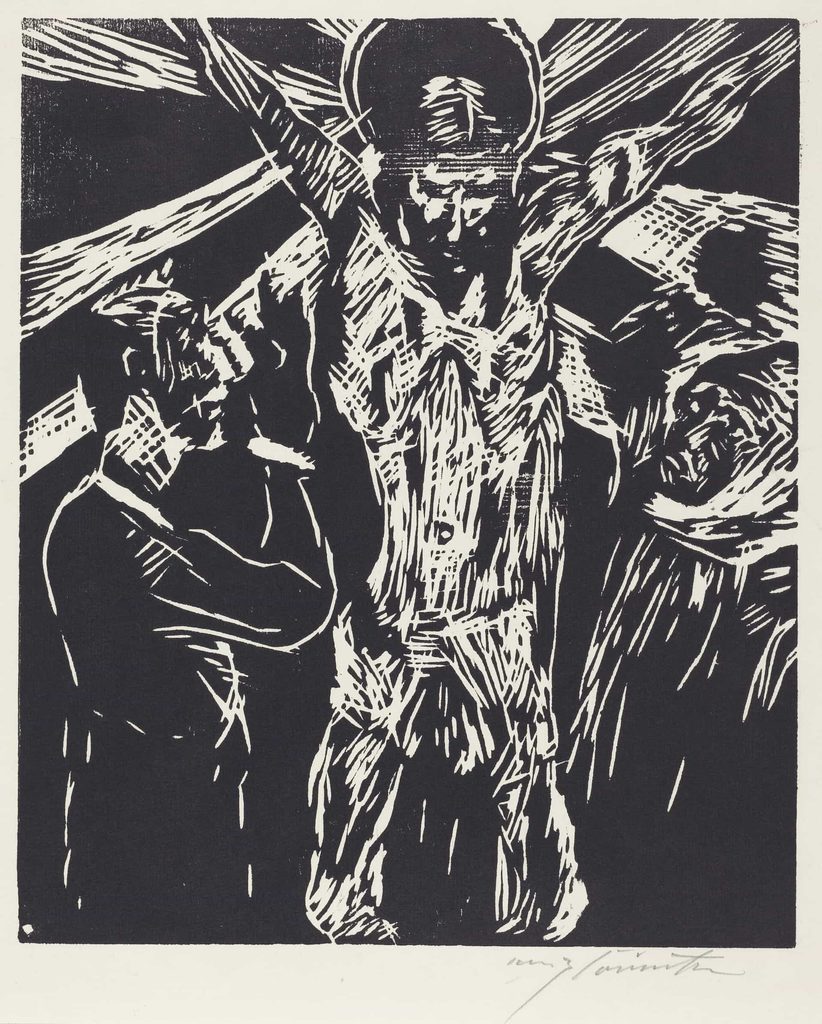
Expressionism and the Emotional Body
Expressionist artists often distorted the figure to communicate feeling.
Egon Schiele’s bodies can appear tense, thin, exposed and awkward.
Edvard Munch used figures to express loneliness, anxiety, desire and fear.
Artists associated with German Expressionism used intense colour, sharp lines and simplified forms to create psychological pressure.
These works show why figurative art is not merely descriptive.
A body can become a visual language.
The angle of a shoulder, the position of a hand or the distance between two figures may communicate more than facial expression.
This remains central to contemporary figurative painting.
What Happened to Figurative Art When Abstraction Arrived?
By the early and middle twentieth century, abstraction had become one of the major forces in modern art.
Some artists removed recognisable subjects entirely.
This did not end figurative art.
Instead, it changed what the term meant.
Artists who continued painting people were now making a visible choice.
Figuration was no longer the automatic default.
In Britain, artists including Francis Bacon and Lucian Freud became important examples of post-war figurative painting.
Bacon’s figures appear trapped, blurred, twisted or isolated.
Freud painted bodies with uncompromising physical attention.
Later, artists such as Frank Auerbach and Leon Kossoff continued to work with figures and places using heavy, expressive paint.
The human subject had survived abstraction, but it no longer needed to behave traditionally.
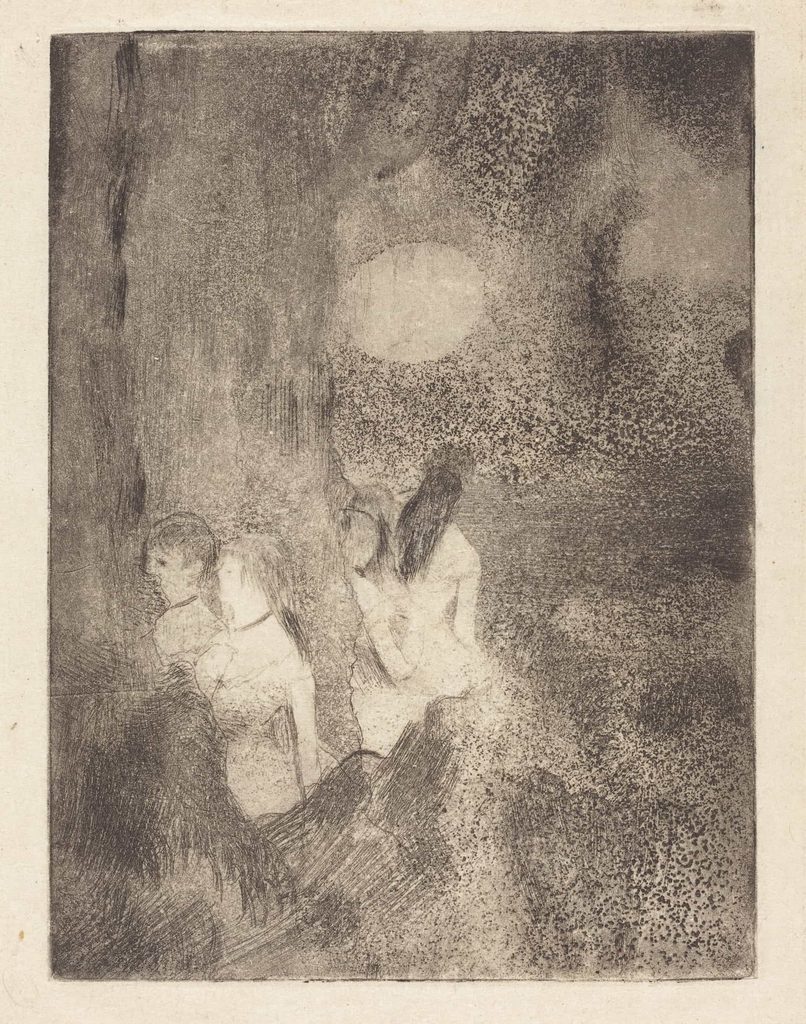
Why the Human Figure Is So Powerful in Art
Human beings are exceptionally sensitive to other human beings.
We look for faces almost automatically.
We notice posture.
We read eyes.
We interpret hands.
We recognise tension between people.
We can often sense whether a body appears comfortable, frightened, tired or guarded before consciously analysing it.
Figurative artists work with this instinct.
A single figure can create a relationship with the viewer that is difficult to achieve with other subjects.
A person looking directly out of a painting can make us feel watched.
A person turning away can create privacy.
A seated figure can feel contemplative.
A group can suggest friendship, conflict, family or isolation.
This immediate recognition gives figurative art enormous emotional range.
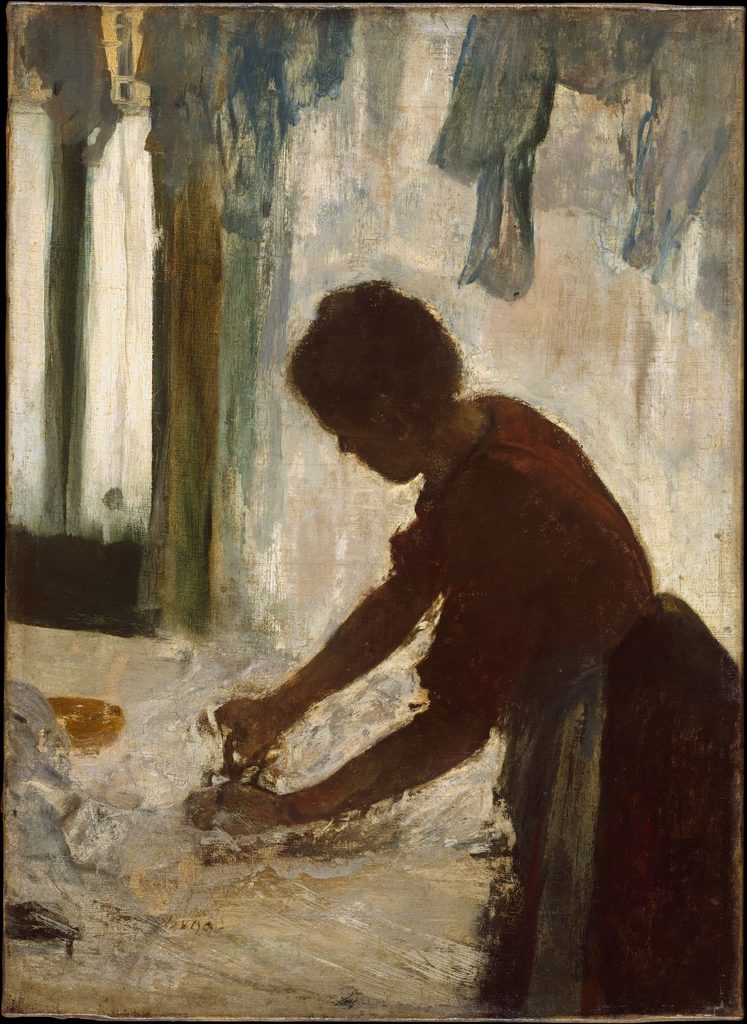
Gesture in Figurative Art
Gesture is one of the most important parts of figurative art.
A figure does not need a detailed face to communicate.
Consider:
A head lowered slightly
Hands folded tightly
A body leaning forward
A figure standing apart from a group
A hand resting on another person’s shoulder
A person turning towards a window
A foot placed awkwardly
Arms crossed over the body
These gestures create meaning before we know anything about the person.
Artists often spend considerable time studying gesture because it prevents a figure from feeling stiff.
Life drawing classes frequently use short poses for exactly this reason.
When an artist only has a minute or two, there is no time for detail.
They have to find the essential movement of the body.
That ability remains valuable even in highly developed paintings.
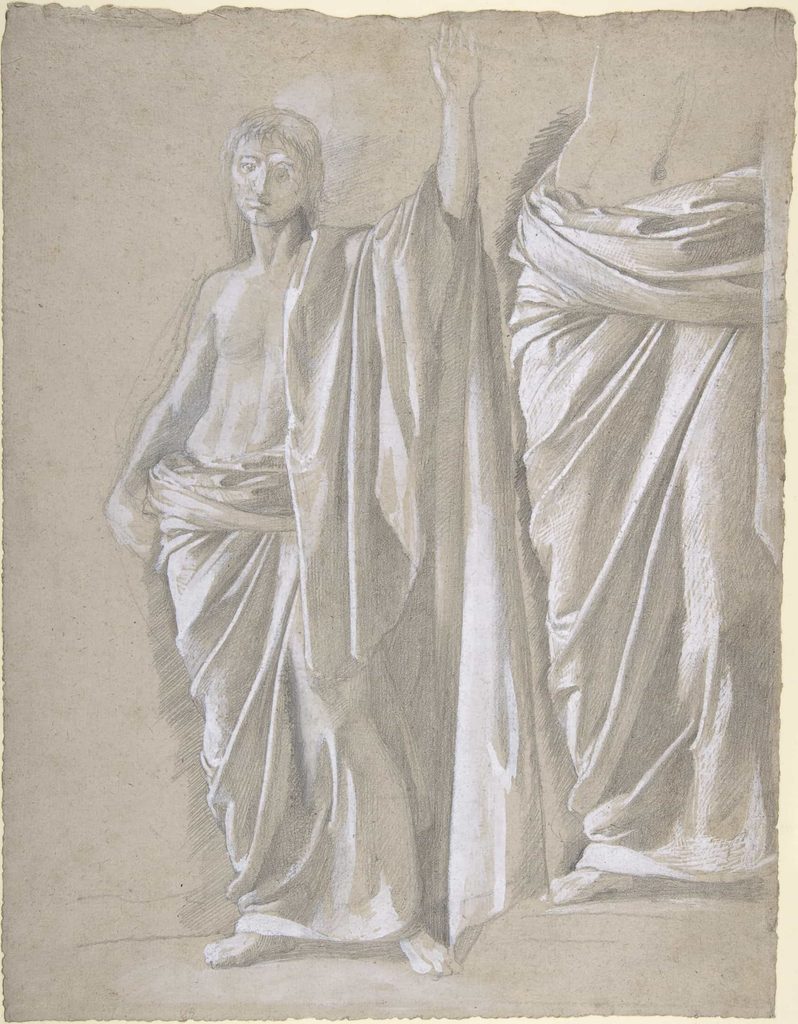
Drawing and Figurative Art
Drawing has always been closely connected with figurative art.
Artists draw the body to understand:
- Weight
- Proportion
- Balance
- Movement
- Anatomy
- Gesture
- Light
- Volume
- Space
- Life drawing can be highly accurate, but it can also be expressive.
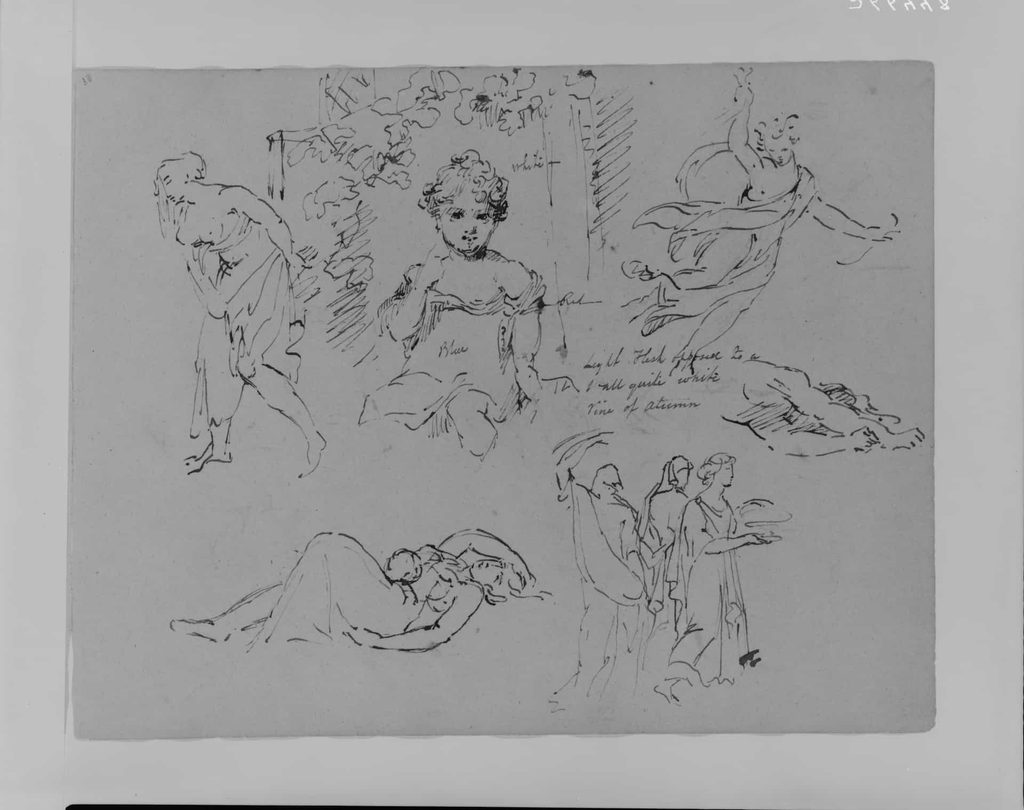
A charcoal drawing may use only a few dark marks to suggest the entire body.
Repeated lines can show searching and correction.
Erased areas can become part of the finished work.
The drawing can reveal how the artist looked.
That sense of directness is one reason figurative drawings can feel particularly intimate.
They often show the thinking before the finished image becomes polished.
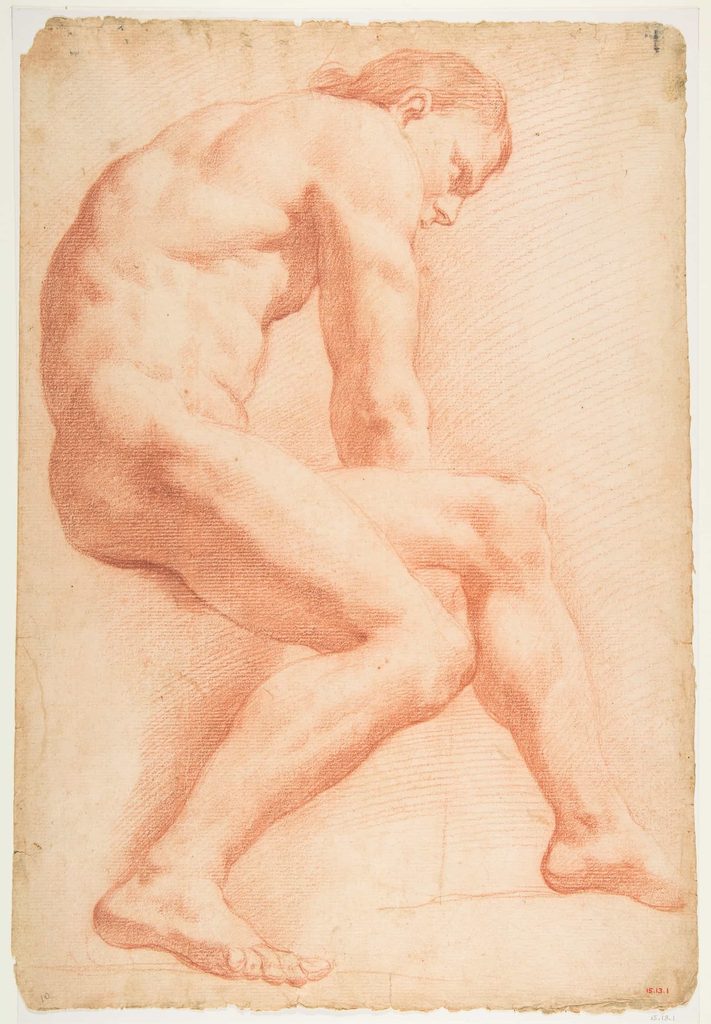
Life Drawing and Why Artists Still Practise It
Life drawing means drawing a live model, usually through a series of timed poses.
It remains one of the traditional foundations of figurative art, but it is not only about learning perfect anatomy.
Life drawing trains observation.
The artist has to notice how weight shifts through the body, how shoulders relate to hips, how limbs shorten when seen from different angles, and how a figure occupies space.
Short poses help develop gesture.
Long poses allow closer study of proportion, tone and structure.
Drawing from life also forces the artist to respond to a real person rather than a flat photograph.
That difference can be important.
A photograph has already converted the body into a two-dimensional image.
Working from life requires the artist to make those decisions themselves.
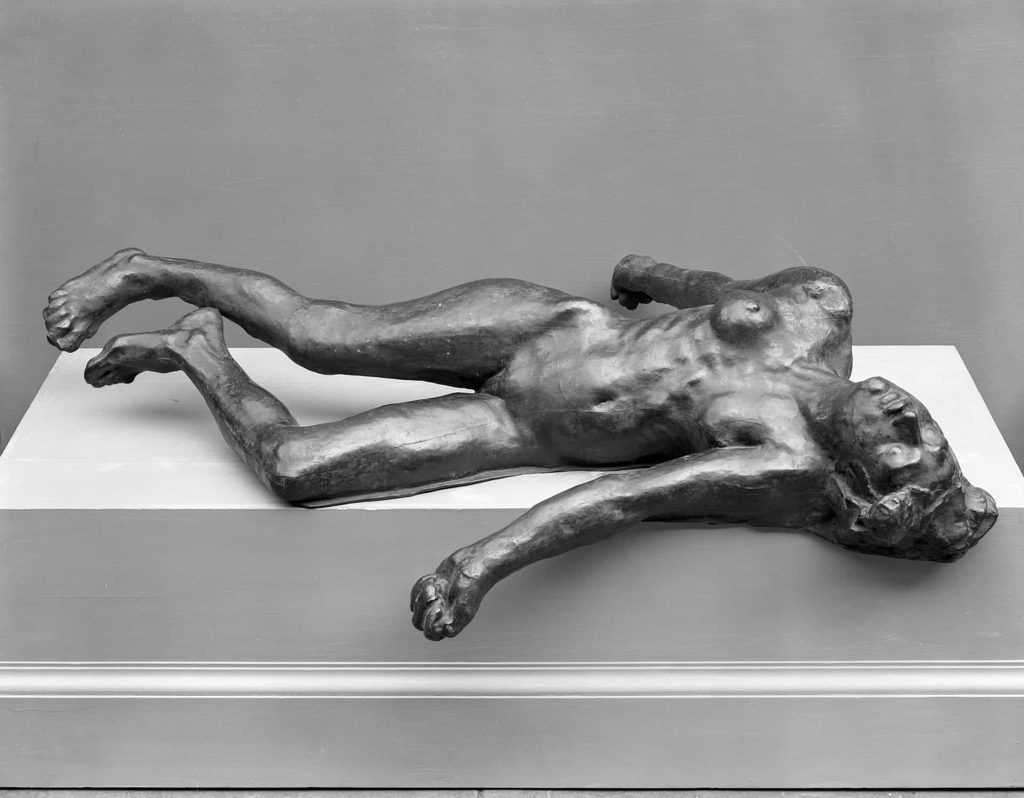
Figurative Sculpture
Figurative art is not limited to painting and drawing.
Sculpture has a long relationship with the human figure.
Ancient Greek and Roman sculpture established traditions of idealised anatomy that shaped Western art for centuries.
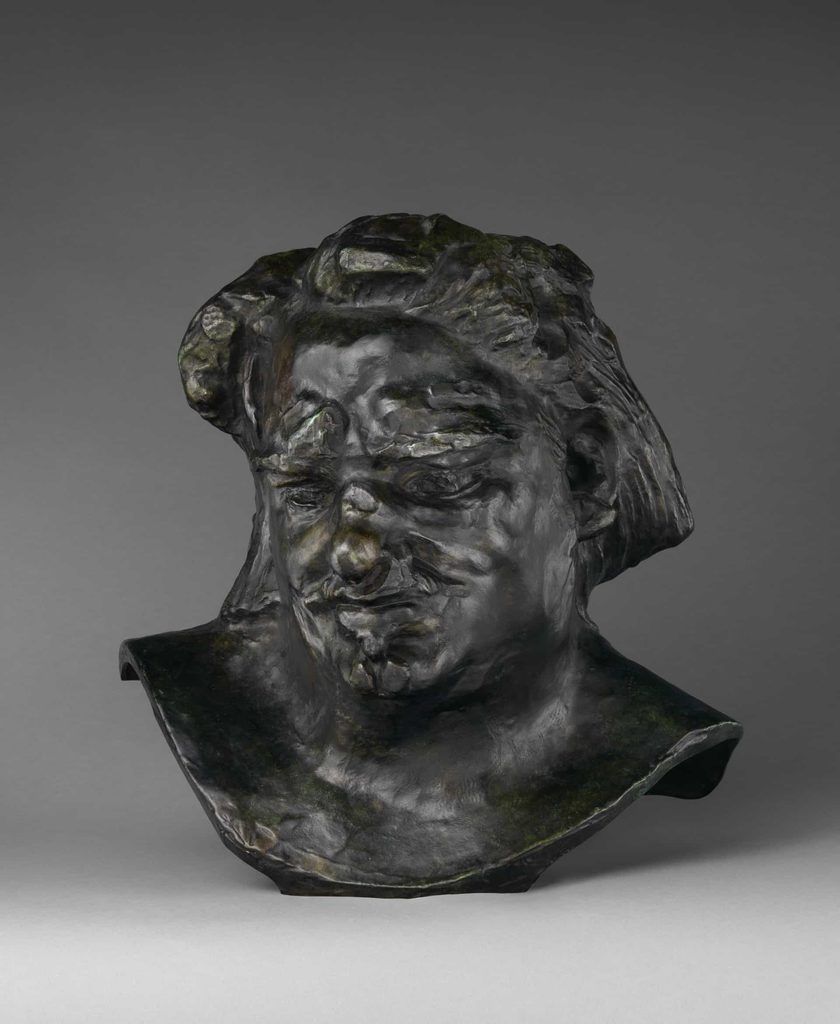
Auguste Rodin later brought a different sense of surface and emotion to sculpted bodies.
Alberto Giacometti stretched the figure into thin vertical forms that seem fragile, distant and strangely present.
Henry Moore simplified the reclining body into large organic shapes that sometimes approach abstraction.
Figurative sculpture makes us particularly aware of our own bodies because it occupies the same physical space.
We can move around it.
Its scale can be compared directly with our own.
This makes figurative sculpture a different experience from the painted figure.
Figurative Art and Photography
Photography changed figurative art, but did not replace it.
Instead, painters began using photographs in different ways.
Some work directly from photographic references.
Others combine multiple photographs.
Some use film stills, family albums, newspapers, magazines, screenshots or social media images.
The question is not whether using photography makes the painting less authentic.
The interesting question is what happens during translation.
A photograph contains one kind of information.
Painting can change it.
The artist can alter colour, remove detail, change scale, blur figures, combine moments or introduce marks that have no photographic equivalent.
This relationship between photographic imagery and painting has become especially important in contemporary figurative art.
Figurative Art in the Digital Age
Today we see more human faces and bodies than almost any previous generation.
Phones, news feeds, video calls, films, advertising and social media surround us with images of people.
Yet many of these images pass by extremely quickly.
Figurative art can work against that speed.
A painting asks us to remain with one image.
The artist has already slowed the image down through making it.
The viewer can then slow down again through looking.
This gives contemporary figuration an unusual role.
The figure is familiar because we see people constantly, but painting can make that familiarity strange again.
An artist can take a fleeting screen image and give it weight.
A blurred video frame can become a large canvas.
A moment that lasted a fraction of a second can become an object that exists for decades.
That tension between digital speed and physical painting is one reason figurative art remains so relevant.
Contemporary Figurative Art
Contemporary figurative art covers an enormous range of approaches.
Some artists work with detailed realism.
Others allow figures to emerge from loose or abstract paint.
Some invent their subjects.
Others paint family, friends or themselves.
Some use archival photographs.
Others respond to cinema, online imagery or current events.
Contemporary figurative artists may explore:
- Identity
- Memory
- Race
- Gender
- Ageing
- Family
- Migration
- The body
- Private life
- Public space
- History
- Class
- Desire
- Isolation
- Community
- Technology
- Representation
- The gaze
This variety is one reason figurative art remains difficult to reduce to a style.
It is better understood as a territory.
The recognisable world is the starting point.
What the artist does with it can vary completely.
Important Contemporary Figurative Artists
There are many artists working with figuration today, and any list will be incomplete.
Several names provide useful starting points.
Jenny Saville is known for monumental paintings of the body and flesh.
Lynette Yiadom-Boakye creates invented figures whose histories remain deliberately unclear.
Kerry James Marshall has made major paintings centred on Black figures and the history of representation.
Njideka Akunyili Crosby combines figures, interiors, family imagery and layered photographic material.
Marlene Dumas uses fluid paint to create psychologically charged faces and bodies.
Chantal Joffe paints women, children, family and friends with direct, often loose handling.
Jordan Casteel places sitters within everyday environments and social spaces.
Michael Armitage brings contemporary East African experience, politics and art history together through figurative painting.
Salman Toor paints scenes of friendship, intimacy, nightlife and private life.
These artists look very different from one another.
That difference is exactly the point.
Contemporary figuration is not one style.
Figurative Art and Identity
The figure has always carried questions of identity.
Historically, portraiture was strongly connected with wealth, status, religion and power.
Who was painted mattered.
How they were painted mattered.
Who was excluded mattered too.
Contemporary figurative artists have expanded the range of bodies and experiences given serious attention in painting.
This has changed not only who appears in art, but how viewers understand the history behind representation.
Artists can now use figuration to ask:
Who has traditionally been visible?
Who has been overlooked?
Who controls the image?
How do people present themselves?
How does clothing communicate identity?
How does cultural background shape a figure?
Who is looking at whom?
These questions make figurative art socially significant as well as visually compelling.
Figurative Art and the Gaze
Looking is never neutral in figurative art.
When we stand in front of a painted person, we become part of a relationship.
Does the figure look back?
Do they ignore us?
Are they aware of being watched?
Are we seeing a private moment?
Does the figure seem comfortable with our attention?
This relationship is often described through the idea of the gaze.
Artists can use gaze to create intimacy, authority, discomfort, distance or confrontation.
A direct gaze may make the viewer feel challenged.
A turned head may create privacy.
Closed eyes can create vulnerability or withdrawal.
A figure seen from behind may make us wonder whether we are observing without permission.
The way a painting positions the viewer can be as important as the person depicted.
Figurative Art and the Body
The human body carries enormous cultural meaning.
Bodies can represent:
- Strength
- Vulnerability
- Age
- Beauty
- Labour
- Illness
- Desire
- Identity
- Violence
- Care
- Movement
- Mortality
Artists have repeatedly challenged ideals about what bodies are supposed to look like.
Some reject idealisation.
Others exaggerate it deliberately.
Some paint bodies that have rarely occupied central positions in art history.
Others distort anatomy because emotional truth matters more than physical correctness.
The body in figurative art is therefore never simply anatomy.
It is also social, personal and historical.
Figurative Art and Place
A figure changes depending on where the artist puts them.
A person standing alone in a landscape means something different from the same person sitting in a kitchen.
An interior can communicate family, privacy, wealth, isolation or safety.
A street can bring public life into the work.
A workplace can connect the figure with labour.
An empty background can remove context completely.
Place gives the figure a world.
Some artists provide detailed environments.
Others deliberately remove them.
Both choices tell us something.
When looking at figurative art, do not only look at the person.
Look at what surrounds them.
Figurative Art and Colour
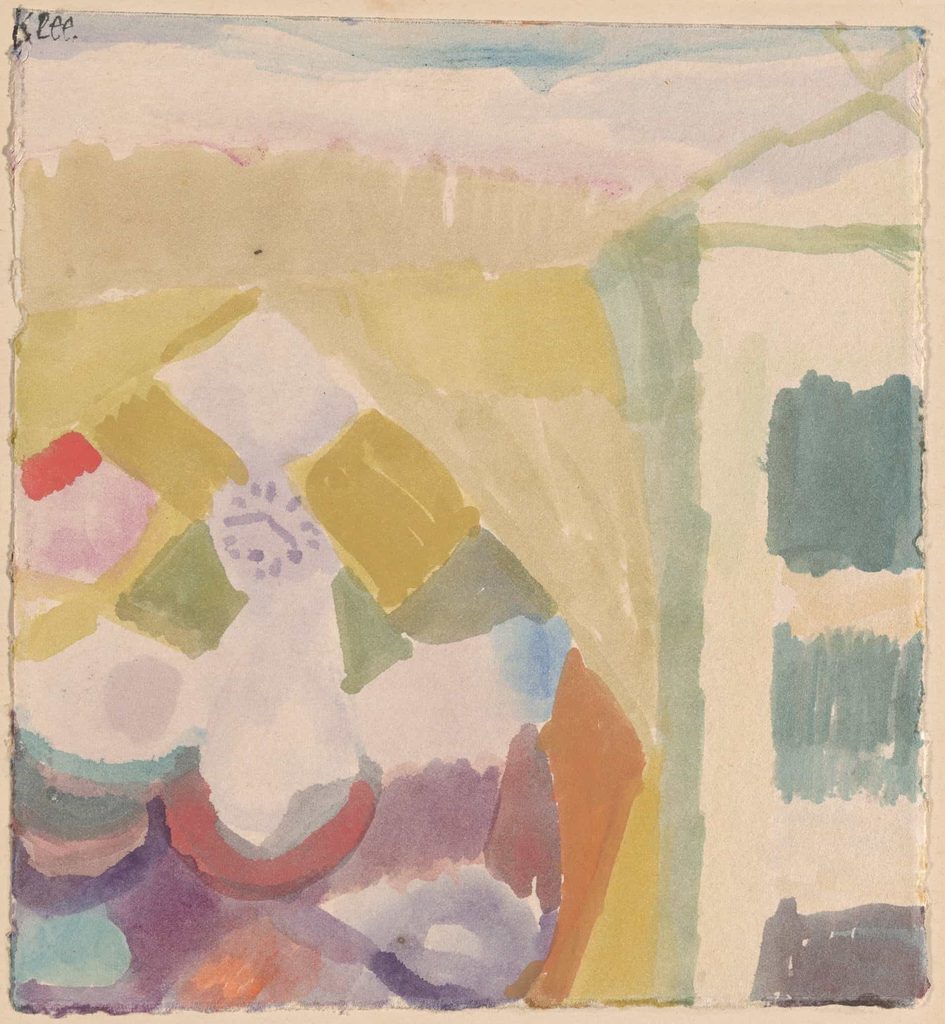
Colour can make a figure feel natural, emotional, artificial or dreamlike.
Naturalistic skin tones are only one option.
Matisse showed how green, orange, pink and blue could structure a face.
Expressionists used colour to increase psychological tension.
Contemporary painters may use unexpected colours to separate the body from ordinary reality.
Colour can make a figure appear:
- Warm
- Cold
- Present
- Distant
- Healthy
- Unsettled
- Luminous
- Artificial
- Calm
- Threatening
The emotional effect often comes from relationships between colours rather than individual colours alone.
A blue figure against an orange background behaves differently from the same blue against grey.
Figurative artists use these relationships to control how the body feels.
What Makes Good Figurative Art?
Good figurative art is not simply art with accurate anatomy.
Technical skill matters, but accuracy alone rarely makes a memorable work.
A strong figurative artwork often has several qualities working together.
The figure has presence.
The composition feels deliberate.
Gesture carries meaning.
The space around the figure contributes to the work.
Colour supports the mood.
The artist’s handling of material feels connected to the subject.
The scale has a reason.
Something remains interesting after the initial recognition.
The work does not need to answer every question.
In fact, some of the strongest figurative artworks leave important things unresolved.
You recognise the person.
You do not necessarily understand them completely.
That is very close to how relationships with real people work.
How to Look at Figurative Art
When viewing figurative art in a gallery, begin from a distance.
Do not immediately read the label.
First notice the figure.
Where are they positioned?
How large are they compared with you?
Where does your eye go first?
Then look at posture.
Where is the body’s weight?
Are the shoulders tense?
What are the hands doing?
Is the figure moving or still?
Look at the face.
Does the figure meet your eyes?
Are features detailed or simplified?
What has the artist chosen not to show?
Then look at the surroundings.
Is the figure inside or outside?
Is the space recognisable?
Does the background contain clues?
Finally, move closer and look at the surface.
Can you see brushstrokes?
Has paint been scraped away?
Are some sections highly finished while others remain loose?
At that point, you are no longer only looking at the represented person.
You are looking at the artist’s decisions.
How Artists Learn Figurative Art
There is no single route into figurative art.
Traditional training may include:
- Life drawing
- Anatomy
- Portrait drawing
- Gesture drawing
- Tonal studies
- Colour studies
- Composition
- Painting from a model
Artists can also work from photography, film, observation, memory and imagination.
The important skill is not merely copying what is visible.
It is learning to decide what matters.
A photograph contains thousands of details.
A painting does not need all of them.
The artist chooses what to keep.
A gesture may matter more than the exact shape of a shoe.
A shadow may matter more than a facial feature.
A background may need to disappear completely.
Figurative art becomes interesting when selection begins.
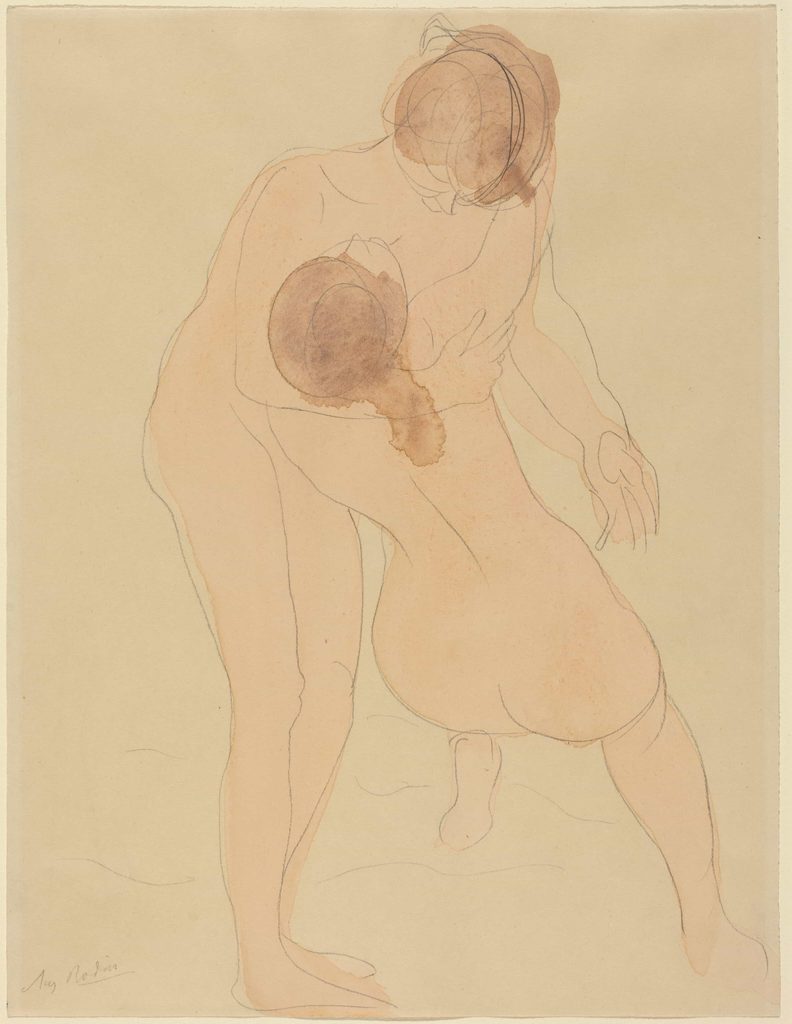
Why Life Drawing Is Useful Even for Abstract Artists
Life drawing is often associated with figurative painters, but it can also help artists who work abstractly.
Drawing a body teaches:
- Proportion
- Rhythm
- Negative space
- Weight
- Movement
- Balance
- Shape
- Line
- Speed
- Observation
These are not exclusively figurative skills.
They belong to visual art more broadly.
A series of quick figure drawings may eventually become abstract marks while retaining the rhythm of the body.
This is one reason life drawing has remained useful even after abstraction changed modern art.
The subject teaches more than anatomy.
Buying Figurative Art
Figurative art can create a strong presence in a home because human figures naturally attract attention.
Before buying, consider more than whether you like the subject.
Ask:
Does the figure feel alive?
Do I keep returning to the painting?
How does the scale affect me?
Do I like the surface from close up?
How does the figure relate to the background?
What kind of mood does the artwork bring into a room?
Can I imagine living with this person or figure?
That final question can sound strange, but it matters.
A figurative artwork brings a human presence into a space.
A direct portrait may feel very different from a distant figure in a landscape.
An intimate drawing behaves differently from a large frontal painting.
Choose the work you want to continue encountering.
Framing Figurative Art
Framing can change how figurative art is experienced.
A small drawing may gain presence with a generous mount.
A charcoal figure may benefit from a quiet frame that does not compete with the marks.
A large oil painting may need only a simple tray frame.
A historic print might suit a more traditional profile.
The frame should respond to:
- Scale
- Medium
- Colour
- Age
- Surface
- The room
- The character of the artwork
For works on paper, framing also provides physical protection.
Good glazing, suitable mounts and conservation-conscious materials can help protect drawings, prints and watercolours from damage.
The frame is not separate from the viewing experience.
It controls the transition between the artwork and the wall.
Figurative Art for Different Rooms
Figurative art can work throughout a home, but different works create different moods.
Living rooms can often handle larger or more sociable figurative works.
Bedrooms may suit quieter portraits, drawings or solitary figures.
Hallways work well for smaller drawings, prints or groups of works.
Dining rooms can carry stronger colour and conversation pieces.
Home offices may benefit from a work with enough presence to reward regular looking without becoming distracting.
There is no rule that says certain subjects belong in certain rooms.
The main consideration is whether you want to live with the atmosphere of the work.
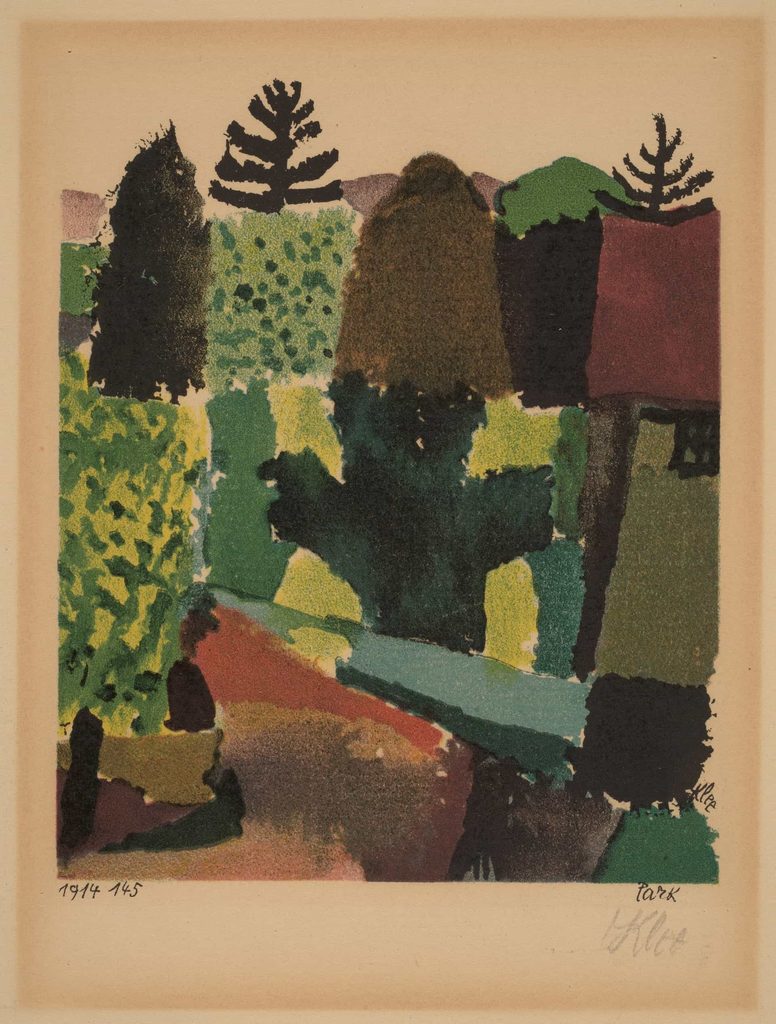
Can Figurative Art Be Abstract?
Yes.
This is one of the most interesting parts of figurative art.
A work can contain recognisable figures while using abstract colour, marks and composition.
The figure may be partly hidden.
It may appear only after prolonged looking.
An artist may begin with a person and then allow the painting process to break the image apart.
This creates a tension between recognition and uncertainty.
The viewer may move between seeing paint as paint and seeing it as a body.
That movement can make a painting particularly rewarding.
It is also why “figurative or abstract?” is sometimes the wrong question.
A work can be both.
Why Figurative Art Still Matters
Figurative art still matters because the visible world still matters to us.
People continue to look at other people.
We continue to read faces.
We continue to think about bodies, ageing, identity, intimacy, family, loneliness, community and place.
What has changed is the visual world surrounding those subjects.
Artists now work after photography, cinema, advertising, television, social media, video calls, smartphones and generative images.
That makes painting a figure different from painting one 200 years ago.
The act of painting has become slower in comparison with the images around us.
That slowness can be valuable.
A face can remain on one canvas instead of disappearing after half a second of scrolling.
A body can be looked at rather than consumed instantly.
An ordinary person can occupy the same scale and seriousness once reserved for monarchs and myths.
A blurry video image can become a permanent painting.
The figure still offers artists one of the richest subjects available because human beings remain complicated.
We recognise ourselves in figures while also recognising difference.
That balance between familiarity and uncertainty keeps figurative art alive.
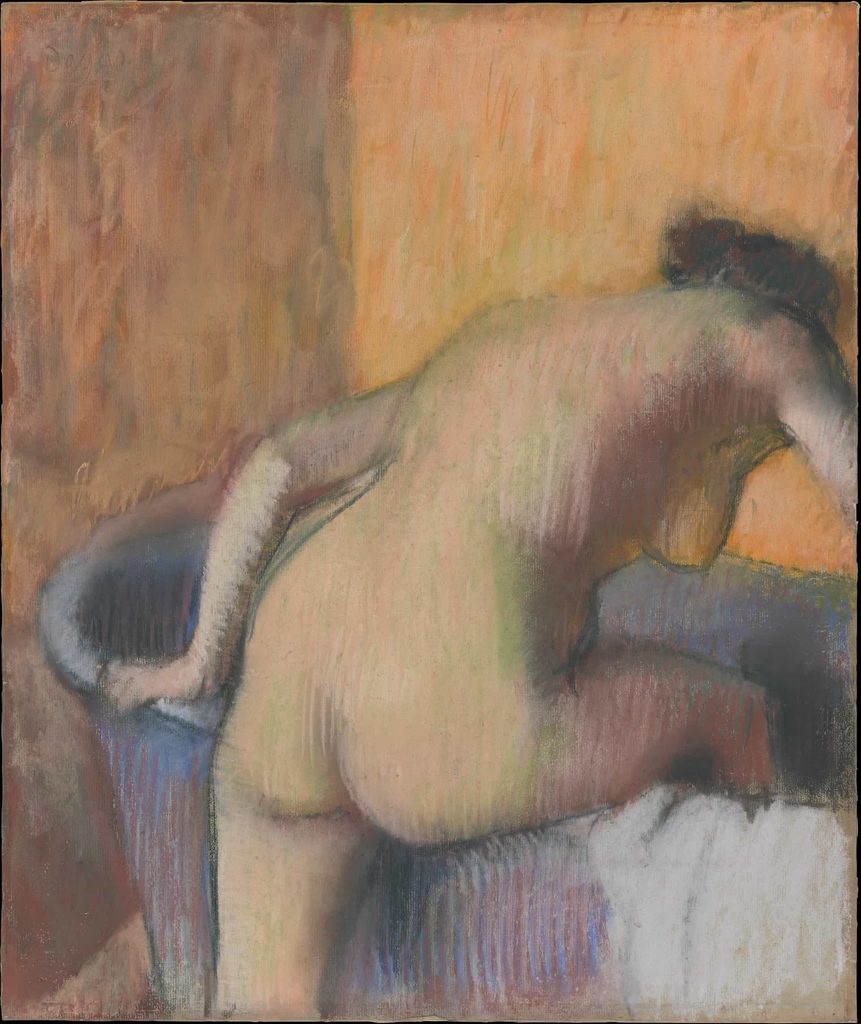
Common Misunderstandings About Figurative Art
One misunderstanding is that figurative art must be realistic.
It does not.
Another is that figurative art only means portraits.
It is much broader.
Another is that abstraction replaced figuration.
It did not. The two have existed side by side for more than a century.
Another is that technical accuracy determines quality.
An anatomically perfect figure can still produce a dull painting. A distorted figure can carry enormous feeling.
Another is that figurative art is old-fashioned.
Some of the most discussed contemporary painters working today are figurative or move between figuration and abstraction.
The figure has changed.
It has not disappeared.
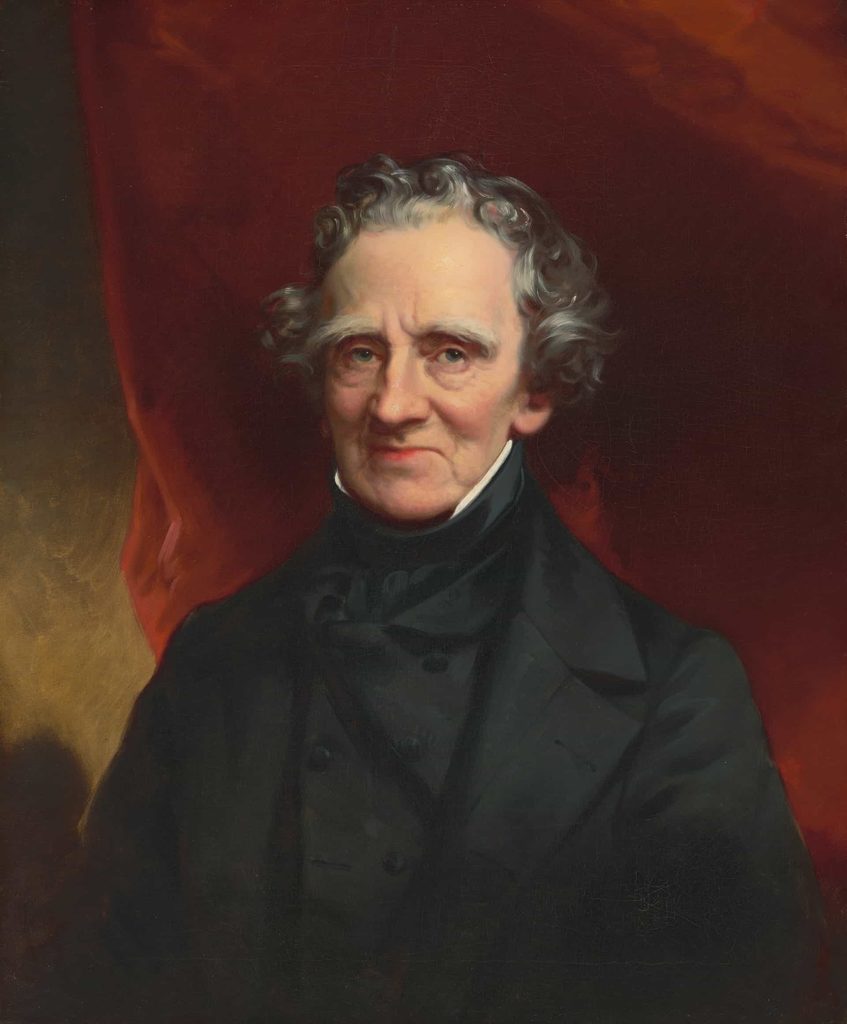
Public Domain Figurative Art Worth Exploring
One of the best ways to understand figurative art is to compare works across different centuries.
There is a huge amount of public domain figurative art available through museum open-access collections and Wikimedia Commons.
Useful artists to explore include:
- Rembrandt van Rijn
- Francisco Goya
- Édouard Manet
- Berthe Morisot
- Edgar Degas
- Mary Cassatt
- Vincent van Gogh
- Paul Gauguin
- Amedeo Modigliani
- Egon Schiele
- Gwen John
- Henry Ossawa Tanner
- Suzanne Valadon
- Lovis Corinth
These artists approach the figure in very different ways.
Compare their handling of:
- Faces
- Hands
- Clothing
- Skin
- Gesture
- Background
- Scale
- Colour
Looking at several artists together quickly reveals that figurative art is not a style.
It is a vast field of possibilities.
Figurative Art FAQs
What is Figurative Art?
Figurative Art is art that represents recognisable subjects from the real world. The term is especially associated with representations of the human figure, although landscapes, animals, objects and interiors can also be figurative.
Does Figurative Art have to be realistic?
No. Figurative art can be highly realistic, loosely painted, distorted, expressive, simplified or partly abstract. The important point is that a recognisable connection with the visible world remains.
What is the difference between Figurative Art and abstract art?
Figurative art contains recognisable subjects. Abstract art does not require recognisable representation and can work through colour, line, shape, texture and material alone. Many artworks sit somewhere between the two.
Is Figurative Art the same as portrait art?
No. Portraiture usually represents a particular person or sitter. Figurative art can include portraits but can also show anonymous, invented or partially represented figures.
What is contemporary Figurative Art?
Contemporary figurative art is current art that uses recognisable figures or subjects while responding to modern concerns such as identity, memory, technology, photography, representation, gender, race, private life and digital culture.
Who are famous Figurative artists?
Important figurative artists include Rembrandt, Goya, Manet, Van Gogh, Matisse, Picasso, Egon Schiele, Amedeo Modigliani, Francis Bacon, Lucian Freud and many contemporary painters working today.
Can Figurative Art be abstract?
Yes. An artwork can be partly figurative and partly abstract. Artists often allow recognisable bodies or objects to emerge from abstract colour, marks and shapes.
Why is Figurative Art important?
Figurative art is important because recognisable bodies, faces and places allow artists to explore identity, emotion, memory, society and the experience of being human.
Is life drawing Figurative Art?
Yes. Life drawing is a major form of figurative art in which artists draw the human body from a live model. It is also used as a training method for studying gesture, proportion, movement and observation.
Is Figurative Art still popular?
Yes. Figurative painting and drawing remain important areas of contemporary art. Many current artists work with figures directly or move between figuration and abstraction.
Figurative Art begins with recognition, but it does not end there.
A viewer sees a body, face, landscape or object and knows what it is. Then the artist begins to complicate that recognition.
Colour changes it.
Paint changes it.
Scale changes it.
Memory changes it.
Gesture changes it.
The historical moment changes it.
A figure painted today carries thousands of years of earlier images behind it, but it also lives in a world of smartphones, film, social media, photography and rapidly generated digital pictures.
That is why figurative art still has work to do.
It gives artists a way to return to the visible world without simply copying it.
It gives viewers something recognisable while leaving room for uncertainty.
And it gives us one of art’s oldest subjects in a form that can continue changing with each generation.
The figure remains familiar.
What artists do with it is still wide open.
Leave a Reply