
No products in the cart.
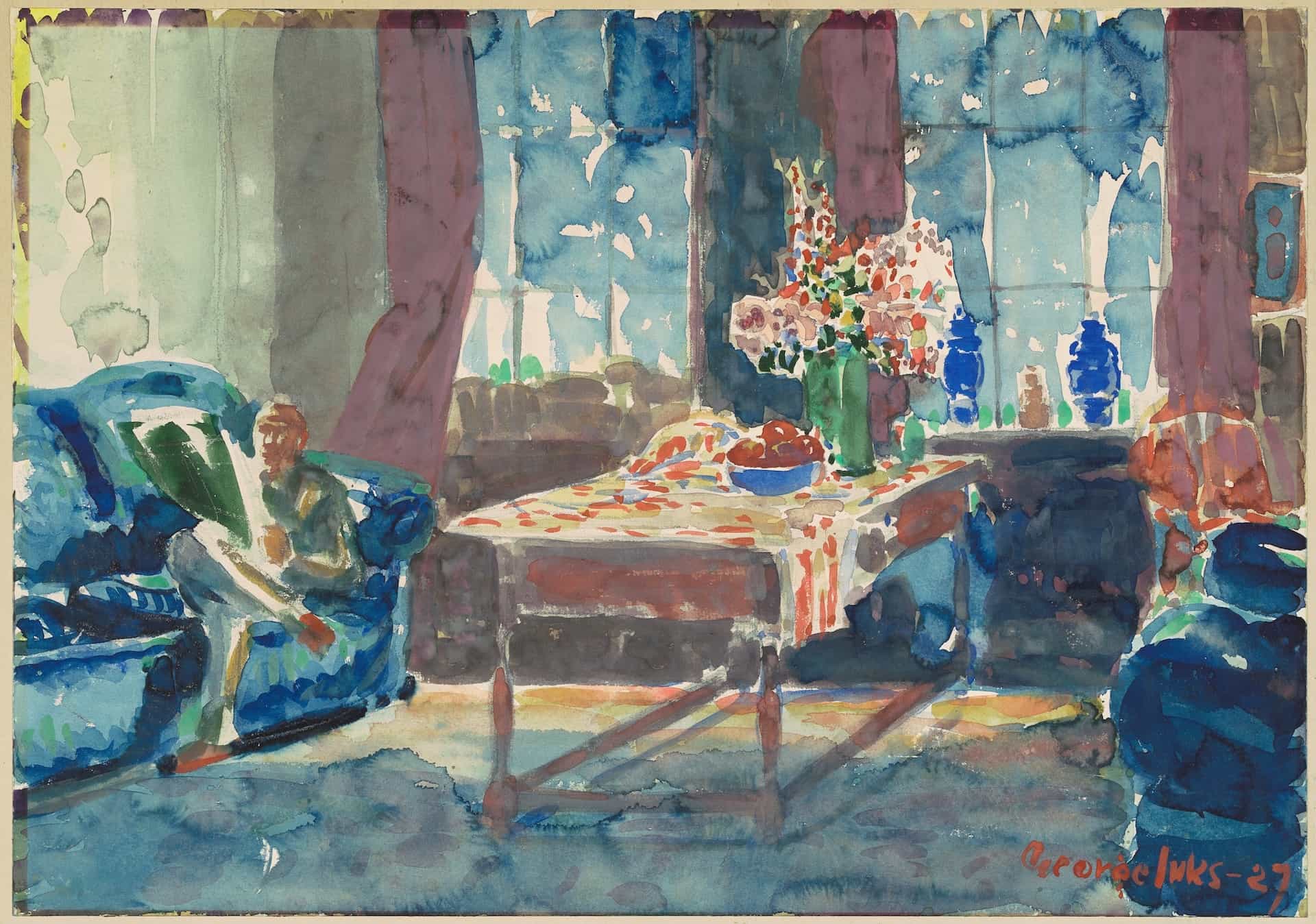
How to Choose the Right Size Artwork for a Room
Choosing the right size artwork can change the whole feeling of a room. A piece that is too small can look lost, even if the artwork itself is beautiful. A piece that is too large can crowd the wall, dominate the furniture or make the room feel unsettled. The right size sits somewhere between the two. It gives the artwork presence without making the room feel awkward.
This is one of the most common problems people have when buying art. They know what they like, but they are not sure whether it will work above a sofa, bed, console table, fireplace, desk or empty wall. The measurements can feel confusing. Should the artwork match the sofa? Should it fill the wall? Should a framed print be measured by the paper size or the frame size? How high should it hang? Is one large artwork better than a group of smaller pieces?
The good news is that choosing the right size artwork is not guesswork. There are simple rules that help, especially when you understand why they work. You do not need to follow them rigidly, but they give you a calm starting point.
This guide explains how to choose artwork size by room, wall, furniture, frame and viewing distance. It also covers gallery walls, small rooms, large rooms, framed prints, original artwork and the most common mistakes people make when choosing art for the home.
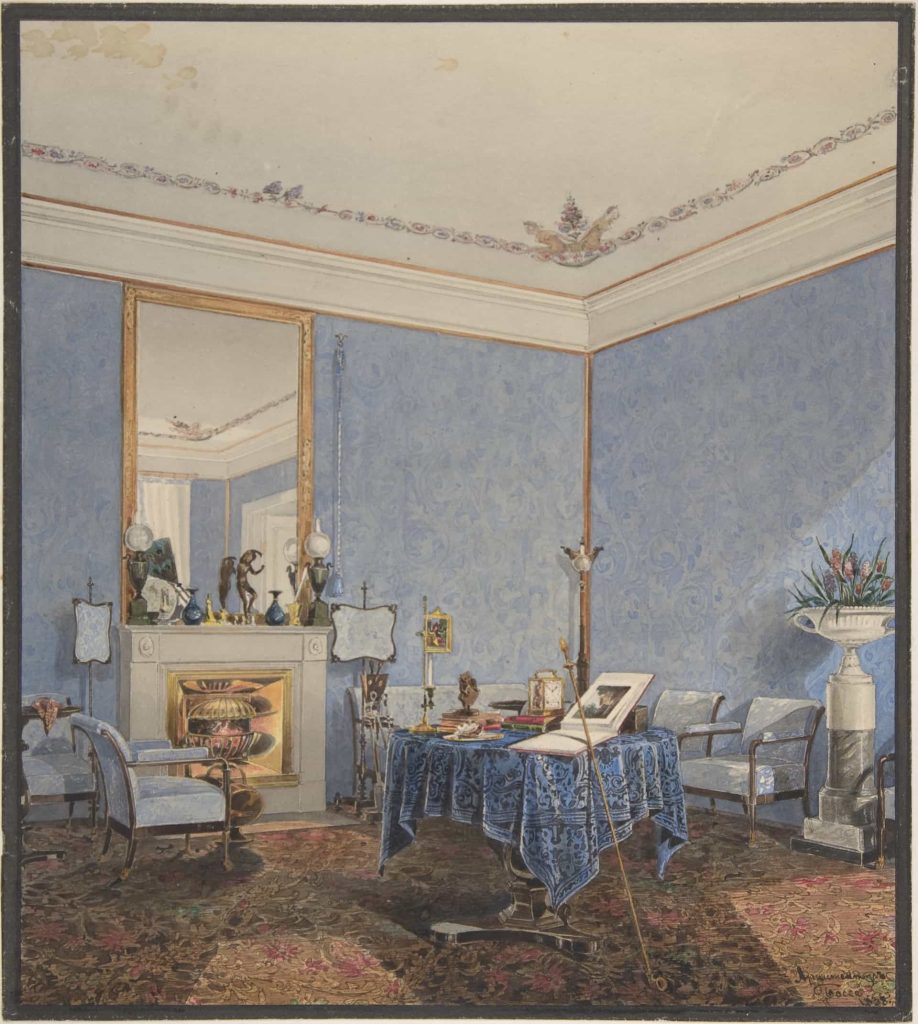
Quick answer: what size artwork should you choose?
As a general guide, artwork above furniture should usually be around two-thirds to three-quarters of the width of the furniture below it.
If your sofa is 180 cm wide, look for artwork or a grouped arrangement around 120 to 135 cm wide.
If your bed is 150 cm wide, look for artwork around 100 to 115 cm wide.
If your console table is 120 cm wide, look for artwork around 80 to 90 cm wide.
For a blank wall with no furniture below it, the artwork should usually take up around half to two-thirds of the usable wall width, depending on the room, ceiling height and viewing distance.
Hang most artworks so the centre sits roughly at eye level. In many homes and galleries, that means the centre of the artwork is around 145 to 150 cm from the floor. When hanging above furniture, leave around 15 to 25 cm between the top of the furniture and the bottom of the frame.
These are not laws. They are starting points. The right size artwork also depends on the shape of the room, the amount of blank wall, the frame, the colours, the visual weight of the piece and how close people will stand to it.
Why artwork size matters
Artwork has visual weight. A small black and white drawing can feel stronger than a pale print twice its size. A large abstract painting can soften a room if the colours are calm. A small framed print can look important if it has a generous mount and enough space around it.
Size is not only about centimetres. It is about proportion.
When artwork is properly sized, it feels connected to the room. It does not float awkwardly. It does not look like an afterthought. It gives the wall a clear focal point and helps the room feel more settled.
When artwork is too small, the surrounding wall can swallow it. This often happens above sofas, beds and fireplaces. People choose a piece they love, then hang it on a large wall where it suddenly looks timid.
When artwork is too large, it can feel cramped. The eye has nowhere to rest. The piece may sit too close to ceiling, corners, doors, shelves or furniture.
The right size artwork gives the work enough space to breathe while still giving it proper presence.
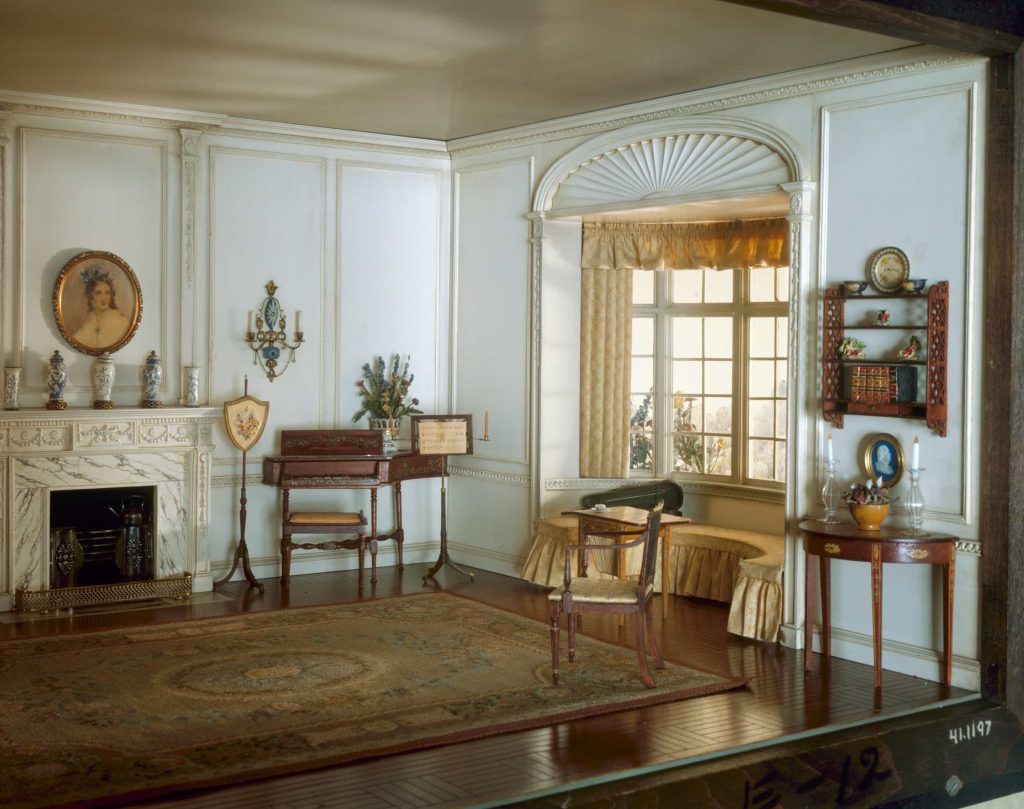
Start with the wall, not the artwork
Before buying artwork, measure the wall where it might go. This sounds obvious, but many people skip it. They choose the art first, then hope it fits.
Measure:
- The full width of the wall
- The usable wall width
- The height from furniture to ceiling
- The width of the furniture below
- The distance from nearby doors, lamps, shelves or windows
- The viewing distance from the main seat or walkway
Usable wall space is more important than full wall space. A wall may be 300 cm wide, but if a lamp, doorway or cabinet interrupts it, the real art space may only be 180 cm.
Write the measurements down. If you are visiting a gallery, framer or artist studio, take the measurements with you. It makes the conversation much easier.
If the wall is empty and you are unsure where the art should sit, mark the possible area with masking tape. This helps you see the scale before spending money.
The two-thirds rule for artwork
The two-thirds rule is one of the most useful guidelines for choosing the right size artwork.
It means the artwork should be roughly two-thirds the width of the furniture below it. This works especially well above sofas, beds, sideboards, console tables, desks and dining benches.
The formula is simple:
Furniture width x 0.66 = approximate artwork width
Examples:
150 cm sofa x 0.66 = 99 cm artwork width
180 cm sofa x 0.66 = 119 cm artwork width
210 cm sofa x 0.66 = 139 cm artwork width
240 cm sofa x 0.66 = 158 cm artwork width
This does not mean the artwork must be exactly two-thirds. A range is better. Artwork between two-thirds and three-quarters of the furniture width usually feels balanced.
For example, above a 180 cm sofa, a piece around 120 to 135 cm wide usually works well. That could be one large painting, one framed print, a diptych, triptych or a group of smaller framed works.
The reason this rule works is simple. The artwork feels visually connected to the furniture without stretching from edge to edge. It looks intentional.
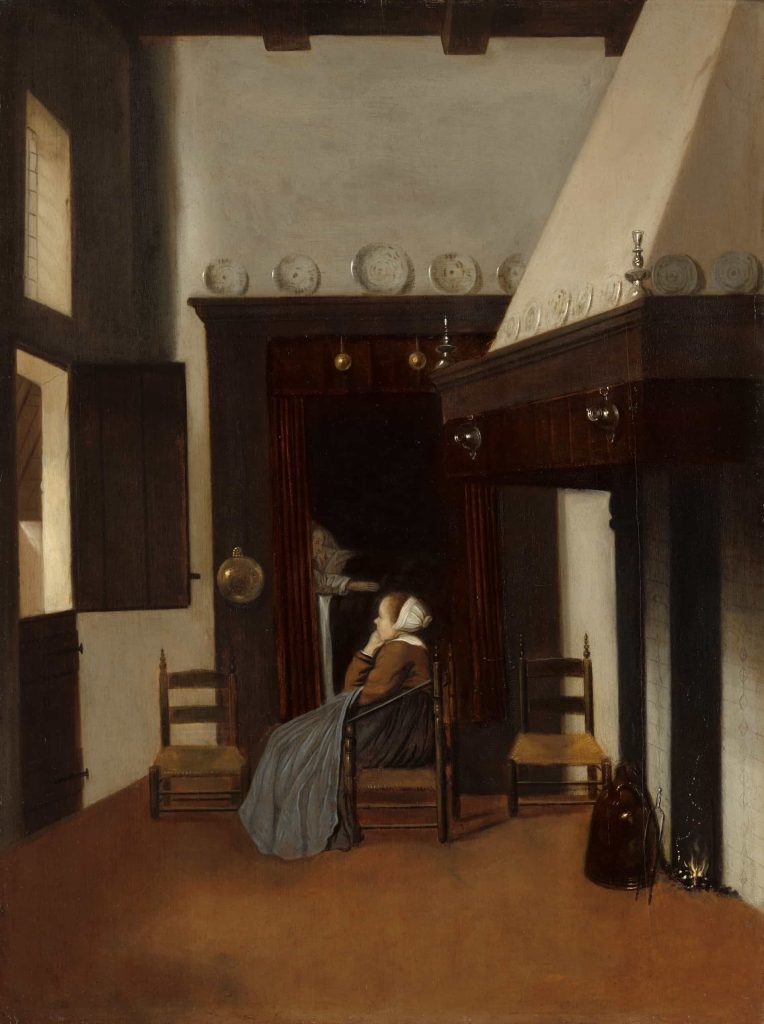
When to ignore the two-thirds rule
The two-thirds rule is useful, but it is not always right.
- You may ignore it when:
- The artwork is extremely visually strong.
- The furniture is unusually wide.
- The wall space is narrow.
- The ceiling is very low.
- You are using a gallery wall.
- You want a deliberately small, quiet piece.
- You are hanging art above a tall object such as a bookcase.
- The room has a strong architectural feature.
A small artwork can work beautifully if it is given enough breathing space. A small drawing on a large wall can feel calm and deliberate if it is centred carefully, framed well and not expected to act like a statement piece.
A very large artwork can also work if the room can hold it. Large pieces often suit rooms with high ceilings, open walls and enough viewing distance.
The rule is a guide, not a judge. Use it to avoid common mistakes, then adjust for the artwork itself.
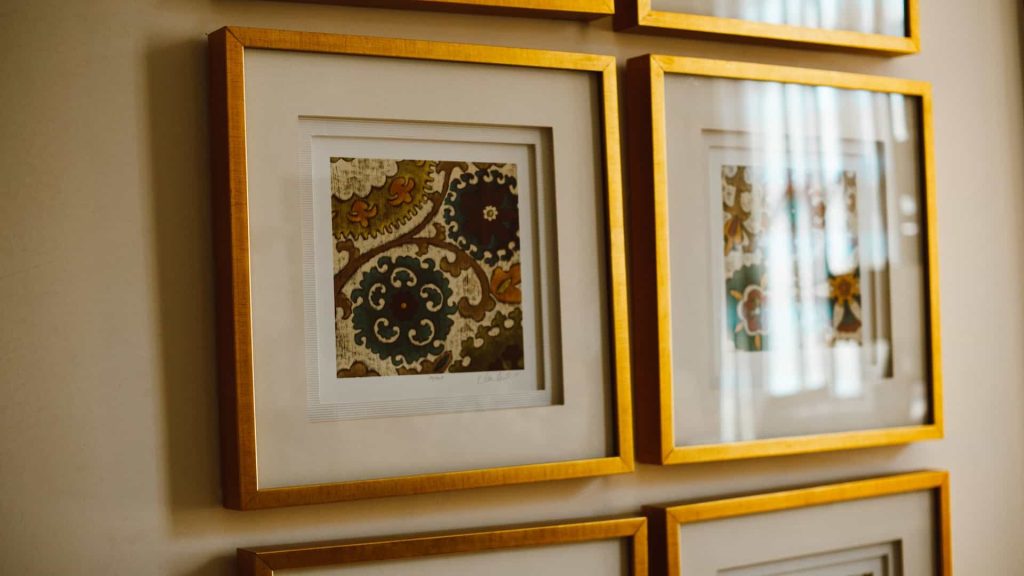
How high should artwork hang?
Height matters as much as width. Even the right size artwork can look wrong if it is hung too high.
For most artworks, aim to place the centre of the piece around eye level. A common gallery-style height is roughly 145 to 150 cm from the floor to the centre of the artwork.
This works well for standalone pieces on a blank wall. It also works in hallways, living rooms and dining rooms where people view the work while standing.
Above furniture, the artwork usually needs to relate to the object below. Leave around 15 to 25 cm between the top of the furniture and the bottom of the frame. This keeps the artwork connected to the furniture rather than floating too high.
Common hanging gaps:
- Above a sofa: 15 to 25 cm
- Above a bed headboard: 15 to 25 cm
- Above a console table: 15 to 30 cm, depending on lamps or objects
- Above a fireplace mantel: 10 to 20 cm, depending on the mantel height
- In a hallway: centre around eye level
In a dining room: slightly lower can work because people are often seated
The most common mistake is hanging artwork too high. If in doubt, lower it slightly.
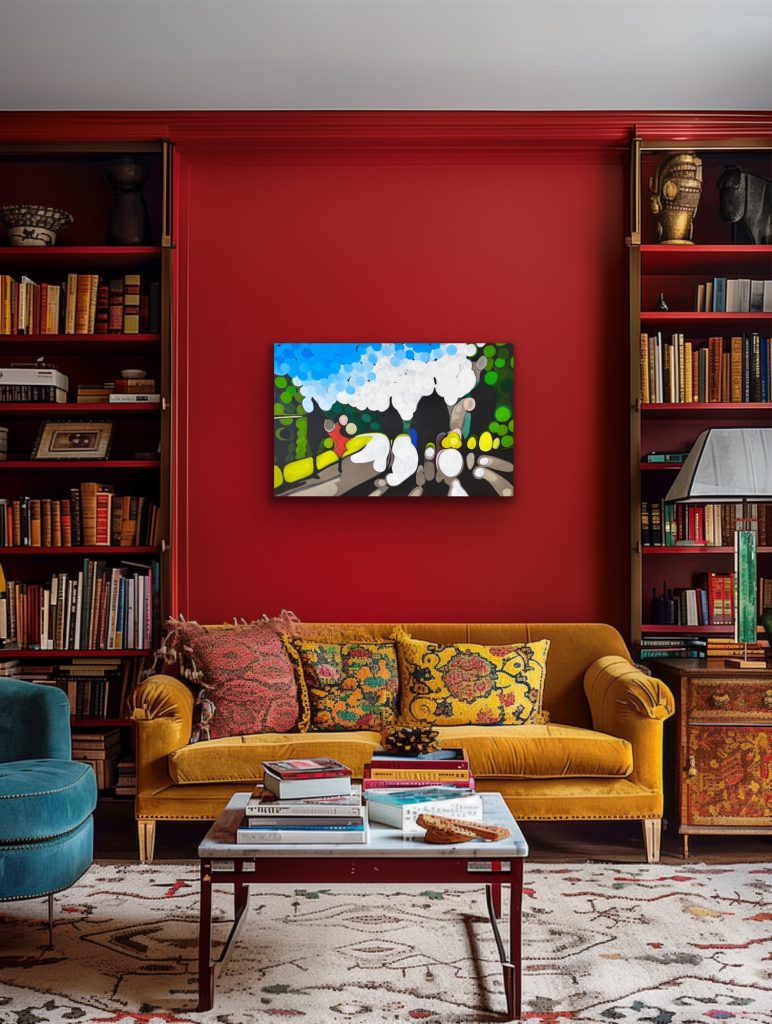
Choosing artwork for above a sofa
The wall above a sofa is one of the most common places for artwork, and one of the easiest to get wrong.
Start with the width of the sofa. The artwork or arrangement should usually be around two-thirds to three-quarters of the sofa width.
- For a 180 cm sofa, look for artwork around 120 to 135 cm wide.
- For a 210 cm sofa, look for artwork around 140 to 155 cm wide.
- For a 240 cm sofa, look for artwork around 160 to 180 cm wide.
The artwork does not need to be one single piece. A group of two or three framed works can create the same overall width. The important thing is to measure the whole arrangement, including gaps between frames.
Landscape-shaped pieces often work well above sofas because they echo the horizontal shape of the furniture. Large square artworks can also work if the wall has enough height. Portrait-shaped pieces are usually better in pairs or groups above a sofa, unless the ceiling is high.
Leave around 15 to 25 cm between the top of the sofa and the bottom of the frame. If the sofa has a very low back, you can hang slightly lower. If people sit back heavily or the sofa is deep, make sure the artwork is not likely to be touched by heads.
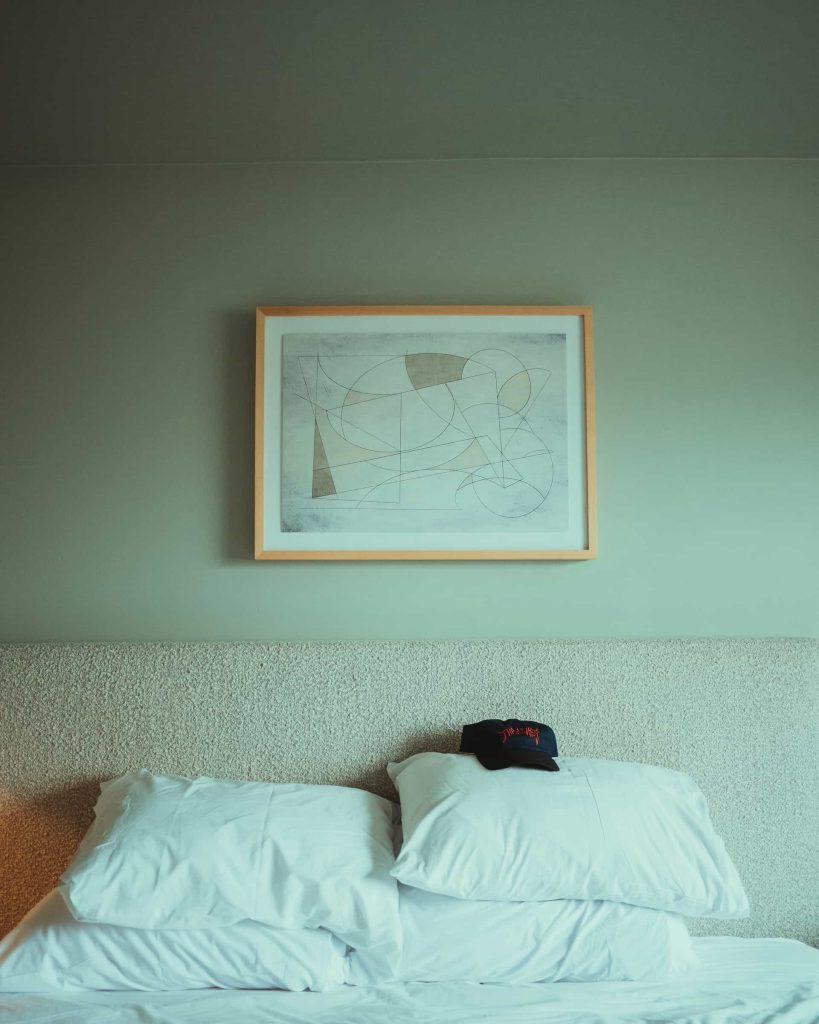
Choosing artwork for above a bed
Artwork above a bed should feel calm, anchored and properly scaled. It should not look as if it is about to fall into the room.
Measure the width of the bed or headboard. The artwork should usually be around two-thirds to three-quarters of that width.
- For a double bed around 135 cm wide, aim for artwork around 90 to 100 cm wide.
- For a king-size bed around 150 cm wide, aim for artwork around 100 to 115 cm wide.
- For a super king around 180 cm wide, aim for artwork around 120 to 135 cm wide.
If the bed has bedside tables, do not measure the whole furniture span unless the artwork is intended to sit above the full arrangement. Most of the time, measure the bed or headboard itself.
For bedrooms, softer spacing often looks better. The artwork should sit close enough to feel connected to the bed, but not so low that it feels unsafe. Around 15 to 25 cm above the headboard is a good starting point.
One wide piece can look calm and confident. Two or three smaller pieces can feel more personal. A gallery wall above a bed can work, but keep it controlled. Bedrooms usually benefit from fewer pieces and quieter spacing.
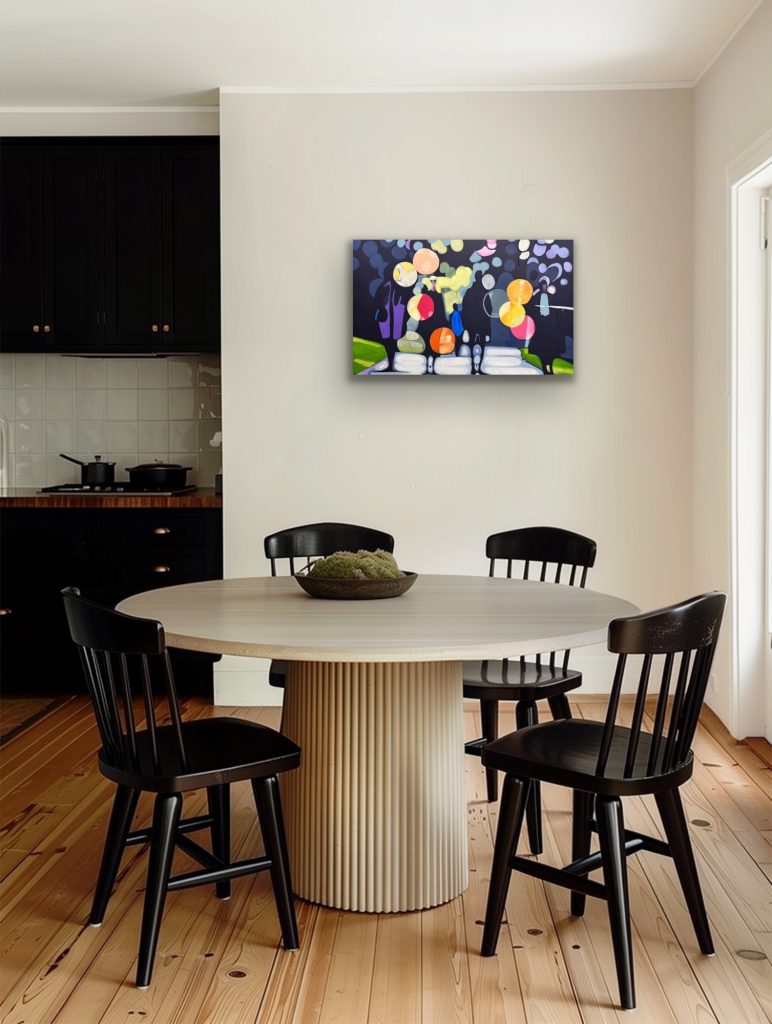
Choosing artwork for a dining room
Dining rooms are often viewed while seated, so artwork can sometimes hang a little lower than in a hallway or gallery-style space.
The right size depends on the wall and the furniture. If the artwork is above a sideboard, use the two-thirds rule. If it is on a blank dining room wall, think about the table, chairs and viewing distance.
Large artworks can work well in dining rooms because people spend time sitting near them. A painting with depth, texture or detail can reward longer looking.
For a sideboard:
- Artwork should be around two-thirds to three-quarters of the sideboard width.
- Leave room for lamps, flowers or objects.
- If there are tall items on the sideboard, hang the artwork above the tallest item, not too close to it.
For a blank dining wall:
- Use one large piece if the room feels formal or minimal.
- Use a pair or series if you want rhythm.
- Use works on paper or prints if the room is smaller and more intimate.
- Avoid hanging delicate works where food, heat, steam or direct sunlight could damage them.
Choosing artwork for a hallway
Hallways are often narrow, so artwork size should be based on walking distance and wall rhythm.
In a narrow hallway, people view the art from close range. This means very large pieces may feel cramped unless the wall is long and the ceiling is high. Smaller works, framed prints, drawings and series can work beautifully.
For hallways:
- Hang works at consistent centre height.
- Use a repeated frame size for calmness.
- Leave enough space near door frames and corners.
- Avoid pieces that protrude too far into the walkway.
- Consider a series of works rather than one oversized piece.
A hallway is a good place for works that reward close looking: drawings, prints, small paintings, photographs or textiles.
If the hallway has one long uninterrupted wall, a gallery wall can work well. Keep the spacing consistent. A gap of around 5 to 8 cm between frames often feels tidy without being cramped.
Choosing artwork for a stairway
Stairway artwork needs to follow movement. A single large piece can work on a landing, but along the stairs a series or gallery wall is often better.
The key is to follow the rise of the stairs without making the arrangement look chaotic. Use a consistent centre line that rises with the stairs, or create a structured gallery wall that follows the angle.
Tips for stairway art:
- Use lightweight frames where possible.
- Keep spacing consistent.
- Avoid very fragile works in high-traffic areas.
- Do not hang pieces where they may be knocked.
- Use paper templates before making holes.
For a stair landing, treat the wall like a small room. A medium or large artwork can become a strong pause point.
Choosing artwork for a fireplace or mantel
Artwork above a fireplace needs careful sizing because the fireplace is already a strong feature.
If the mantel is wide, the artwork should usually be around two-thirds to three-quarters of the mantel width. If the fireplace is narrow but the chimney breast is wide, measure the chimney breast and mantel together to decide what feels balanced.
Leave a smaller gap than you might above a sofa. Around 10 to 20 cm above the mantel can work, depending on the frame and objects on the mantel.
A vertical piece can work well above a fireplace if the chimney breast is tall. A square piece can also look strong. A very wide horizontal piece may feel awkward unless the mantel is wide and the room has enough space.
Avoid hanging delicate artworks where heat, smoke or soot could affect them. If the fireplace is used, ask a framer or conservator for advice before placing valuable work above it.
Choosing artwork for a home office
A home office needs art that supports concentration without feeling dull. Size depends on the wall behind the desk, the wall opposite the desk and whether the artwork appears on video calls.
Behind a desk, artwork should usually be connected to the desk width. Around two-thirds of the desk width works well, but you can go smaller if the wall also includes shelves or lighting.
For a wall opposite the desk, choose artwork that can be seen from a seated position. One medium piece often works better than several tiny pieces scattered around the room.
For video call backgrounds, avoid pieces that are too small or too busy. A medium framed print, calm abstract work, landscape or simple gallery wall usually reads better on screen.
Also think about glare. Glass-fronted frames can reflect monitor light or windows. Non-reflective glazing or careful placement can help.
Choosing artwork for small rooms
Small rooms do not always need small art. This is a common mistake.
One large artwork can make a small room feel more considered because it reduces visual clutter. Several tiny pieces can sometimes make the space feel busier.
For a small room:
- Use one strong piece if the wall has enough space.
- Choose a calm frame.
- Keep the spacing generous.
- Avoid crowding the wall with too many small items.
- Use lighter works if the room already feels dense.
Works on paper, framed prints, small paintings and textiles can all work well. The frame and mount can help give smaller pieces more presence.
A small artwork can also look beautiful if placed deliberately: above a narrow console, beside a bed, on a reading corner wall or as part of a small pair.
Choosing artwork for large rooms
Large rooms need scale. A single small artwork on a large wall often looks accidental. If the room has high ceilings, open floor space or large furniture, the artwork needs enough presence to hold its own.
Options for large rooms:
- One oversized artwork
- A diptych or triptych
- A large framed print
- A large abstract painting
- A grid of smaller works
- A salon-style gallery wall
- A pair of vertical works
- A long horizontal work above a sofa or sideboard
Large rooms also allow more distance for viewing. This means bolder compositions, larger marks and stronger colour can work well.
If you cannot afford one large original piece, consider a group of smaller works. The overall arrangement can still have the right scale. The important thing is to measure the full group as one artwork.
Single artwork or gallery wall?
A single large artwork and a gallery wall create different moods.
A single artwork feels calmer, clearer and more confident. It works well when the artwork has enough presence and the room needs a focal point.
A gallery wall feels personal, layered and collected. It works well when you have several smaller pieces, family works, prints, drawings or mixed media pieces you want to bring together.
Choose one large artwork if:
- You want a clean focal point.
- The room already has many objects.
- The artwork is strong enough alone.
- You want a calmer look.
- Choose a gallery wall if:
- You have several meaningful pieces.
- You want a collected feel.
- The wall is large but the individual artworks are small.
- You enjoy changing the arrangement over time.
A gallery wall should still have an overall size. Treat the full arrangement as one large piece. Above a sofa, the complete gallery wall should still sit around two-thirds to three-quarters of the sofa width.
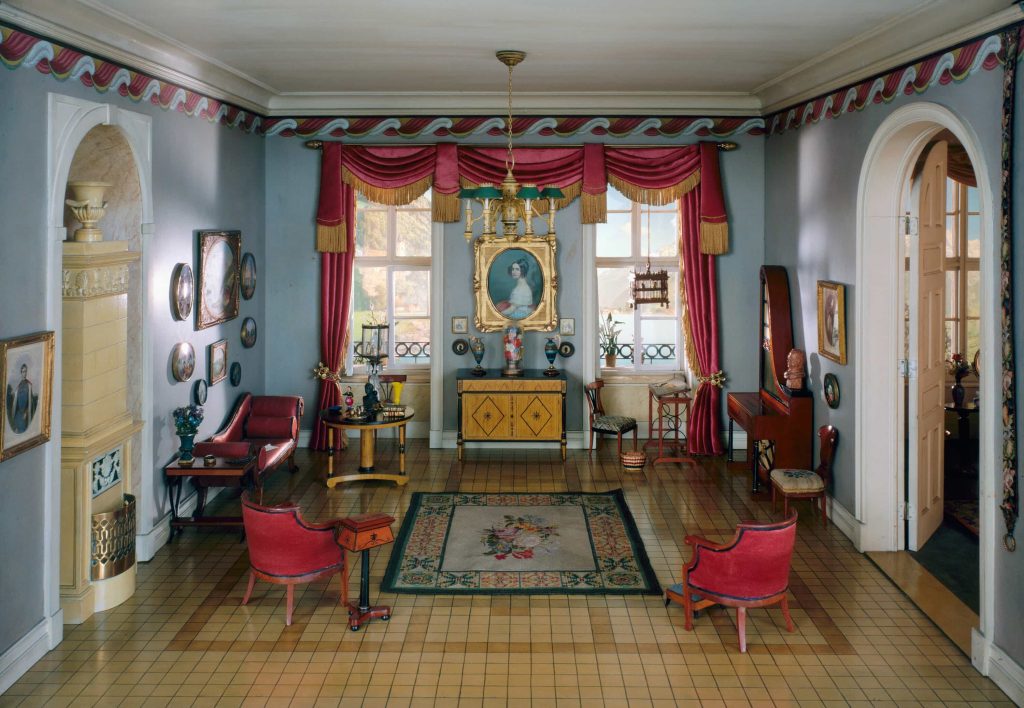
How to size a gallery wall
A gallery wall needs planning. The mistake is to hang one picture at a time and hope the group works.
Start by measuring the total area you want the gallery wall to occupy. If it is above furniture, use the two-thirds rule for the full arrangement. If it is on a blank wall, decide how much wall space the arrangement should fill.
Then choose a layout:
Grid layout
- Best for matching frames or works of similar size. It feels tidy and modern.
Central anchor layout
- One larger piece sits near the centre, with smaller works around it.
Linear layout
- A row of works sits along one line. Good for hallways or above sideboards.
Salon layout
- A looser arrangement with mixed sizes. Good for collected homes, but harder to balance.
Keep gaps consistent. Around 5 to 8 cm between frames usually works well for most homes. Larger gaps can feel more formal. Smaller gaps can feel denser and more connected.
Lay the arrangement on the floor first, or cut paper templates and tape them to the wall. This saves mistakes.
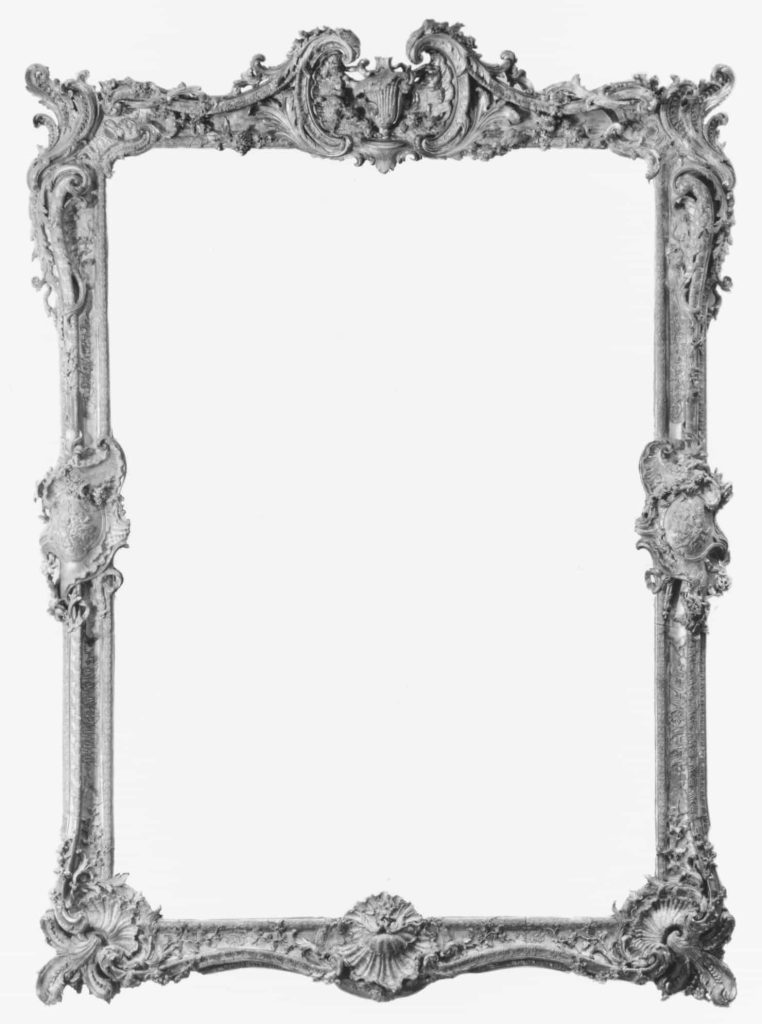
Framed size vs artwork size
When choosing the right size artwork, always check whether the measurement refers to the artwork itself or the framed size.
This matters because framing can add a lot.
- A 40 x 50 cm print might become 60 x 70 cm once mounted and framed.
- A small drawing can become a medium-sized wall piece with a generous mount.
- A canvas may have no frame, a slim tray frame or a wider traditional frame.
- When measuring for a wall, use the final outer frame size. That is what the room will see.
If buying unframed artwork, ask the gallery or framer what the finished size might be. This is especially important for works on paper, because a mount can change the scale dramatically.
A small work with a generous mount can look elegant and calm. A small work in a tight frame can feel cramped. The frame is part of the final size decision.
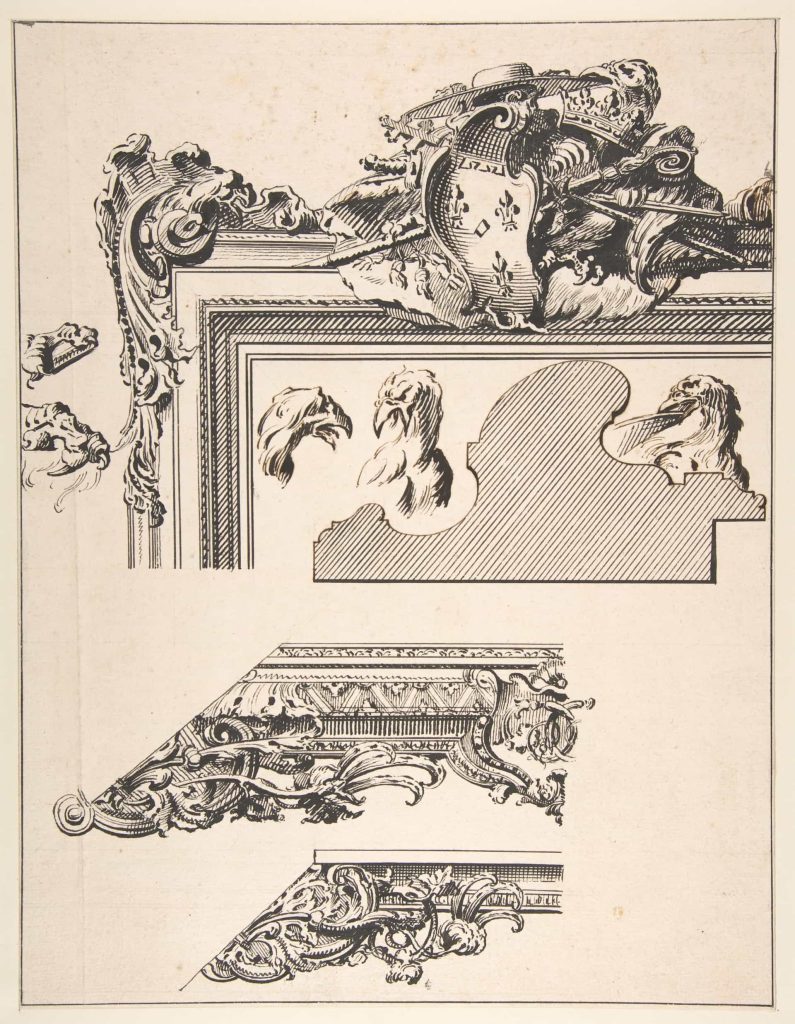
How mount size changes the artwork
A mount can help a work breathe. It creates space between the image and the frame, protects works on paper and gives the eye a pause before entering the image.
For small works, a wider mount often gives more presence. This is useful when you love a smaller drawing or print but want it to sit confidently on a wall.
For larger works, a narrower mount may be enough. Too much mount around a large image can look heavy unless the room and frame can carry it.
Mount choices affect:
- Final framed size
- Visual weight
- Formality
- Protection
- Colour balance
- How important the work feels on the wall
Do not choose mount size only by habit. A framer can help you test options. Sometimes a slightly larger mount makes a modest work look far better.
Portrait, landscape or square artwork?
Shape matters as much as size.
Landscape-shaped artwork is wider than it is tall. It works well above sofas, beds, sideboards and long walls.
Portrait-shaped artwork is taller than it is wide. It works well on narrow walls, chimney breasts, between windows, beside doors and in pairs.
Square artwork is balanced and flexible. It can work above furniture, in grids, on blank walls and in modern interiors.
Very narrow horizontal artwork can work above a bed, console or long dining bench. Very tall vertical artwork works well in rooms with high ceilings or narrow wall spaces.
Choose the shape based on the wall, not only the subject. A beautiful vertical piece may not work above a wide sofa unless paired with another piece. A wide landscape may look awkward on a narrow wall between two doors.
How colour affects perceived size
Colour changes how large artwork feels.
A dark, high-contrast artwork can feel larger and heavier than its physical dimensions.
A pale, low-contrast artwork can feel quieter and smaller.
A bright artwork with strong red, yellow or blue can dominate a wall more than a muted piece of the same size.
A detailed artwork may feel visually busier than a simple abstract piece.
This means the right size artwork is not only a measurement. A 100 cm wide black and white print may feel calm, while a 100 cm wide painting with strong orange and blue may feel bold.
Before choosing a size, consider visual weight. If the artwork is visually strong, you may not need to go as large. If it is pale and subtle, it may need more size or a stronger frame to hold the wall.

How frame style affects size
Frames add visual weight. A thin oak frame, a black frame, a gilded frame and a deep tray frame all change how the artwork feels.
A wide dark frame can make artwork feel larger.
A pale natural frame can soften the edge.
A floating frame can make a canvas feel more finished.
A slim frame can keep the focus on the image.
A mount and frame can turn a small print into a more substantial piece.
When planning size, include the frame in your thinking. A 90 cm image in a 110 cm frame will not feel the same as an unframed 90 cm canvas.
If you want the artwork to feel quiet, choose a frame that supports without shouting. If the room needs structure, a stronger frame may help.
Choosing artwork by room mood
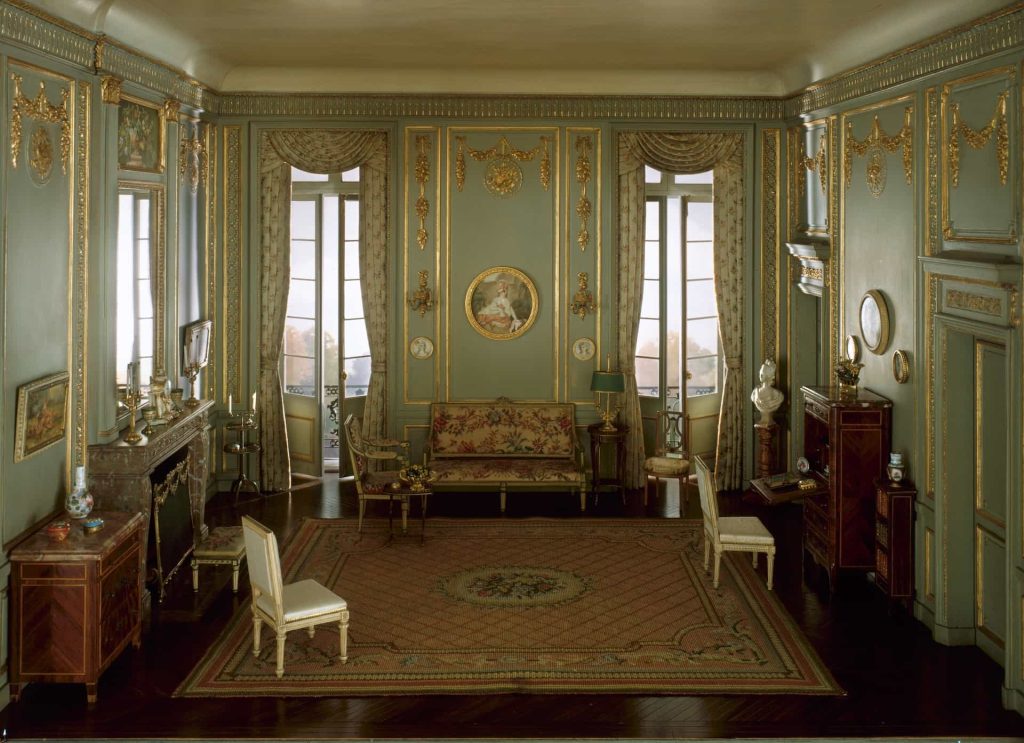
Size should also match the feeling of the room.
A living room can usually take stronger scale because it is a shared space. A bedroom often benefits from calmer proportions. A hallway can take repeated smaller works. A dining room can handle richer colour and detail. A home office may need something clear and steady.
Ask what the room needs:
- Does it need a focal point?
- Does it need calm?
- Does it need warmth?
- Does it need height?
- Does it need colour?
- Does it need visual rhythm?
- Does it already have too many objects?
- Does it feel empty?
The right size artwork is not just about filling space. It is about giving the room what it is missing.
How to test artwork size before buying
The simplest way to test size is with paper.
Cut paper or newspaper to the size of the artwork or frame. Tape it to the wall with low-tack tape. Step back and look from different positions.
Check:
- How it looks from the doorway
- How it looks while seated
- How it relates to the furniture
- How much blank wall remains
- Whether it feels too high or too low
- Whether the shape suits the space
Leave the paper up for a day if possible. You may notice that the piece feels too small in the morning light or too wide when you sit down in the evening.
You can also use masking tape to mark the outline directly on the wall. This is useful for large pieces.
If buying online, this step is essential. Online images often make artwork look larger than it is.
Standard artwork sizes and where they work
The best size depends on the room, but these general ranges can help.
- Small artwork: up to 40 cm wide
Best for shelves, small walls, bedside spaces, narrow hallways, small studies and grouped arrangements.
- Medium artwork: 40 to 80 cm wide
Good for bedrooms, hallways, home offices, smaller living rooms, above small furniture and as part of a pair.
- Large artwork: 80 to 140 cm wide
Good above sofas, beds, sideboards, dining room walls and medium to large living rooms.
- Oversized artwork: 140 cm wide and above
Best for large walls, open-plan spaces, high ceilings, statement rooms and spaces with enough viewing distance.
For framed works, always check the outer frame size. A medium print can become a large framed piece once mounted.
Room-by-room size guide
Living room
Above a sofa, choose artwork around two-thirds to three-quarters of the sofa width. For a blank living room wall, choose one large piece or a grouped arrangement that fills enough space to feel intentional.
Bedroom
Above a bed, choose artwork around two-thirds to three-quarters of the bed or headboard width. Keep the mood calm unless the room can handle stronger colour.
Dining room
Use larger work if the wall is open. Above a sideboard, follow the two-thirds rule. Hang slightly lower if the work is mainly viewed while seated.
Hallway
Use smaller or medium works in series. Keep centre height consistent. Avoid deep frames that project into the walkway.
Home office
Choose medium-sized work behind or opposite the desk. Avoid glare if using glass. For video backgrounds, keep the arrangement simple.
Kitchen
Use smaller framed prints, ceramics, shelves or works that can handle a busier setting. Avoid delicate works near heat, steam or grease.
Bathroom
Avoid valuable works on paper or delicate originals unless the room is well ventilated and the framing is suitable. Humidity can damage artwork.
Stairway
Use a rising series or gallery wall. Plan with paper templates before hanging.
Fireplace
Choose artwork around two-thirds to three-quarters of the mantel width. Check heat and soot before hanging valuable work.

What if the artwork you love is too small?
If you love a small artwork, do not dismiss it. There are ways to give it more presence.
Use a wider mount.
Choose a slightly larger frame.
Hang it with another related work.
Place it on a smaller wall.
Use it above a bedside table or reading chair.
Include it in a gallery wall.
Hang it with generous space around it.
Small artwork can feel powerful when placed carefully. It does not need to compete with a large wall. Give it a setting where it can be noticed.
A small original drawing, print or study can be far more interesting than a large generic piece. The key is not to ask it to do the job of a large statement artwork.

What if the artwork you love is too large?
Large artwork can be wonderful, but it needs space.
Before buying, check:
- Will it fit through doors and stairways?
- Can the wall physically hold it?
- Is there enough viewing distance?
- Will it sit too close to ceiling or corners?
- Will it dominate the furniture?
- Is the frame too heavy?
- Can it be safely installed?
Large works often need professional hanging. This is especially true for heavy framed pieces, glazed works, large canvases and anything going above furniture.
If the work is slightly larger than the usual rule, it may still look excellent. Slightly too large often looks better than slightly too small, especially above a sofa or bed. But if the artwork touches the edges of the space, crowds the ceiling or overwhelms the room, choose another wall.
Common mistakes when choosing artwork size
The most common mistake is choosing artwork that is too small. This happens above sofas, beds and fireplaces more than anywhere else.
Other common mistakes include:
- Hanging artwork too high.
- Measuring the image but forgetting the frame.
- Ignoring the furniture below.
- Using too many tiny pieces on a large wall.
- Leaving too much space between a sofa and artwork.
- Choosing a frame that makes the piece feel heavier than intended.
- Not checking glare from windows or lights.
- Buying before measuring the wall.
- Trying to fill every blank space.
- Choosing art only to match the room.
A good artwork does not need to match everything. It needs to belong. Size, placement and framing help it belong.
Should artwork match the furniture?
Artwork does not need to match furniture, but it should relate to it.
The relationship can come through size, colour, mood, shape or contrast. A bold artwork can lift a neutral room. A quiet drawing can soften a strong interior. A coastal painting can work in a modern room if the frame and scale are right.
Avoid choosing artwork only because it matches cushions, curtains or paint. That can make the piece feel temporary. Instead, choose art you genuinely want to look at, then use size and framing to make it sit well in the room.
The room can change around good artwork. A piece bought with care may outlast several sofas.
Choosing artwork for renters
Renters often need flexible options. You may not want to make many holes in the wall, or you may move home later.
Good options include:
- Medium framed prints
- Leaned artwork on shelves or mantels
- Picture ledges
- Lightweight frames
- Groups of small works
- Command-style hanging strips for suitable lightweight pieces
- Unframed works stored safely until ready to frame
If you rent, avoid buying only for one specific wall. Choose artwork that could work in more than one future space. Medium-sized pieces are often easiest to move and rehang.
Choosing artwork for collectors
If you are collecting original art, size should be considered alongside condition, medium, framing and display.
Before buying, ask:
- What is the artwork’s exact size?
- What is the framed size?
- Is it ready to hang?
- Does it need special framing?
- Is it sensitive to light?
- Can it be safely shipped?
- Will the size work in more than one room?
- Does the scale suit the artist’s work?
Some artists work best at a small, intimate scale. Others need larger surfaces. Do not assume bigger is always better. A small work with intensity can be more rewarding than a large piece that feels empty.
If you are building a collection, aim for variety. A home with only large statement pieces can feel heavy. A home with only tiny works can feel scattered. A good collection often includes a mix of sizes.
Choosing artwork for framed prints
Framed prints are one of the easiest ways to add art to a room, but the final size can be misleading.
Check:
- Print image size
- Paper size
- Mount size
- Frame size
- Orientation
- Glass type
- Frame depth
A print listed as A3 may become much larger once mounted and framed. This can be useful, especially if you want more presence. But it can also cause problems if you measured only the print size.
If buying prints for a series, keep the outer frame size consistent unless you are deliberately building a mixed gallery wall. Consistency helps the group feel calm.
Limited edition prints often deserve proper framing. Use materials that protect the paper and avoid placing them in direct sunlight.
Choosing artwork for original paintings
Original paintings may be framed or unframed. A canvas may already have painted edges, or it may need a tray frame. A board painting may need a frame for protection and presentation.
When choosing the size, think about the whole object. A painting has depth, texture and surface. It may feel stronger than a flat print of the same dimensions.
For original paintings:
- Check whether the frame is included.
- Ask whether it is ready to hang.
- Look at the edges of the canvas.
- Check weight.
- Think about lighting.
- Consider whether the piece needs space around it.
A painting with strong texture or colour may need more breathing room than a quiet print. Avoid crowding it with shelves, lamps or other pictures.
Choosing artwork for works on paper
Works on paper include drawings, watercolours, prints, collages, pastels and photographs. They often need framing for protection.
Because they are usually glazed, think about reflections. Do not hang them opposite bright windows if glare will make them hard to see. Avoid direct sunlight, which can fade paper and pigments.
Works on paper can be excellent for smaller rooms, bedrooms, hallways and gallery walls. They also suit generous mounts, which can make modestly sized works feel more important.
When measuring, use the final framed size. A drawing that looks small on paper may become a strong wall piece once properly framed.
How to choose artwork size without losing the feeling
Rules help, but they should not take the life out of choosing art.
After measuring, ask one final question: does the size suit the feeling of the artwork?
A quiet drawing may need space around it.
A bold abstract painting may want a large wall.
A small print may work best in a close, intimate corner.
A coastal landscape may need width.
A portrait may need height and stillness.
A group of works may need rhythm.
The right size artwork is not only the one that fits. It is the one that lets the artwork speak clearly.
Simple checklist before buying
Before buying artwork for a room, check:
- Have I measured the wall?
- Have I measured the furniture below?
- Do I know the framed size?
- Does the artwork fill enough space?
- Is there enough breathing room around it?
- Will it hang at the right height?
- Will light or glare be a problem?
- Does the frame suit the room and artwork?
- Can it be safely installed?
- Will I still like it if the room changes?
If the answer is yes to most of these, you are probably choosing well.
FAQs about choosing the right size artwork
What is the rule for choosing the right size artwork?
A useful rule is to choose artwork around two-thirds to three-quarters of the width of the furniture below it. This works well above sofas, beds, sideboards and console tables.
How big should artwork be above a sofa?
Artwork above a sofa should usually be around two-thirds to three-quarters of the sofa width. For a 180 cm sofa, choose artwork or a group of artworks around 120 to 135 cm wide.
How high should artwork be above a sofa?
Leave around 15 to 25 cm between the top of the sofa and the bottom of the frame. The artwork should feel connected to the sofa, not floating too high above it.
How big should artwork be above a bed?
Artwork above a bed should usually be around two-thirds to three-quarters of the bed or headboard width. For a 150 cm king-size bed, artwork around 100 to 115 cm wide usually works well.
Should I choose one large artwork or several small ones?
Choose one large artwork if you want a calm focal point. Choose several smaller works if you want a collected or personal feel. When grouping smaller works, measure the full arrangement as one piece.
Is it better for artwork to be too big or too small?
Slightly larger often looks better than too small, especially above sofas and beds. But artwork should still have breathing room and should not crowd the ceiling, corners or furniture.
How do I know the framed size of artwork?
Ask for the outer frame dimensions. The artwork size, paper size and framed size can all be different. For wall planning, the framed size is the most important measurement.
Can small artwork work on a large wall?
Yes, but it needs careful placement. A small artwork can work if it has a generous mount, strong frame, enough breathing space or sits as part of a group. Do not expect one tiny piece to fill a large wall by itself.
What size artwork works best in a hallway?
Small and medium artworks usually work well in hallways because they are viewed from close range. A series of framed prints, drawings or photographs can create rhythm without overwhelming the space.
How do I test artwork size before buying?
Cut paper to the size of the artwork or frame and tape it to the wall. Look at it from different positions and at different times of day. This is the easiest way to check scale before buying.
Choosing the right size artwork is partly measurement and partly judgement. The measurements stop the piece from feeling lost or crowded. The judgement comes from looking at the artwork itself: its colour, shape, frame, subject, weight and mood.
Start with the wall. Measure the furniture. Use the two-thirds rule as a guide. Think about framed size, not only image size. Test the shape with paper. Then step back and ask whether the artwork feels settled in the room.
Good art does not need to match the room perfectly. It needs enough space, the right scale and a place where people can properly see it.
When the size is right, the artwork feels less like decoration and more like it belongs.
Leave a Reply