
No products in the cart.

Capturing Britain – Spotlight on Contemporary British Landscape Artists
The British landscape has long been a rich source of inspiration for artists, offering a vast array of natural beauty, from the rugged coastlines of Cornwall to the rolling hills of the Cotswolds. Over the centuries, painters have sought to capture its shifting moods, dramatic light, and seasonal transformations. Today, contemporary British landscape artists are reinterpreting this tradition, infusing it with fresh perspectives and innovative techniques. Whether through oil paintings, digital mediums, or mixed media, these artists are expanding the possibilities of landscape art, often blending realism with abstraction or incorporating environmental themes.
Landscape art in Britain is undergoing a fascinating evolution, moving beyond conventional pastoral scenes to embrace urban landscapes, conceptual compositions, and climate-conscious narratives. This shift reflects the changing relationship between humans and nature, as artists explore themes of memory, identity, and place through their work. Some continue to depict the traditional countryside, while others turn their focus to contemporary cityscapes, capturing the ways in which nature interacts with modern architecture.
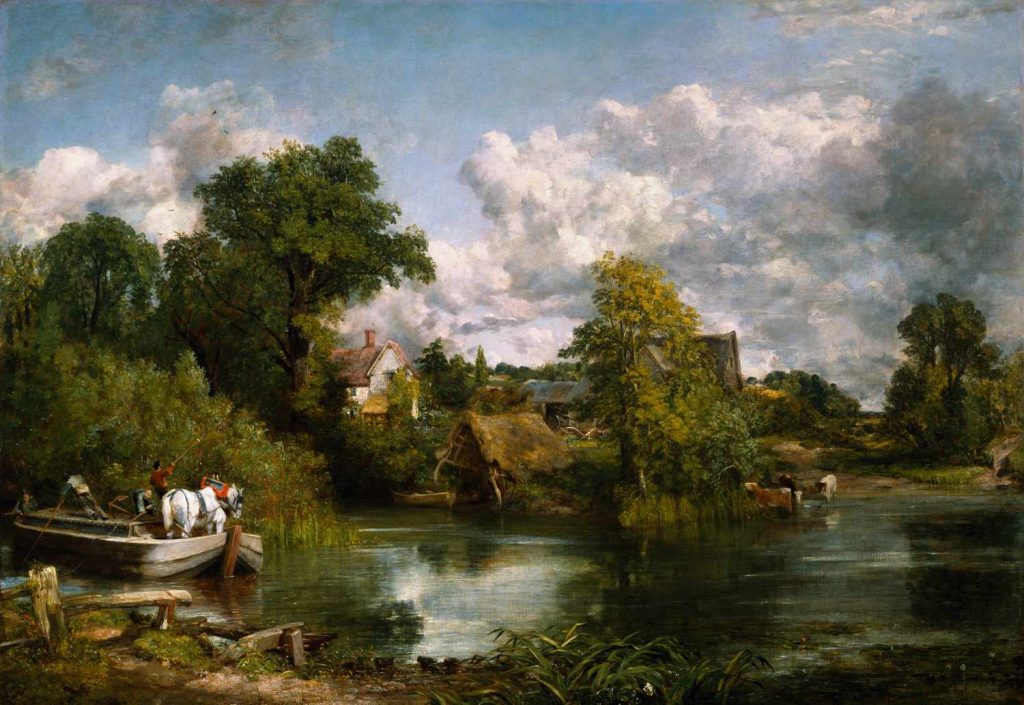
The Evolution of Landscape Painting in Britain
Historical Perspective
The tradition of landscape painting in Britain can be traced back to the 18th and 19th centuries, when artists such as J.M.W. Turner and John Constable helped define the genre. Turner, often referred to as the “painter of light,” was known for his dramatic skies, expressive brushwork, and ability to capture the fleeting effects of atmosphere and weather. His seascapes and countryside scenes, often infused with a sense of movement and energy, laid the groundwork for later developments in landscape painting. Many of his works are housed at Tate Britain, making it a key destination for anyone interested in British landscape art.
In contrast, Constable focused on the English countryside, portraying it with meticulous detail and an emphasis on natural beauty. His depictions of the Suffolk landscape, such as The Hay Wain, celebrated rural life and the harmony between humans and nature. These paintings can be explored at The National Gallery, where classic British landscape art is still prominently featured.
As the 20th century progressed, landscape painting in Britain began to shift away from purely representational approaches. Movements such as Impressionism, Modernism, and later Abstract Expressionism influenced artists to experiment with color, form, and technique, leading to new interpretations of the British landscape. The influence of artists such as Paul Nash and Ivon Hitchens helped bridge traditional landscape art with contemporary abstraction, paving the way for today’s landscape painters.
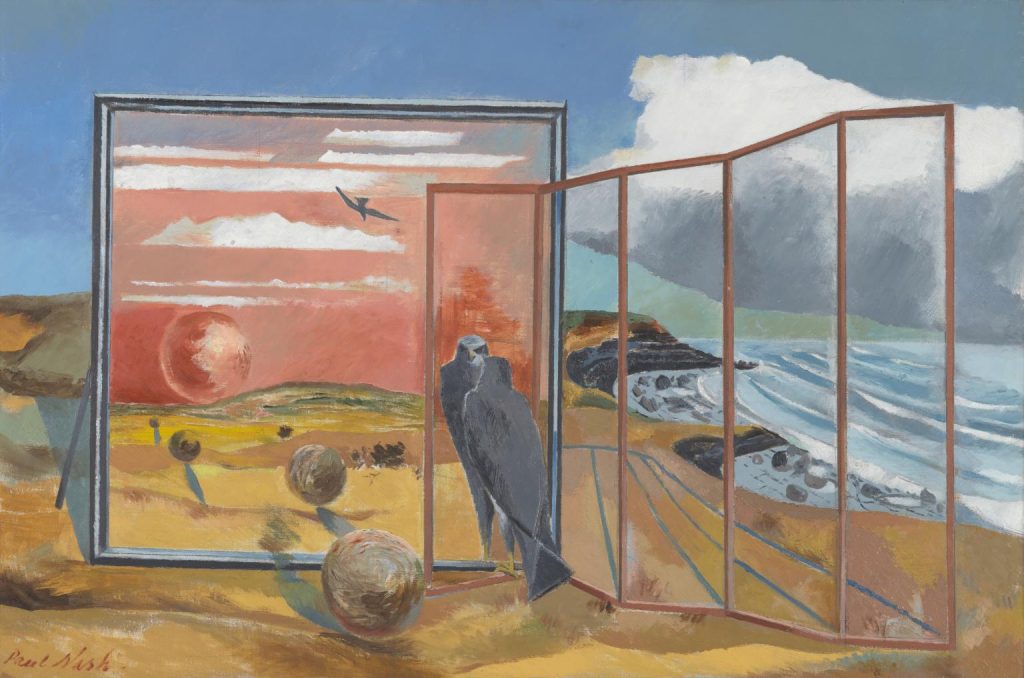
Transition to Contemporary British Landscape Art
Contemporary British landscape painters continue to push the boundaries of the genre, redefining traditional themes through abstraction, bold color palettes, and unconventional materials. Some artists embrace digital technology, creating landscapes through innovative techniques that blend photography, painting, and mixed media. Others engage with environmental concerns, using their work to comment on issues such as climate change, urban development, and the loss of natural habitats.
Rather than simply recording the appearance of a place, modern landscape painters often seek to evoke an emotional or sensory response. Textured surfaces, layered compositions, and atmospheric lighting effects bring a new depth to landscape paintings, inviting viewers to experience the scene in a more immersive way. Many artists also draw upon personal memories or historical references, weaving narratives into their depictions of the land.
Artists such as David Hockney, known for his vibrant Yorkshire landscapes, have embraced digital tools to create dynamic, large-scale works. His iPad paintings, which explore the English countryside in a new and innovative way, can often be seen in exhibitions at major galleries such as The Royal Academy of Arts. Similarly, Norman Ackroyd, a master of etching, brings a monochromatic and atmospheric quality to British landscapes, with his work regularly featured at The Royal Society of Painter-Printmakers.
At the same time, the influence of globalization and digital media has led to a fusion of styles. Some contemporary British artists integrate traditional landscape techniques with elements of street art, surrealism, or abstract expressionism, resulting in hybrid works that challenge conventional definitions of landscape painting. Hurvin Anderson, for example, blends Caribbean influences with classic British landscapes, reflecting on cultural identity and memory. His work is regularly showcased at Victoria Miro Gallery, one of London’s leading contemporary art spaces.
Urban vs. Rural Perspectives
While traditional British landscape paintings often depicted the rural countryside, contemporary artists are increasingly exploring the relationship between natural and urban environments. The contrast between cityscapes and untouched landscapes has become a compelling subject, with many artists focusing on the intersections where nature and human development meet.
For example, some painters depict industrial sites, motorways, or high-rise buildings within broader natural landscapes, illustrating how modern infrastructure reshapes our surroundings. Others focus on the way light and weather interact with urban structures, creating compositions that blend elements of natural and built environments. Chloe Early, a contemporary artist known for her dreamlike depictions of cities and landscapes merging, creates works that can be explored through The Lazarides Gallery.
On the other hand, some contemporary British landscape artists remain dedicated to capturing the timeless beauty of rural scenes, presenting the countryside in a way that feels both familiar and fresh. Artists such as Kurt Jackson, who paints expressive and textural depictions of the Cornish coast, often incorporate found materials from nature into his work. His latest collections can be found at The Jackson Foundation Gallery.
This tension between tradition and modernity, rural and urban, is one of the defining characteristics of contemporary British landscape art. It reflects the evolving nature of the British landscape itself—constantly shifting, shaped by history, industry, and human intervention. Whether through classic pastoral scenes or bold contemporary cityscapes, today’s landscape artists continue to capture the beauty and complexity of Britain’s diverse environment.
For those looking to explore these works firsthand, institutions such as The National Gallery and The British Museum offer extensive collections of both historic and contemporary landscape paintings. Meanwhile, online platforms such as Artfinder provide access to limited edition prints from emerging and established British landscape artists.
Top Contemporary British Landscape Artists You Should Know
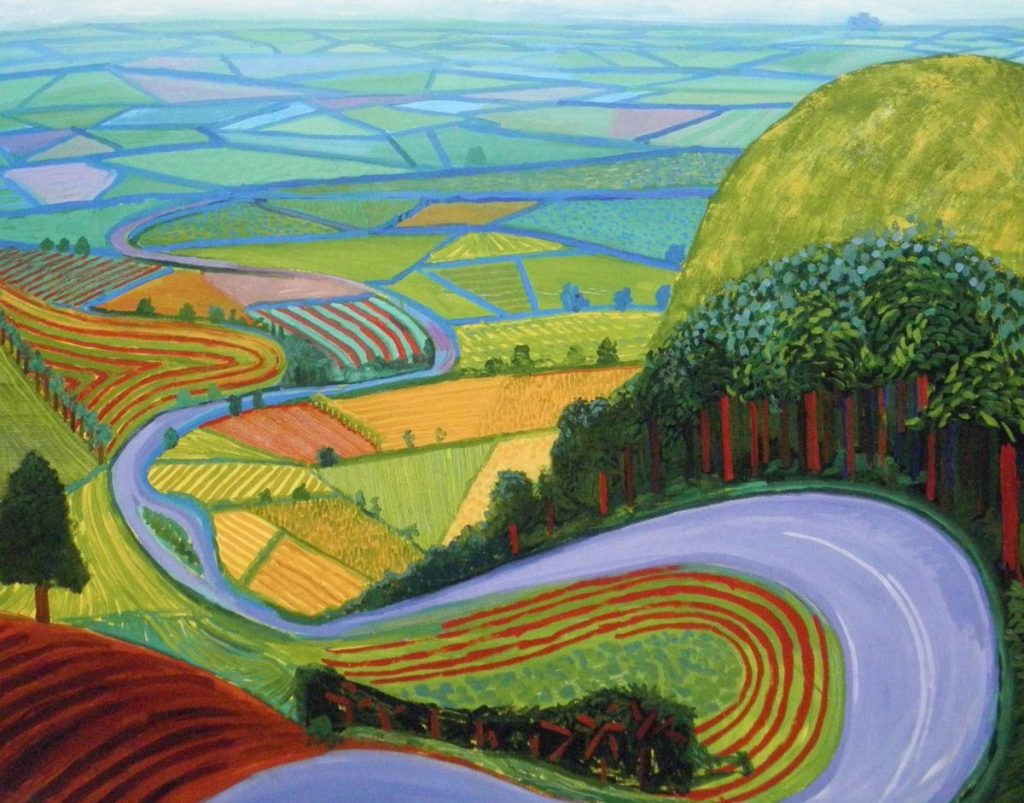
David Hockney – A Fresh Eye View of the Countryside
Born in Bradford, England, in 1937, David Hockney is one of the most influential and celebrated British artists of the 20th and 21st centuries. While he initially gained recognition as a leading figure in the Pop Art movement, Hockney later turned his focus to landscape painting, particularly inspired by the natural beauty of his home county, Yorkshire. His work is known for its vibrant colour palette, bold compositions, and innovative approach, blending traditional and digital techniques to redefine contemporary landscape painting. In recent years, Hockney has experimented with iPad drawings, creating vivid depictions of the British countryside that embrace technology while remaining rooted in classical painting traditions.
Hockney’s landscapes often depict rolling hills, winding country roads, and clusters of trees, transformed through his distinctive use of exaggerated color and simplified forms. His ability to reinterpret the British landscape in an entirely new way, while still retaining its essence, has cemented his place as one of the most influential contemporary landscape painters.
Most Famous Landscape Works:
- The Arrival of Spring in Woldgate, East Yorkshire (2011) – A series of 51 iPad paintings capturing the seasonal changes in Yorkshire’s countryside.
- Bigger Trees Near Warter (2007) – A vast 50-canvas work celebrating the beauty of British woodland.
- Garrowby Hill (1998) – A vivid depiction of the rolling hills of Yorkshire, painted in striking, unnatural hues that evoke a sense of nostalgia and wonder.
What Makes Hockney Iconic?
Hockney’s landscapes are instantly recognisable for their striking use of colour and innovative approach. By embracing digital tools alongside traditional techniques, he has expanded the possibilities of landscape painting for the modern age. His work frequently celebrates the natural beauty of Britain while also presenting it through a unique, almost dreamlike lens. Hockney’s paintings are housed in major collections, including Tate Britain, and he continues to exhibit internationally.
Explore his work: David Hockney’s Official Website
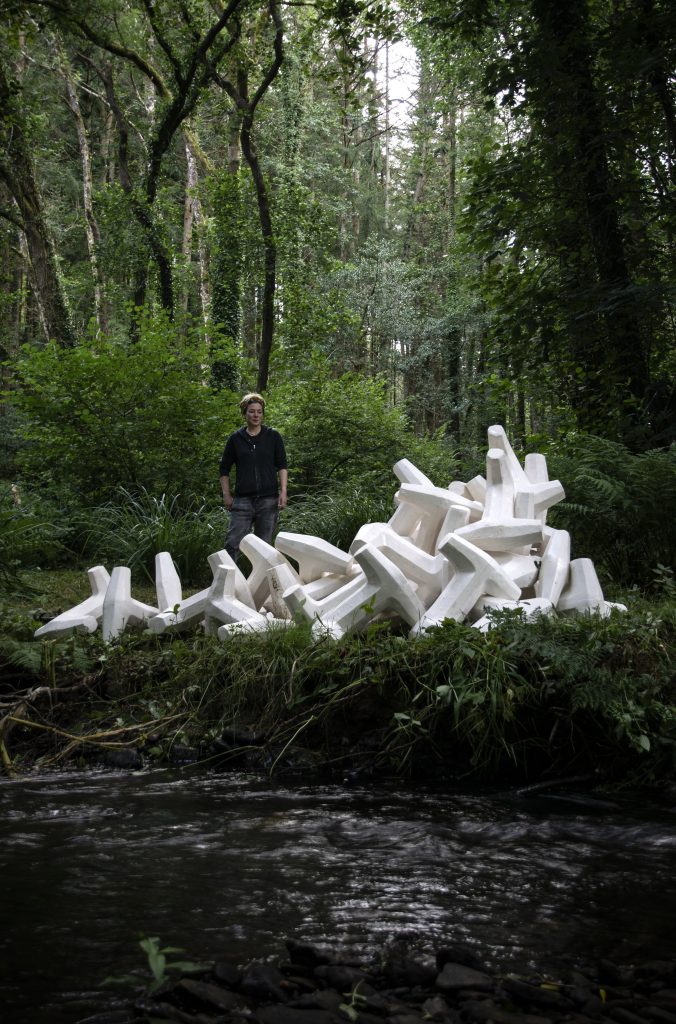
Henrietta Armstrong – Exploring the Intersection of Nature and Geometry
Henrietta Armstrong was born in London, England, and is a contemporary British artist known for her unique approach to landscape art, blending organic forms with geometric abstraction. Her work challenges traditional landscape painting by integrating structured, almost architectural elements with the natural environment. Using bold shapes and contrasting colours, Armstrong explores the relationship between man-made structures and the untamed beauty of the British landscape.
Armstrong’s compositions often depict rolling hills, forests, and coastal scenes, reimagined through the use of sharp lines and layered textures. Her background in design and fine art allows her to create pieces that feel simultaneously natural and constructed, offering a fresh perspective on landscape painting.
Most Famous Landscape Works:
- Geometric Dunes (2019) – A landscape piece where natural sand dunes are reinterpreted through geometric forms.
- Architectural Coastline (2021) – A study of how modern buildings interact with Britain’s rugged coastline.
- Fragmented Fields (2022) – A reworking of the British countryside through intersecting shapes and vivid contrasts.
What Makes Armstrong Iconic?
Her ability to seamlessly integrate abstract geometric elements with the natural world sets her apart in the field of contemporary landscape art. Armstrong’s work challenges perceptions of landscape painting, pushing it towards a fusion of fine art and design. Her pieces have been exhibited at The Mall Galleries and The Saatchi Gallery, making her a rising star in the world of British landscape art.
Explore her work at: Henrietta Armstrong’s Official Website
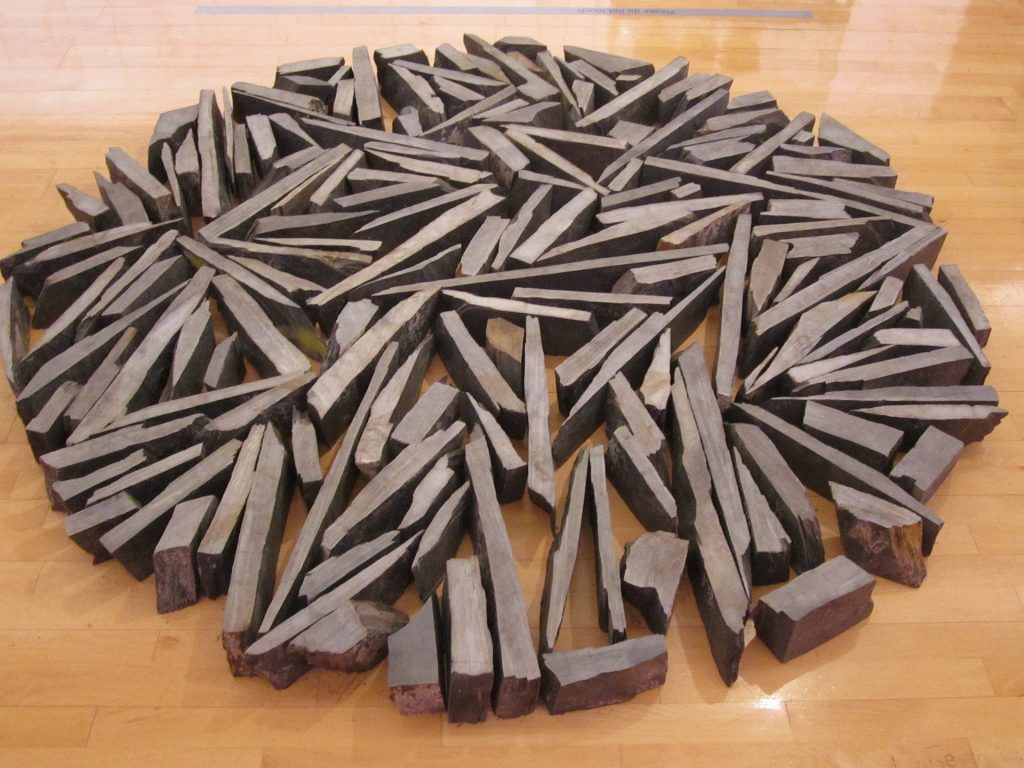
Richard Long – Art in the Landscape
Born in Bristol, England, in 1945, Richard Long is a pioneering land artist who has redefined landscape art by engaging directly with nature. Unlike traditional painters, Long does not simply depict landscapes—he creates art within them. His practice involves walking through natural environments and shaping the land itself, arranging stones, carving paths, and using natural materials such as mud and driftwood to form temporary and permanent installations. Long’s work is deeply influenced by the act of walking, viewing the journey itself as a form of artistic expression.
His minimalist and conceptual approach challenges conventional ideas of landscape art, emphasizing movement, impermanence, and the relationship between humans and nature. Long’s work is often documented through photography and maps, capturing the traces he leaves behind. His interventions in the landscape range from subtle, almost imperceptible marks on the ground to large-scale stone circles and sculptures that evoke ancient monuments.
Most Famous Landscape Works:
- A Line Made by Walking (1967) – A conceptual piece where Long walked back and forth on a stretch of grass, imprinting a temporary line into the landscape.
- Cornish Slate Ellipse (2009) – A striking installation made of Cornish slate, arranged in a perfect elliptical shape.
- River Avon Mud Circle (1981) – A large-scale mud painting created using sediment from the River Avon, highlighting the connection between natural materials and artistic creation.
What Makes Long Iconic?
Long’s work challenges traditional notions of painting and sculpture, using the landscape itself as his medium. By integrating walking and natural materials into his art, he creates pieces that are deeply connected to place and time. His art is featured in major institutions such as Tate Modern and The British Museum, and his influence extends far beyond the gallery space, redefining how we interact with and perceive the natural world.
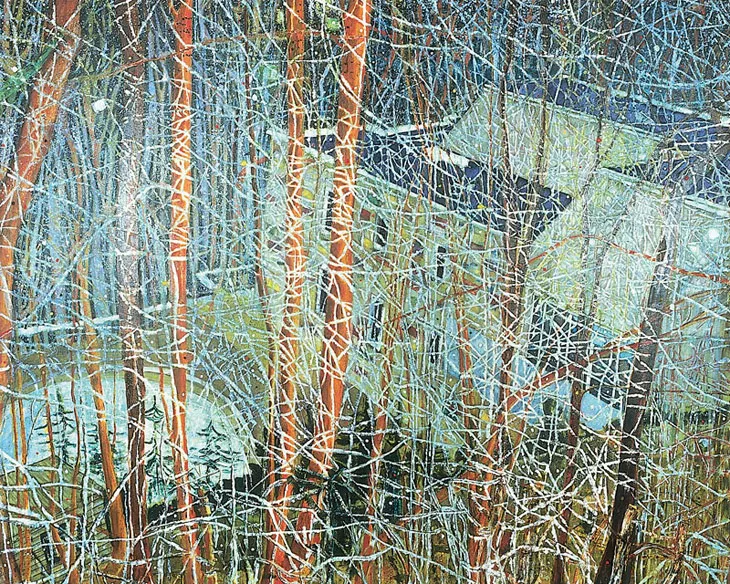
Peter Doig – Dreamlike Landscapes
Born in Edinburgh, Scotland, in 1959, Peter Doig is known for his evocative and dreamlike approach to landscape painting. Although he has lived and worked in Canada and the Caribbean, his work frequently references British landscapes, drawing on childhood memories and historical imagery. Doig’s paintings blend elements of realism and surrealism, creating atmospheric compositions that feel both familiar and fantastical. His use of rich, layered colours and unconventional perspectives lends his landscapes an almost cinematic quality, as though they exist in a liminal space between reality and imagination.
His work is often inspired by personal recollections, found photographs, and historical art references, resulting in landscapes that are deeply subjective and emotional. Doig’s ability to merge nostalgia with an almost eerie stillness makes his paintings some of the most intriguing contemporary landscape works today.
Most Famous Landscape Works:
- White Canoe (1990) – A haunting, reflective water scene that broke auction records for contemporary art.
- Echo Lake (1998) – A moody, semi-abstract interpretation of a wooded lake scene.
- Red House (1995) – A surreal landscape featuring a lone house amidst an eerie, dreamlike environment.
What Makes Doig Iconic?
Doig’s landscapes are not simply representations of physical locations—they are emotional landscapes, filled with memory, mystery, and psychological depth. His ability to blend traditional landscape painting with elements of dreamlike abstraction has set him apart as one of the most distinctive voices in contemporary art. His paintings are showcased in leading galleries such as The Michael Werner Gallery and The Scottish National Gallery.
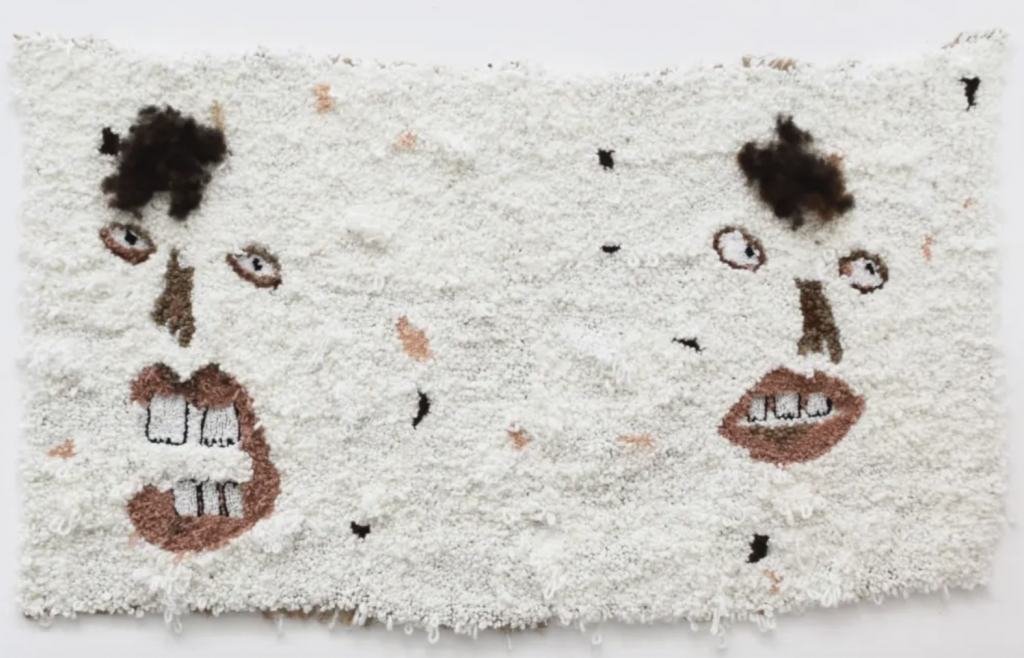
Anya Paintsil – Textured Landscapes in Contemporary Art
Anya Paintsil was born in Wrexham, Wales, in 1993 and is an emerging contemporary British artist redefining the boundaries of landscape art. She is best known for her unique textile-based works, which combine rug-hooking, embroidery, and weaving to create richly textured and highly tactile pieces. While much of her work explores personal identity and heritage, her landscapes reflect a deep connection to place, memory, and the natural world.
Rather than relying on traditional painting techniques, Paintsil crafts landscapes that are both visually striking and physically immersive. Her innovative use of fabrics and materials brings a new, tactile dimension to landscape art, making her a standout figure in contemporary British art.
Most Famous Landscape Works:
- Handmade Horizons (2020) – A woven landscape that plays with texture and abstraction.
- Fleeting Light (2022) – A fabric-based interpretation of shifting British weather patterns.
- Echoes of Home (2021) – A piece that merges childhood memories with imagined landscapes.
What Makes Paintsil Iconic?
Her use of textiles to construct landscapes offers a fresh, interdisciplinary approach to contemporary art. Paintsil’s work challenges traditional painting techniques by incorporating the warmth and tactility of fabric, making her one of the most innovative landscape artists of her generation. Her pieces have been featured in Frieze Magazine and exhibited at The Carl Freedman Gallery.
Norman Ackroyd – Capturing Britain in Monochrome
Norman Ackroyd was born in Leeds, England, in 1938 and is a master printmaker known for his dramatic black-and-white etchings of Britain’s coastal landscapes. For decades, he has traveled extensively throughout the UK, sketching remote and rugged terrains before turning them into atmospheric etchings that capture the mood and isolation of these places.
His work primarily focuses on the wild and untouched landscapes of Scotland, Ireland, and the farthest reaches of the British Isles. Ackroyd’s ability to distill the essence of these places through detailed, monochromatic compositions has made him one of Britain’s most respected contemporary landscape artists.
Most Famous Landscape Works:
- The Western Isles (2012) – A series of etchings portraying Scotland’s dramatic coastal cliffs.
- The Orkney Portfolio (2004) – A detailed set of prints depicting Orkney’s remote islands.
- Stone Wall, Shetland (2015) – A strikingly detailed monochrome study of Shetland’s rugged landscapes.
What Makes Ackroyd Iconic?
His mastery of etching techniques, combined with his dedication to documenting Britain’s most isolated landscapes, has made his work both timeless and deeply evocative. His art is displayed at The Royal Academy of Arts and The Bankside Gallery.
Discover his work at: Royal Academy of Arts
Emma Stibbon – Powerful Prints of the Natural World
Emma Stibbon was born in Münster, Germany, in 1962 and is a British artist known for her large-scale, monochrome prints that explore themes of environmental change and the fragility of natural landscapes. Her works often depict glaciers, coastal cliffs, and other landscapes under threat, making a powerful statement about the changing planet.
Using a combination of printmaking and drawing, Stibbon creates intricate, high-contrast compositions that capture the raw beauty and impermanence of the natural world. Her focus on texture and atmosphere brings a unique depth to her work, making her one of Britain’s most compelling contemporary landscape artists.
Most Famous Landscape Works:
- Glacial Flow (2015) – A print documenting melting glaciers and climate change.
- Cliff Edge (2018) – A stark representation of Britain’s eroding coastlines.
- Volcanic Terrain (2020) – A study of geological formations shaped by natural forces.
What Makes Stibbon Iconic?
Her ability to combine fine detail with a deep environmental consciousness makes her a leading figure in landscape art today. Her work is displayed at The Cristea Roberts Gallery and The Victoria and Albert Museum.
Find her work at: Cristea Roberts Gallery
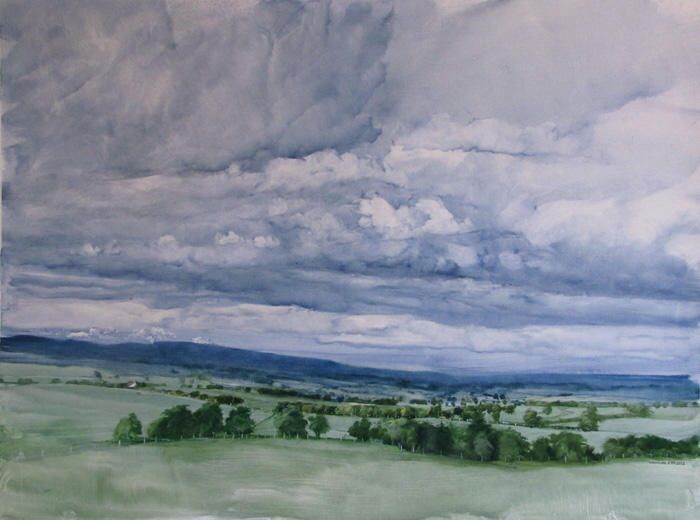
James Morrison – Evoking Atmosphere in Landscape Art
James Morrison was born in Glasgow, Scotland, in 1932 and became one of Scotland’s most beloved landscape artists. His paintings of the Scottish Highlands, with their expansive skies and soft, luminous light, are recognized for their deep atmospheric qualities.
Morrison’s landscapes often depict vast open spaces, where nature’s power and beauty are the central focus. His work reflects an almost meditative quality, inviting viewers to experience the stillness and quiet grandeur of the land.
Most Famous Landscape Works:
- West Coast Sunset (1996) – A striking painting of Scotland’s coastal light.
- Cairngorms in Winter (2010) – A stunning depiction of snow-covered mountains.
- Sky Over Angus (1985) – A dramatic representation of shifting cloud formations over the Scottish countryside.
What Makes Morrison Iconic?
His ability to capture light and atmosphere with remarkable sensitivity has cemented his legacy in British landscape painting. His work is housed at The Scottish National Gallery and The Fleming Collection.
More on his work: Scottish National Gallery
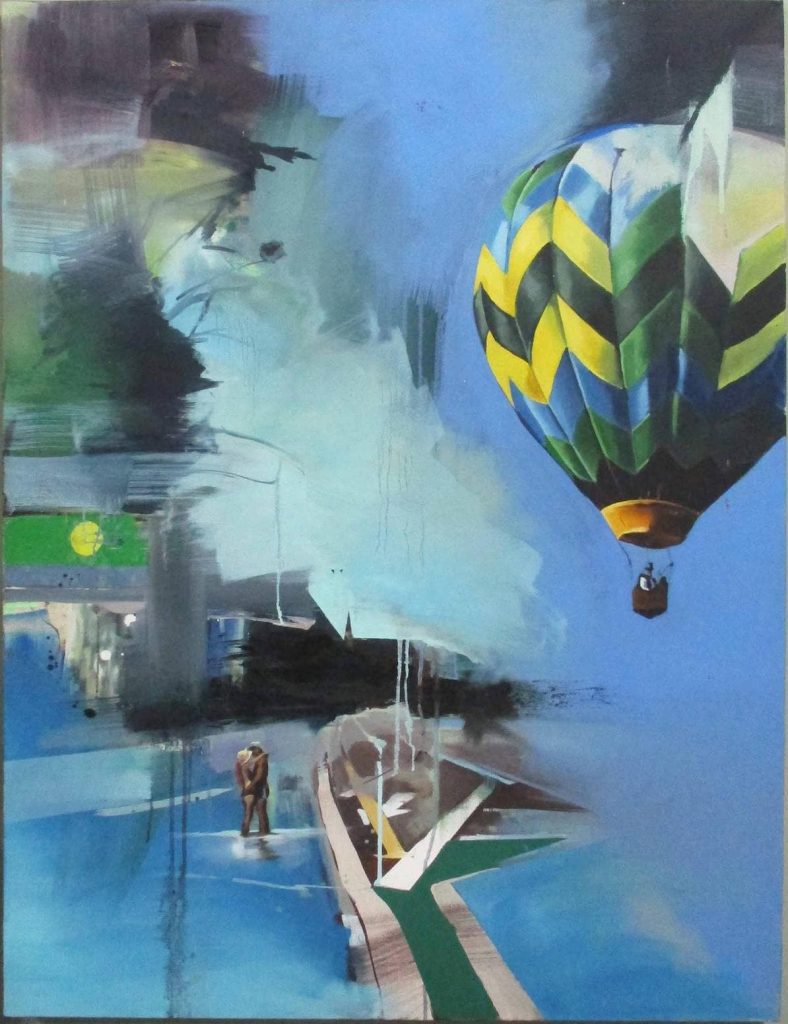
Chloe Early – Where Landscape Meets Fantasy
Chloe Early was born in Cork, Ireland, in 1980 but is based in London, where she has developed a unique style blending urban and natural elements into surreal and dreamlike compositions. Her paintings often feature floating figures, landscapes infused with movement, and symbolic imagery that merges the organic with the mechanical.
Her approach to landscape painting is unconventional, incorporating elements of street art and contemporary realism to create visually arresting and emotive scenes.
Most Famous Landscape Works:
- Suspended in the Sky (2013) – A painting merging celestial and terrestrial landscapes.
- Concrete Ocean (2018) – A surreal blend of cityscapes and rolling countryside.
- Soft Crash (2021) – A work exploring the tension between nature and industrialization.
What Makes Early Iconic?
Her ability to weave landscapes with dreamlike, floating elements and urban influences creates an entirely new take on traditional landscape art. Her work has been exhibited at The StolenSpace Gallery and The Lazarides Gallery.
Follow her exhibitions: Chloe Early’s Website
Antony Gormley – Sculptural Interactions with Landscape
Antony Gormley was born in London, England, in 1950 and is best known for his large-scale public sculptures that engage with the landscape in profound ways. While not a traditional landscape painter, his work challenges how we perceive and interact with the environment, making him an essential figure in contemporary British landscape art.
His most famous installations place human figures within landscapes, prompting contemplation about space, solitude, and humanity’s relationship with nature.
Most Famous Landscape Works:
- Another Place (1997) – A haunting installation of iron figures along the shore in Merseyside.
- Field for the British Isles (1993) – A vast collection of small clay figures arranged in open spaces.
- Angel of the North (1998) – A colossal steel sculpture overlooking the British countryside.
What Makes Gormley Iconic?
His ability to integrate sculpture with landscape creates a dialogue between the viewer and the natural world. His work can be seen at The White Cube Gallery.
View at: White Cube
The Impact of Limited Editions in Contemporary Landscape Art
Why Limited Editions Matter
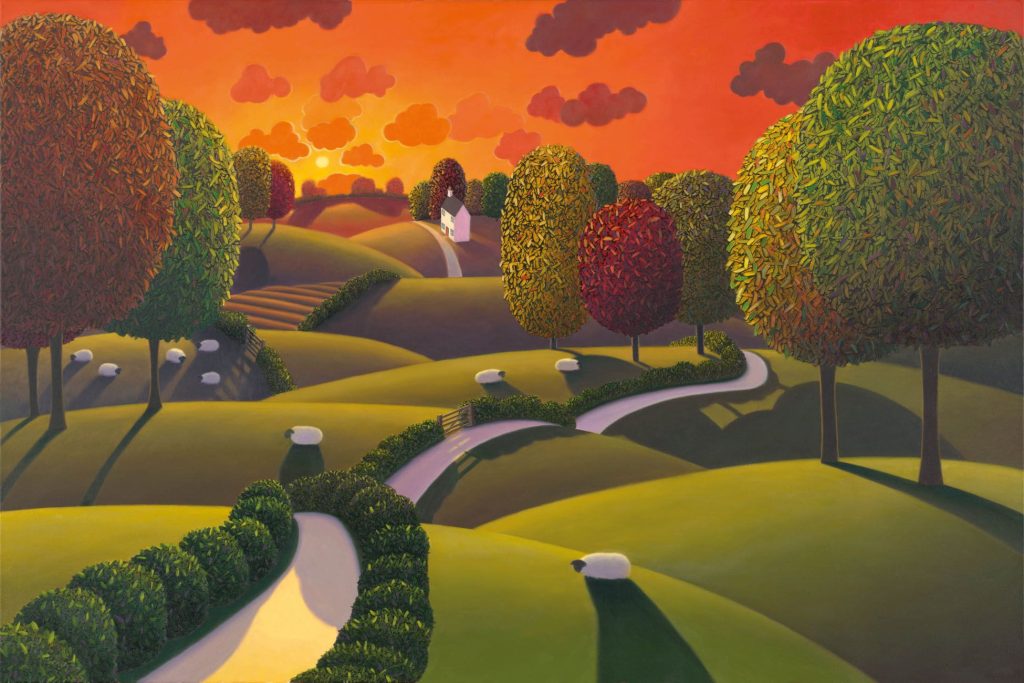
Limited edition prints have become a vital part of the contemporary art market, particularly in the field of landscape painting. These prints allow collectors and enthusiasts to own high-quality reproductions of works by leading British artists, making fine art more accessible while still maintaining an element of exclusivity. Many contemporary British landscape painters release limited edition prints alongside their original works, ensuring that their art reaches a broader audience without diminishing the value of the original pieces.
Artists such as David Hockney and Norman Ackroyd have successfully utilised limited edition prints to expand their reach while preserving the uniqueness of their work. The demand for these prints is driven by their rarity—editions are often capped at a specific number, with each print individually signed and numbered by the artist. This not only adds to their collectability but also ensures that each piece retains its value over time.
Where to Buy
For those interested in acquiring limited edition landscape prints, several reputable online platforms and galleries specialize in contemporary British landscape art. Many artists sell directly through their websites, but collectors can also explore curated selections from renowned art institutions.
- Artfinder – A leading marketplace for independent artists, offering a wide range of limited edition prints by contemporary British painters.
- Cristea Roberts Gallery – A specialist in limited edition prints, showcasing works from prominent British printmakers.
- Tate Prints – A collection of signed and numbered prints from some of Britain’s most celebrated artists, including landscape painters.
Investment Potential
Limited edition prints are not only a way to appreciate contemporary landscape art but also an investment opportunity. As an artist’s reputation grows, their limited edition works can increase in value significantly. Investing in prints by emerging British landscape artists offers a chance to support new talent while potentially acquiring pieces that will gain financial worth over time.
Collectors who purchased early limited edition prints by Peter Doig or Emma Stibbon have seen their value rise as the artists gained international recognition. While purchasing art should primarily be about passion and appreciation, investing in carefully chosen prints can also be a smart financial move.
Browse Limited Editions at: Artfinder
How to Experience Contemporary British Landscape Art
Major Galleries & Exhibitions in the UK
For those looking to experience contemporary British landscape art in person, several galleries and institutions regularly showcase the work of both established and emerging artists.
- Tate Britain – Home to an extensive collection of British art, featuring both historical and contemporary landscape paintings.
- The Royal Academy of Arts – Hosts annual exhibitions featuring some of the most exciting landscape painters working today.
Many of these institutions also offer virtual tours and online exhibitions, allowing art lovers to explore contemporary British landscape art from anywhere in the world.
Best Online Platforms to Explore British Landscape Art
For those unable to visit physical galleries, several online platforms provide access to contemporary British landscape art, offering insights into current trends, artist profiles, and opportunities to purchase artwork.
White Cube – A contemporary gallery known for promoting British landscape and conceptual artists, with a focus on modern interpretations of landscape art.
Artsy – Features works by British landscape artists across various styles, offering insight into current trends and market movements.
The British Art Network – A resource for exploring contemporary art movements in the UK, including landscape painting, sculpture, and mixed media works.
Tate Online Collection – Offers a vast collection of historical and contemporary British landscape art, including works by J.M.W. Turner, David Hockney, and Richard Long.
Saatchi Art – A leading global marketplace featuring emerging and established British landscape artists, with options for purchasing original paintings, prints, and limited editions.
Art UK – The UK’s online collection of public art, showcasing over 200,000 artworks, including pieces from national museums, local galleries, and institutions.
The Royal Academy of Arts – A hub for British contemporary landscape artists, featuring exhibitions, artist interviews, and curated collections.
DACS – Artist’s Rights and Licensing – Provides resources for understanding copyright and licensing in the art world, including information on landscape artists and print editions.
The Scottish Gallery – A gallery dedicated to Scottish landscape art, showcasing both historical and contemporary artists working in painting, printmaking, and sculpture.
Mall Galleries – Features The Federation of British Artists and exhibitions focusing on contemporary British landscape painting.
The National Gallery – Houses an extensive historical collection of British landscape paintings, offering virtual exhibitions and detailed artist insights.
British Museum Prints & Drawings – Features landscape prints and drawings from British and international artists, with high-resolution digital access.
Lisson Gallery – Represents leading contemporary artists, including those working in landscape and environmental art.
The Future of Contemporary British Landscape Art
Emerging Trends in Landscape Art
Contemporary British landscape art is constantly evolving, with new trends shaping the way artists depict the natural world. Three key movements are currently influencing the field:
- Digital Landscapes – The rise of digital tools, from iPad paintings (as pioneered by David Hockney) to AI-assisted generative art, is reshaping how artists create and share landscape imagery.
- Eco-Conscious Themes – Many artists, including Kurt Jackson and Emma Stibbon, are using their work to highlight environmental issues, climate change, and the fragility of natural landscapes.
- Abstraction & Experimentation – Artists are increasingly merging landscape painting with abstract techniques, blending elements of geometric design, mixed media, and surrealism.
The Role of British Artists in a Global Context
British landscape artists continue to influence international art movements, with exhibitions and collaborations taking place across Europe, North America, and beyond. The British landscape has long been an inspiration for global artists, and today’s painters are continuing this tradition by pushing boundaries and exploring new ways of representing their surroundings.
New Artists to Watch
A wave of emerging artists is bringing fresh perspectives to contemporary landscape painting. Some promising names include:
Henrietta Armstrong – Known for her striking combination of landscape and geometric abstraction, bringing a modernist approach to traditional scenery.
Tom Hammick – A painter and printmaker whose atmospheric landscapes explore the intersection between the natural world and human experience.
Lucy Kent – A plein-air painter capturing fleeting moments of light and weather in the British countryside with expressive brushwork.
Jemma Gowland – Merging sculpture and landscape, she explores the effects of climate change on natural environments.
Nicholas Jones – A contemporary landscape painter known for moody seascapes and atmospheric landforms, often working in oil and mixed media.
Rosie Sanders – Primarily a botanical artist, she integrates landscape elements and nature studies, bridging the gap between realism and abstraction.
Eleanor Adair – Her landscapes focus on the play of light and shadow, using oil and pastel techniques to bring depth and movement to her compositions.
Joanna Kirk – A contemporary British landscape artist creating expressive pastel drawings of landscapes infused with dreamlike, cinematic quality.
James Naughton – A modern landscape painter whose works depict dramatic skies and light-drenched terrains, often evoking a sense of wonder.
Katherine Jones – A printmaker specializing in landscape etchings and collagraphs, bringing a delicate and poetic approach to the natural world.
Sophie Capron – Merges abstract expressionism with landscape painting, incorporating texture and mixed media to create layered, immersive pieces.
Emily Powell – A bold colorist whose contemporary landscapes embrace vibrancy and surreal elements, transforming nature into dynamic compositions.
Jason Line – Specializes in monochrome and minimalist landscapes, emphasizing form and negative space to create striking contrasts.
Lindsey Lavender – A contemporary urban landscape painter capturing the geometry of cityscapes, merging realism with abstraction.
Pippa Young – Explores the relationship between memory, perception, and landscape, often blending figurative elements into natural scenery.
Richard Whadcock – A painter focusing on atmospheric coastal landscapes, using layers of paint to evoke misty, dreamlike environments.
Rebecca Partridge – Creates meditative, expansive landscapes that reflect the relationship between nature and emotion.
Andy Lovell – A printmaker whose linocuts and screenprints capture the movement and energy of British landscapes.
Sarah Ross-Thompson – Works in collage and printmaking, constructing textured, layered landscapes that feel both organic and abstract.
Clare Halifax – Known for intricate cityscapes and stylized landscapes, blending precision with artistic storytelling.
As these artists continue to innovate, the future of contemporary British landscape art remains vibrant and dynamic.
Leave a Reply