
No products in the cart.
What Is Arte Povera? Raw Materials And Radical Simplicity
If you have ever seen a sculpture made from coal, cloth, branches, wax, mirrors, stone or even living matter and wondered how something so apparently rough, ordinary or unfinished could hold such power, you are already close to understanding Arte Povera. The movement is often translated as “poor art”, but that phrase can be misleading if it sounds like a lack of ambition. Arte Povera was not poor in imagination, seriousness or cultural force. It was radical in the way it stripped art back to raw materials, direct actions and elemental questions.
At its strongest, Arte Povera does not feel decorative or polite. It feels immediate. It places humble materials in front of you and asks what they can still mean in a world shaped by industry, consumer culture and spectacle. It invites you to think about weight, energy, growth, decay, repetition, nature, labour and time. Instead of polished surfaces and grand illusions, it offers branches, rags, earth, fire, lead, glass, rope, wood and stone. Instead of distancing life from art, it pushes them together.
For beginners, that can make Arte Povera one of the most rewarding modern art movements to explore. It is rich in ideas, but it is also deeply physical. You do not need to know every theory around post war Italy to feel the force of a tree trunk altered by the artist’s hand, a mirrored surface that pulls you into the work, or a pile of basic materials that suddenly looks charged with meaning. Arte Povera works through contact. It asks what happens when art stops pretending to be separate from the world and starts using the world more directly.
This guide explains what Arte Povera is, where it came from, why critics called it “poor art”, which artists shaped the movement, and why its use of raw materials still feels so relevant now. It also explores how to recognise Arte Povera in a gallery and why the movement continues to matter in contemporary discussions around material, making, environment and anti consumer culture.

What is Arte Povera?
Arte Povera was a radical Italian art movement that emerged in the late 1960s and early 1970s. The term was introduced by the Italian critic Germano Celant in 1967, and it has since become the standard name for a loose but highly influential group of artists working mainly in cities such as Turin, Rome, Genoa and Milan. The phrase literally means “poor art”, but it refers less to poverty itself than to a deliberate rejection of preciousness, polish and the conventions of the established art world.
Museum definitions tend to stress two things. First, Arte Povera artists used unconventional, humble and often impermanent materials. Second, they did so to challenge the commercialisation of art and the values attached to elite cultural production. That combination is crucial. The movement was not just about using unusual materials because they looked interesting. It was about breaking down the hierarchy between art and ordinary life.
This is why the movement matters beyond its moment. Arte Povera asked whether art had become too dependent on prestige, permanence and the polished object. It pushed back against that by working with soil, rags, twigs, coal, wood, plants, industrial scraps and other non precious matter. It also turned attention towards processes such as growth, gravity, burning, balancing, stacking and transformation.
The result is a movement that sits somewhere between sculpture, installation, performance, process art and conceptual thinking. Arte Povera does not always look minimal, and it does not always look messy either. What it does share is a refusal to separate artistic meaning from material reality.

Why the name “poor art” matters
The phrase Arte Povera can sound harsher than it needs to. In English, “poor” often suggests something inadequate, cheap or second rate. That is not what Celant meant. The poverty in Arte Povera is better understood as an intentional stripping back. It points to ordinary, direct and unglamorous materials, but also to a kind of artistic refusal. These artists were refusing a system that treated art as a luxury object, neatly contained and easily sold.
Seen that way, the title becomes more interesting. Arte Povera is poor in the sense that it avoids extravagance, but it is rich in physical presence and philosophical depth. A work made from lead, burlap, wax or timber can feel more charged than something highly finished, because it keeps the viewer close to matter itself. It makes you aware of weight, temperature, fragility, resistance and time.
This is one reason the movement still feels fresh. In a culture saturated with polished images and endless digital surfaces, Arte Povera can feel almost cleansing. It returns art to substance. It reminds viewers that materials are never neutral. Coal carries labour and heat. Trees carry time and growth. Rags carry use, wear and social life. Mirrors carry the viewer. The movement’s so called simplicity is never empty. It is loaded.

The historical moment behind Arte Povera
Arte Povera did not emerge in a vacuum. It developed in Italy during a period of political unrest, industrial change and cultural upheaval. The late 1960s were marked by protests, labour struggles, student movements and wider challenges to authority across Europe. In Italy, those tensions intersected with rapid modernisation and the growing power of consumer society.
That background matters because Arte Povera was, in part, a reaction against a world increasingly defined by mass production, corporate logic and spectacle. The artists associated with the movement were not all ideologically identical, but many shared a suspicion of systems that turned everything into commodity, image or instrument. Their work often carries that tension. Natural and industrial materials are placed together. Organic forms meet hard manufactured surfaces. Time, instability and raw matter interrupt the neatness of modern life.
Arte Povera also arrived after several other important post war movements had already changed art. Minimalism had reduced visual language to essentials. Conceptual art was shifting attention from object to idea. Performance art was challenging the object based logic of galleries. Arte Povera absorbed some of these energies, but it remained distinct. It stayed unusually close to matter, to physical presence, and to a sense that life and art should not be too cleanly separated.
What makes Arte Povera different from Minimalism and Conceptual Art
Arte Povera is often mentioned alongside Minimalism and Conceptual Art, but it is not the same thing as either. Minimalism tends to emphasise clean form, repetition, industrial finish and the viewer’s experience of objects in space. Conceptual Art often places the idea above the object and may reduce materials to language, systems or instructions.
Arte Povera can overlap with both, but it keeps a different energy. Its materials are usually more tactile, more irregular and more visibly bound to the world outside the gallery. It is not anti idea, but it rarely lets thought detach entirely from matter. Nor is it committed to the sleek impersonal finish that often characterises Minimalism. In Arte Povera, rawness matters. Process matters. The object may look provisional, but that is often where its force lies.
If Minimalism can sometimes feel cool and Conceptual Art can sometimes feel cerebral, Arte Povera often feels bodily. You sense weight, friction, smell, vulnerability and change. That gives it a different emotional register. It is not necessarily louder or more expressive, but it is often more elemental.

The materials of Arte Povera
One of the easiest ways into Arte Povera is through its materials. The movement is famous for using things that earlier art would often have treated as too ordinary, too unstable or too crude. Artists worked with soil, rocks, twigs, wood, coal, cloth, wax, glass, mirrors, rope, lead, fire, water and plants, among other materials.
These choices were not random. Each material brought with it a different set of associations and behaviours. Earth suggested ground, origin and transformation. Coal suggested labour, energy and industrial history. Mirrors turned the viewer into part of the work. Wood and trees brought time, growth and the living world into direct contact with sculpture. Wax suggested vulnerability and change. Fire introduced process and risk.
This attention to behaviour is important. Arte Povera materials are often active rather than inert. They bend, burn, dry out, reflect, decay, crack or carry traces of use. That instability gives the work a sense of life. It also prevents the artwork from becoming too fixed. Arte Povera often feels as though it is still happening.
The movement’s so called raw materials are therefore not only visual choices. They are ways of thinking. They allow the work to engage with nature, industry, labour, energy, time and fragility without having to illustrate those things literally.
Key Arte Povera artists to know
Arte Povera was never a rigid club with a single manifesto, but certain artists are central to understanding it.

Jannis Kounellis is one of the movement’s most striking figures. His work often used coal, iron, sacks, fire and even live animals, pushing the gallery away from detached contemplation and towards something more immediate and physical. Kounellis understood that material can carry social and emotional charge without being turned into a polished symbol.

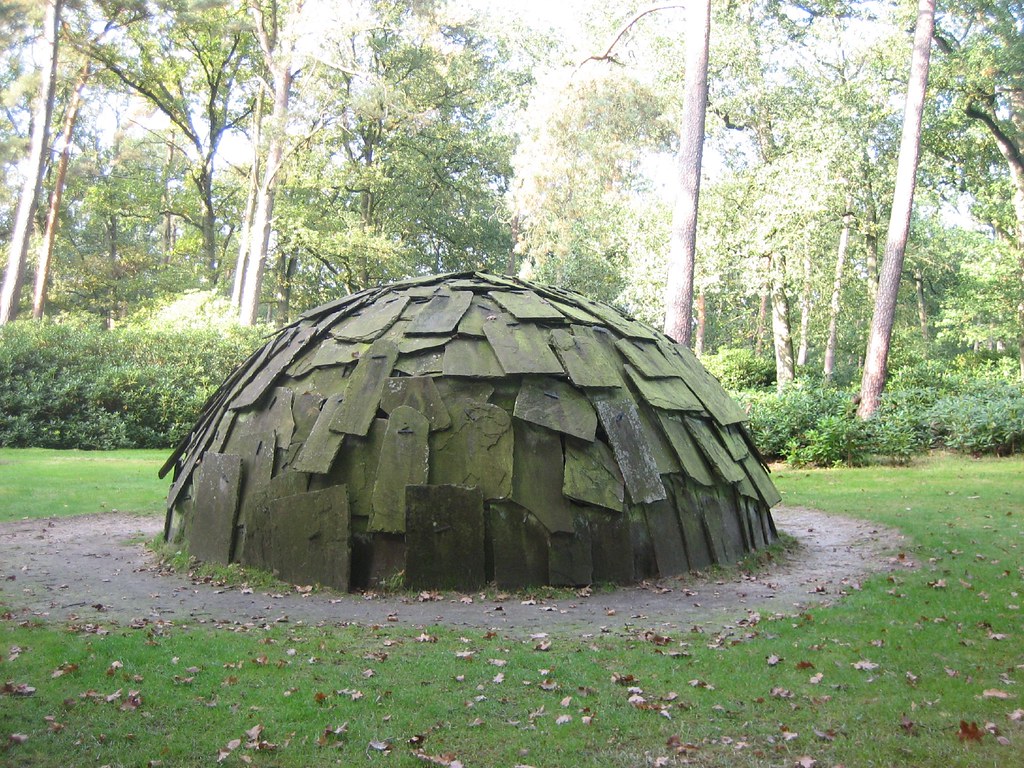
Mario Merz is another key figure. He is especially known for his igloos and his use of the Fibonacci sequence, which brought together natural growth patterns, mathematical order and basic shelter forms. In his work, simple structures become unexpectedly expansive. Merz shows how Arte Povera could move between humble matter and large conceptual ambition without losing contact with the material world.

Michelangelo Pistoletto is perhaps best known for his mirror works, which incorporate the viewer directly into the image, and for Venus of the Rags, one of the movement’s most memorable juxtapositions. His work often stages a collision between classical beauty, consumer waste and living presence. Pistoletto is especially useful for beginners because he makes the relationship between art and everyday life so visible.

Giuseppe Penone brings the movement into close contact with nature and the body. Trees, leaves, breath, skin and growth recur throughout his work. Penone often reveals time inside material, especially in works that expose the inner life of timber or trace bodily contact with the natural world. His art is patient, sensuous and deeply attentive to process.

Marisa Merz brought an intimate, often quieter energy into the movement. Her work with folded materials, woven forms and delicate structures reminds us that Arte Povera was not only about grand gestures or rough force. It could also be subtle, domestic, suspended and lyrical.
Other important artists include Alighiero Boetti, Luciano Fabro, Pier Paolo Calzolari, Giovanni Anselmo, Giulio Paolini, Pino Pascali and Gilberto Zorio. Each approached materials differently, but together they expanded what sculpture and installation could be.
A few famous works that help explain the movement
Sometimes the fastest way to understand Arte Povera is through a handful of key works.
Michelangelo Pistoletto’s Venus of the Rags is often the first piece people remember. A classical female figure stands before a heap of discarded clothing. The contrast is blunt, but it is also deeply effective. High culture meets waste. Beauty meets excess. Permanence meets use and disorder. The work makes Arte Povera’s challenge to established values immediately legible.
Jannis Kounellis’s Untitled, often referred to through his installation of twelve horses in a gallery, is another touchstone. Bringing living animals into the exhibition space shattered the idea that art had to stay within the limits of stable, controllable objects. The work is difficult, provocative and impossible to reduce to neat symbolism. It asks what happens when life itself enters the gallery without being disguised.
Mario Merz’s igloos are among the movement’s most recognisable forms. The igloo is simple, archaic and provisional, yet in Merz’s hands it becomes a place where shelter, energy, mathematics and myth can all meet. It is a perfect example of how Arte Povera could remain materially spare while still carrying large meanings.
Giuseppe Penone’s works involving trees are especially important because they reveal how Arte Povera treats nature not as scenery but as process. By carving back timber to reveal a younger tree inside, Penone makes time visible. Growth becomes sculpture.
These works matter because they show the movement’s range. Arte Povera is not one look. It can be monumental or intimate, conceptual or sensuous, aggressive or meditative. What connects it is a shared commitment to materials that remain close to life.

Arte Povera and the body
One of the less obvious but very important features of Arte Povera is its relationship to the body. This can appear directly, as in works involving mirrors, breath, clothing or bodily traces. It can also appear indirectly through scale, touch, shelter, balance and movement.
The body matters because Arte Povera does not want the viewer to remain detached. Even when the work is static, it often asks you to feel your own physical relation to it. You notice your reflection, your scale, your distance, your movement through space. You become aware that the work is not only an image but a material situation.
This helps explain why the movement still feels contemporary. Many current installation practices aim for bodily awareness, but Arte Povera achieved that without relying on digital immersion or theatrical spectacle. It did it through matter, placement and tension.
Nature, industry and the unstable boundary between them
A recurring theme in Arte Povera is the encounter between natural and industrial worlds. Artists place wood beside steel, living matter beside manufactured matter, raw earth beside industrial surfaces. The movement does not treat these oppositions as simple. It does not romanticise nature entirely or reduce industry to evil. Instead, it makes the tension visible.
That tension is one reason Arte Povera feels so relevant now. We live in an age of ecological crisis, mass waste and increasing anxiety about how industrial systems shape the natural world. Arte Povera did not predict our present moment exactly, but it created a visual language that can still speak to it. Its materials are never only formal. They carry the political and environmental conditions of their existence.
This also helps explain why younger viewers often respond strongly to the movement. The use of reused, unstable or humble materials no longer feels marginal. It feels urgent.

Why Arte Povera still matters now
Arte Povera still matters because it offers a way of thinking about art that resists spectacle without becoming lifeless. It shows that radical work does not have to be technologically complex or visually overloaded. It can begin with simple matter and still open onto large questions.
It matters because it takes materials seriously. In a culture where images can become endlessly weightless, Arte Povera insists on substance. It asks what things are made of, where they come from, how they behave and what histories they carry.
It matters because it questions value. By working with ordinary or unstable materials, Arte Povera challenged the idea that artistic worth depends on rarity, luxury or finish. That remains a powerful challenge in a commercial art world that still often rewards polish, scale and status.
It matters because it keeps art close to life. The movement collapses the distance between cultural object and everyday matter. In doing so, it makes viewers more alert to the physical world around them.
And it matters because it still influences contemporary artists. Many current practices involving installation, found materials, ecological thinking, process, anti consumer critique and place based making owe something to Arte Povera, even if they do not use the label directly.
How to recognise Arte Povera in a gallery
If you are looking at an unfamiliar work and wondering whether it connects to Arte Povera, a few questions can help.
What materials are being used?
If the work relies on humble, raw, natural, industrial or impermanent materials rather than precious ones, that is one clue.
Does the work feel polished or deliberately unresolved?
Arte Povera often keeps a sense of provisionality. The work may feel active, open ended or materially exposed.
Is process visible?
You may be able to sense growth, burning, balancing, stacking, weathering or transformation rather than a final perfected object.
How close is the work to everyday life?
Arte Povera often narrows the distance between art and ordinary materials, actions or environments.
What kind of tension is present?
Many Arte Povera works hold nature and industry, fragility and force, simplicity and intensity in the same space.
How to look at Arte Povera without overcomplicating it
Arte Povera can sound more difficult than it needs to. The best way to begin is with direct observation.
Start with the materials. Name them plainly. Coal. Cloth. Rope. Tree trunk. Mirror. Lead. Stone.
Then ask what those materials usually do outside art. Coal heats. cloth wears. mirrors reflect. trees grow. rope binds. This already gets you closer to the work’s meaning.
Next, notice what the artist has changed. Have the materials been combined unexpectedly? Has a natural material been placed in a gallery so that it feels strange? Has a simple structure been made to feel monumental? Has a basic action been slowed down until it becomes meaningful?
After that, ask what tensions the work holds. Is it about waste and beauty? Nature and manufacture? order and instability? presence and reflection? labour and display?
You do not need to force a complicated theory onto the work. In many cases, Arte Povera becomes clearer when you keep your language simple and your attention steady.
Common misconceptions about Arte Povera
It is just rough sculpture
No. Roughness may be part of its appearance, but the movement is not defined by an unfinished look alone. What matters is how materials are used to think through larger questions about value, life, process and resistance.
It is anti beauty
Not exactly. Arte Povera often avoids traditional prettiness, but many works are deeply beautiful in their own way. Their beauty comes through weight, balance, vulnerability, rhythm or elemental clarity rather than through polish.
It is the same as environmental art
There is overlap, especially in the use of natural materials, but Arte Povera grew from a specific Italian and late 1960s context. It is better understood as its own movement, even if it has clear relevance to ecological thinking today.
It is only about materials
Materials are central, but they are not the whole story. Arte Povera is also about politics, perception, process, time, the body and the structures of the art world itself.
What Arte Povera can offer viewers today
One of the reasons Arte Povera remains so compelling is that it rewards slow looking. It does not always give you an instant narrative, but it gives you contact. It asks you to notice matter, scale, instability and relation. In return, it can make ordinary things feel newly charged.
That is valuable in a contemporary gallery context. So much art is still judged by speed, image impact or how quickly it can be summed up online. Arte Povera resists that. It asks viewers to spend time with presence rather than simply consume appearance.
It can also change how you think about making. For artists and students, Arte Povera is a reminder that material choices are never secondary. They are part of the meaning from the beginning. A humble material can carry more intensity than an expensive one if it is used with precision and thought.

Arte Povera is one of the most important post war art movements because it changed the relationship between art, matter and life. It rejected the idea that serious art had to be polished, precious or safely contained. Instead, it worked with raw materials, unstable processes and direct encounters. It used ordinary things to ask difficult questions.
That is why the movement still matters. It offers a model of art that is materially alert, intellectually sharp and resistant to empty spectacle. It reminds us that simplicity is not the same as emptiness, and that humble materials can carry enormous force.
If you are new to Arte Povera, the best place to start is not with jargon but with attention. Look at the materials. Notice what they do. Notice how they change the space. Notice how they bring nature, industry, history and the body into the same frame.
The next time you encounter a work made from cloth, wood, coal, rope, mirror, wax or stone, do not dismiss it because it looks basic. Arte Povera teaches us that raw materials can hold complex meanings, and that radical art does not always arrive in grand form. Sometimes it arrives as matter, stripped back and placed in front of us with enough force to make us see it differently.
Leave a Reply