
No products in the cart.
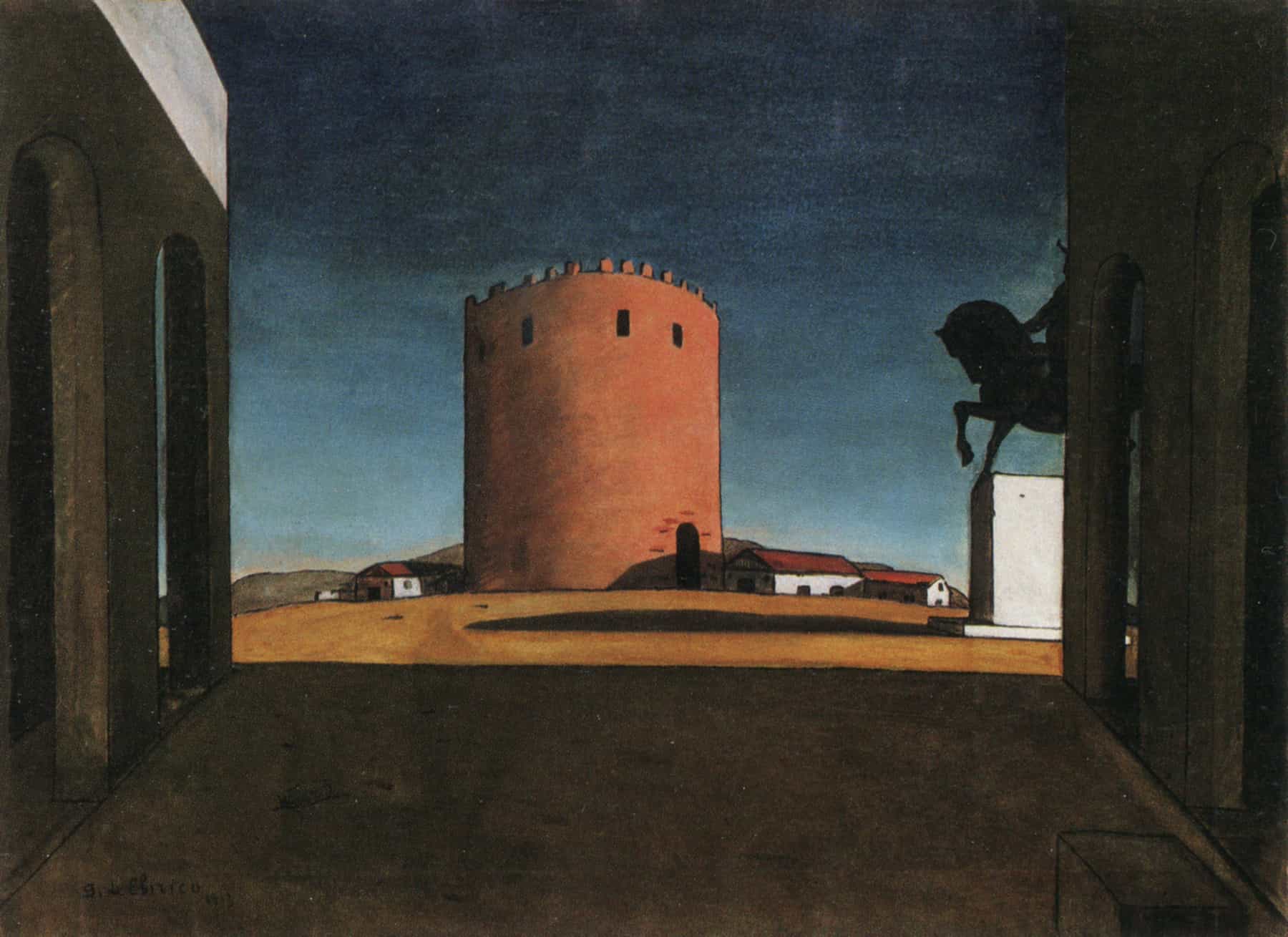
Why Surreal Art Feels So Relevant Right Now
If surreal art feels unusually familiar at the moment, that is probably because daily life already contains many of the conditions surrealist artists once tried to visualise. We live among contradictory headlines, unstable realities, algorithmic feeds, vivid dreams, digital doubles, warped memories, artificial images, political absurdity and a constant sense that ordinary logic is no longer enough to explain what we are experiencing. In that context, surreal art does not feel like a historical curiosity. It feels like a language for the present.
That helps explain why surrealism keeps returning. It is not simply because people still like dreamlike paintings or strange juxtapositions. It is because surreal art gives form to feelings that are otherwise difficult to pin down. Anxiety, dislocation, desire, dread, fascination, absurd humour, psychic overload and emotional ambiguity all sit naturally within surreal imagery. A bent room, a floating object, a human figure split in two, an impossible landscape, a familiar thing placed in the wrong context, these images still feel uncannily useful because they capture the sense that modern life often runs on two levels at once. There is the surface level of routine and there is the deeper level of fear, fantasy, memory and contradiction underneath it.
For readers looking up surreal art, what is surrealism, why surrealism still matters, contemporary surreal art, dream imagery in art or surrealist artists today, the real question is often not just historical. It is personal. Why does this kind of art still feel so alive? Why do people who may never read a Surrealist manifesto still respond to images that seem strange, unsettling or dreamlike? Why do surreal forms continue to appear across painting, photography, film, fashion, installation, advertising and digital culture?
This guide explores those questions in a way that is grounded, clear and useful for a general reader. It looks at where surrealism came from, what surreal art actually does, why it continues to resonate, how it appears in contemporary art, and what it can tell us about the moment we are living through. It also offers practical ways to look at surreal art without reducing it to a simple puzzle with one answer.

What is surreal art?
Surreal art emerged from Surrealism, an avant garde movement that took shape in the 1920s and sought to connect art more directly to dreams, the unconscious, free association and the irrational. Tate defines Surrealism as a movement that aimed to revolutionise human experience by balancing rational life with the power of the unconscious and dreams. MoMA similarly describes it as concerned with the unconscious, the mysterious and the strange. Those definitions still matter because they make clear that surreal art was never only about visual weirdness. It was about challenging the limits of reason and opening art up to hidden parts of the mind.

That means surreal art is not simply art that looks odd. It is art that uses strangeness to disrupt conventional ways of seeing and thinking. A surreal image often places familiar things into unfamiliar relations. A lobster becomes a telephone. A train comes out of a fireplace. A body melts, doubles, floats or transforms. A landscape feels both recognisable and impossible. Time behaves strangely. Scale shifts. Interiors and exteriors overlap. Desire and fear sit in the same image.
The point is not to confuse people for the sake of it. The point is to show that reality itself may be less stable than we assume, and that the deeper truths of the mind do not always obey common sense. Surreal art often works by making the familiar feel uncanny. It unsettles without always explaining itself. That is part of its force.


Where surrealism came from
Surrealism grew out of the wreckage of the early twentieth century, especially the shock that followed the First World War. Many artists and writers no longer trusted the rational systems that European culture had claimed to prize. If reason had led to mechanised slaughter, empire and social breakdown, then perhaps reason was not enough. Perhaps the irrational, the dream state, the accidental and the forbidden had something important to reveal.
The movement was strongly shaped by the writings of André Breton, whose Surrealist manifestos argued for the liberation of thought from social control and conventional logic. Psychoanalysis also played a major role. Sigmund Freud’s ideas about dreams, repression and the unconscious gave Surrealists a framework, even if they did not always use his theories in strict ways. What interested them most was the possibility that hidden desires and fears might surface through images, chance encounters, automatic writing or unexpected visual combinations.
This is why surrealism still matters beyond its original period. It was never only an art style. It was a way of questioning official reality. It challenged categories such as sense and nonsense, conscious and unconscious, waking and dreaming, high culture and taboo. That deeper attitude is one of the reasons it still feels available now.

What surreal art actually does
One of the best ways to understand surreal art is to stop asking first what it means and start asking what it does. A surreal image may not offer a neat allegory or a single message. Instead, it tends to create a psychological effect. It can disturb, amuse, seduce, repel, hypnotise or leave you slightly unsure of what you are seeing.
This uncertainty is not a flaw. It is the point. Surreal art often works by holding contradictions open rather than resolving them. A painting may feel humorous and sinister at once. A scene may look precise and impossible at the same time. An object may remain entirely recognisable, yet seem charged with a new and inexplicable power.
MoMA’s materials on surrealist strategies are useful here because they highlight techniques such as automatism, free association and dream logic. These methods were not simply decorative effects. They were attempts to bypass ordinary habits of thought and allow unexpected images to surface. Tate’s wider treatment of surrealism similarly stresses the movement’s attempt to unlock imagination through the unconscious. (moma.org)
That is why surreal art continues to feel so contemporary. We still live with contradiction, slippage and hidden motives. We still experience private dream life alongside public routine. We still recognise that logic cannot always account for love, fear, obsession, grief, longing or dread. Surreal art remains useful because it gives shape to those less tidy parts of experience.

Why surreal art feels especially relevant now
There is no single answer to this, but several forces come together.
First, we are living through a period of heightened unreality. News cycles often feel stranger than fiction. Political life can feel theatrical, absurd and unstable. Online life constantly mixes truth, performance, manipulation and projection. Digital images are endlessly mutable. Artificial intelligence can generate convincing fantasies on demand. Personal identity is split across screens, profiles, memories and public versions of the self. In that environment, surrealism stops looking eccentric. It starts looking descriptive.
Second, many people now move through a constant state of cognitive overload. The mind is expected to process grief, climate fear, economic insecurity, overstimulation, beauty, outrage and distraction all within the same day. Surreal art is good at expressing this layered psychological pressure because it does not pretend that experience is neat. It lets conflicting emotions and impossible combinations sit side by side.
Third, surreal imagery has become a way of processing contemporary anxiety without turning art into literal commentary. Saatchi Art’s current market trends coverage says plainly that we are living in surreal times, and that contemporary artists are processing anxieties, desires and disconnections through surreal imagery. That observation matters because it comes from within the current art world, not just from historical reflection. It suggests that surrealism is not only being revisited academically. It is being used now because it still works.
Fourth, surreal art remains visually arresting in a crowded image culture. It can stop people because it resists passive scrolling. The wrongness of the image becomes its hook. But the best surreal art does not stop there. It holds attention because it remains emotionally and psychologically open.

Dream logic in a waking world
One reason surreal art continues to resonate is that dream logic has become a familiar part of how many people describe ordinary life. People use phrases like fever dream, unreal, dissociative, uncanny and distorted to explain political events, social media experience, memory, heartbreak and collective anxiety. This does not mean everyone is suddenly a Surrealist. It means the old surreal language still maps onto present experience with unusual accuracy.
Dream logic works because it does not follow straightforward narrative rules. In dreams, time folds, people merge, places shift without warning, symbols appear before explanations, and emotionally charged details feel more real than rational sequence. That same structure often appears in contemporary life, especially online, where private memory, breaking news, advertising, fantasy and fear all occupy the same feed.
Surreal art helps make sense of this by refusing to reduce experience to a clean storyline. It allows associative rather than purely linear thinking. That is especially useful when people are trying to process events that feel too fractured or contradictory for ordinary realism.

The uncanny and the return of the familiar
Another reason surreal art feels current is its relationship to the uncanny. The uncanny is not simply the strange. It is the strange made out of something familiar. A room that looks almost normal but not quite. A body that seems recognisable but subtly wrong. A domestic object that suddenly feels loaded with threat or desire.
This matters because much of contemporary anxiety works in exactly this way. It is not always spectacular. Often it sits inside ordinary life. A phone becomes an instrument of dread. A home becomes a site of unease. A routine image becomes unsettling because of context. Surreal art knows how to work with these small shifts. It makes the everyday unstable without having to leave it behind.
That is why so many surreal works remain effective even when their imagery is not especially elaborate. The smallest displacement can be enough. A scale change, an impossible material, an unexpected pairing, a dreamlike gap in logic. These shifts mirror how many people experience stress, disconnection and overstimulation now. Life still looks normal, but it no longer feels reliably so.

Surrealism beyond the old textbook version
Many people first meet surrealism through a small canon of names such as Salvador Dalí, René Magritte and Max Ernst. Those artists matter, but stopping there can make surrealism feel narrower than it really is. Tate’s Surrealism Beyond Borders exhibition was important because it pushed against the old Paris centred, male dominated version of the movement and showed how widely surrealist ideas travelled across geographies, languages and political situations.
This is one reason surreal art feels relevant now. The movement is no longer being read only as a European art historical episode. It is increasingly understood as a wider method of resistance, imagination and psychic freedom. Surrealist ideas were taken up in different forms in Britain, Mexico, Egypt, the Caribbean, Eastern Europe and beyond. They were also reworked by artists whose concerns were not identical to Breton’s original circle.
That broader view makes surrealism feel less like a closed historical style and more like an ongoing set of tools. It can be used to challenge authority, expose absurdity, explore sexuality, register exile, rethink identity, and create images that escape rigid social categories. That openness makes it easier for contemporary artists and viewers to find a way into it.

British surrealism and local relevance
Surrealism is not only a continental story. British artists engaged with it in their own ways, often with a particular sensitivity to landscape, the natural world, occult symbolism and psychological unease. Art UK’s writing on British Surrealists and the natural world is especially useful here because it shows how the movement’s dream logic could intersect with plants, shells, stones, coastlines and organic forms rather than only with highly theatrical fantasy.
That matters for a gallery audience because it makes surreal art feel less remote. It shows that surrealism can emerge from close looking as well as from spectacle. A flower, a shell, a tree root or a coastal form can become surreal when it begins to suggest another order of meaning. This is especially important for readers who respond to contemporary art through place, landscape and material. Surrealism is not always about a blazing desert or melting clock. It can also be about a natural form made quietly strange.

Artists such as Eileen Agar and Ithell Colquhoun remain relevant here. Art UK’s features on Agar and on women artists of British surrealism help correct the narrow version of the movement and show how British Surrealists often brought nature, sexuality, mysticism and transformation into the heart of the image.

Contemporary surreal art is not nostalgia
One risk with any historical movement is that it becomes a set of familiar signs. A floating eye here, a strange room there, a melting object, a dream creature, and suddenly the work is labelled surreal. But the best contemporary surreal art is not mere recycling. It uses surrealist methods to address present conditions.

The Artling’s recent articles on emerging surrealist artists show this clearly. Their contemporary examples span painting, photography and digital work, but what connects them is not imitation of Dalí. It is the use of dreamlike logic, personal narrative, ambiguity and visual slippage to speak to current realities. Surrealism survives because it evolves.
That is an important point for any serious blog on the subject. The question is not whether surrealism is coming back, because in some sense it never really left. The better question is why its methods continue to be useful. The answer is that the world keeps producing experiences that cannot be fully handled by realism alone.

Surreal imagery and digital culture
Digital culture has made surreal imagery even more legible. Image editing, filtered identities, AI generation, seamless collage, impossible composites and endless visual remixing have normalised the kind of slippage surrealism once made shocking. We are surrounded by pictures that blur fantasy and reality. That could have weakened surreal art, but in many cases it has done the opposite.
Instead of making surrealism obsolete, digital culture has made its questions more urgent. If every image can be manipulated, what now counts as believable? If identity is increasingly curated and layered, where does the unconscious sit? If images can be generated instantly, what makes an image psychologically powerful rather than merely strange?
The best surreal art still answers those questions through depth rather than novelty. It offers more than a visual effect. It offers psychic pressure. It feels as though something is at stake in the image, even if that stake is difficult to describe immediately.
Why collectors and audiences are responding again
Another sign of surrealism’s present relevance is the way curators, collectors and contemporary art platforms are speaking about it. Saatchi Art’s 2026 trends piece explicitly frames surreal imagery as a response to present anxieties and disconnections, adding that collectors are responding because surrealist work can be visually arresting, emotionally evocative and intellectually engaging without being obvious. That is a useful description because it explains why surreal art works so well for contemporary audiences. It does not flatten experience into a single message. It leaves room for projection and recognition.
This also helps explain why surreal art performs well in a gallery setting. It catches the eye quickly, but it does not finish there. It asks viewers to stay with ambiguity. In an age of fast images, that is valuable.

How to look at surreal art without overexplaining it
One of the easiest mistakes people make with surreal art is assuming that every object must stand for one fixed thing. Sometimes there are symbols that can be unpacked historically or psychologically, but surrealism is usually more open than that. It thrives on associations rather than on neat translations.
A better method is to begin with the image itself.
What feels ordinary here, and what feels wrong?
What has been displaced, enlarged, repeated, merged or interrupted?
Does the work feel comic, anxious, sensual, cold, claustrophobic or ecstatic?
How does time behave in the image?
Does the picture feel dreamlike because of soft transitions, or because of harsh impossibility?
Then ask what kind of experience the work is generating. Is it presenting desire, dread, absurdity, grief, memory, eroticism, political unease, or some mixture of those things?
This way of looking matters because surreal art is often strongest when it stays partly unresolved. If you over reduce it, you lose the pressure of the image. The goal is not to solve it completely. The goal is to register how it works on you.
Common misconceptions about surreal art
It is just random weirdness
No. Strong surreal art is usually highly controlled. Even when it draws on accident or free association, it is not simply nonsense. The tension between precision and impossibility is part of what gives it power.
It is all about dreams
Dreams are central, but surreal art is not limited to dream illustration. It also draws on desire, politics, chance, taboo, memory, humour, fear and the uncanny.
It belongs to the past
Historically, surrealism began in the early twentieth century. But its methods remain alive in contemporary art, photography, film and visual culture because the conditions it addresses have not disappeared.
It is only about Dalí
Dalí is important, but surrealism is far broader. A wider view includes artists across countries, media and generations, and increasingly pays more attention to women artists and global surrealist networks.

Why surreal art still matters in a gallery today
Surreal art matters in a contemporary gallery because it offers something many viewers are actively looking for, even if they would not phrase it that way. It offers room for interpretation without collapsing into emptiness. It offers strong visual experience without becoming purely decorative. It offers emotional tension without didactic over explanation.
For visitors, surreal art can be a very direct entry point into modern and contemporary work because the first response is often instinctive. You do not need specialist theory to feel unsettled, intrigued or drawn in by an image that behaves strangely. At the same time, surreal art rewards depth. The longer you stay with it, the more its psychological and historical layers begin to appear.
That combination is unusual. It makes surreal art accessible without making it shallow.
Why it feels personal now
Perhaps the simplest reason surreal art feels relevant right now is that it gives form to private feelings that many people struggle to articulate. It acknowledges contradiction. It allows for dread and beauty to coexist. It admits that the mind is not fully orderly, and that our deepest responses are not always logical.
In times of uncertainty, art that mirrors this complexity can feel more honest than art that pretends everything is coherent. Surrealism does not restore certainty. It does something more useful. It makes uncertainty visible and sometimes even beautiful.
That may be why people keep returning to it. Surreal art does not demand that the viewer already understand the world. It begins from the fact that the world is strange, and that the self is often divided. From there, it builds images that are capable of holding what ordinary realism sometimes cannot.

Surreal art feels so relevant right now because it was built for periods when reality itself feels unstable. Its dream logic, uncanny imagery, sharp juxtapositions and psychological openness still speak directly to contemporary life. We live with fractured attention, unstable truths, digital doubles, political absurdity and emotional overload. Surrealism does not solve these conditions, but it offers a language for them.
That is why the movement continues to attract artists, audiences and collectors. It is visually compelling, but more importantly, it is psychologically useful. It helps people recognise experiences that feel difficult to express in ordinary terms.
The best surreal art still does what it always did. It disrupts habit. It unsettles certainty. It makes the familiar feel strange enough to be seen again. And in a world that often feels increasingly dreamlike, disjointed and hard to trust, that may be exactly why it still matters.
If surreal art seems close to home at the moment, that is not because the movement has somehow become fashionable again in a shallow way. It is because it still understands something essential about how people live, fear, imagine and remember. The world remains full of things that do not quite fit. Surreal art gives them form.
Leave a Reply