
No products in the cart.
What a Photograph Cannot Show You About a Painting
You have probably experienced it at least once.
A painting looks interesting in a book or on a screen. You recognise the image, understand its subject and have a reasonable idea of its colours.
Then you encounter the original.
It may be much larger than expected, or surprisingly small. The paint may stand out from the canvas. A colour that looked flat in the photograph might contain several different shades. Details you had barely noticed become important.
Sometimes the opposite happens. An image that seemed powerful on a screen feels less compelling when viewed at its actual size.
Neither experience means the photograph was necessarily bad.
A photograph is a representation of an artwork, made under particular lighting conditions and viewed through another medium. A painting is a physical object with dimensions, materials, surface qualities and a relationship to the space around it.
The two experiences overlap, but they are not identical.
Understanding what photographs can and cannot communicate helps us look at paintings more carefully, whether we encounter them in a museum, independent gallery, artist’s studio or online.
Why Do Paintings Look Different in Person?
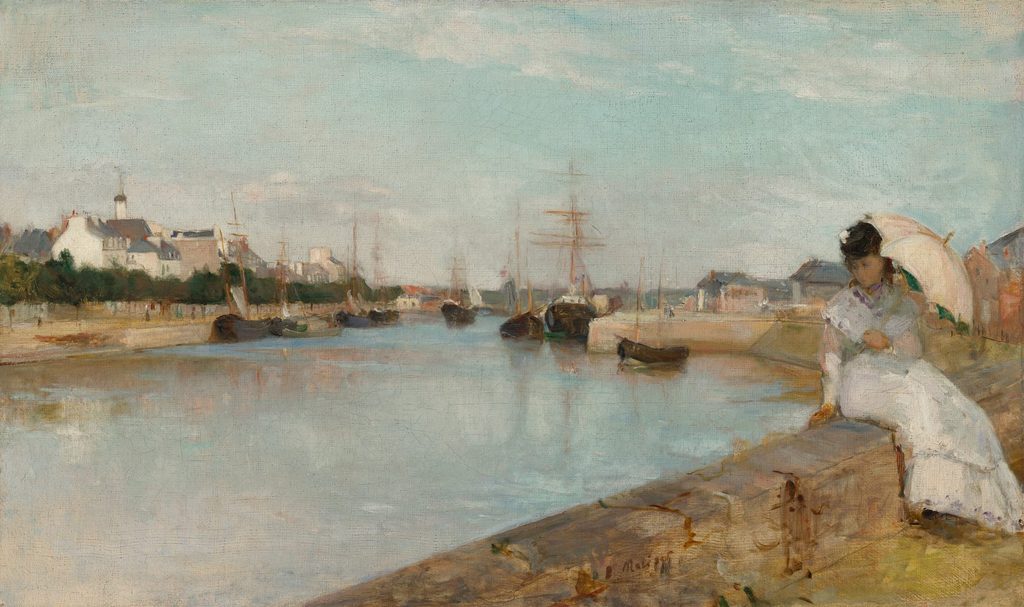
Paintings often look different in person because a photograph translates a physical object into a flat image.
The camera records the visible appearance of the painting from one position, under particular lighting conditions. The resulting image is then reproduced on a screen or printed page, where colour, scale, contrast and detail may differ from the original.
A photograph can communicate the subject, composition and much of the artwork’s visual character.
However, the experience of standing before a painting involves additional information.
We see the work at its actual scale. We can move closer to examine details and step back to consider the whole composition.
We notice the thickness and direction of brushstrokes. We see where paint catches the light, where the surface is matte or glossy and where the artist has allowed the canvas or paper to remain visible.
These qualities can influence how the image feels.
Some paintings depend heavily on their physical surface. Others have relatively smooth surfaces and reproduce particularly well.
There is no universal rule that every original painting must look dramatically better in person.
But seeing the object itself allows us to understand aspects of it that a single photograph may not reveal.
The First Difference Is Scale
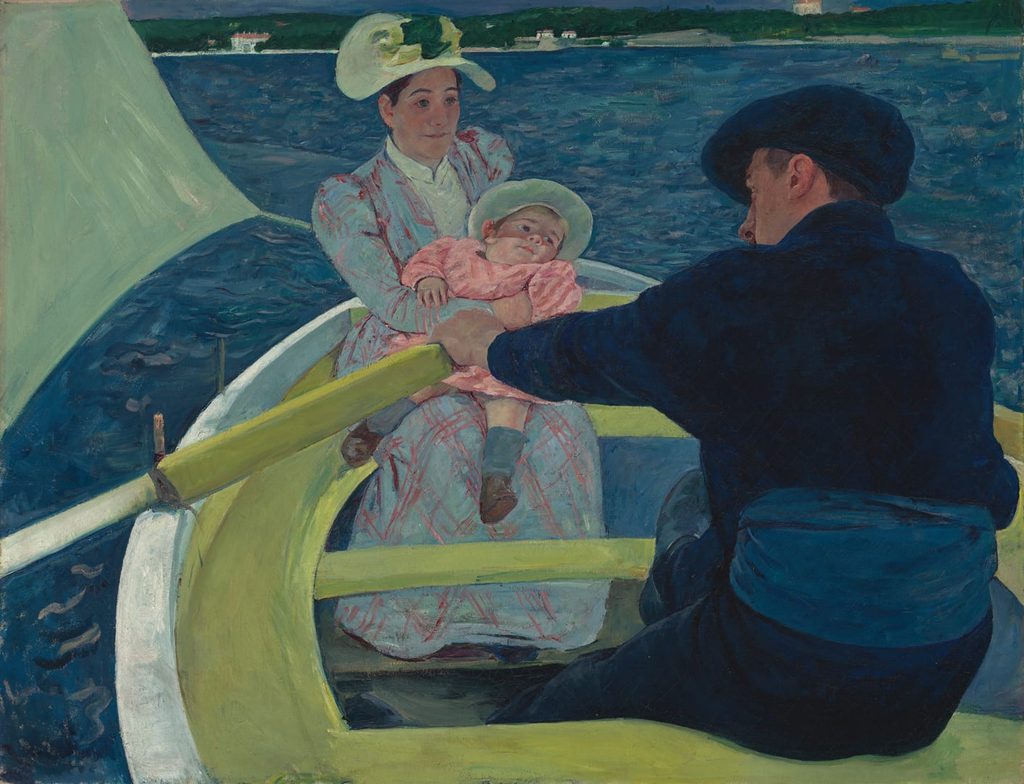
One of the easiest things to misunderstand in an artwork photograph is size.
On a phone, a painting measuring two metres across may appear the same size as a drawing that fits comfortably inside a sketchbook.
Both images occupy a similar rectangle on the screen.
Without a reliable indication of dimensions, our sense of scale becomes uncertain.
This matters because the size of an artwork affects how we experience its composition.
A large painting can occupy a substantial part of our field of vision. Details that appear small in a photograph may be physically broad passages of colour or paint.
We may need to move our eyes across the work, or change our position to understand the whole image.
A small painting encourages a different kind of attention.
We may move closer and examine the relationship between delicate marks, tightly arranged forms or subtle colour changes.
Neither size is inherently better.
A small work can have great visual intensity, while a large painting can feel restrained and quiet.
But scale changes the relationship between the viewer and the image.
A photograph can tell us the dimensions. It cannot completely reproduce the bodily experience of standing before an object of that size.
Why the Same Composition Feels Different at Different Sizes
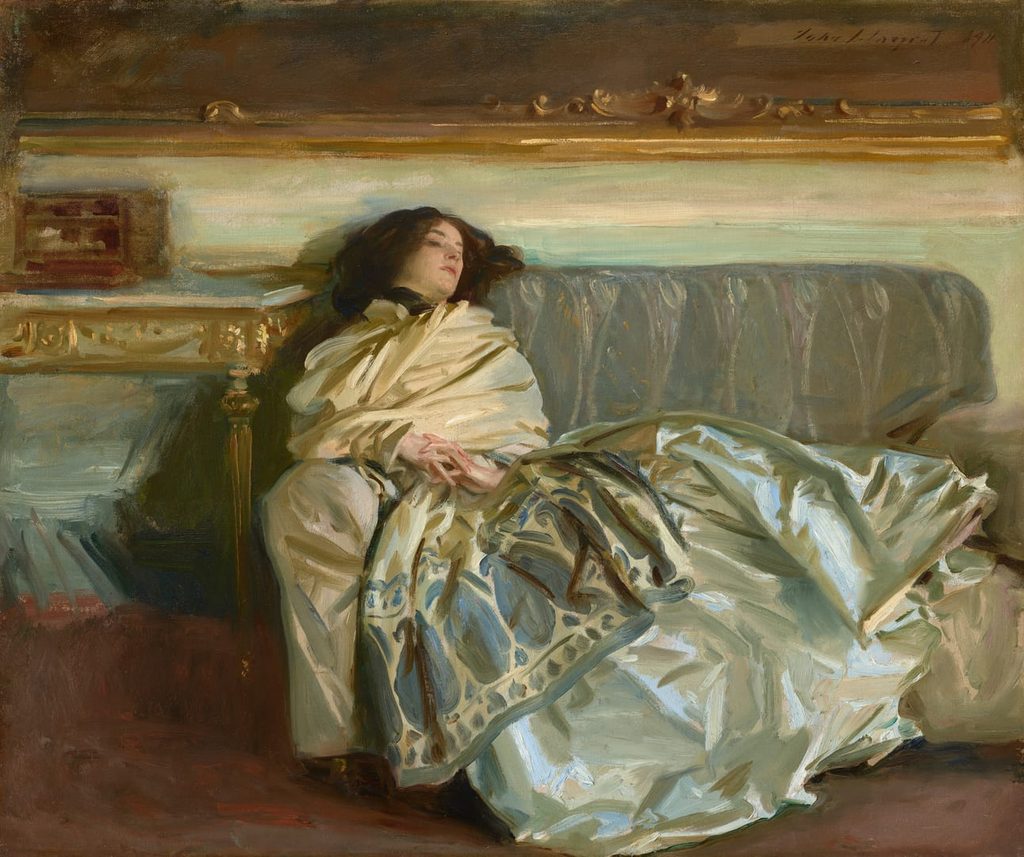
Imagine a painting of a figure standing in a nearly empty room.
Reproduced on a phone, the figure might look relatively small and the surrounding space may seem uncomplicated.
Now imagine that the original painting is considerably larger than a person.
The empty area around the figure might become physically imposing. The distance between the figure and the edges of the canvas may feel significant.
The composition has not changed, but its relationship to the viewer has.
Something similar happens with very small paintings.
A modestly sized landscape may require the viewer to approach closely to see the brushwork. Its intimacy becomes part of the experience.
A digital reproduction can enlarge the painting to reveal detail, but this removes another important piece of information: the size at which the artist actually made it.
Looking at a painting at its intended physical scale can reveal why particular marks, proportions and areas of detail were chosen.
A Painting Has a Surface, Not Just an Image
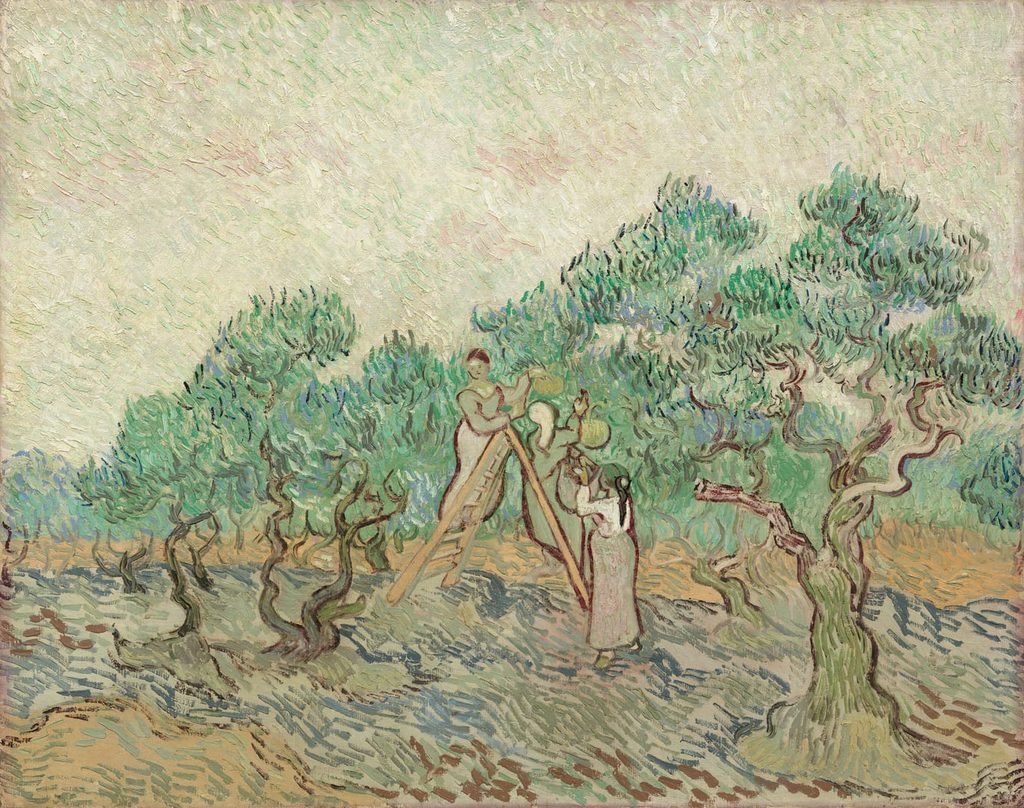
When we look at a reproduction, we tend to concentrate on the image: the portrait, landscape, still life or abstract composition.
In person, the surface becomes much more apparent.
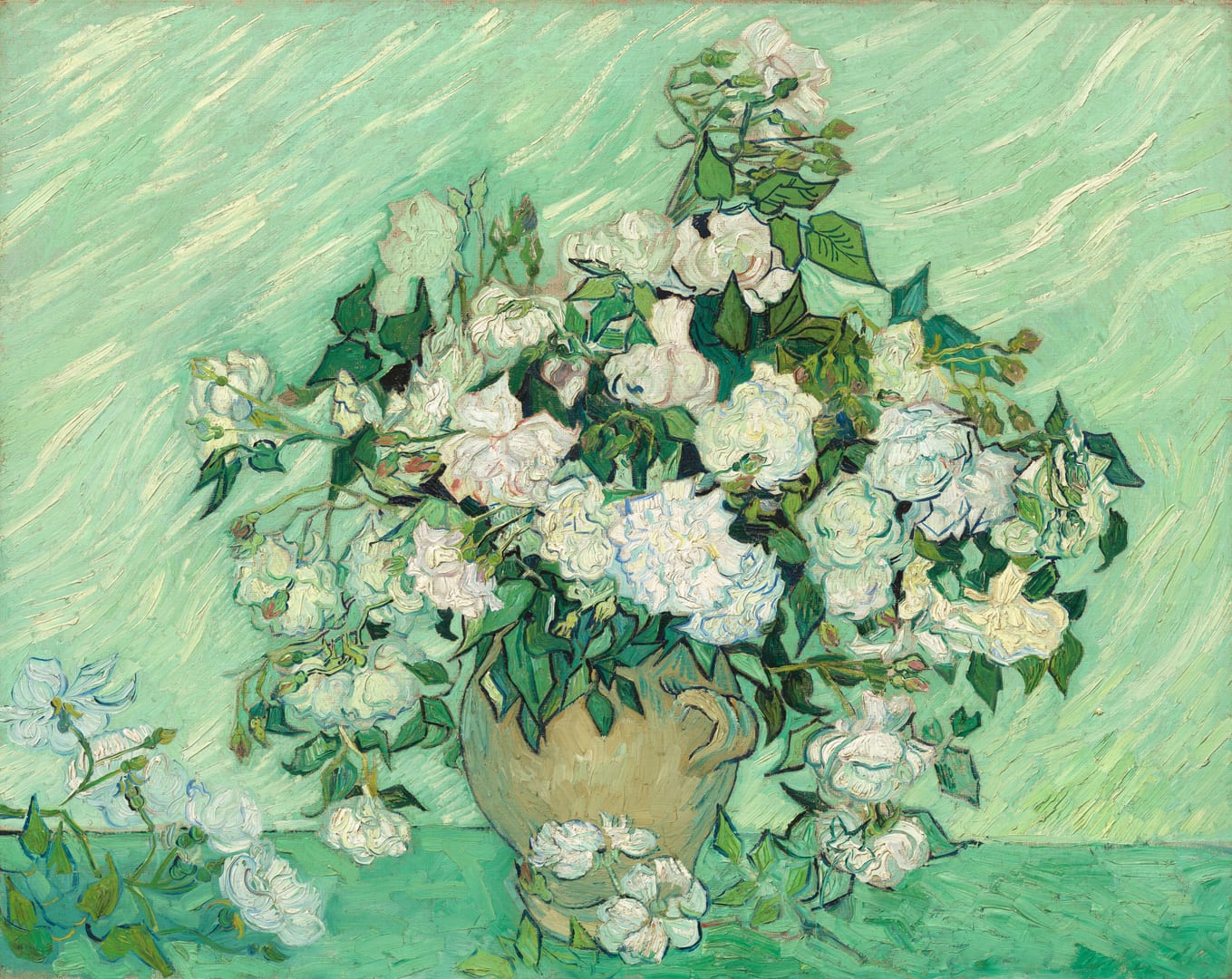
Paint may be thick, thin, smooth, rough, scraped, layered or partially removed.
The underlying canvas might show through. A wooden panel may provide a particularly firm support. Areas of exposed paper can influence the brightness and texture of a work.
The painter’s choice of material affects how the image is constructed.
An oil painting made with broad, raised brushstrokes will behave differently from one built through thin, carefully blended layers.
The difference is not simply decorative.
Texture can reinforce the direction of a movement, draw attention to a particular area or introduce a rhythm across the surface.
It can make the process of painting visible.
A close photograph can show these details, particularly when the lighting is chosen carefully. But a front-facing image of the entire work may conceal much of the surface variation.
What Is Impasto, and Why Is It Difficult to Photograph?
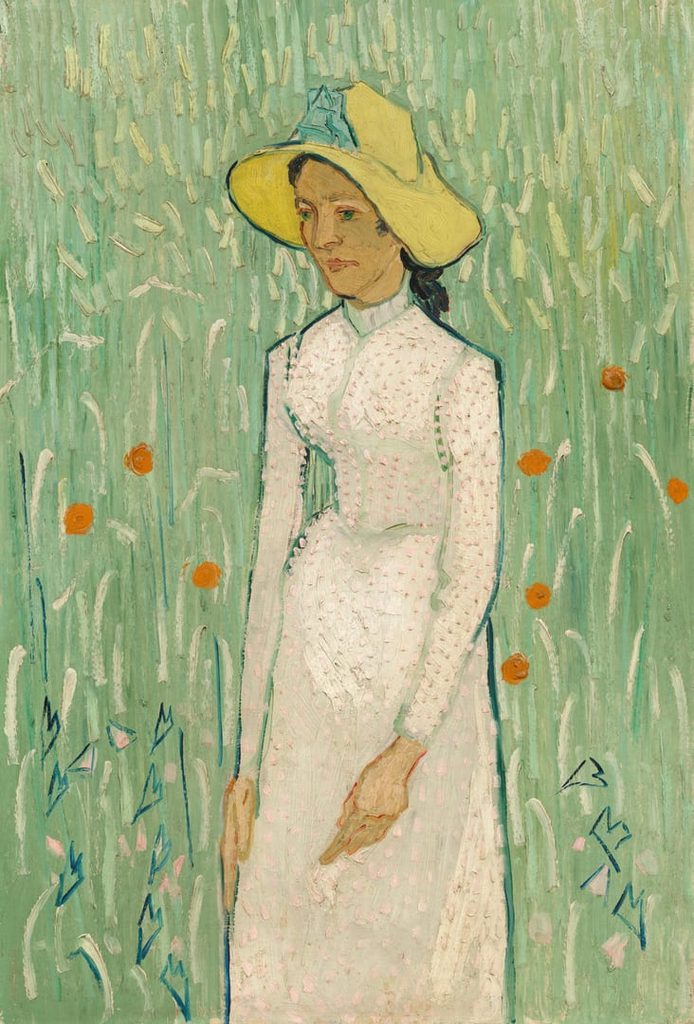
Impasto is a painting technique in which paint is applied thickly enough to create noticeable texture or relief.
The paint may retain the shape of a brush or palette knife, with ridges and raised areas remaining visible after drying.
These physical marks interact with light.
A raised ridge can catch a highlight on one side and cast a small shadow on the other.
When the viewer changes position, the relationship between the surface and the light can change.
In a photograph, the lighting and viewpoint are fixed.
An image taken under frontal illumination may make the surface appear relatively even. Another photograph using light from the side can reveal the paint’s relief much more clearly.
Both are photographs of the same object.
Neither necessarily communicates everything about the surface.
This is one reason why museums and conservators sometimes use specialised lighting to investigate paintings.
Raking light, which strikes a surface from a low angle, can reveal raised paint, irregularities and other physical characteristics that are less obvious under ordinary viewing conditions.
The technique helps demonstrate a simple point: a painting’s appearance changes according to how light reaches its surface.
Brushwork Can Change the Way We Read an Image
Brushstrokes are not only evidence of how paint was applied.
They can contribute to the image’s character and meaning.
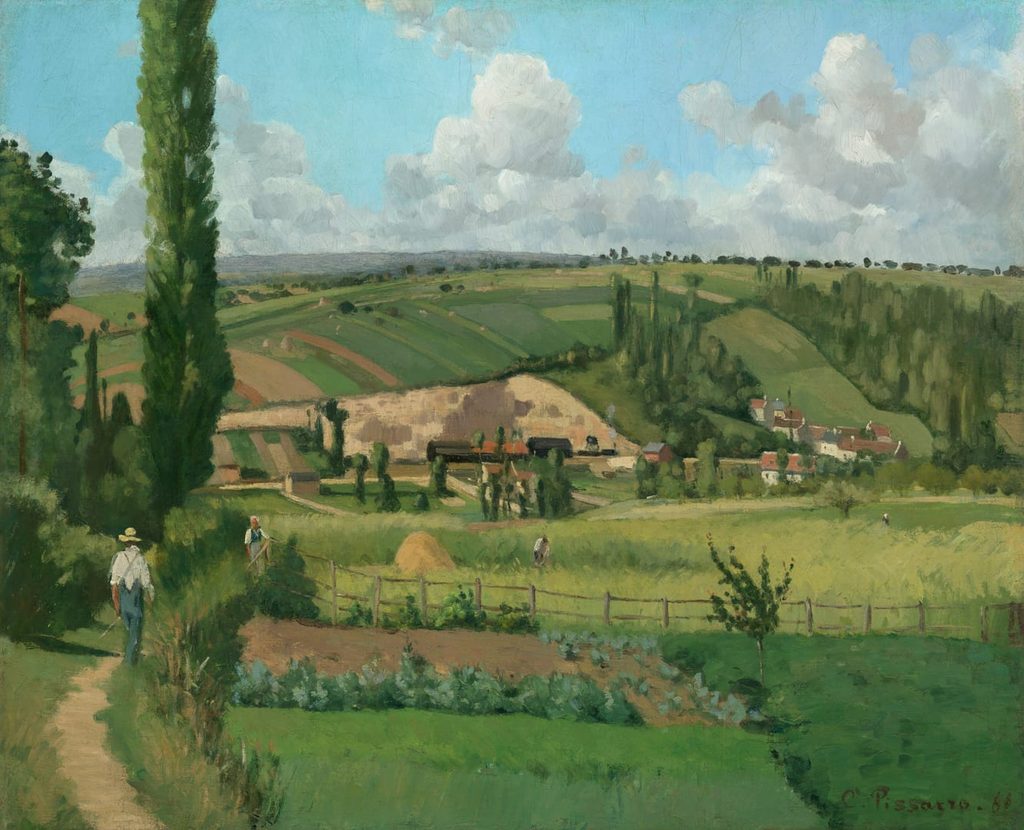
A painter might use short, dense marks to describe a field of grass, broad sweeping strokes to suggest moving water or thin, careful lines to define a face.
From a distance, these marks may combine into recognisable forms.
Up close, they can appear as individual decisions.
This movement between the whole image and the marks that construct it is one of the pleasures of looking at original painting.
The viewer can examine the painting at different distances.
A passage that seems realistic from several metres away might become an arrangement of apparently unrelated marks when viewed closely.
Step back again and the forms return.
A digital image can imitate some of this experience through zooming, but it still presents the marks as pixels rather than material on a physical support.
The distinction becomes particularly clear in paintings where the handling of paint is central to the artist’s approach.
Colour Is More Complicated Than It Looks on a Screen
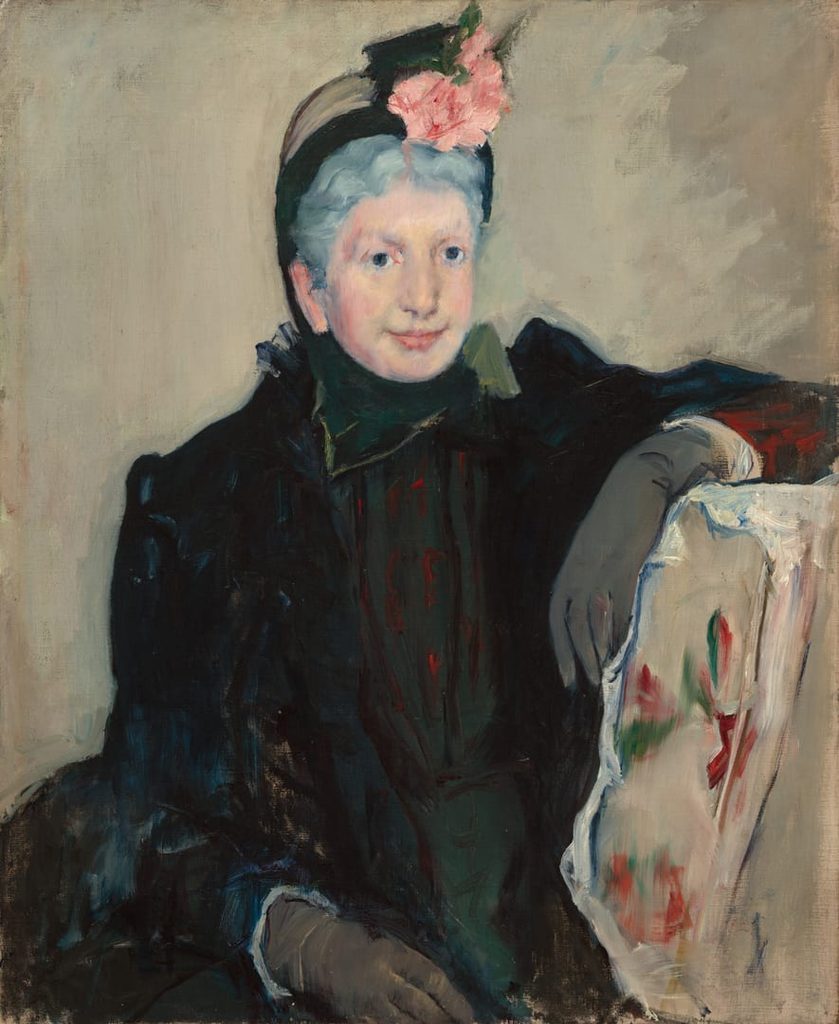
Colour is another area in which photographs can differ from original paintings.
Professional artwork photography can be extremely accurate. Museums invest considerable expertise in photographing, calibrating and checking reproductions.
Even so, a digital image is not the artwork itself.
Cameras, lighting, editing processes and screens all influence the colours we see.
A painting photographed under warm light may look different from the same work photographed under cooler illumination.
The camera’s colour settings can affect the result. Editing may adjust brightness, contrast or saturation.
After the image is published, the viewer’s screen introduces further variation.
Different devices display colours differently. Screen brightness, colour profiles and surrounding lighting can influence what appears on the display.
This means that two people looking at the same online artwork photograph may not see precisely the same colours.
The original painting does not change because a screen is brighter or dimmer, although its appearance can still vary with the physical light falling on it.
The important point is that a digital reproduction passes through several stages before reaching the viewer.
Each stage can influence the result.

Why Certain Colours and Finishes Are Harder to Reproduce
Not all colours or materials are equally straightforward to reproduce.
Some paints contain pigments that interact with light in ways that are difficult to represent fully through standard digital imaging.
Metallic, pearlescent or iridescent materials are particularly dependent on lighting and viewing angle.
A metallic surface may appear luminous from one position and comparatively dark from another.
A photograph fixes one of those appearances.
Deep colours can also present difficulties.
A painting containing subtle differences between several dark blues may lose some of those distinctions on a display with limited shadow detail or unsuitable brightness settings.
The opposite can happen in very light areas.
Several pale colours may appear almost identical when reproduced against a bright screen.
These differences do not mean photographs are unreliable.
They mean colour reproduction is a technical process that benefits from careful lighting, calibration and viewing conditions.
For a painting in which colour relationships are especially important, seeing the original can provide useful additional information.
Light Changes as You Move Around a Painting
A photograph usually provides a single chosen view.
In a gallery, the viewer can move.
A small change in position may reveal reflections that were previously invisible or reduce glare across a glossy passage of paint.
Side lighting can emphasise texture. Diffuse lighting may make colour relationships easier to examine.
A painting with a highly varied surface can therefore appear subtly different as we move around it.
This is especially noticeable when the artist has combined contrasting materials or finishes.
A matte area may absorb and scatter light differently from a glossy painted surface.
The effect can be quiet rather than dramatic, but it contributes to the physical presence of the work.
The important distinction is that a painting exists within changing conditions, while a photograph preserves one selected appearance.
That selected appearance may be excellent.
It is simply not the only appearance the object can have.
The Physical Edge of a Painting Matters
Artwork photographs often show the painted image without its surrounding context.
Sometimes the photograph is cropped precisely to the edges of the composition.
This is useful when the aim is to study the image.
But it can conceal information about the physical object.
A canvas has edges and a depth. A work on paper may have irregular boundaries. A painted panel can appear different depending on how its edges are finished.
The support may also be visible around the image.
These characteristics influence our sense of the work as an object.
A painting with deliberately exposed canvas around its edges creates a different impression from one where paint extends across the entire surface.
A small work on paper with generous blank margins may depend on those margins as part of the composition.
Cropping them away can change how the image is understood.
The edge is not always incidental.
Sometimes it forms an important boundary between the artist’s marks and the surrounding space.
Frames Alter the Experience Too
The frame is another physical element that photographs may omit.
Some online reproductions show paintings without frames to make the image easier to examine.
Other photographs include the frame but provide little sense of its depth, material or relationship to the artwork.
A frame can change how a painting is perceived.
A narrow, dark frame creates a different boundary from a wide gilded frame. A pale wooden frame may soften the transition between a painting and the wall.
For works on paper, a mount introduces space around the image and changes its apparent scale.
These effects are not always dramatic, but they contribute to the viewer’s experience.
Framing is particularly relevant when considering how an artwork belongs within a physical setting.
The painting is not suspended in a neutral digital rectangle. It has a size, an edge and a relationship to whatever surrounds it.
Seeing those relationships in person can help us understand how the work has been presented.
Why the Distance Between You and a Painting Matters
Looking distance influences which details become visible.
Standing close to a painting allows us to investigate individual marks, surface texture and small decisions.
Standing further away makes it easier to understand the overall arrangement of forms and colours.
Both views can be important.
Some paintings rely on broad relationships that become clearer from a distance. Others reward close examination because much of their interest lies in delicate details.
In a gallery, we can move between these positions.
We may begin by noticing the image as a whole, then approach to examine a particular area.
After looking at the details, stepping back often changes our understanding of the entire composition.
The details become part of a larger structure.
Digital zoom provides valuable access to small features, sometimes beyond what would be possible in a gallery where barriers or conservation restrictions limit how closely we can approach.
However, zooming also changes the apparent size of the work.
A tiny passage of paint can fill the screen and seem much more substantial than it does within the original composition.
That can be extremely useful for research, but it is a different viewing experience.

Photographs Can Make Some Paintings Look Better Than They Do in Person
It would be misleading to suggest that photographs always diminish paintings.
Sometimes they improve the immediate impression of an artwork.
Carefully selected lighting can emphasise colours and reduce distractions. Cropping removes surrounding objects. Editing can make the composition appear clear and balanced.
A photograph may present the work under especially flattering conditions.
The viewer encounters a controlled image rather than an object in a room.
This can be useful for understanding the composition.
But it may also create expectations.
A painting may appear more saturated online than it does under ordinary gallery lighting. A digitally enlarged image may suggest an intensity of detail that feels different at the work’s true scale.
In other cases, a painting that looks unremarkable online becomes much more interesting when its surface and physical presence are visible.
Neither response automatically tells us whether the artwork is good.
It simply shows that different methods of presentation emphasise different characteristics.
Why Excellent Artwork Photography Still Matters
Despite these limitations, photographs are essential to how we encounter art.
They make collections accessible to people who cannot visit galleries or museums.
They allow us to compare artworks held in different countries, examine details and discover artists whose work we might never otherwise see.
High-resolution images are particularly valuable for studying composition, iconography, brushwork and historical details.
Photographs also preserve records of works that may later be lost, damaged, altered or moved.
For researchers, artists, students and curious readers, access to digital collections has transformed the possibilities of looking at art.
The distinction is not between a good original and a bad photograph.
A photograph and a painting do different things.
A well-made photograph can communicate a remarkable amount of information.
What it cannot do completely is replace the experience of the painting as a physical object.
Recognising that limitation does not reduce the value of photography.
It helps us understand what kind of information each medium offers.

How to Judge a Painting More Accurately from Online Images
If you are viewing paintings online, there are several ways to build a clearer understanding of the original.
Start by checking the dimensions.
A photograph without measurements tells you very little about scale.
Next, look for more than one image.
A full view is useful for understanding composition. A close-up can reveal brushwork and surface detail. A photograph showing the painting in a room can provide a better sense of physical size.
Images taken from a slight angle may show the depth of a canvas or raised passages of paint.
Pay attention to the stated materials.
Oil on canvas, acrylic on wood panel and watercolour on paper can produce very different surfaces.
Knowing the medium will not tell you everything about the appearance of a particular artwork, but it provides useful context.
Look for consistent colours across photographs rather than relying on one highly saturated image.
If colour accuracy is particularly important, remember that your screen may influence the result.
Finally, distinguish between the painted image and its presentation.
Check whether the photograph includes the frame, and whether the listed dimensions refer to the image, the support or the framed work.
These details help produce a more realistic understanding of what is being shown.
How to Look at a Painting When You See It in Person
There is no single correct way to look at a painting, but a few habits can reveal qualities that are easy to miss.
Begin at a comfortable distance.
Take in the composition before approaching the work.
Notice which areas attract your attention and how the artist has arranged light, colour and forms.
Then move closer, provided the gallery permits it.
Examine the surface without touching it.
Look at the direction of the brushstrokes and the relationship between thick and thin passages of paint.
Notice whether parts of the underlying support remain visible.
Consider whether the paint has been layered, scraped or blended.
Move slightly to one side if this can be done without disturbing other visitors or approaching too closely.
The changing angle may make texture or gloss more apparent.
Then step back again.
Try to notice whether your understanding of the image has changed.
Details that initially seemed isolated may begin to contribute to the larger composition.
A painting that appeared smooth from a distance might now reveal a surprisingly active surface.
Alternatively, a work with conspicuous marks might resolve into a very quiet image when seen as a whole.
Allow yourself enough time to notice these shifts.
The experience is less about finding a hidden meaning than about recognising what the physical artwork is doing.
Does Seeing a Painting in Person Change Its Meaning?
Sometimes it does.
A work’s scale, materials and presentation can contribute directly to its meaning.
An extremely large painting may create a different relationship with the human body from a small drawing on paper.
A heavily worked surface can make the artist’s physical process unusually apparent.
An artwork incorporating reflective or unusual materials may depend on the viewer’s changing position.
However, not every painting relies on physical effects to communicate its subject.
A relatively smooth portrait might retain much of its emotional and compositional power in reproduction.
The meaning of a painting is not determined by texture alone.
Historical context, symbolism, subject matter and the viewer’s own experience remain important.
Seeing the original simply provides another level of information.
Sometimes that information changes our interpretation. Sometimes it confirms what we already understood from the photograph.
Both experiences are valuable.
The Difference Between Seeing and Remembering a Painting
There is another aspect of looking at original art that photographs can influence.
Once we know an artwork through reproductions, we may feel that we already know it well.
We remember the composition, the main colours and perhaps a few important details.
Encountering the original can challenge that familiarity.
An unexpectedly small painting may feel more intimate than the image we remembered. A large canvas may reveal qualities that were never apparent in reproductions.
The experience can also work in reverse.
After seeing an original painting, we may return to its photograph with a different understanding.
We know where the surface catches the light. We remember the size of the canvas and the movement of the brushwork.
The photograph becomes more informative because we can connect it to a physical encounter.
Looking and remembering begin to support one another.
This is one reason why visiting galleries can change how we respond to art even when we later encounter it mainly through books and screens.
We carry some understanding of the physical object into the reproduction.
Frequently Asked Questions About Viewing Paintings in Person
Why do original paintings look different from photos?
Original paintings have physical qualities such as texture, scale, surface variation and changing reflections. Photographs reproduce the image under particular conditions, while screens can also affect colour and contrast.
Can photographs accurately reproduce the colours of paintings?
Professional photography can reproduce artwork colours very closely, but complete consistency is difficult because lighting, cameras, editing and display devices influence the result. Some finishes and pigments are particularly challenging to represent.
What is the best way to see the texture of a painting?
Look at the work from an appropriate close distance without touching it. Lighting from the side can make raised brushstrokes more visible, although the gallery’s lighting and viewing restrictions should always be respected.
Why is artwork scale important?
Scale affects how viewers physically relate to a painting. A large work can occupy much of the field of vision, while a small work may encourage close, intimate looking. Both experiences can be difficult to reproduce accurately on a screen.
Are online artwork photographs reliable?
They can be very useful and, when professionally produced, highly accurate. For a fuller understanding, check dimensions, materials, close-up images and photographs showing the artwork in a physical setting.
Is viewing art online as valuable as visiting a gallery?
The experiences offer different benefits. Digital collections provide accessibility, comparison and detailed study. Visiting a gallery provides a direct encounter with an artwork’s physical scale, materials and presence. One does not eliminate the value of the other.
The Part of Painting That Belongs to the Painting Itself
A photograph lets us carry an image away from its original location.
We can return to it on a screen, enlarge details, compare it with other works and spend time looking without travelling anywhere.
That accessibility is enormously valuable.
But a painting is more than the image reproduced in the photograph.
It is also paint, support, surface, scale and an object occupying a particular place.
The artist’s decisions are present not only in what has been depicted but in how the image has been physically made.
Some of those decisions are visible from a distance. Others become apparent only when we approach.
A photograph may show the composition beautifully while leaving the surface relatively quiet. It may reveal details while making the original size difficult to imagine.
Neither limitation is a failure of photography.
It reflects the difference between experiencing an object and seeing an image of that object.
The next time you encounter a painting you have previously known through photographs, give yourself a moment to look beyond the familiar picture.
Notice its size.
Look at the edges.
Pay attention to the surface, the light and the marks that make up the image.
Then step back and see how those physical details become part of the painting as a whole.
You may discover that what you thought you knew was only one part of the work.
Leave a Reply