
No products in the cart.
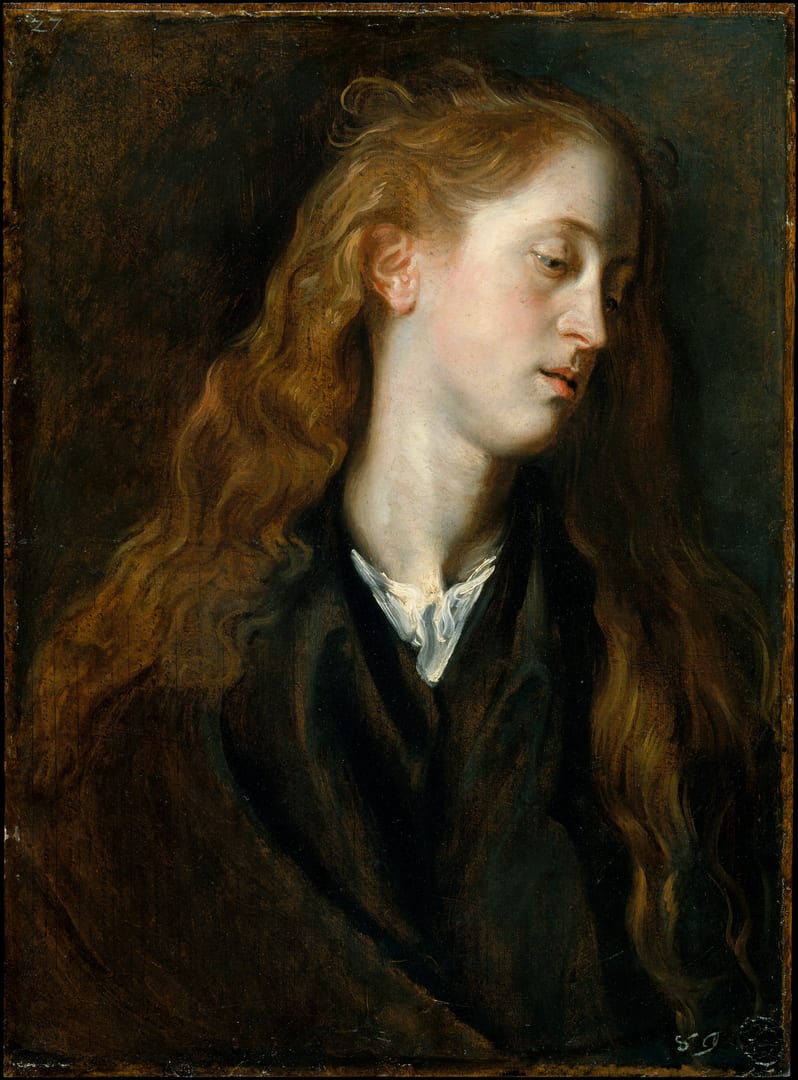
What Is an Artist’s Study? The Ideas Behind a Finished Work
An artist might spend several hours drawing the same hand, painting a small patch of sky or arranging a few objects on a table. The result may never appear in an exhibition. It might be left in a sketchbook, pinned to a studio wall or put aside while another idea takes its place.
Yet that apparently modest piece of work can tell us a great deal about how art is made.
Some of the most revealing works in art history were created not as finished pictures but as studies. They show painters testing an arrangement, investigating the way light falls across a surface, working out the movement of a figure or trying to understand something they have observed.
Occasionally, a study becomes more interesting than the painting it was intended to support.
What makes these works compelling is that they let us see artistic decisions before they have settled into a final form.
To understand an artist’s study is to see painting and drawing differently. Instead of treating an artwork as something that simply appears, complete and resolved, we begin to recognise the observation, uncertainty, experimentation and revision that can lie behind it.
What Is an Artist’s Study?
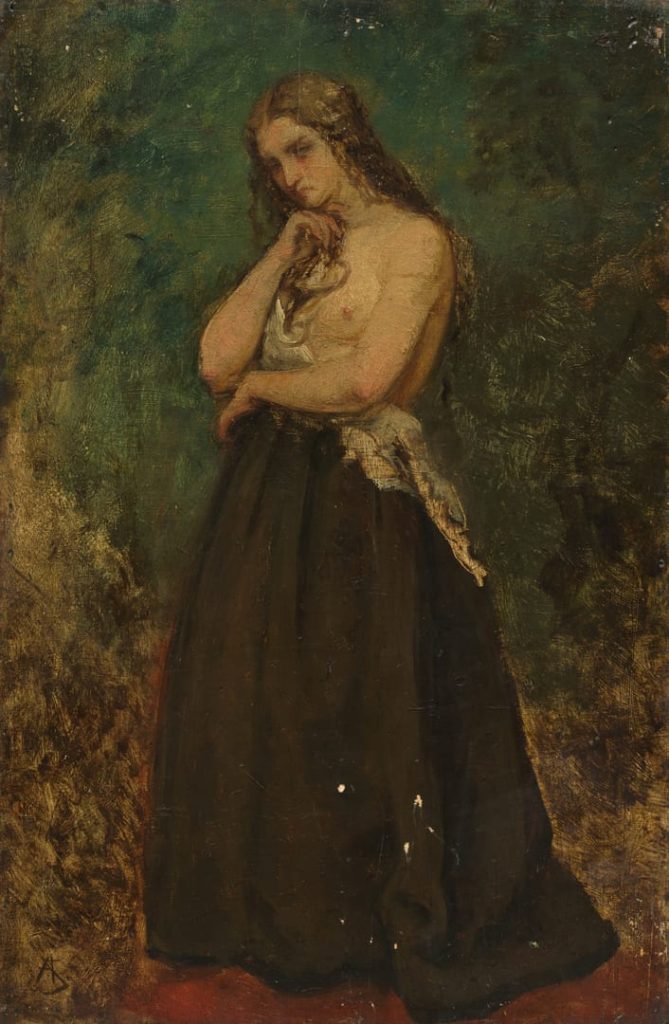
An artist’s study is a drawing, painting or other exploratory work made to investigate a subject, technique or visual idea.
A study might help an artist understand the proportions of a figure, observe a particular lighting effect, test a composition or become more familiar with a material.
Some studies are made in preparation for a larger or more complex artwork. Others are exercises in observation or experimentation, without any intended finished piece.
The distinction matters.
Not every study is a preliminary version of something else. A painter might make a series of small landscapes simply to understand changing weather. A portrait artist might draw faces to explore expression. An abstract artist might experiment with colour relationships without deciding whether those experiments will lead to a larger work.
An artist’s study is generally defined by its investigative purpose rather than its appearance.
It can be detailed or loose, carefully planned or spontaneous. It may take a few minutes or several days. Some studies are little more than a handful of lines. Others look complete enough to hang on a wall.
The term describes what the artist was trying to discover, not necessarily how polished the result appears.
What Is the Difference Between a Sketch and a Study?
The words sketch and study are closely related, and artists frequently use them interchangeably. However, there is a useful distinction.
A sketch often suggests a quick visual record of an observation or idea. It might capture the outline of a person, the arrangement of buildings or the first impression of a landscape.
A study usually implies a more focused investigation.
An artist could sketch a seated person in thirty seconds to capture the pose. They might then spend an hour studying the relationship between the shoulder, neck and head.
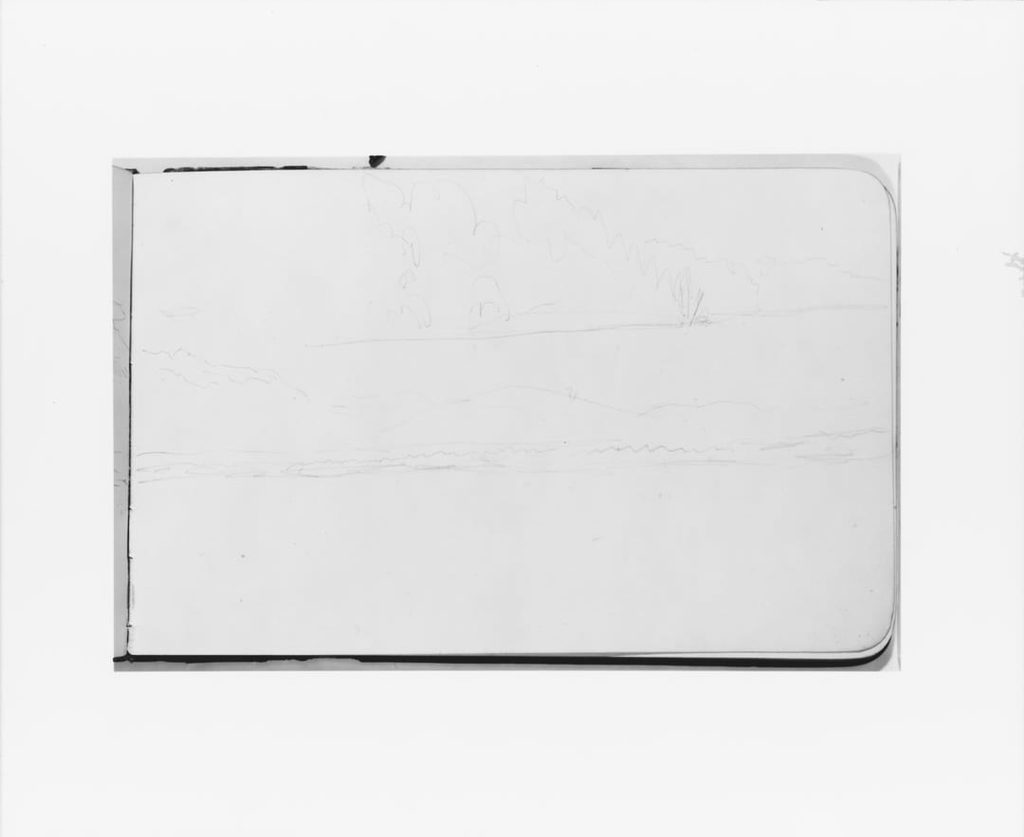
Both works could be made in pencil. Both might be unfinished. Their purpose, however, would be slightly different.
A sketch often records something before it disappears. A study investigates how something works.
In practice, the boundary is flexible.
A drawing made rapidly from life might also be a serious examination of movement. A carefully developed composition study might retain the loose appearance of an initial sketch.
Rather than trying to classify every drawing precisely, it is more useful to ask what the artist was investigating.
Why Do Artists Make Preparatory Studies?
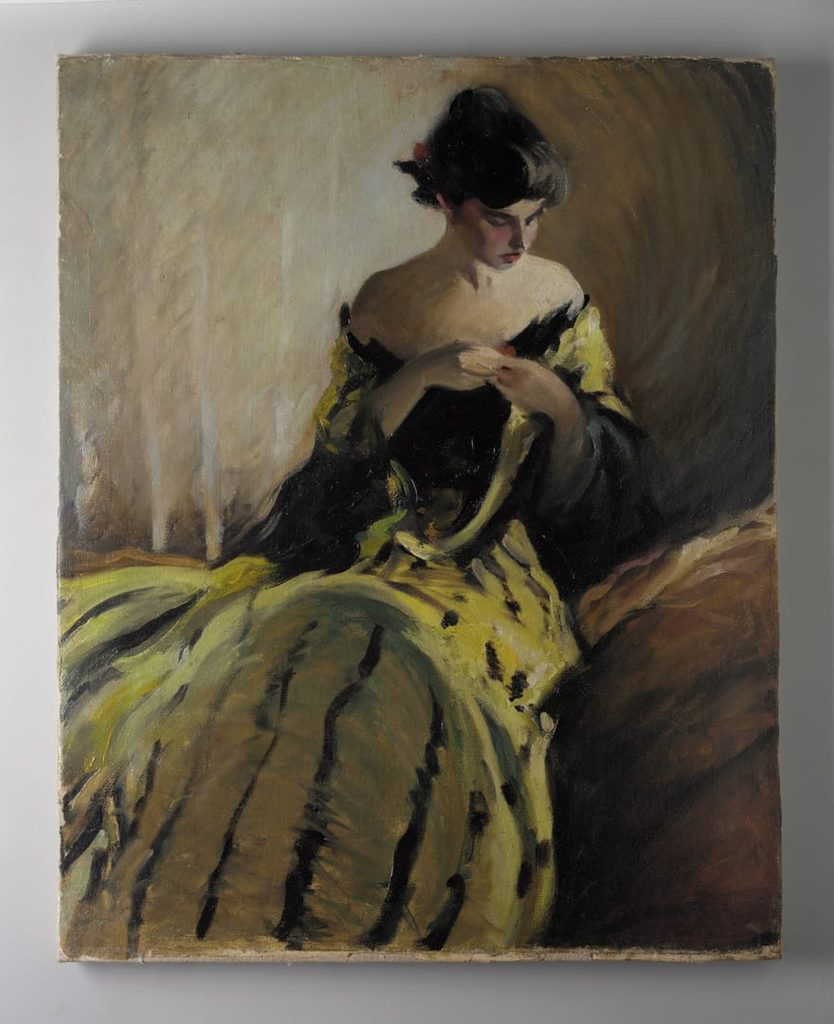
One reason is simple: making a painting involves decisions, and not all those decisions are best made on the final canvas.
Consider a painting containing several figures in a crowded room.
The artist must decide where each person stands, which figures overlap, how light enters the space, where the viewer should look first and how the arrangement communicates a particular feeling.
Attempting to resolve everything directly on a large painting can be difficult.
Preparatory studies allow artists to explore alternatives without committing themselves to one solution.
A painter might move a figure to the left, alter the direction of a face or remove an object that distracts from the composition. They can make these changes on paper before transferring the chosen arrangement to a canvas.
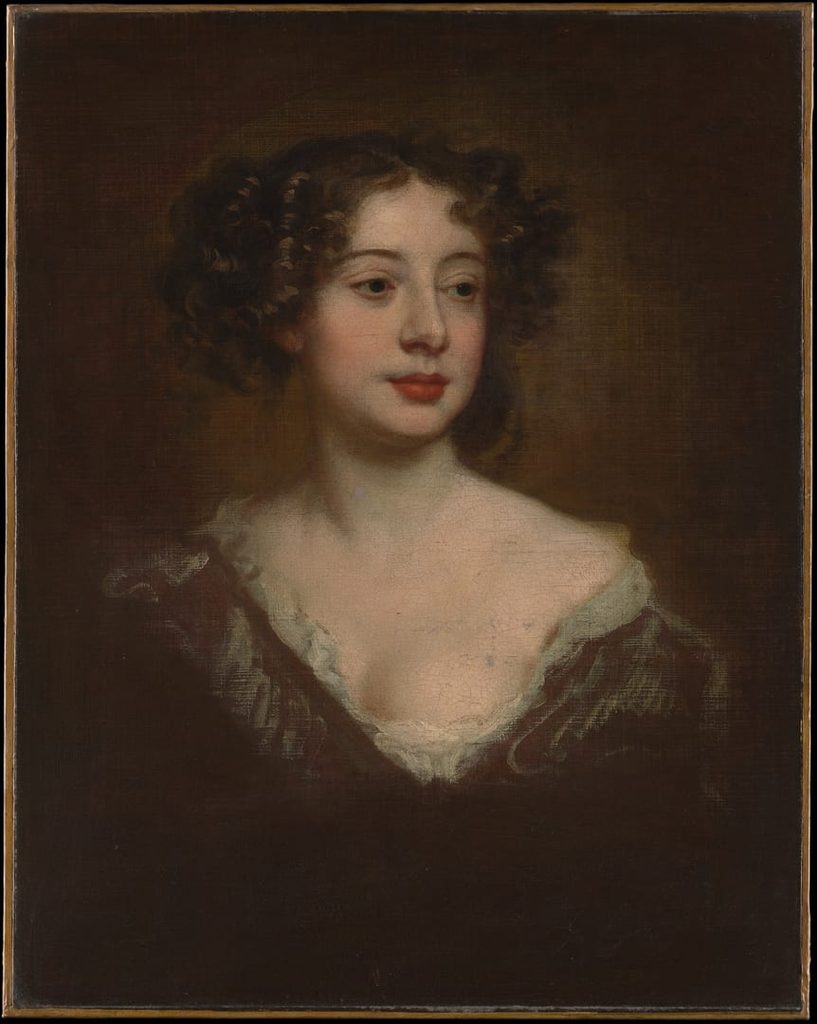
Studies also allow artists to concentrate on individual problems.
A hand may need further observation. A difficult fold of fabric might require repeated drawing. The lighting may be convincing in one area but confusing in another.
Working through these questions separately can help an artist understand the finished image more clearly.
However, studies are not simply a way to avoid mistakes. Experimentation may lead to ideas that would never have appeared through careful planning alone.
A seemingly unsuccessful drawing can suggest an unexpected composition. An accidental colour combination might become the central feature of a painting.
The study is a place where those discoveries can happen.
The Main Types of Artistic Studies
Different studies answer different questions. Understanding their purpose makes them easier to appreciate.
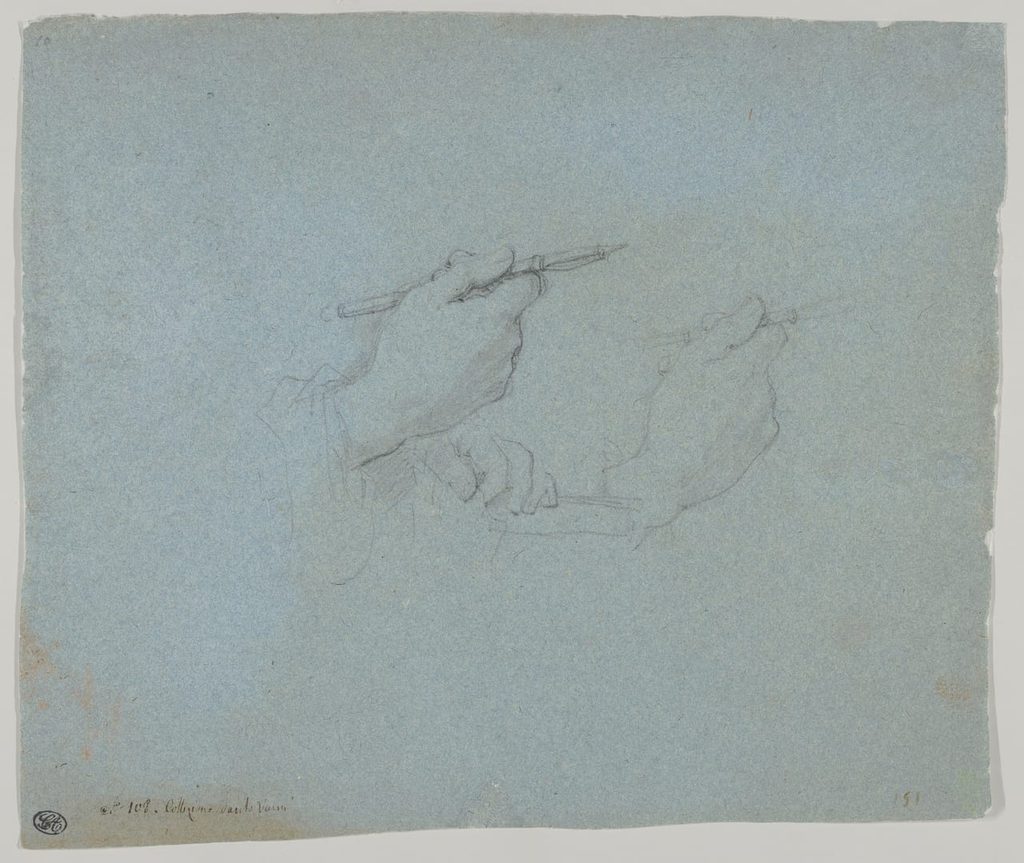
Figure Studies
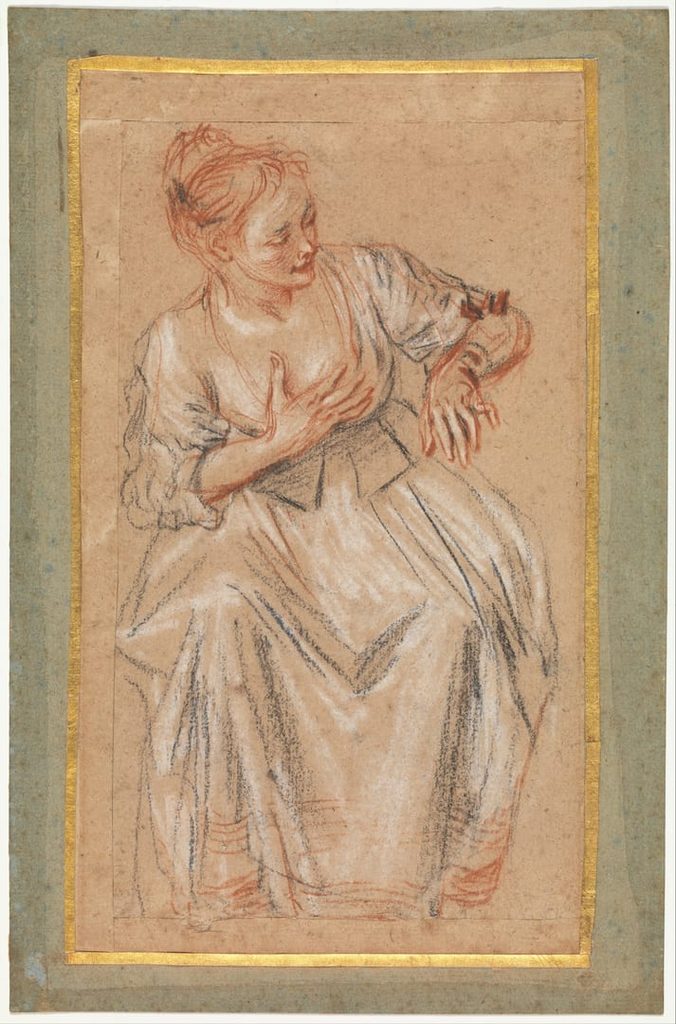
A figure study investigates the human form.
Artists may focus on posture, anatomy, proportion, movement, gesture or the relationship between several figures.
Some figure studies are highly detailed. Others reduce the body to a few essential lines.
The important question is not whether every anatomical detail has been included. It is whether the artist has understood something about the body’s structure or movement.
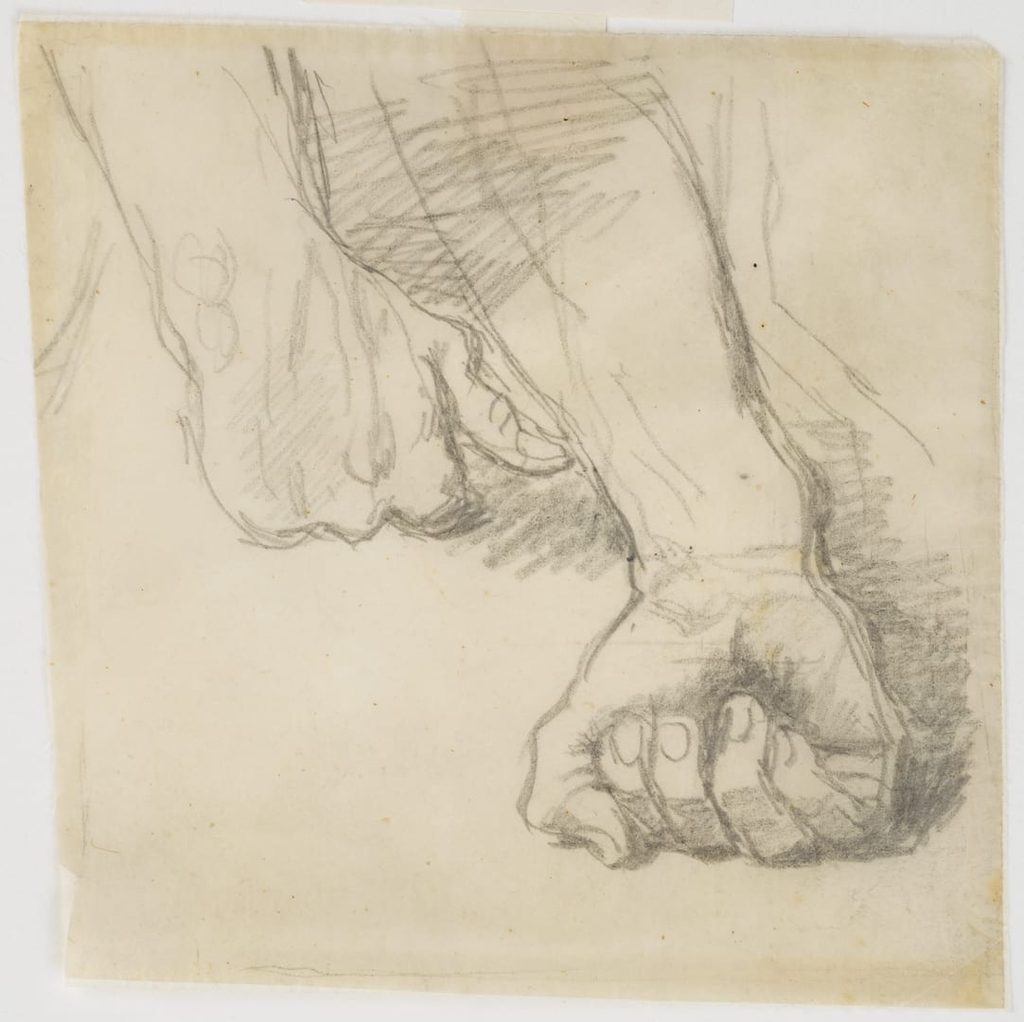
A drawing of a person leaning forward, for example, might concentrate almost entirely on the distribution of weight.
The face may be unfinished because facial expression was not the problem being studied.
Composition Studies
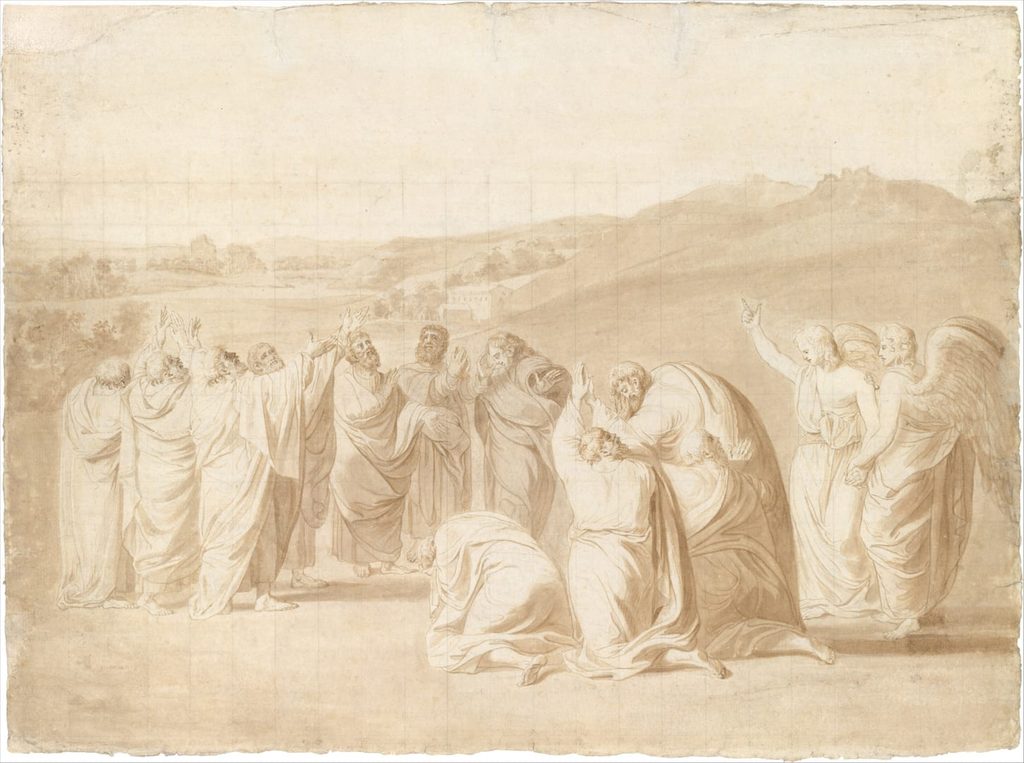
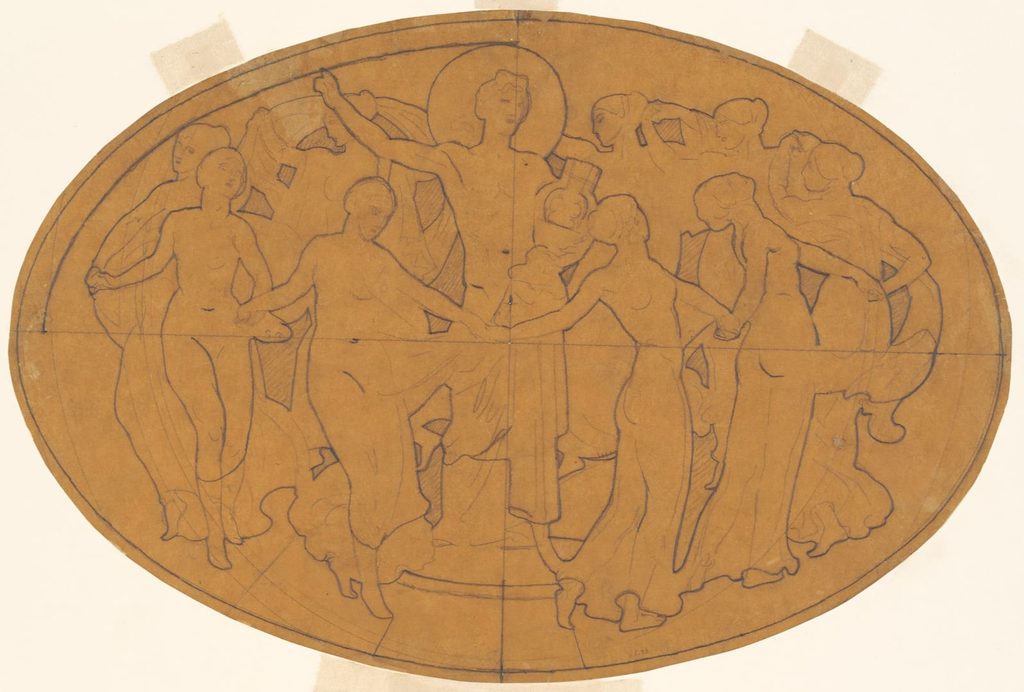
A composition study explores how the parts of an artwork relate to one another.
The artist considers the arrangement of shapes, figures, objects, empty spaces, lines and areas of visual emphasis.
A small compositional drawing can be extraordinarily useful.
At a reduced scale, it becomes easier to judge whether a painting has a clear structure. The artist can see whether the darkest area dominates the picture or whether the arrangement directs attention away from the intended subject.
Some painters make several small versions of a composition before beginning the final work.
What changes between the versions is often revealing. An object might disappear, the horizon may shift or a large empty area might be introduced to create a different atmosphere.
Colour Studies
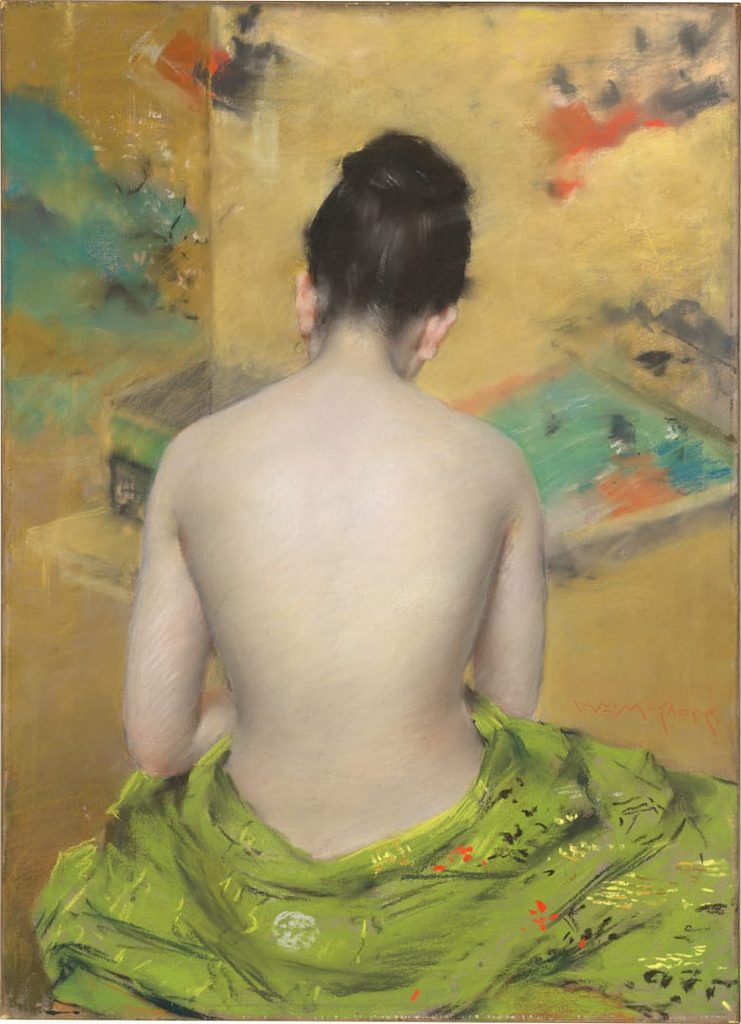
A colour study investigates relationships between colours before or during the making of an artwork.
An artist might test whether a muted green belongs beside a warm pink, how a particular blue behaves in shadow or whether a composition needs a stronger contrast.
Colour studies need not reproduce the full detail of the intended painting.
A few broad areas of colour may be sufficient to establish its overall character.
These experiments are particularly useful because colour rarely operates in isolation.
A grey can appear warm beside a blue and cool beside an orange. A pale colour may seem brighter against a dark surrounding area.
A colour study helps the artist judge these relationships together rather than selecting each colour separately.
Tonal Studies
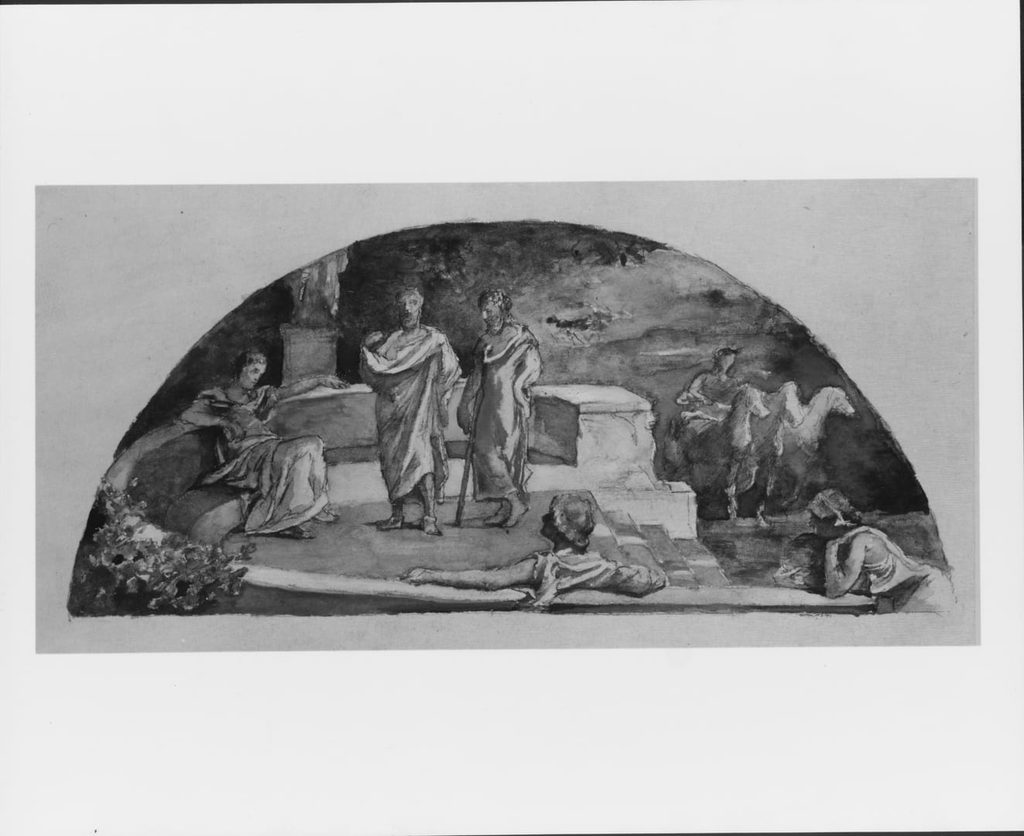
A tonal study concentrates on lightness and darkness.
It may be completed in charcoal, graphite, ink or a restricted range of paint colours.
Removing complicated colour relationships can make the structure of an image easier to understand.
An artist might discover that a painting contains too many equally strong highlights, or that the main figure disappears into the background because both have similar tonal values.
By studying these relationships separately, the artist can make choices about emphasis, atmosphere and depth.
Landscape and Light Studies
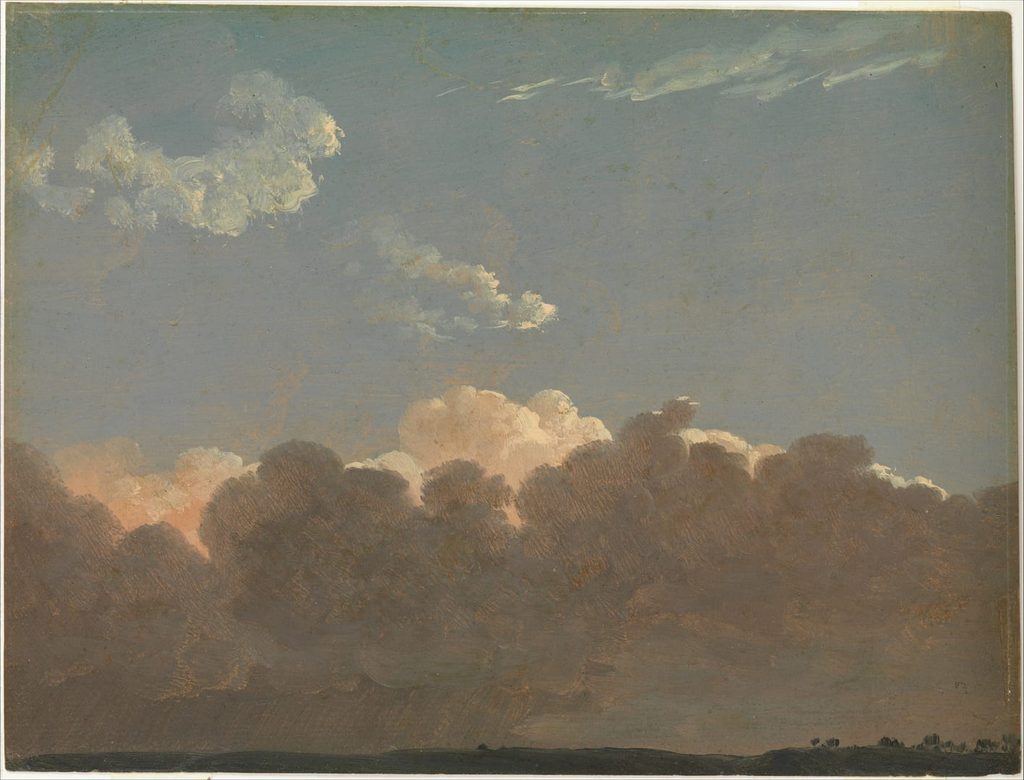
Landscape studies are often concerned with conditions that change.
Clouds move. Shadows lengthen. A building that appears golden in afternoon sunlight may become almost blue under an overcast sky.
Painting outdoors requires the artist to respond to these changes.
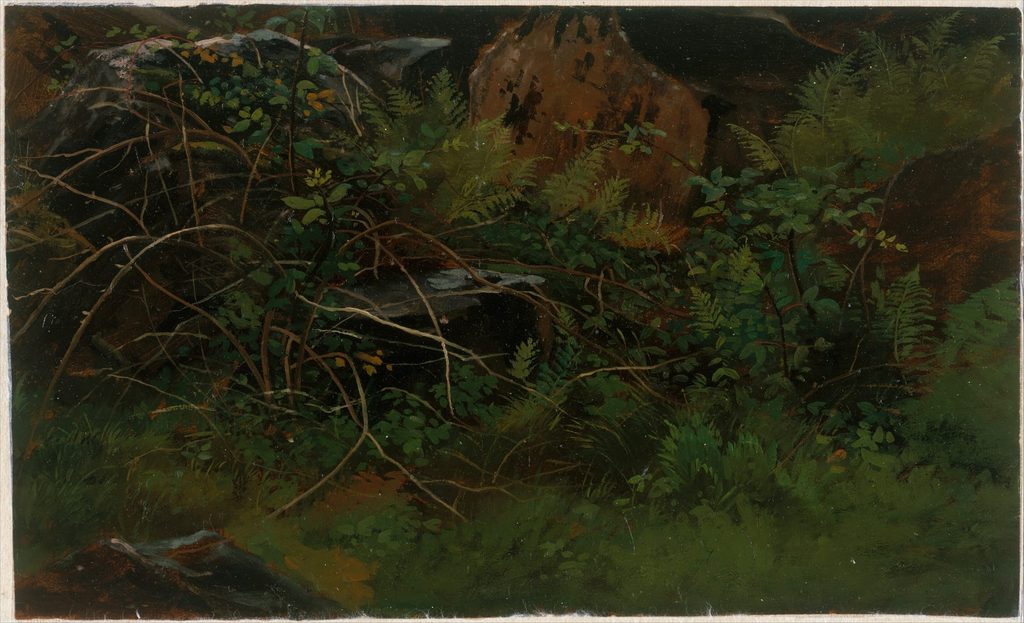
A landscape study might focus on one particular effect, such as sunlight passing through leaves or the reflection of a cloudy sky on water.
The artist may deliberately leave out architectural details, distant figures or other information that does not contribute to the investigation.
Material and Technique Studies
Some studies are primarily concerned with what materials can do.
A painter might investigate the effect of applying thin layers of oil paint over an opaque ground. Another might explore scratching into wet acrylic, combining charcoal with paint or working on an absorbent wooden surface.
These experiments can appear abstract even when the eventual artwork is representational.
Their purpose is to discover how a surface responds, how materials interact and what sort of marks are possible.
For an artist working across several media, these studies can be especially important.
They allow the process of making to become part of the development of the idea.
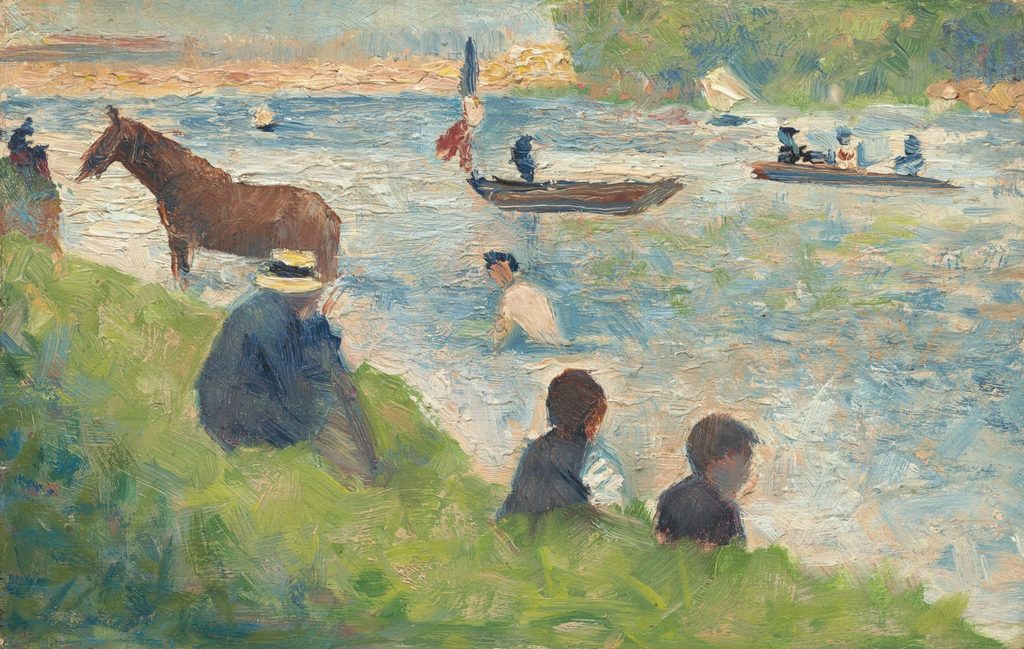
A Famous Example: Georges Seurat’s Studies for Bathers at Asnières
Georges Seurat’s Bathers at Asnières, completed in 1884, is an ambitious painting showing people relaxing beside the River Seine.
The composition appears carefully controlled. Figures sit or stand along the riverbank, their positions contributing to the painting’s still, measured atmosphere.
But the finished work did not emerge in one uninterrupted attempt.
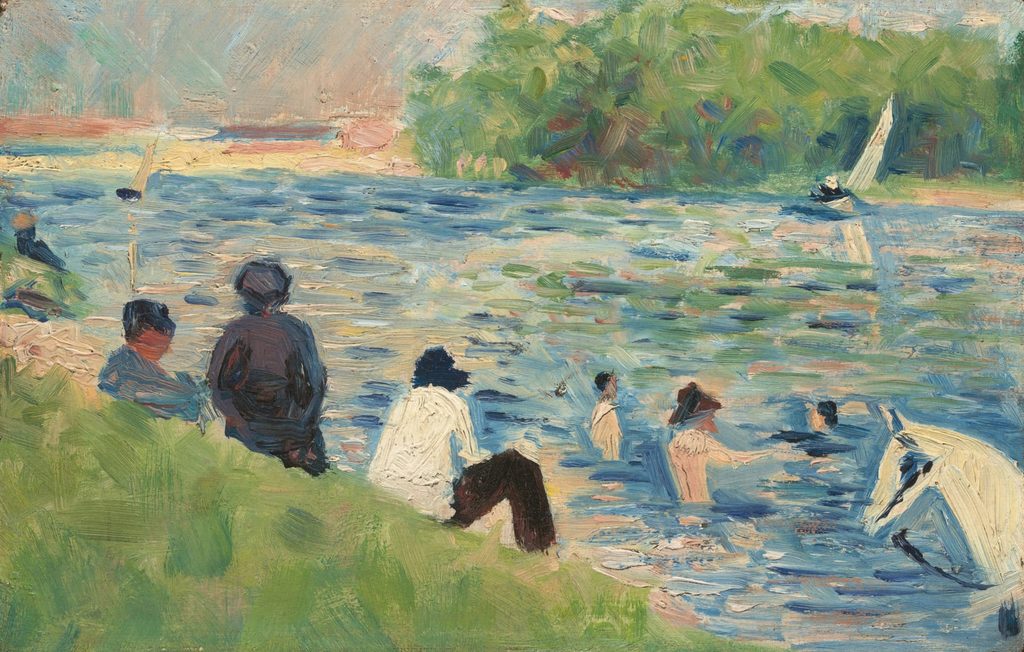
Seurat produced numerous preparatory studies, including small oil paintings made near the river.
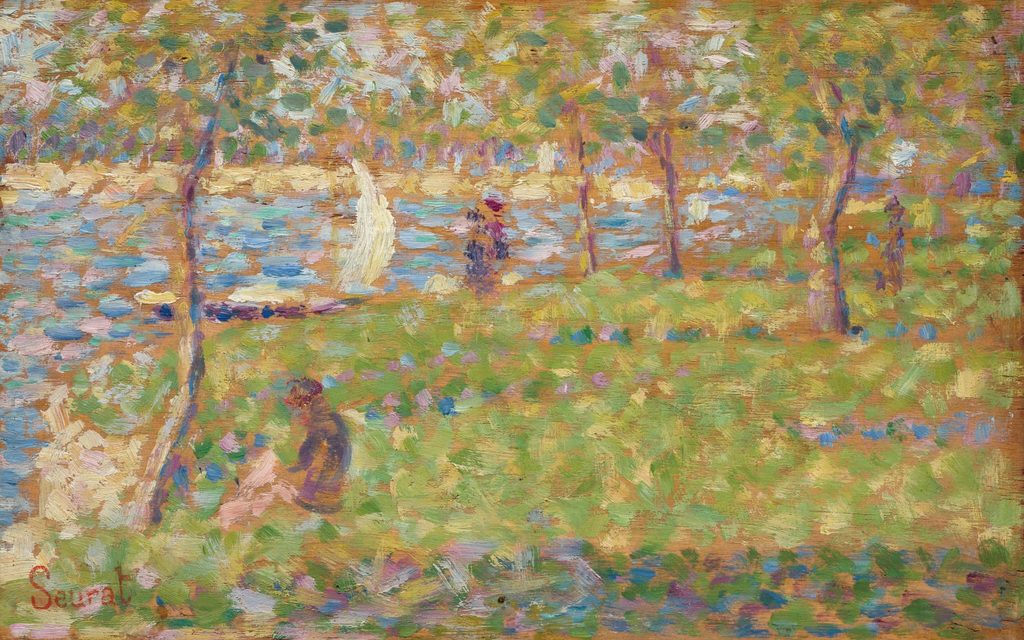
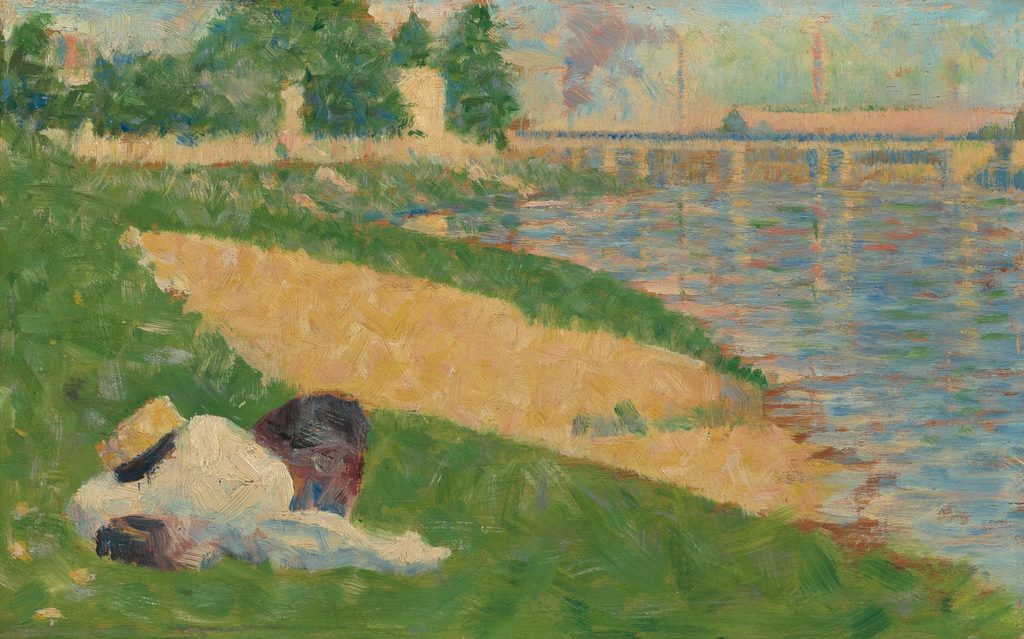
One surviving work, Clothes on the Grass: Study for ‘Bathers at Asnières’, shows how selectively he approached the subject.
Some areas are broadly painted, while the water receives more deliberate attention. The viewpoint is close to the eventual composition, although many of the figures that define the finished painting are absent.
The study is not merely an incomplete copy.
It records a stage at which Seurat was examining the landscape, testing perspective and exploring the conditions of light.
Looking at it beside the finished painting changes our understanding of his method.
We can see that the apparently calm final image depended on extensive investigation.
The final work conceals some of that searching. The study makes it visible.
John Constable and the Landscape Study
John Constable provides another revealing example.
His paintings often appear to record familiar English landscapes with a sense of immediacy. Trees, rivers, clouds and rural buildings seem to belong to particular places and particular moments.
Yet his major compositions could require substantial development.
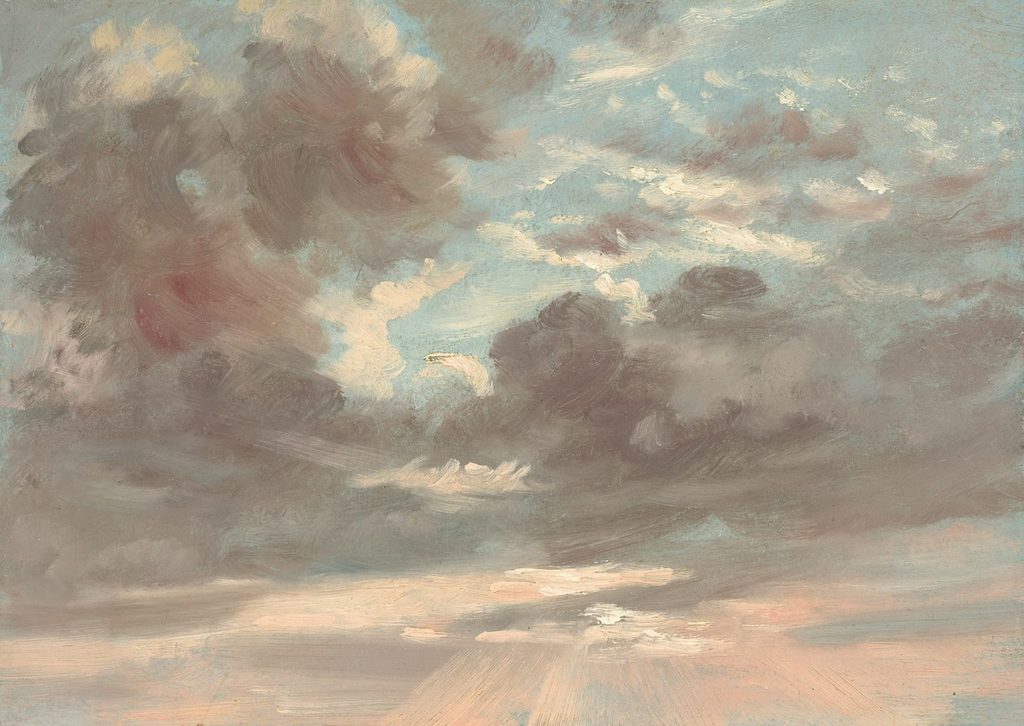
The Hay Wain, exhibited in 1821, was painted in his London studio using knowledge accumulated from open-air studies made over several years.
Constable also prepared a full-size oil sketch to investigate the composition.
This complicates the common assumption that a naturalistic landscape must have been painted directly from the scene in front of the artist.
Observation and invention can work together.
An artist may study a location repeatedly, then use those observations to construct a painting that expresses something more considered than a single moment.
The preliminary study helps bridge the gap between looking and making.
It also reminds us that a convincing painting of nature can be the result of deliberate artistic choices rather than simple transcription.
Why Some Studies Look Unfinished
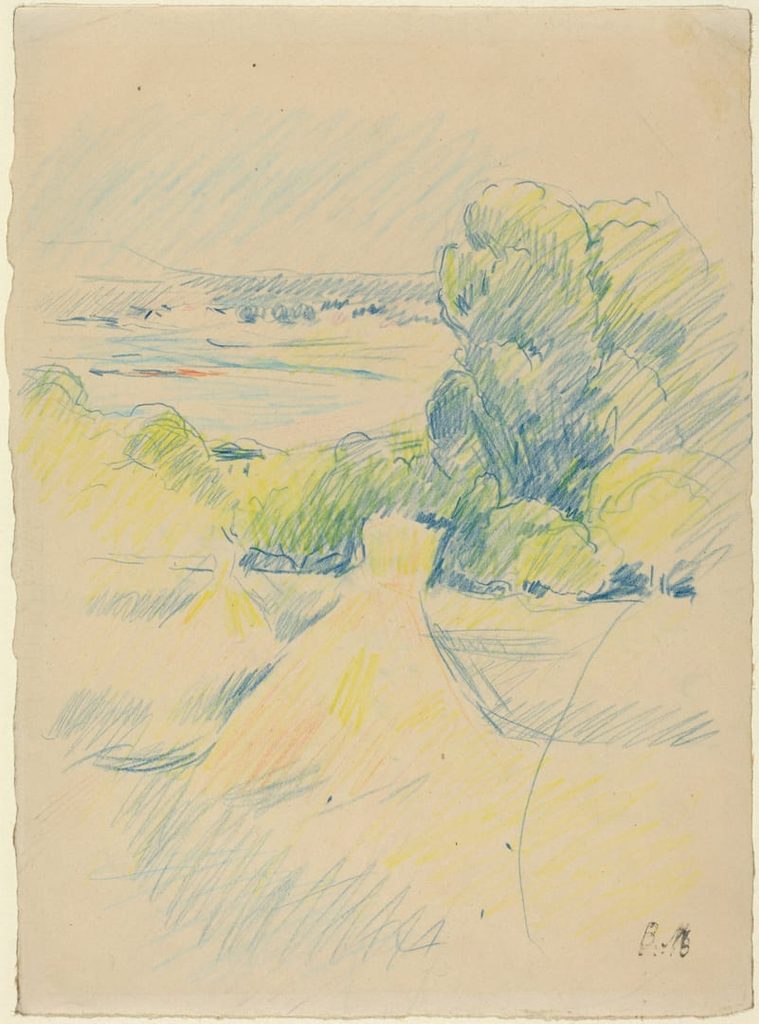
An artist’s study may contain exposed paper, incomplete figures, rough brushwork or areas that have barely been touched.
It is tempting to describe such work as unfinished.
Sometimes that description is accurate. But it does not necessarily tell us whether the study achieved its purpose.
Imagine a painter making a colour study of a sunset.
If the intention is to understand the relationship between a dark violet cloud and a warm orange horizon, there may be no reason to paint every branch of every tree in the landscape.
Adding those details could distract from the original investigation.
The study might appear incomplete as a conventional landscape painting while being entirely successful as a study of colour.
This distinction is useful when looking at drawings and paintings in galleries.
Instead of asking only what is missing, ask what the artist chose to concentrate on.
The answer may reveal the point of the work.
When a Study Becomes an Artwork in Its Own Right
Historically, many preparatory studies were considered private studio material.
They belonged to the process of making rather than the public presentation of art.
Over time, attitudes changed.
Collectors and critics increasingly recognised qualities in studies that could be less apparent in more polished paintings.
A quickly painted landscape might communicate a striking sense of weather. A loose figure drawing could capture movement more convincingly than a carefully finished composition.
The visible decisions and rapid handling became interesting in themselves.
During the nineteenth century, artists associated with increasingly expressive approaches to painting helped challenge the separation between sketch and finished work.
A painting could preserve the openness of a study without needing to be refined into a smooth, highly detailed surface.
Today, studies can be exhibited, collected and appreciated as independent works.
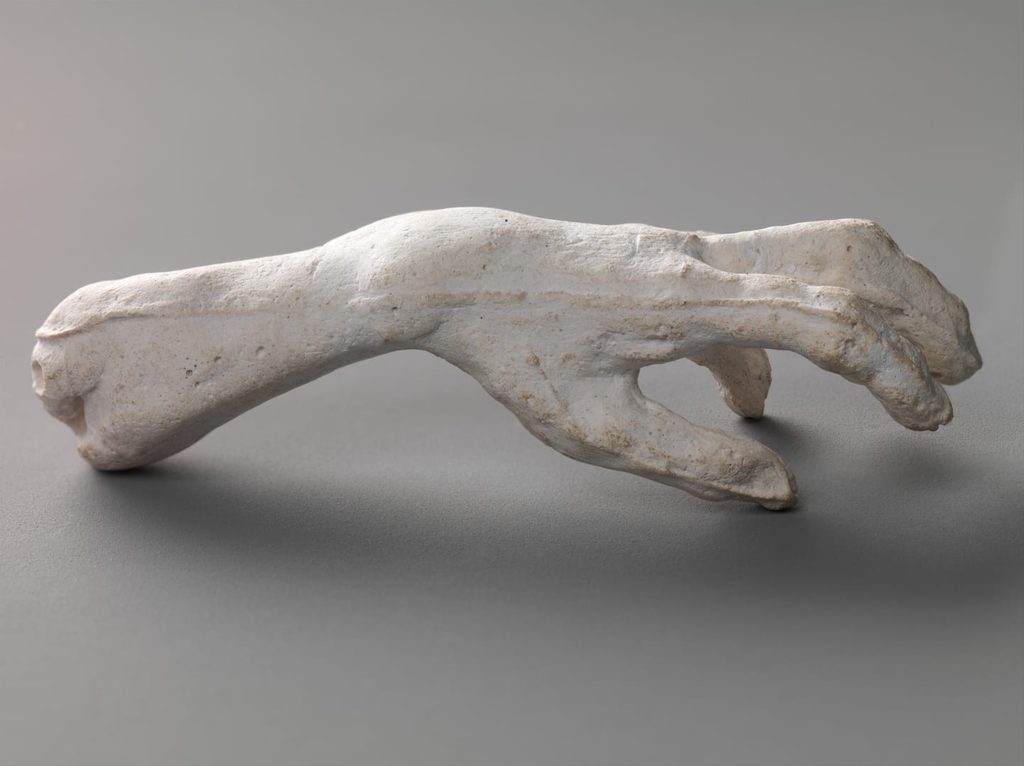
A drawing originally made to investigate a hand or a face may have visual strength beyond its preparatory function.
Its original purpose remains relevant, but that purpose does not determine everything the viewer can find in it.
Does a Study Have to Lead to a Finished Painting?
No.
This is one of the most common misunderstandings.
The word study can suggest that a final result must follow. But artists often study subjects without intending to make a larger version.
A painter may produce small observational works as part of an ongoing practice.
A sketchbook might contain experiments with composition, discarded ideas, unfamiliar materials and observations that never become anything else.
Those pages still have value.
They develop the artist’s understanding, visual memory and ability to make decisions.
Sometimes an investigation becomes useful years later. A colour combination discovered in one study may return in a completely different painting. An arrangement tested and abandoned can become relevant to another subject.
The relationship between studies and finished work is rarely a perfectly straight line.
An artist’s practice is better understood as an accumulation of observations and decisions.
Not every experiment needs a final destination.
Why Studies Can Feel More Immediate Than Finished Paintings
A finished painting often asks the viewer to consider the image as a whole.
A study may bring the act of making closer to the surface.
We notice the speed of a line, the direction of a brushstroke or the point at which an artist stopped adding information.
These qualities can create an impression of immediacy.
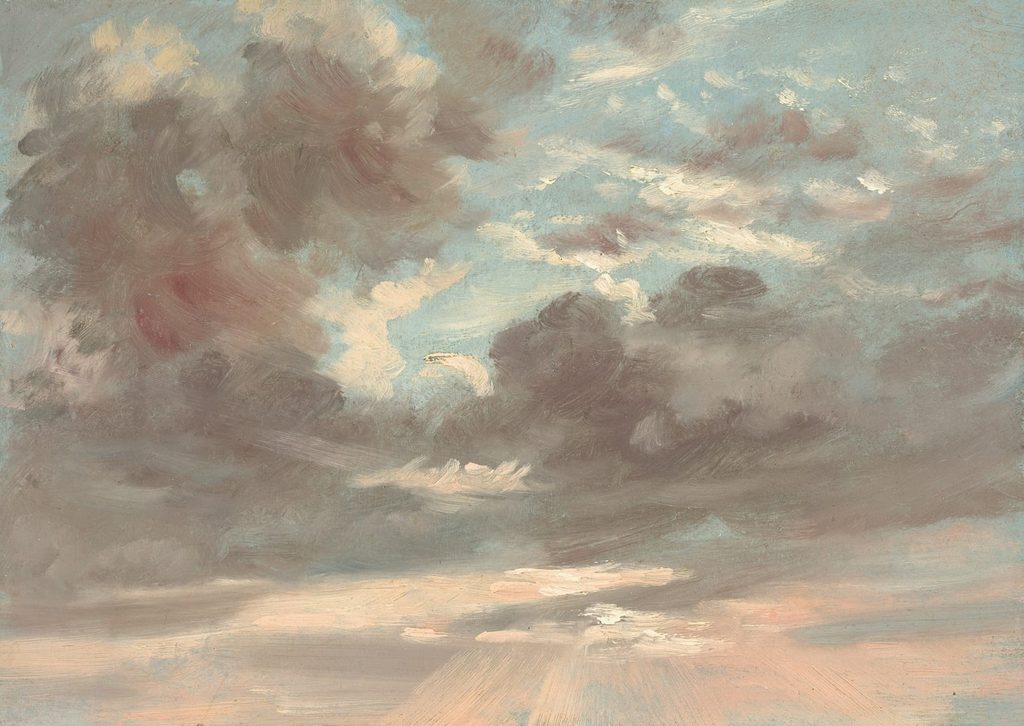
An oil sketch of a cloudy sky, for example, may contain only a handful of large colour relationships. Because there is little additional detail, our attention remains with the movement of the paint and the passing conditions it describes.
There is also something interesting about seeing a decision before it has been fully resolved.
A study can preserve alternatives and uncertainties that disappear in a completed composition.
But we should be careful not to assume that every loosely painted study is spontaneous, or that every refined painting lacks energy.
Some studies are carefully calculated. Some finished paintings are made with extraordinary speed.
The distinction is not between honest and dishonest art, or free and controlled art.
It is between different stages and purposes within artistic practice.
How to Look at an Artist’s Study
The next time you encounter a study in a gallery, begin by looking at it as an artwork rather than treating it merely as supporting evidence for something else.
Notice which areas have received the most attention.
Perhaps the artist has drawn a face carefully but barely indicated the clothing. Perhaps the sky is fully developed while the landscape below remains an arrangement of loose shapes.
That imbalance may be a clue.
Look for repeated lines or changes in direction.
A second outline around a shoulder can indicate that the artist adjusted the pose. Several overlapping shapes may show that the composition was reconsidered.
Pay attention to areas where the support remains visible.
Exposed paper or canvas may help reveal how the work was constructed.
If the study relates to a finished painting, compare them.
Look for changes in scale, placement, light, expression and emphasis.
Do not assume that every change represents a correction. Artists may alter an image because their intentions have developed, not simply because the earlier version was wrong.
Finally, consider whether the study offers something that the finished painting does not.
It might be a particular gesture, an unusual colour relationship or the physical excitement of an experimental mark.
The study deserves to be examined on its own terms.
Are Artist’s Studies Valuable?
An artist’s study can have artistic, historical or monetary value, but the three are not identical.
Historically, a study may reveal how an important composition developed. Researchers can compare preparatory work with the finished painting to understand the artist’s changing intentions.
Artistically, a study may be compelling because of its composition, observation, material qualities or expressive handling.
Monetary value depends on additional factors, including the artist, authenticity, provenance, condition, significance, medium and market demand.
A famous artist’s study may be highly valued, while a carefully finished work by another artist may attract much less attention.
Neither price nor degree of finish provides a reliable measure of artistic quality.
For someone interested in contemporary art, studies can also provide an opportunity to understand an artist’s working methods.
A series of drawings may show how a painter thinks about the human figure. Small colour experiments may reveal recurring interests that also appear in larger works.
They can be rewarding to look at without needing to justify themselves through a future painting.
What Is the Difference Between a Study, a Maquette and a Cartoon?
These terms describe related but different forms of preparation.
A study is an investigation of a visual problem or idea, often through drawing or painting.
A maquette is generally a small-scale three-dimensional model, commonly made in preparation for a larger sculpture, installation or architectural work.
A cartoon, in traditional art terminology, is a full-scale preparatory drawing used to transfer or develop a composition for a painting, fresco, tapestry or other work.
The art-historical meaning of cartoon is different from the modern meaning associated with humorous drawings or animation.
Artists may also use terms such as ébauche, meaning an initial painted laying-in, or bozzetto, often used for a preparatory sketch or model.
The terminology can be useful, but it should not become a barrier.
All these methods reflect the same underlying fact: significant artworks often develop through several stages of thought and making.
Frequently Asked Questions About Artist’s Studies
What is a study in art?
A study is an exploratory drawing, painting or other artwork made to investigate a subject, composition, technique, material or visual problem. It may prepare for a finished work or exist as an independent experiment.
Is an artist’s study the same as a sketch?
Not exactly. A sketch often records an idea or observation quickly, while a study generally investigates something more closely. In practice, the terms overlap and many works can reasonably be described as both.
What is an oil study?
An oil study is a painting made in oil paint to explore a subject or idea. Artists often use oil studies to examine colour, light, composition or atmosphere before undertaking larger works.
Can an artist’s study be considered finished art?
Yes. A study may be complete in relation to its purpose, even if it lacks the detail associated with a conventional finished painting. Many studies are now exhibited and valued as independent artworks.
Why do painters make several studies of the same subject?
Different studies may investigate different problems. One might focus on light, another on composition and another on colour. Repetition can also help an artist develop familiarity with a subject.
Are preparatory drawings important in art history?
They can be extremely important. Preparatory drawings provide evidence of artistic decisions, changed compositions and working methods that may not be visible in the finished work.
The Value of Seeing an Idea Before It Settles
There is something unusually revealing about an artist’s study.
It may show a painter concentrating on one small problem rather than trying to create an entirely resolved image. It can expose decisions that would otherwise remain hidden: where a figure might stand, which colours belong together, how a patch of light changes the atmosphere of a landscape.
Studies remind us that artistic confidence does not necessarily mean knowing the result in advance.
Much of art is made through looking, testing, rejecting, returning and noticing something that was not apparent at the beginning.
A finished painting offers one form of satisfaction. It brings decisions together into a considered work.
A study offers another.
It lets us encounter an idea while it is still taking shape, when several possibilities may remain open and the artist has not yet decided what matters most.
Sometimes that is precisely what makes the work worth looking at.
Leave a Reply