
No products in the cart.
Climate And Landscape Art: How Artists Are Painting Environmental Change
Landscape art used to be described as a way of looking at the world. Now it is often a way of reading what is happening to it.
That shift is one of the most important changes in contemporary art. A landscape painting is no longer only about beauty, atmosphere, light or the pleasure of place, though it may still include all of those things. It is also increasingly about pressure. Flooded ground, thinning ice, scorched earth, bleached coral, unstable coastlines, industrial scars, smoky horizons and altered weather patterns now sit inside the language of landscape. Artists are not only painting what they see. They are painting change itself.
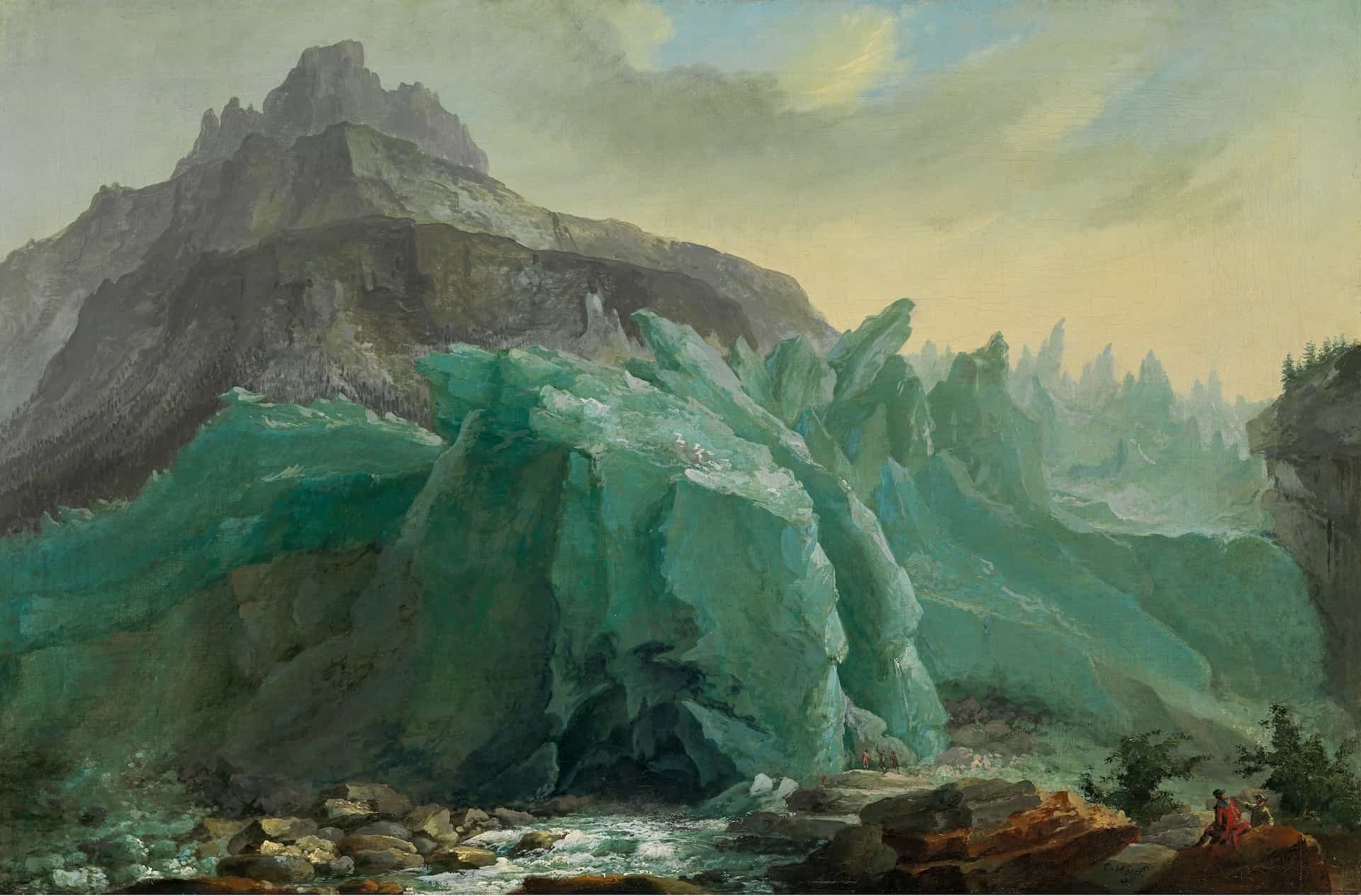
This is one reason climate and landscape art has become such a powerful subject. It brings together two things people already care about deeply: the visual world around them and the growing sense that this world is shifting faster than many communities can absorb. It allows artists to address environmental change without always falling into slogans or simple illustration. A painting of a coastline can now carry erosion, sea level anxiety, tourism, memory and loss all at once. A drawing of a glacier can operate as document, elegy and warning. A work built from geological or recycled materials can make climate change feel physical rather than abstract.
For readers searching for climate and landscape art, climate change in art, environmental landscape painting, ecological art, artists responding to climate change, contemporary landscape art and climate crisis, or how artists are painting environmental change, the deeper question is usually practical and emotional at the same time. How do artists show a crisis that is vast, uneven, slow moving and difficult to picture? How does landscape art change when the land itself becomes unstable? And why are so many contemporary artists returning to weather, coast, ice, forests, fire and geology right now?
This guide explores those questions in a clear and grounded way. It looks at how landscape art has shifted in response to environmental crisis, what climate conscious artists are doing differently, why painting and related mediums still matter in this conversation, and how viewers can read these works without reducing them to simple messages. It also considers why climate and landscape art is not only about disaster. It is also about attention, memory, responsibility and the changing meaning of place.
What is climate and landscape art?
Climate and landscape art sits at the meeting point between environmental awareness and the long tradition of depicting land, sea, sky and weather. It includes painting, drawing, printmaking, photography, installation, moving image and material based work that responds directly or indirectly to environmental change.
Some of these works show visible evidence of climate crisis, such as melting ice, drought, flooding, fire damage, pollution, extraction or rising tides. Others are less direct. They may focus on ecosystems, seasons, geology, weather systems, disappearing habitats or fragile local environments. Some are documentary in spirit. Others are poetic, immersive or concept driven. What joins them is a shared understanding that landscape is no longer a neutral backdrop. It is a site of transformation, stress and political meaning.
This matters because older forms of landscape art often treated nature as something to admire, possess, master or escape into. Contemporary climate and landscape art often begins from a different position. It sees landscape as dynamic, vulnerable and entangled with human action. It asks not only what a place looks like, but what is happening to it, who is responsible for that change, and how art might make that change more visible.
That does not mean every climate aware landscape work has to be bleak or didactic. Many of the best examples still contain beauty, wonder and visual pleasure. But that beauty is now often complicated by fragility. A glacier can still look sublime, but it may also look temporary. A coastline can still be luminous, but it may carry the pressure of erosion and flood risk. A forest can still feel enchanting, but also threatened.
Why landscape art has changed
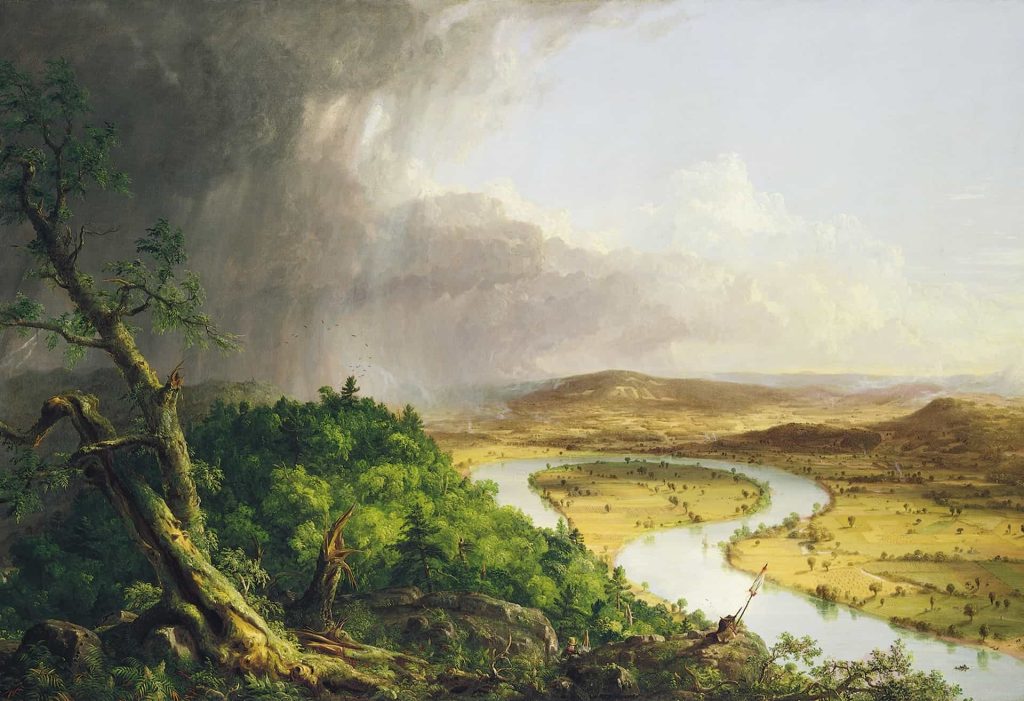
Landscape has always reflected cultural attitudes as much as physical places. In earlier centuries, artists used landscape to explore national identity, the sublime, rural labour, industrial progress, colonial expansion and private feeling. But climate change has altered the terms of that tradition.
It has done so partly by changing the land itself. Ice retreats. rivers dry. coastlines erode. storms intensify. fires spread. heat reshapes colour and vegetation. Seasonal expectations become less reliable. Places that once seemed visually stable become uncertain.
It has also changed how people look at images of nature. A view of wilderness no longer arrives innocent of politics. A mountain, shoreline, glacier or field is now likely to carry questions about tourism, extraction, carbon, development, agriculture, transport, biodiversity or loss. The landscape image becomes denser because viewers bring different fears and knowledge to it.
This is why contemporary artists are not simply continuing older landscape traditions unchanged. They are working inside a transformed field of meaning. The hill, estuary, ice sheet or burnt forest still offers formal challenges of colour, scale, distance and atmosphere, but it also carries data, history, urgency and ethical weight.
From scenic beauty to environmental witness
One of the clearest changes in climate and landscape art is the move from scenic description towards witness. This does not mean artists have stopped caring about formal beauty. It means beauty alone is no longer enough. Many contemporary landscape works now function as acts of attention, testimony or record.
This witnessing can take several forms. Some artists travel to threatened environments and draw, paint or photograph them directly, creating a visual record of places that are changing quickly. Others work from research, scientific imagery, maps or long term observation. Some make work that documents the marks of industry and extraction in the landscape. Others use materials from particular sites so that the land is present in the work physically as well as visually.
Witnessing is important because climate change often feels too large and abstract to picture. Scientific graphs and policy language are essential, but they do not always create emotional connection. Art can work differently. It can make change visible in the texture of ice, the colour of a river, the shape of a scarred hillside or the quiet absence left by loss.
This does not turn art into a substitute for science. It gives it a different role. Art can make people feel scale, time and vulnerability in ways that data alone cannot. It can turn environmental change from a distant topic into a lived and visible condition.
Weather is no longer just atmosphere
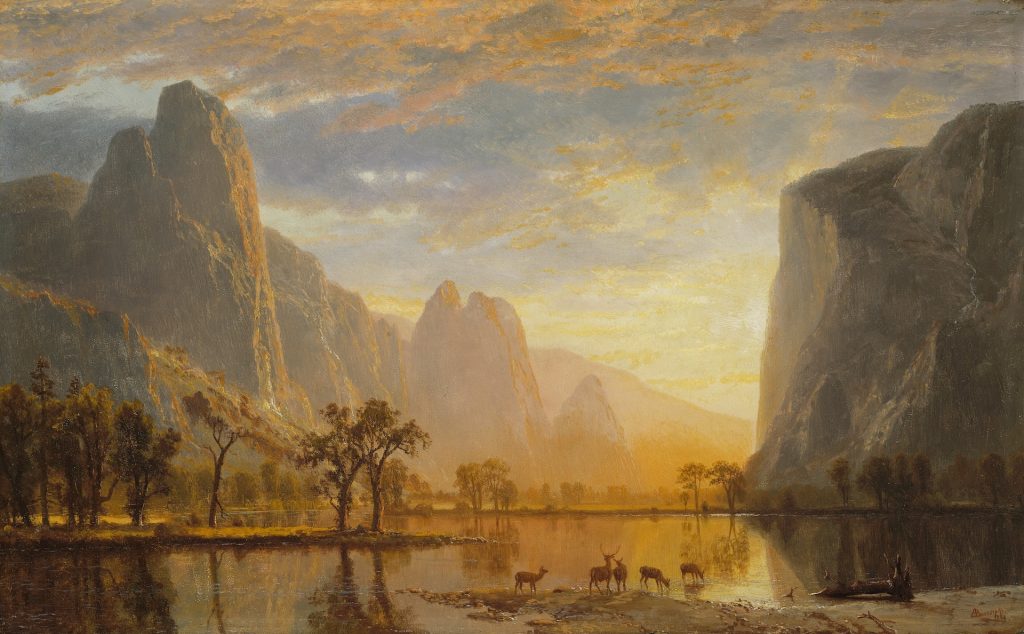
Weather has always mattered in landscape art. Painters have long used cloud, mist, rain, wind and shifting light to create mood and structure. What has changed is the meaning attached to weather.
A storm in an eighteenth or nineteenth century painting might signal drama, divine force, or the sublime power of nature. A storm in contemporary art may still carry those meanings, but it can also suggest climate instability, damaged infrastructure, displacement and future anxiety. A dried field may no longer read simply as summer heat. It may speak to drought and ecological stress. An orange sky may evoke beauty and danger at the same time.
This shift matters because it changes how artists use atmosphere. Weather is no longer only expressive. It is evidential. It can register environmental conditions without becoming purely documentary. A viewer may not need a caption to feel that something is wrong in a painting where the light looks toxic, the ground exhausted or the sea unusually invasive.
In this sense, contemporary climate and landscape art often holds two time scales together. There is the immediate visual moment, and there is the longer environmental story unfolding through it.
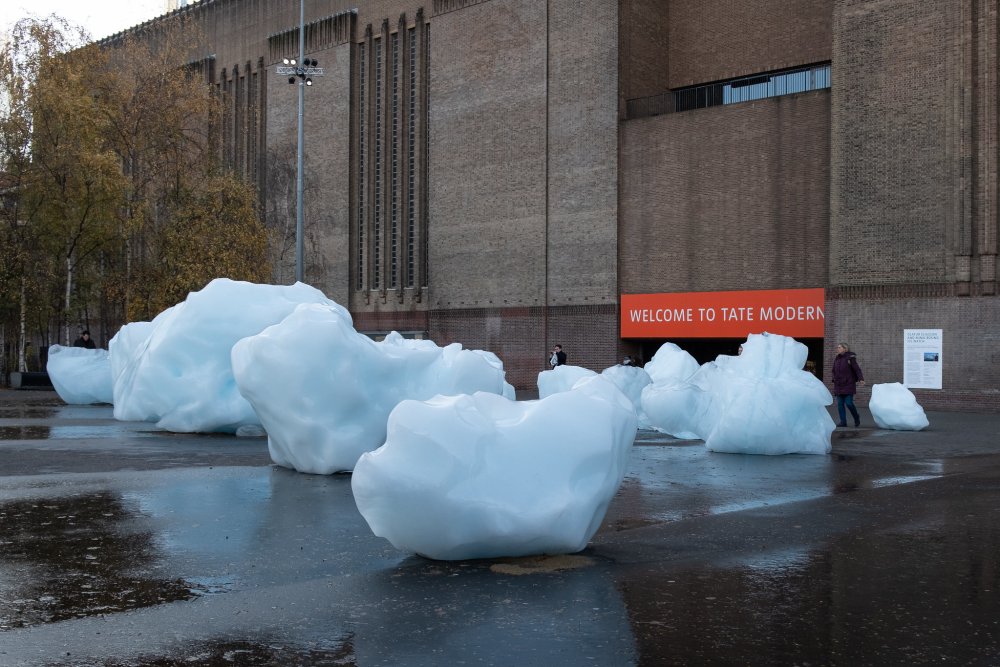
Ice, water and the politics of disappearance
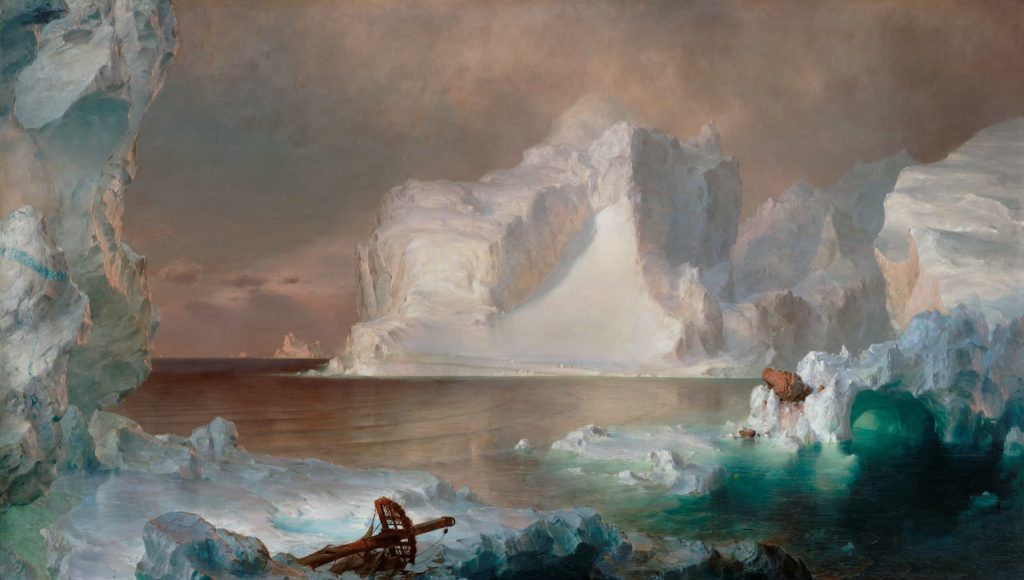
Few subjects have become more emblematic of climate and landscape art than ice. Glaciers, ice sheets and frozen environments carry an unusual combination of beauty, remoteness and vulnerability. They can appear ancient and monumental, yet are now understood as profoundly unstable.
Artists drawn to ice often work at the edge of visibility and disappearance. The whiteness, scale and silence of these places can seem almost abstract, but the knowledge of melt changes how viewers encounter them. Ice is no longer only a sublime subject. It is also a record of warming, a storage site of climatic history and a symbol of irreversible loss.
Water works in similar ways. Rivers, coastlines, estuaries and flooded ground have become central to contemporary environmental art because they show change visibly. Shorelines shift. Flood marks remain. Salt water moves inland. Tidal zones become more fragile. The surface beauty of water remains, but it now carries risk more openly.
This is why coastal and river based art feels so urgent in the present moment. These are places where climate change becomes legible. Artists do not need to force the message. The land itself is already writing part of it.
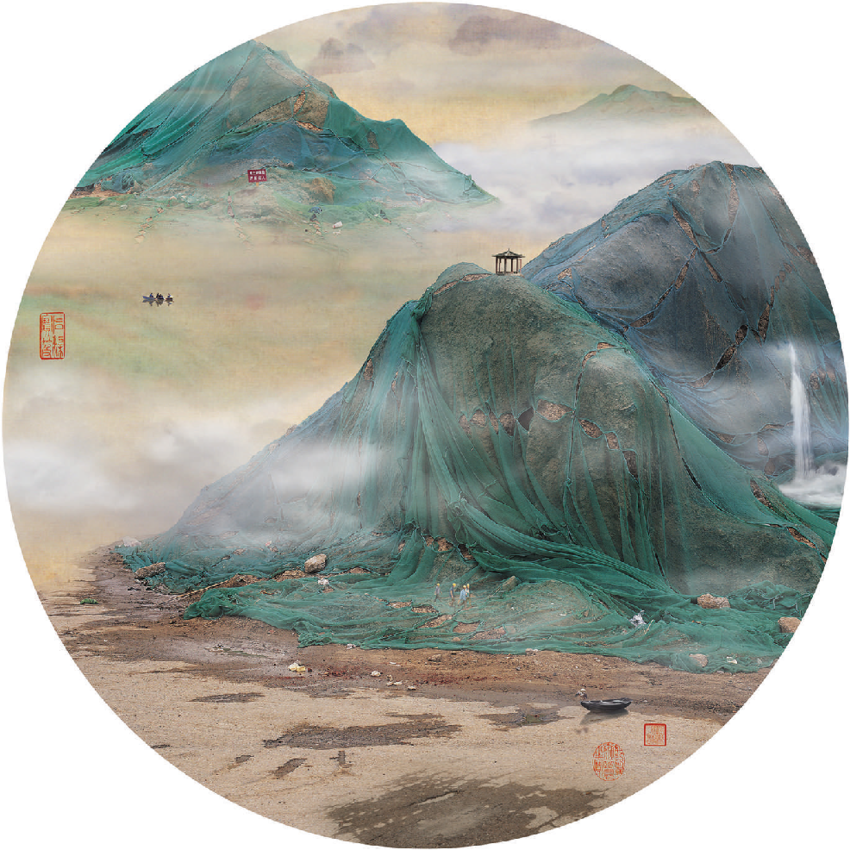
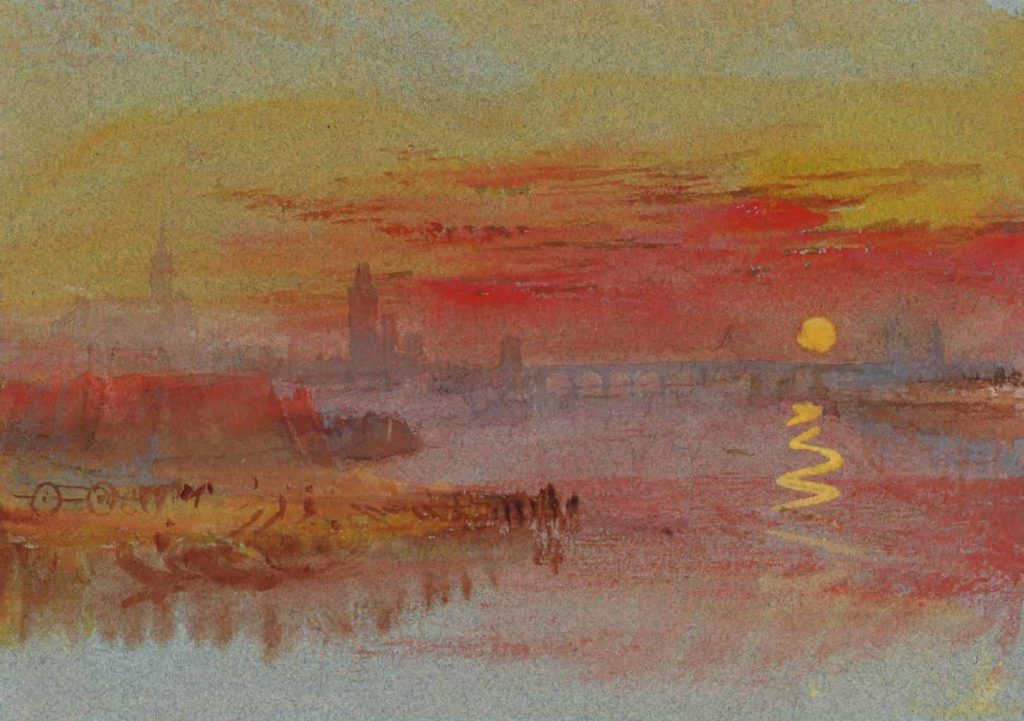
Fire, smoke and scorched colour
If ice has become one of the major symbols of melting, fire has become one of the major symbols of acceleration. Burnt landscapes, smoke darkened skies, ash and heat altered colour palettes now appear across contemporary art in ways that would have felt different a generation ago.
Fire in art is not new, of course. But climate related fire changes the register. It is no longer merely dramatic or mythic. It is seasonal, repeated, ecological and political. A scorched tree line or smoke veiled horizon can now stand for altered weather patterns, land mismanagement, air quality collapse and the emotional shock of living through recurring emergency.
This has changed the colour language of landscape art too. Darkened oranges, bruised reds, greys, cinders and bleached yellows can read as climate colours rather than only expressive ones. Painters working with fire or heat stressed environments often use colour in ways that feel simultaneously beautiful and alarming. The visual pleasure is still there, but it carries tension.
That tension is one of the defining strengths of climate and landscape art. It allows contradiction to remain visible. The image can attract and unsettle at the same time.
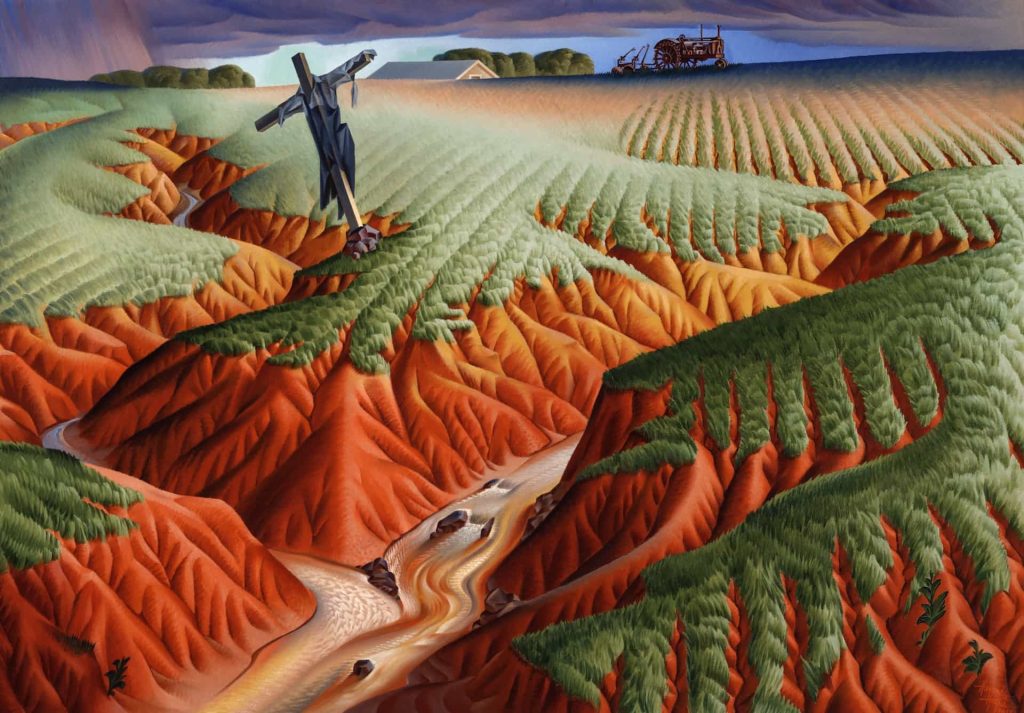
The landscape as evidence of extraction
Not all environmental change is shown through weather or natural drama. Many artists focus instead on extraction, infrastructure and the marks human systems leave behind. Quarries, mines, pipelines, roads, reservoirs, spoil heaps, industrial coastlines and altered agricultural land all appear in contemporary landscape art as evidence of how deeply the environment is shaped by economic structures.
This matters because it broadens the idea of climate and landscape art beyond scenes of melting or burning. Environmental change is not only a matter of spectacular disaster. It is also built into ordinary land use, transport, energy and construction. A landscape painting can therefore become a critique of what appears normal.
Artists dealing with extraction often use a cooler, more forensic visual language. They may focus on cuts in the earth, exposed strata, damaged vegetation, artificial geometry or the uneasy meeting of natural and industrial form. These works can feel less overtly emotional than climate disaster imagery, but they are often deeply political. They show that the climate crisis does not begin only when catastrophe becomes obvious. It begins in the ongoing organisation of land for use.
This is one reason geology has become so important in contemporary art. Soil, rock, sediment and strata make long histories visible. They remind viewers that human action is not separate from deep time, but inscribed into it.
Why artists still paint landscape in a time of climate crisis
Some people assume that painting is too slow or too traditional to respond adequately to environmental emergency. In fact, its slowness is part of what makes it useful.
Painting allows artists to stay with a place, a condition or a visual problem over time. It can register atmosphere, instability, uncertainty and remembered experience in ways that are difficult to achieve through instant imagery alone. It can move between observation and interpretation without having to choose one or the other.
A climate aware landscape painting may not function like a scientific record, but it can still be accurate in a different sense. It can be accurate to pressure, mood, change, fear or fragility. It can hold together sensory experience and environmental knowledge. It can make a viewer feel both the beauty of a place and the fact that beauty is under threat.
This is why contemporary painting has not abandoned landscape. It has rethought it. Landscape painting now often carries a double burden. It must still work as painting, with attention to scale, colour, rhythm, form and surface. But it also works as an ethical and environmental encounter.
That double burden can make the best works especially strong. They are visually compelling without treating environmental change as a mere subject trend. The painting has to earn its seriousness through how it is made.
Printmaking, drawing and the force of close observation
While painting often takes centre stage in discussions of climate and landscape art, drawing and printmaking are just as important. In many cases, they are even better suited to close environmental observation.
Drawing can be direct, fast and forensic. It allows artists to record changing coastlines, collapsing ice, damaged trees or altered terrain with an immediacy that still retains the pressure of the hand. A drawing can feel both factual and vulnerable. It often carries the sense that the artist was physically present, trying to keep pace with something unstable.
Printmaking adds another dimension. It allows repetition, layering and tonal variation, which can be especially powerful when dealing with erosion, weather patterns, geological structure or repeated environmental motifs. Prints can also circulate more widely, which has historically made them useful for political and educational purposes.
These mediums matter because they remind us that climate and landscape art is not only about spectacle. It is also about sustained looking. Careful drawing or printmaking can make a coastline, glacier or floodplain feel more real precisely because it avoids visual overstatement.
Contemporary artists painting environmental change
Contemporary climate and landscape art is a broad field, but certain artists help clarify its direction.
Emma Stibbon is an important example in the British context. Her work on polar landscapes, flood zones and rising tides treats drawing and printmaking as forms of witness. She often works from direct experience in places already visibly affected by environmental change. The power of her work lies partly in its seriousness of observation. The landscapes are dramatic, but they are never empty spectacle. They feel researched, lived with and ethically attentive.
Olafur Eliasson is another major figure, though he moves beyond painting into installation and spatial experience. His projects repeatedly engage with ice, weather, light and ecological awareness, showing that landscape can be activated not only through depiction but through physical encounter.
Katie Paterson’s work, while often concept driven, also belongs in this conversation because it addresses deep time, extinction, cosmic scale and environmental fragility in ways that reshape how landscape can be thought.
Alexis Rockman has painted ecosystems and altered environments with a precision that mixes scientific imagination and painterly intensity. His landscapes often feel future facing, even when they are rooted in present conditions.
There are many others across painting, photography, moving image, community based practice and site specific work. What matters is not that all these artists share one style, but that they understand landscape as a site where climate change can be made perceptible.
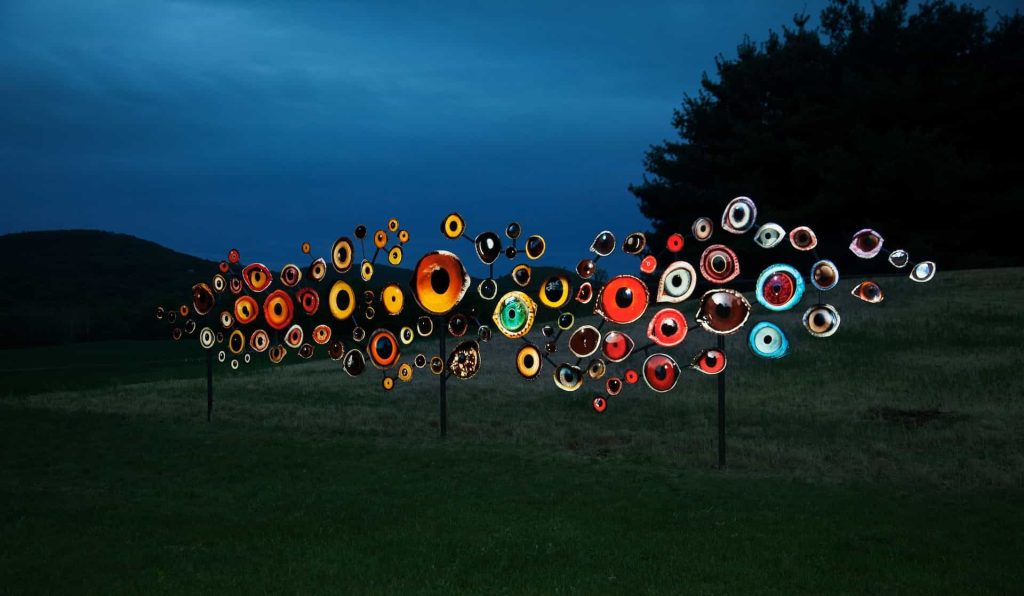
Climate art is not only about warning
One of the traps in writing about environmental art is to make it sound as if every work must function as a warning poster. That is not how the best art operates.
Some climate and landscape works are openly activist, and that can be powerful. But many work in quieter ways. They create attachment to place. They sharpen perception. They teach viewers how to notice. They preserve memory of what is changing. They make damage visible without stripping the land of dignity or beauty.
This matters because art rarely changes minds by instruction alone. Its strength often lies in creating a more intense relationship between people and the world they inhabit. A viewer who spends time with a work about a threatened estuary, a melting ice field or a flood marked shoreline may not walk away with a simple policy statement. They may walk away with a sharpened sense that these places matter.
That shift in feeling is not trivial. Environmental change is often enabled by distance, abstraction and the sense that damage is happening somewhere else. Climate and landscape art can reduce that distance.
The tension between beauty and crisis
One of the most difficult and interesting questions in climate and landscape art is what to do with beauty. If a painting of a burning sky is visually stunning, does that undermine its seriousness? If a glacier image is luminous and sublime, does it turn crisis into spectacle?
There is no single answer. But this tension is real, and many artists work consciously inside it. They know that beauty can attract viewers to a difficult subject, but they also know it can smooth over the violence of what is being shown.
The strongest works usually do not try to eliminate beauty entirely. Instead, they make it unstable. A work may be visually captivating at first, then reveal damage, loss, toxicity or precarity. The viewer is drawn in, then unsettled. This double movement can be more effective than either pure beauty or pure horror.
It also reflects the actual complexity of environmental change. Many threatened landscapes remain beautiful. That beauty does not cancel the crisis. It deepens the sense of what is at stake.
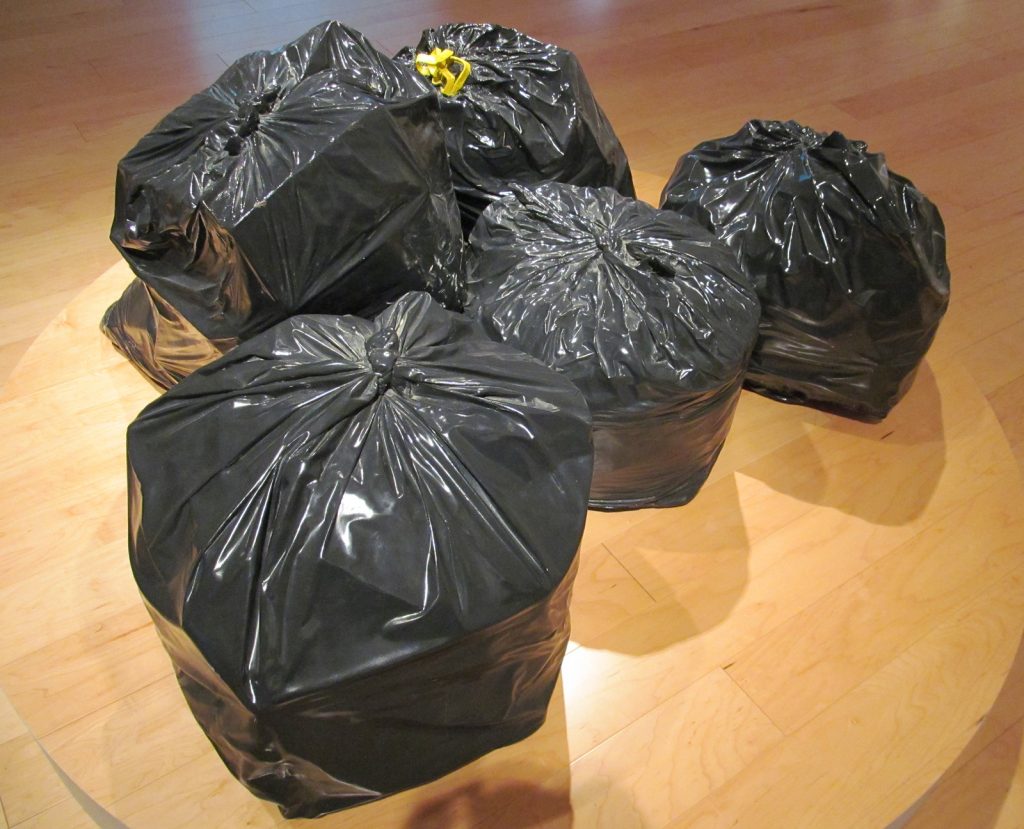
Local places, global pressures
Climate change is global, but it is often experienced locally. This is one reason place based landscape art remains so important. It allows artists to show that environmental crisis is not only a distant polar or tropical issue. It is present in estuaries, coastal paths, fields, towns, riverbanks, harbours and hills close to home.
A chalk cliff under pressure, a flooded meadow, an overheated urban park, a receding shoreline or a salt affected marsh can all become part of climate and landscape art. These local sites often have special force because viewers recognise them. The crisis becomes harder to keep abstract.
This has particular relevance in Britain, where coastlines, rivers, moorland, agricultural land and weather systems already play such a strong part in visual culture. Contemporary artists working with these places inherit a long landscape tradition, but they now work under altered conditions. The familiar view is no longer stable. That can make local landscape art more emotionally charged than ever.
How to look at climate and landscape art
If you want to get more from this kind of work, it helps to ask a few simple questions.
What kind of change is the artist dealing with? Is it melting, flooding, fire, drought, extraction, erosion, pollution, habitat loss or something more atmospheric?
How direct is the work? Is it documentary, symbolic, abstracted or site specific?
What role does beauty play? Does the work use visual pleasure to attract, complicate or unsettle?
What materials or methods are being used? Does the artist paint, draw, print, build, install, collect or research in a way that changes the meaning of the work?
What scale of time is present? Are you looking at one moment of weather, or a sign of deep environmental transformation?
Does the work feel like warning, witness, mourning, attachment or critique?
These questions help move beyond the idea that climate art must simply illustrate catastrophe. They open up the richer ways artists think through environmental change.
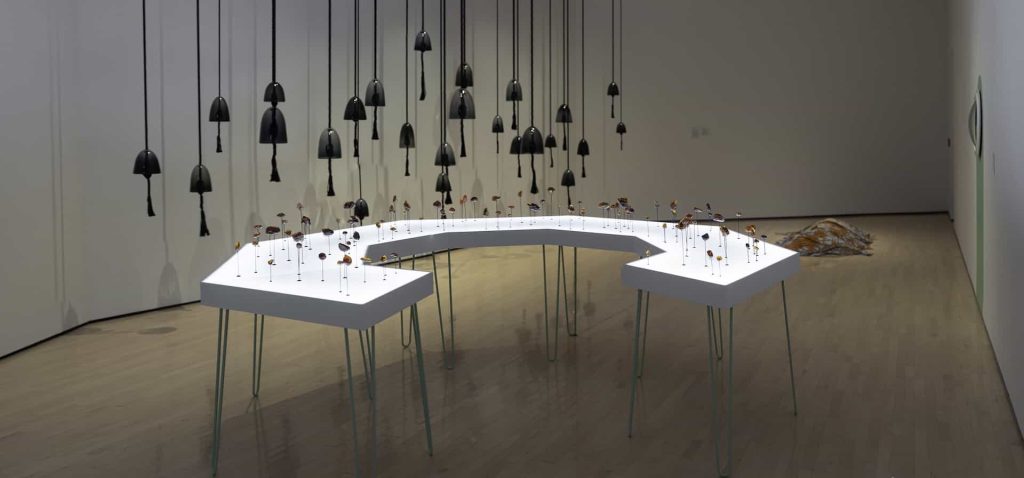
Common misconceptions about climate and landscape art
It is just activism in visual form
Some works are directly activist, but climate and landscape art is far broader than that. It includes witness, memory, material experiment, formal beauty, local observation and conceptual approaches as well as explicit critique.
It is always bleak
Not necessarily. Many powerful works are beautiful, luminous or quiet. Their seriousness lies in tension rather than in visual despair.
Landscape art is too traditional to address climate change
In practice, landscape remains one of the most effective ways to make environmental change visible. The tradition has changed, not disappeared.
It only matters if it shows obvious disaster
Subtle works can be just as powerful. A slight shift in shoreline, colour, weather or vegetation can carry enormous meaning when handled well.
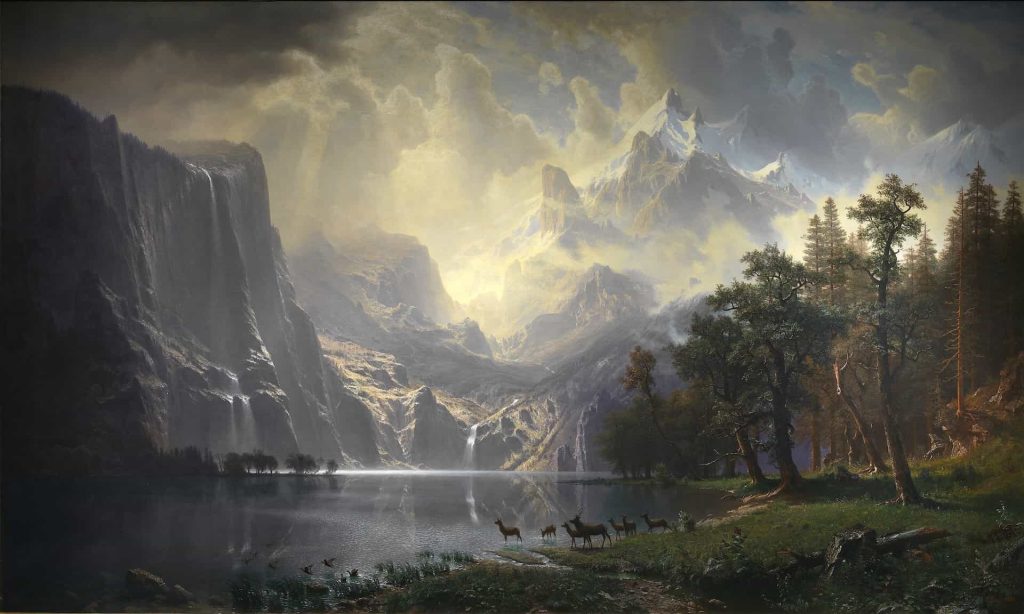
Why climate and landscape art matters now
Climate and landscape art matters because it helps people see environmental change not as a remote concept but as something lived, felt and materially present. It brings the climate crisis into relation with memory, place, beauty, damage and responsibility.
It also matters because it resists numbness. People are bombarded with climate information, yet often feel frozen by scale, repetition or despair. Art cannot solve that problem on its own, but it can cut through it differently. It can slow attention down. It can make a viewer stay with a place. It can turn environmental change into something visible, local and emotionally legible.
This is especially important now, when so many landscapes are being transformed while still remaining outwardly familiar. Art helps register that unsettling condition. The hill is still there, but altered. The shoreline is still beautiful, but more fragile. The weather is still recognisable, but less reliable. The painting or drawing becomes a place where those contradictions can be held.
Climate and landscape art also matters because it expands what landscape can mean. It shows that landscape is not passive scenery. It is history, politics, ecology, labour, extraction, habitation and loss. It is one of the places where environmental change becomes visible enough to feel.
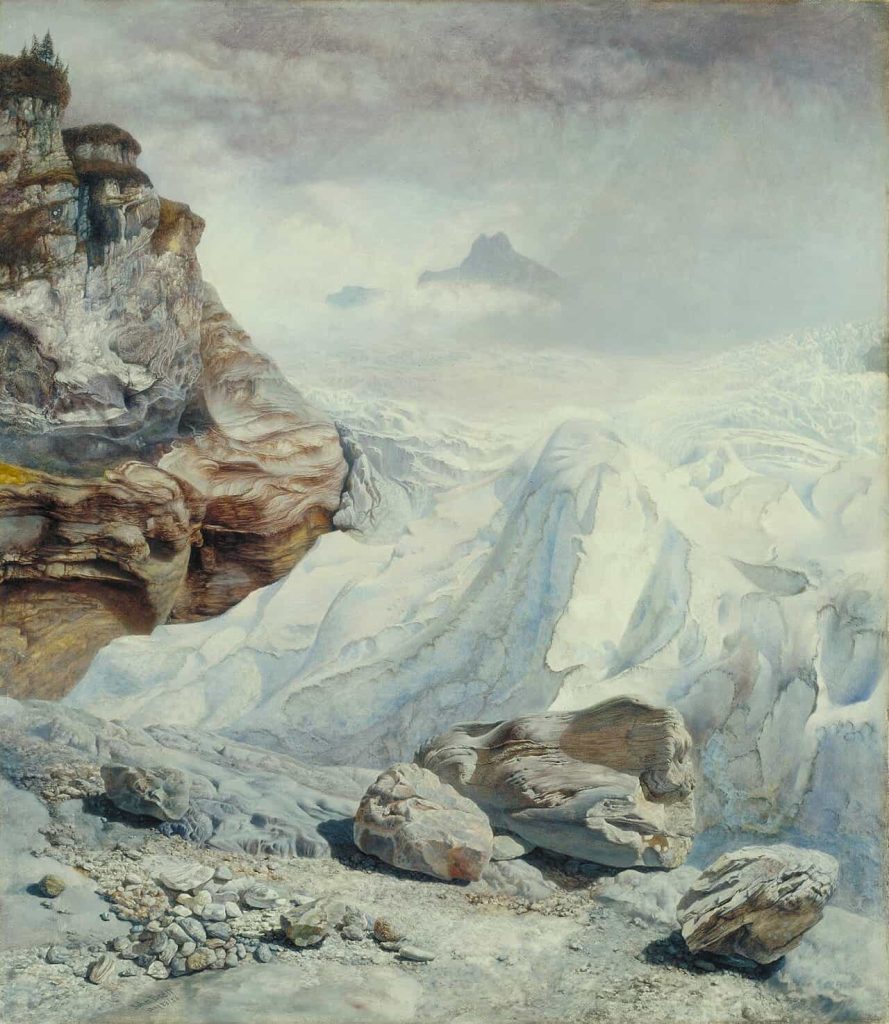
Climate and landscape art is changing the way landscape itself is understood. No longer only a site of scenic pleasure or formal exploration, it has become a field in which artists register environmental instability, witness damage, preserve memory and rethink the relationship between beauty and crisis.
That does not mean the landscape tradition has ended. It means it has become more urgent. The sea, the ice field, the woodland, the estuary, the quarry, the hillside and the weather front now carry different pressures. Artists are responding by making work that is more attentive to vulnerability, more aware of time and more alert to the political life of place.
This is why climate and landscape art feels so necessary now. It offers no easy comfort, but it does offer attention. It helps viewers see that environmental change is not somewhere outside culture. It is already in the land, the weather, the coast and the visual world around us.
The next time you encounter a contemporary landscape painting, drawing or installation, it is worth asking not only what place it shows, but what kind of change it holds. Very often, that is where the work begins. And increasingly, it is where the meaning of landscape art now lives.
Leave a Reply