
No products in the cart.
What Is Fauvism? From Van Gogh’s Influence to Matisse’s Colour Revolution
Fauvism was the moment colour stopped behaving itself.
For centuries, artists had used colour to describe the visible world. Skin was expected to look like skin. Shadows were expected to sit quietly in brown, grey or blue. Trees, skies, faces and rooms were meant to stay close to what the eye could reasonably see.
Then, in the early years of the twentieth century, a group of young painters in France began to use colour with a new kind of force. Faces became green, orange and violet. Trees became red. Shadows became hot pink or blue. Harbours, rooms and bodies were flattened into bright patches of paint. The paintings looked alive, but they also looked wrong to many viewers at the time.
That was the shock of Fauvism.
Led by Henri Matisse, and shaped by artists including André Derain, Maurice de Vlaminck, Albert Marquet, Raoul Dufy, Georges Braque and Kees van Dongen, Fauvism changed modern art by giving colour a new role. Colour no longer had to copy nature. It could create emotion, rhythm, structure and heat.
What is Fauvism?
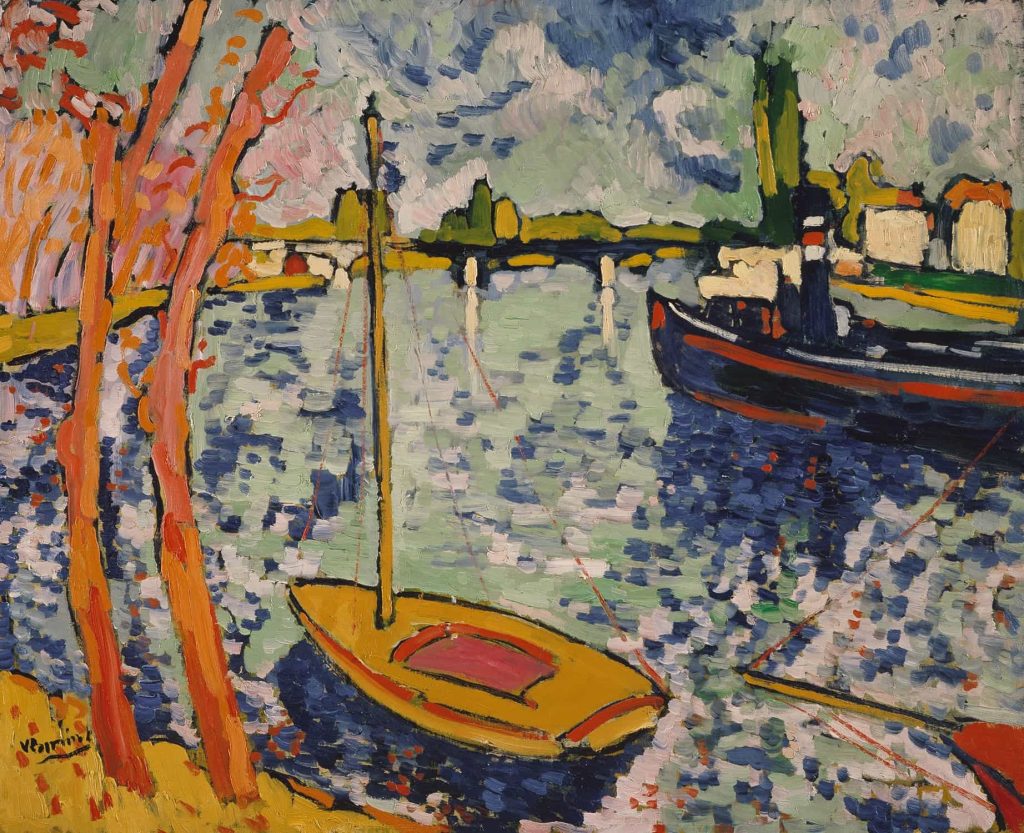
Fauvism is a modern art movement that developed in France in the early twentieth century, especially around 1905 to 1908. It is best known for bold colour, simplified form, loose brushwork and a deliberate move away from realistic representation.
The word “Fauvism” comes from the French phrase “les fauves”, meaning “the wild beasts”. The name was linked to the critic Louis Vauxcelles after he saw paintings by Matisse, Derain and others at the Salon d’Automne in Paris in 1905. Their paintings were so bright, raw and unexpected that the artists were compared to wild beasts.
At its simplest, Fauvism is about colour being set free.
A Fauvist painting may still show a portrait, landscape, harbour, room or still life, but it does not treat colour as obedient description. Colour becomes emotional and structural. It tells the viewer how the artist feels about the subject, not only what the subject looks like.
The main features of Fauvism include:
- Strong, vivid colour
- Non-naturalistic colour choices
- Loose and visible brushwork
- Simplified shapes
- Flattened space
- Bold outlines
- High contrast
- Emotional directness
- A sense of visual energy
- A focus on sensation rather than exact realism
Fauvism was short-lived as a movement, but its effect was large. It helped push European painting towards modernism. It influenced Expressionism, abstraction, colour-field painting, modern design and later artists who treated colour as an independent force.
Why Fauvism shocked people
It is easy now to look at Fauvist paintings and see them as cheerful, decorative or simply colourful. That is not how they first appeared.
In 1905, many viewers still expected painting to follow certain rules. Even Impressionism, which had been controversial a generation earlier, often stayed close to observed light and atmosphere. Fauvism went further. It made colour personal, artificial and intense.
- A portrait could have a green line down the face.
- A landscape could be built from orange, pink, blue and red.
- A shadow might be brighter than the object it described.
- Brush marks could remain rough and visible.
- Perspective could feel shallow or unstable.
To some critics, this looked careless. To others, it looked aggressive. The Fauves were accused of making paintings that seemed unfinished, crude or violent. Yet that shock is part of their importance. They made viewers realise that painting did not need to be a polite window onto the world.
Fauvism asked a new question: what happens if colour is allowed to lead?
The roots of Fauvism
Fauvism did not appear from nowhere. It grew from several earlier developments in nineteenth-century and early twentieth-century art.
The main influences were:
- Vincent van Gogh
- Paul Gauguin
- Georges Seurat and Neo-Impressionism
- Paul Cézanne
- Gustave Moreau
- Japanese prints
- North African and non-European visual sources
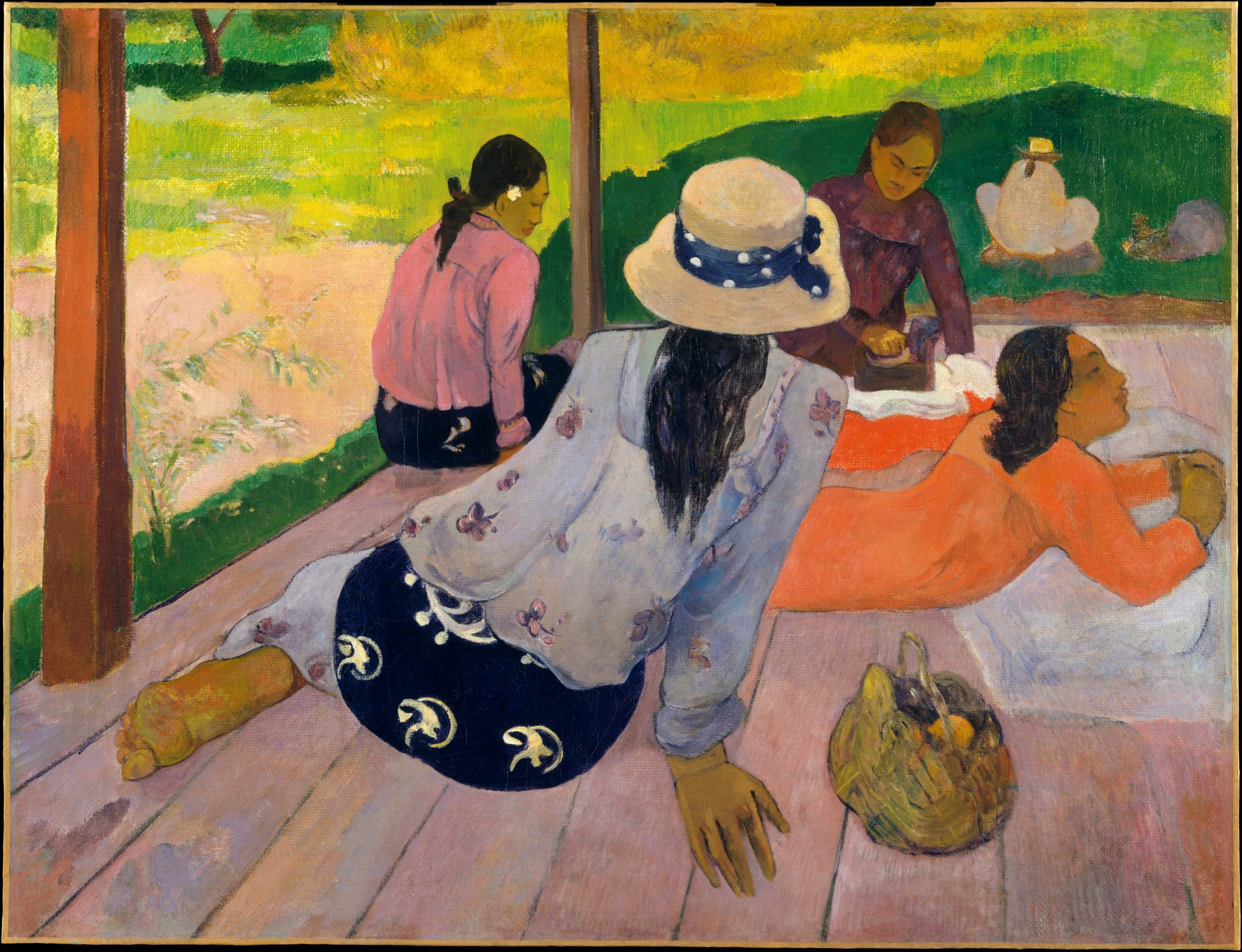
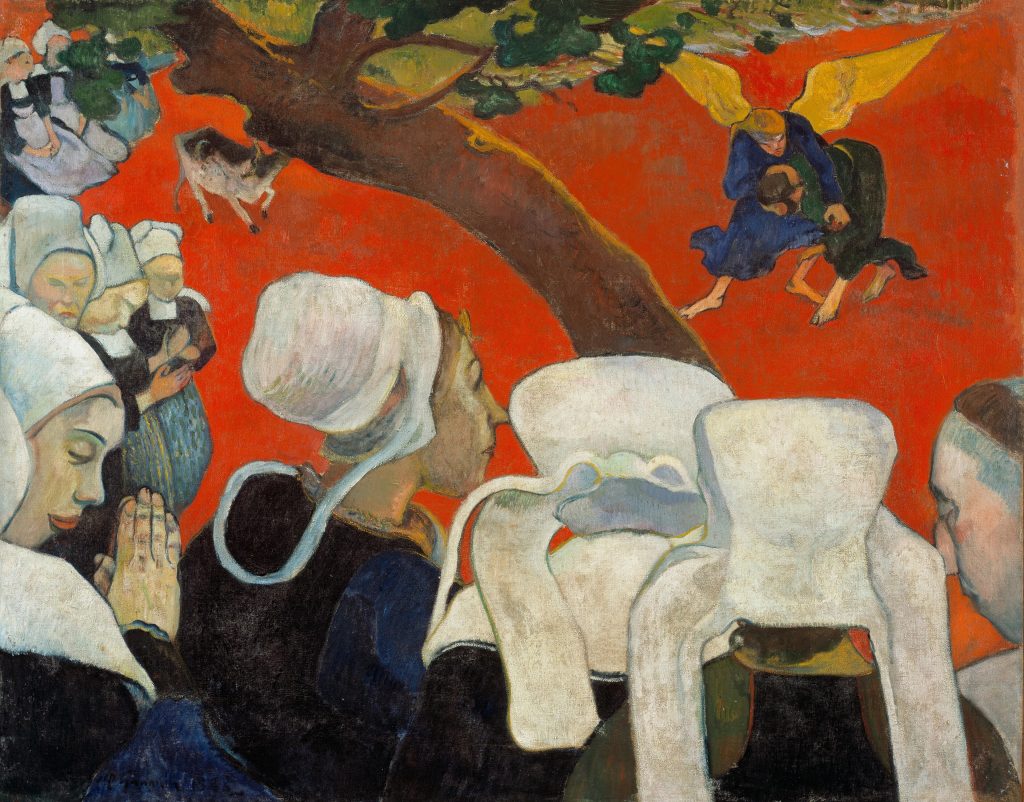
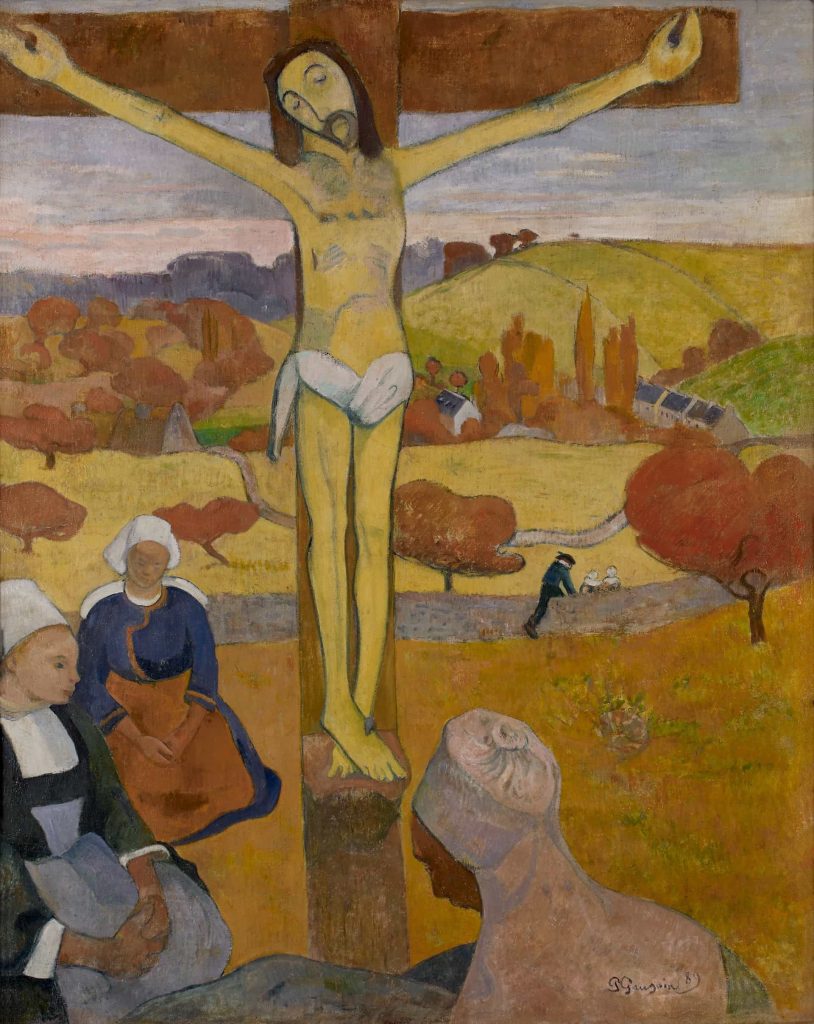
Impressionism had already loosened the rules of painting by focusing on light, atmosphere and brushwork. Post-Impressionist artists then pushed further. Van Gogh made colour emotional. Gauguin made colour symbolic and flat. Seurat made colour systematic and optical. Cézanne rebuilt form through planes and structure.
The Fauves learned from all of this, but they did not copy one artist directly. They took the pressure of Van Gogh’s brushwork, the flat colour of Gauguin, the colour theory of Seurat and the structural simplification of Cézanne, then pushed them towards something sharper and more immediate.
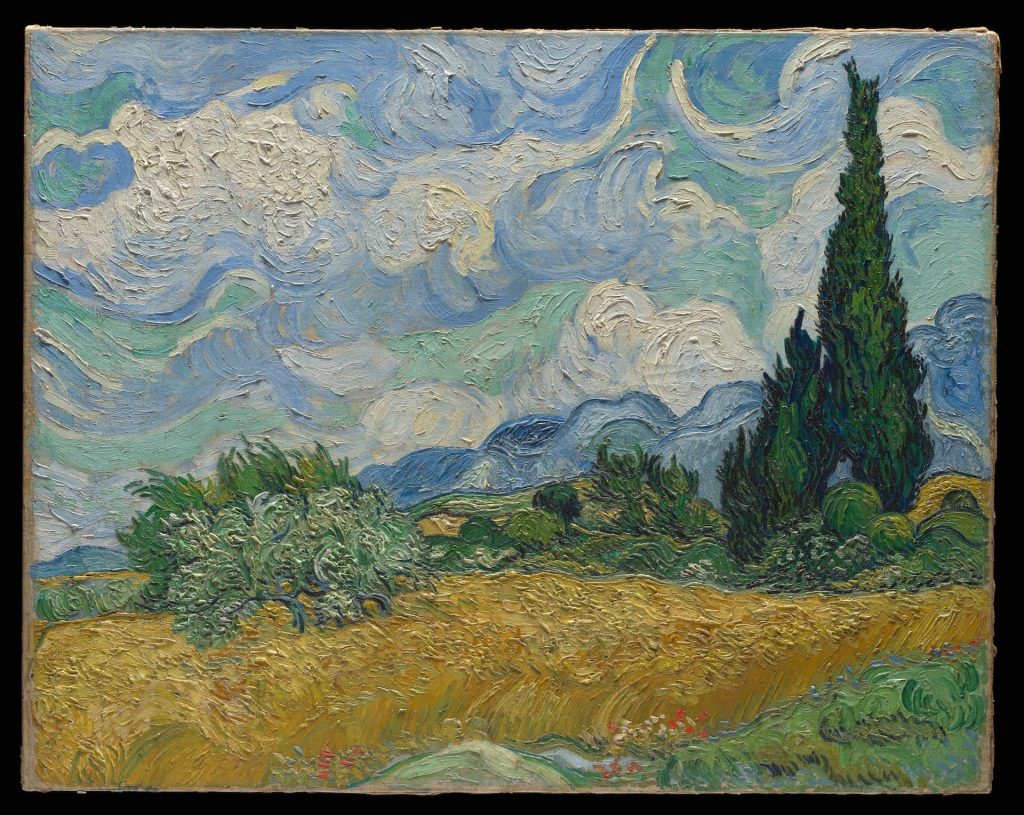
Van Gogh’s influence on Fauvism
Van Gogh was one of the strongest influences on Fauvism, although he was not a Fauvist himself. He died in 1890, before the movement began.
His importance lies in the way he used colour and brushwork to express feeling. Van Gogh did not use colour only to record what was in front of him. He used it to intensify experience. A night café could glow with red and green tension. A wheatfield could throb with yellow and blue. A cypress tree could twist like a flame. A portrait could carry emotional pressure through colour and line.
For the Fauves, Van Gogh showed that colour could be expressive rather than descriptive.
His influence can be seen in several ways:
- The use of strong outlines
- Visible, energetic brushstrokes
- Heightened colour
- Emotional landscape
- Distortion for feeling
- The idea that colour can carry inner life
Maurice de Vlaminck was especially drawn to Van Gogh. He admired the rawness and direct force of his painting. Vlaminck’s landscapes often feel like they have inherited Van Gogh’s heat, then pushed it even harder.
Matisse was also influenced by Van Gogh, though in a different way. Matisse was less interested in turbulence and more interested in balance. He took the liberation of colour and made it structural. Where Van Gogh often feels urgent and restless, Matisse often feels organised, even when the colours are wild.
That difference matters. Fauvism did not simply continue Van Gogh. It changed his emotional colour into a new language of modern painting.

Van Gogh to Matisse: what changed?
Van Gogh used colour to express feeling. Matisse used colour to build a whole painting.
This is one of the key differences.
In Van Gogh, colour often feels like pressure. It can be spiritual, psychological, emotional or physical. His brushwork moves across the surface with great urgency.
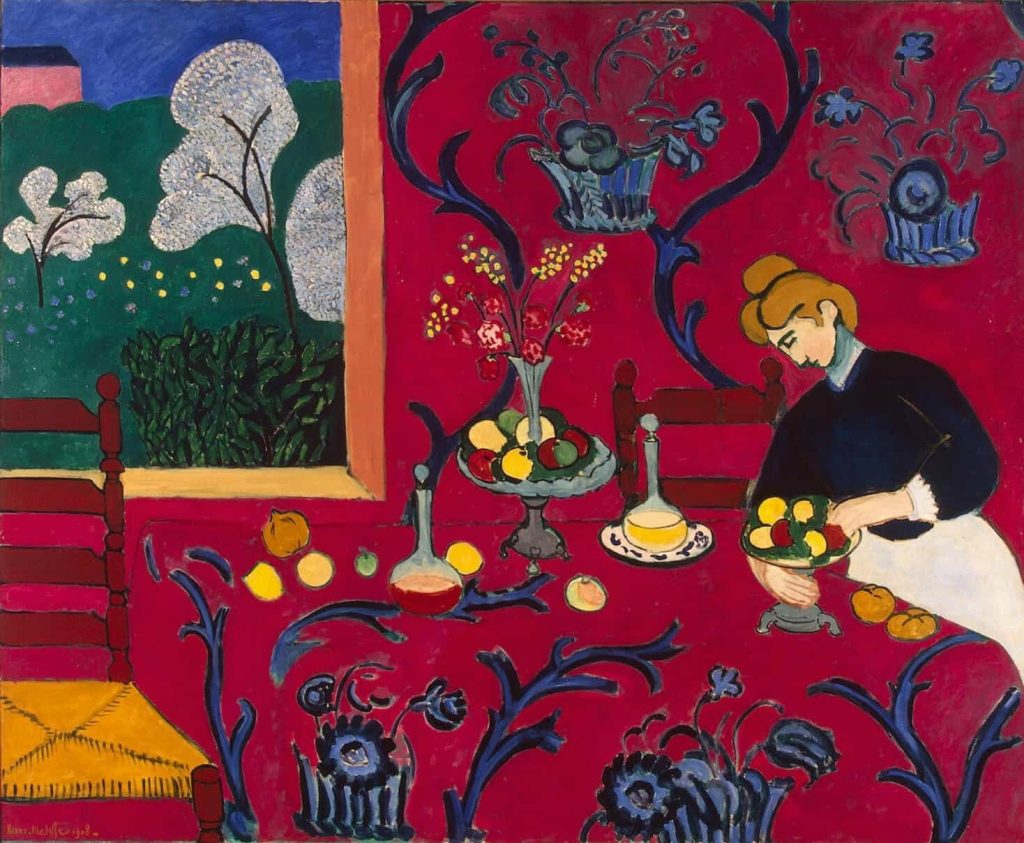
In Matisse, colour is still emotional, but it is also architectural. A red wall, green face, blue window or orange floor is not only expressive. It holds the painting together. Colour becomes a structure.
This shift is why Matisse became so important. He understood that colour could be more than intensity. It could organise space, flatten depth, create balance and make a painting work as a complete object.
If Van Gogh opened the door, Matisse walked through it and rearranged the room.
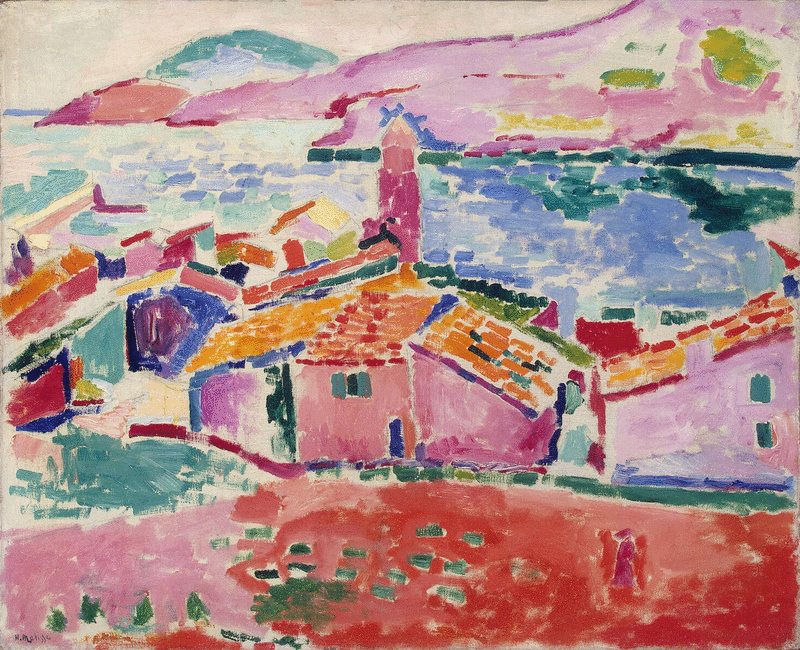
Henri Matisse and the birth of Fauvism
Henri Matisse was born in 1869 in northern France. He began studying art after first training in law, which means he arrived at painting later than many artists. This late start did not weaken his career. It may have given him a serious, questioning attitude towards painting.
Matisse studied in Paris and was taught by Gustave Moreau, a Symbolist painter who encouraged students to find their own language rather than simply follow academic rules. That mattered. Moreau’s studio became an important environment for several artists who later moved towards Fauvism.
By the early 1900s, Matisse was experimenting with colour. He looked at Impressionism, Neo-Impressionism and Post-Impressionism, but gradually moved towards something more direct. His breakthrough came around 1904 and 1905.
The summer of 1905 was especially important. Matisse travelled to Collioure, a fishing village on the Mediterranean coast, with André Derain. The bright southern light, sea, boats, buildings and landscape gave them the setting for a radical experiment in colour.
In Collioure, Matisse and Derain painted harbours, windows, boats and landscapes in colour that seemed to burn. They reduced detail, flattened space and used brushstrokes that felt direct and exposed.
Later that year, their work appeared at the Salon d’Automne in Paris. The reaction was strong. Fauvism had arrived.
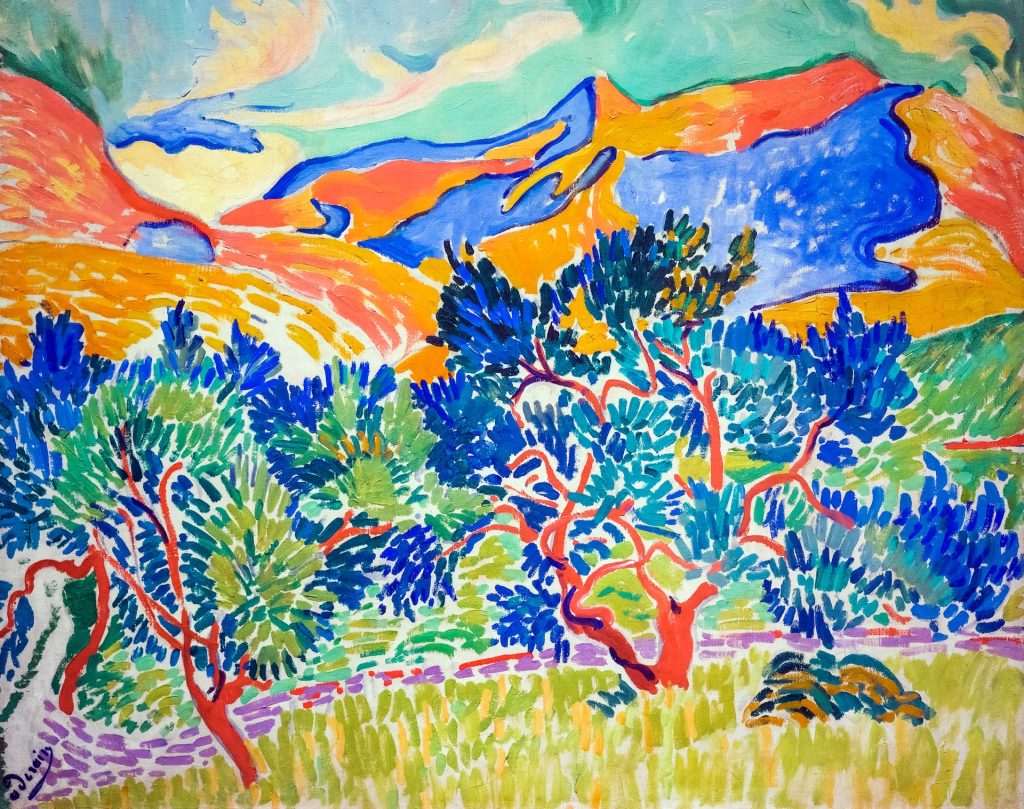
André Derain and Collioure
André Derain was one of the most important Fauvist artists. His work with Matisse in Collioure helped shape the movement.
Derain’s paintings from 1905 often use strong, separated colours and broken brushwork. His views of the harbour, boats and landscape feel both observed and invented. The colour is based on the scene, but it is not trapped by the scene.
Derain later painted views of London, including Charing Cross Bridge and the Thames. These paintings are useful because they show Fauvist colour applied to a modern city. London becomes pink, orange, blue and green. Smoke, water, bridges and buildings are simplified into colour relationships.
Where Monet had painted London through mist and atmosphere, Derain painted it through heat and contrast.
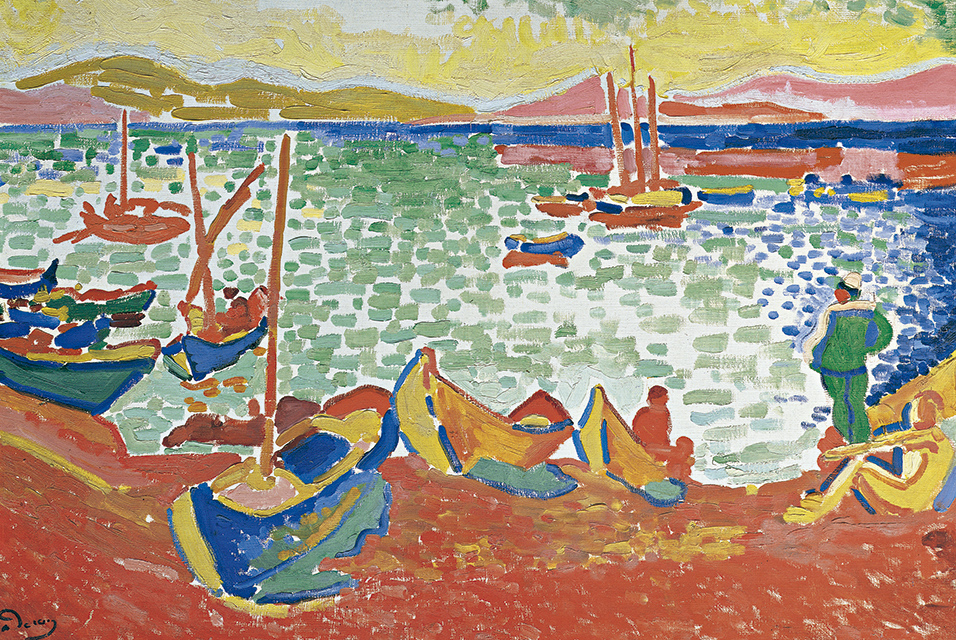
What to notice in Derain:
- Blocks of strong colour
- Broken brushwork
- Simplified bridges, boats and buildings
- Landscape treated as colour rhythm
- The tension between observation and invention
Derain shows that Fauvism was not only Matisse’s personal style. It was a shared experiment, even if Matisse became its leading figure.
Maurice de Vlaminck and raw colour
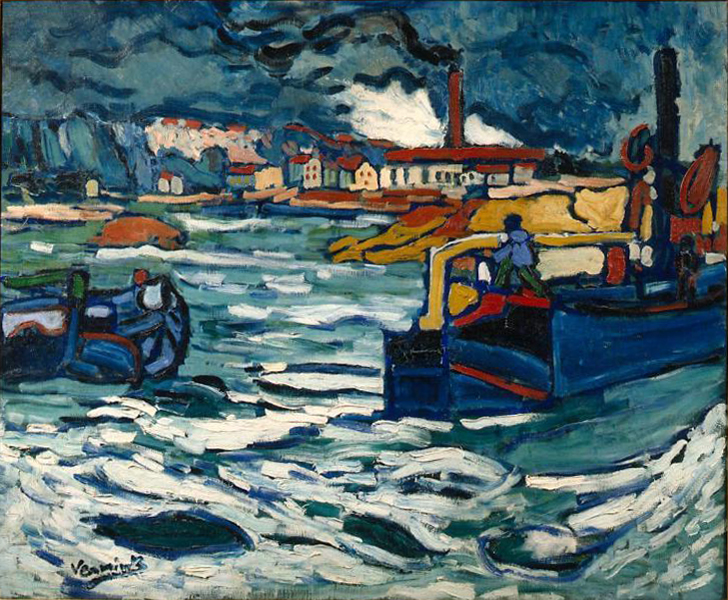
Maurice de Vlaminck brought a rougher, more forceful energy to Fauvism. He is often linked most closely with Van Gogh’s influence.
Vlaminck’s landscapes can feel almost explosive. Roads, trees, houses and skies are painted with strong colour and heavy brushwork. He often used thick paint and strong contrasts. His work can look more aggressive than Matisse’s, less balanced but more immediate.
If Matisse turned colour into structure, Vlaminck turned colour into impact.
His painting Restaurant de la Machine at Bougival is a good example of Fauvist landscape. The road, trees and buildings are built from vivid reds, blues, greens and yellows. The scene does not sit quietly. It pushes forward.
What to notice in Vlaminck:
- Thick paint
- Strong outlines
- Hot colour contrasts
- A feeling of speed
- Landscapes that seem emotionally charged
Vlaminck helps explain why the word “wild” stuck to the Fauves. His painting has a rawness that still feels forceful.
Other Fauvist artists
Fauvism was not a strict group with a manifesto. It was a loose circle of artists who shared an interest in bold colour, simplified form and freedom from naturalism.
Important Fauvist or Fauve-related artists include:
- Henri Matisse
- André Derain
- Maurice de Vlaminck
- Albert Marquet
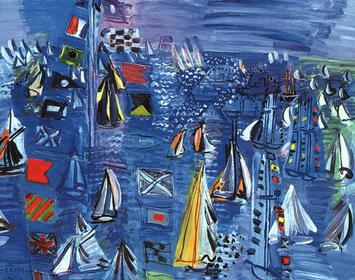
- Raoul Dufy
- Georges Braque
- Kees van Dongen
- Othon Friesz
- Charles Camoin
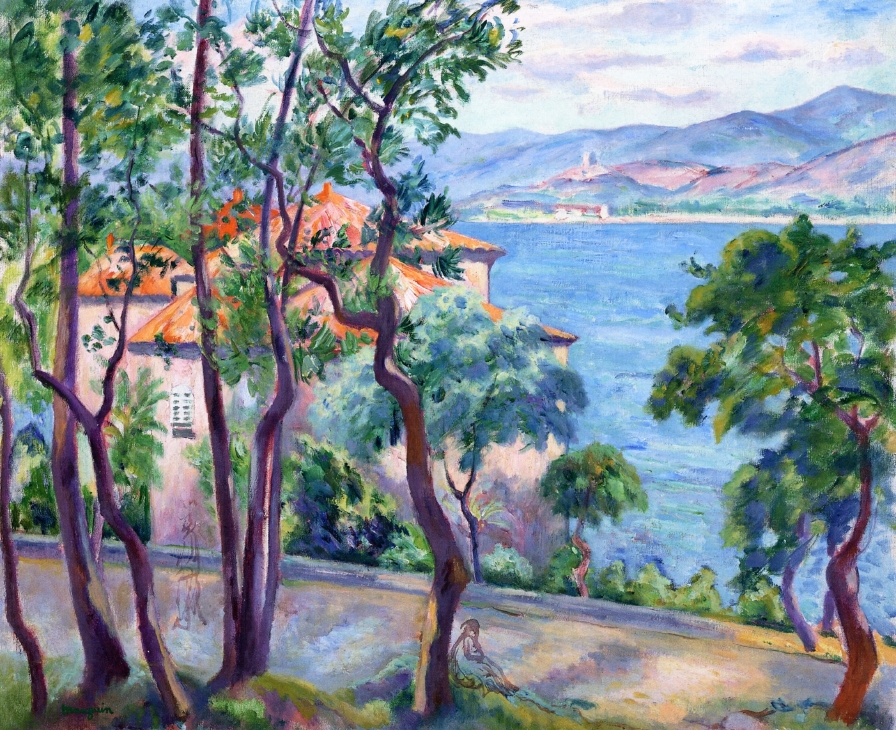
- Henri Manguin
- Georges Rouault
Some of these artists remained close to Fauvist colour for only a short time. Georges Braque, for example, later became one of the founders of Cubism with Picasso. Raoul Dufy developed a lighter, decorative style. Rouault took a darker, more spiritual path with heavy outlines and stained-glass-like colour.
This variety is important. Fauvism was not a single formula. It was a short period of shared permission. For a few years, artists tested what colour could do when released from realism.
The Salon d’Automne of 1905
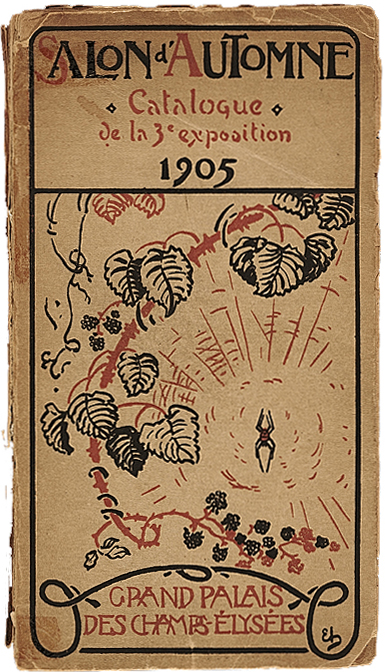
The Salon d’Automne of 1905 is often treated as the public birth of Fauvism.
This exhibition in Paris included works by Matisse, Derain, Vlaminck, Marquet, Manguin, Camoin and others. Their paintings were shown in a room that became famous for its shock value. Strong colour, rough brushwork and simplified forms made the room stand out from more conventional work.
The critic Louis Vauxcelles used the phrase that helped create the name “Fauves”. The label was meant critically, but the name stayed.
This moment matters because it shows how new art movements often begin through misunderstanding or insult. Words intended to dismiss artists can later become the terms used to describe their achievements.
The Fauves were not trying to be wild for its own sake. They were trying to find a new way to paint. But the public label captured something real: their paintings did seem untamed beside more polished academic work.
What makes a painting Fauvist?
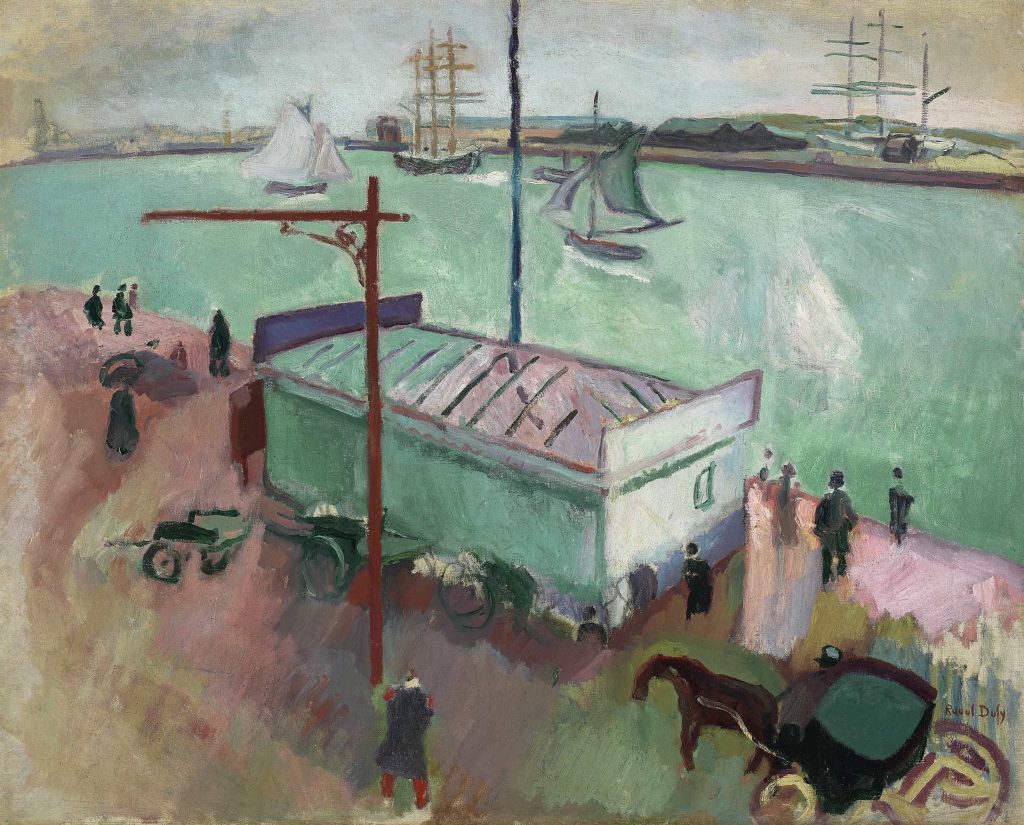
Not every colourful painting is Fauvist. To recognise Fauvism, look for a combination of colour, simplification and emotional force.
A Fauvist painting often has:
Colours that do not match natural appearance
Strong contrast between warm and cool tones
Flat areas of paint
Visible brushwork
Simplified forms
Little traditional modelling
Reduced perspective
Bold outlines
A direct, immediate feeling
A subject taken from everyday life, landscape, portraiture or still life
Fauvism is not only about brightness. It is about colour being used independently.
A painting may show a harbour, but the harbour becomes an arrangement of orange, blue, pink and green.
A portrait may show a woman, but the face becomes a field of colour relations.
A landscape may show trees and roads, but the scene becomes a painted rhythm.
The subject remains visible, but it no longer controls the painting. Colour takes command.
Fauvism and colour theory
The Fauves were not simply throwing bright paint around. Their work often connects to ideas about complementary colour and optical contrast.
Artists in the late nineteenth century were aware of colour theory through writers and scientists interested in how colours affect one another. Neo-Impressionists such as Seurat had used small dots or strokes of pure colour to create optical mixtures. Matisse learned from this, but he wanted more freedom than the careful method of pointillism allowed.
- Fauvist colour often works through contrast.
- Red beside green appears stronger.
- Blue beside orange gains intensity.
- Yellow beside violet can create sharp visual energy.
- Cool colours can make warm colours feel hotter.
Matisse understood this well. His colour choices may look spontaneous, but they are carefully balanced. A patch of green in a face may be necessary because of the pink or orange nearby. A red room may need a blue window to keep the painting alive.
For artists, this is one of the most useful lessons of Fauvism. Colour is relational. No colour works alone. Every colour changes because of what sits beside it.
Woman with a Hat: the portrait that announced the change
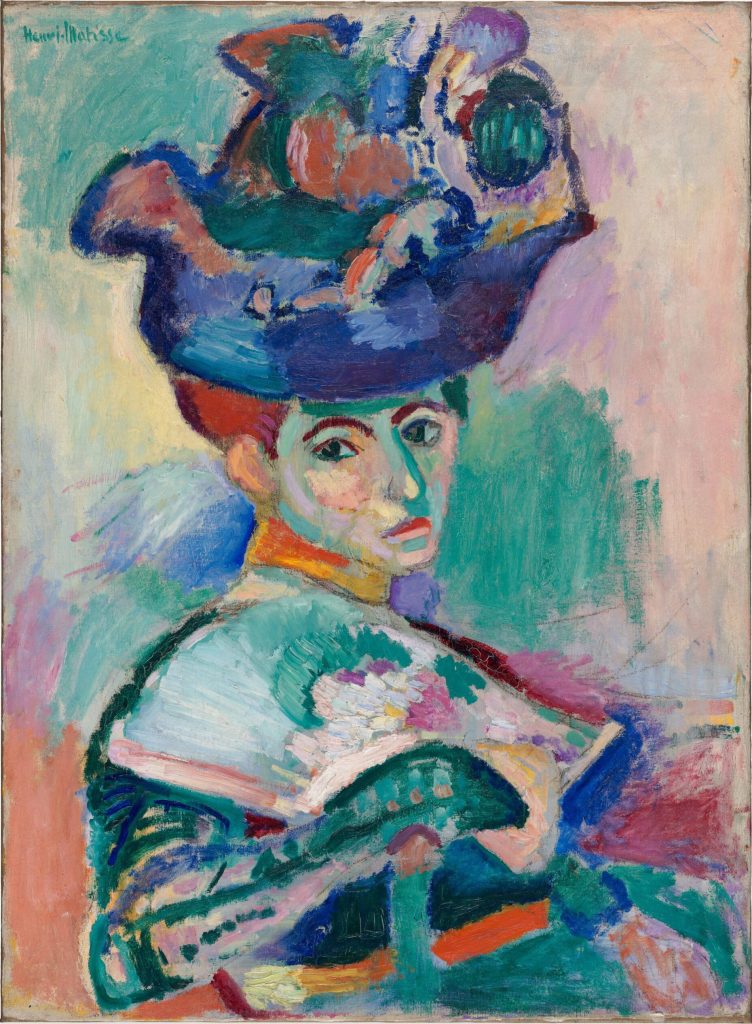
Matisse’s Woman with a Hat, painted in 1905, is one of the key Fauvist works.
The sitter was his wife, Amélie. In a traditional portrait, the artist might have focused on likeness, elegance, smooth skin and social presence. Matisse does something different. The face is made from green, pink, yellow and blue. The brushwork remains visible. The hat becomes a burst of colour and shape. The background refuses to stay quiet.
The painting shocked viewers because it seemed to attack the rules of portraiture. Yet it is not careless. The colours are arranged so the whole image holds together.
The green in the face is especially important. It is not there because Amélie Matisse’s face looked green. It is there because Matisse wanted colour to create form, light and tension.
What to notice:
- The green stripe and patches in the face
- The visible brush marks
- The clash of colour in the hat
- The lack of smooth modelling
- The strength of the sitter’s presence
- Woman with a Hat shows Fauvism at its most direct. A portrait becomes a colour event.
Where to see it:
Woman with a Hat is in the collection of the San Francisco Museum of Modern Art.
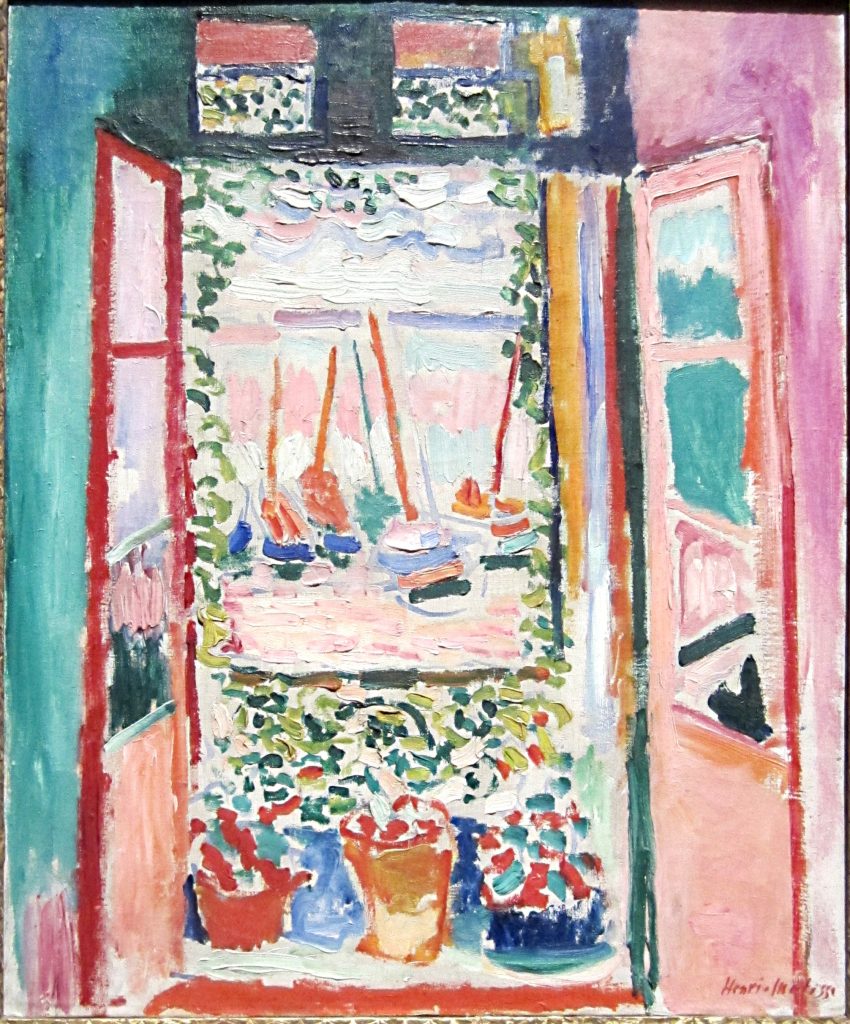
Open Window, Collioure: a window into modern colour
Open Window, Collioure is another essential Matisse painting from 1905. It shows a view through an open window towards boats, water and sky.
The painting is important because it makes space feel flat and open at the same time. The window frame divides the picture, but the colour connects everything. Interior and exterior are held together by pink, green, blue and violet.
The view is recognisable, but not realistic in a traditional way. The boats are simplified. The sea and sky are blocks of colour. The walls and shutters glow with unnatural tones.
This painting is useful for understanding how Fauvism changed landscape and interior painting. The window is not simply a realistic view. It is a structure for colour.
What to notice:
- The pink and green walls
- The simplified boats
- The strong window frame
- The shallow space
- The feeling of Mediterranean light turned into colour
Where to see it:
Open Window, Collioure is in the National Gallery of Art, Washington, DC.
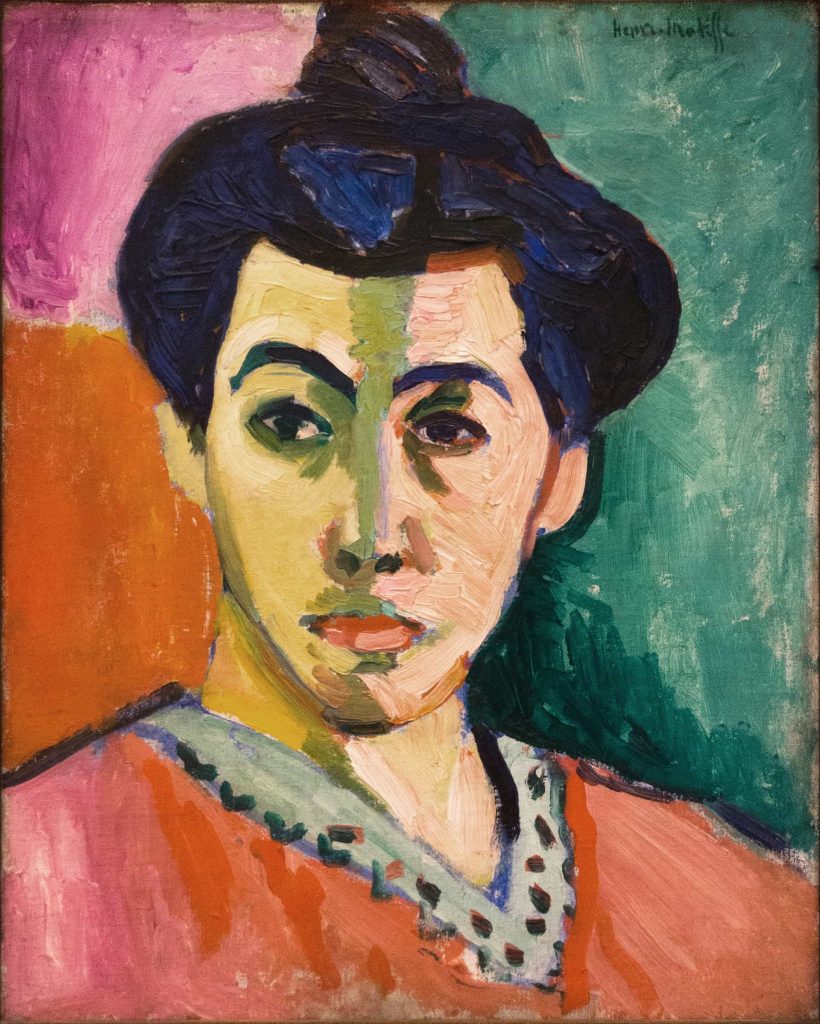
The Green Stripe: colour across the face
The Green Stripe, also known as Portrait of Madame Matisse, is one of the clearest examples of non-naturalistic colour in Fauvism.
The painting shows Amélie Matisse facing the viewer. A green vertical stripe runs down the centre of her face, dividing light and shadow. The surrounding colours are strong and unexpected. Her face is not modelled in the traditional way. It is built from colour zones.
The green stripe has become famous because it explains Matisse’s breakthrough so plainly. He is not using green as a decorative trick. He is using it as a structural line. The colour divides, balances and energises the face.
What to notice:
- The vertical green stripe
- The contrast between warm and cool areas
- The simplified facial structure
- The flatness of the background
- The calm expression despite the radical colour
This painting is a good answer to the question “what is Fauvism?” because it shows colour acting against realism but not against order.
Where to see it:
The Green Stripe is in the Statens Museum for Kunst, Copenhagen.
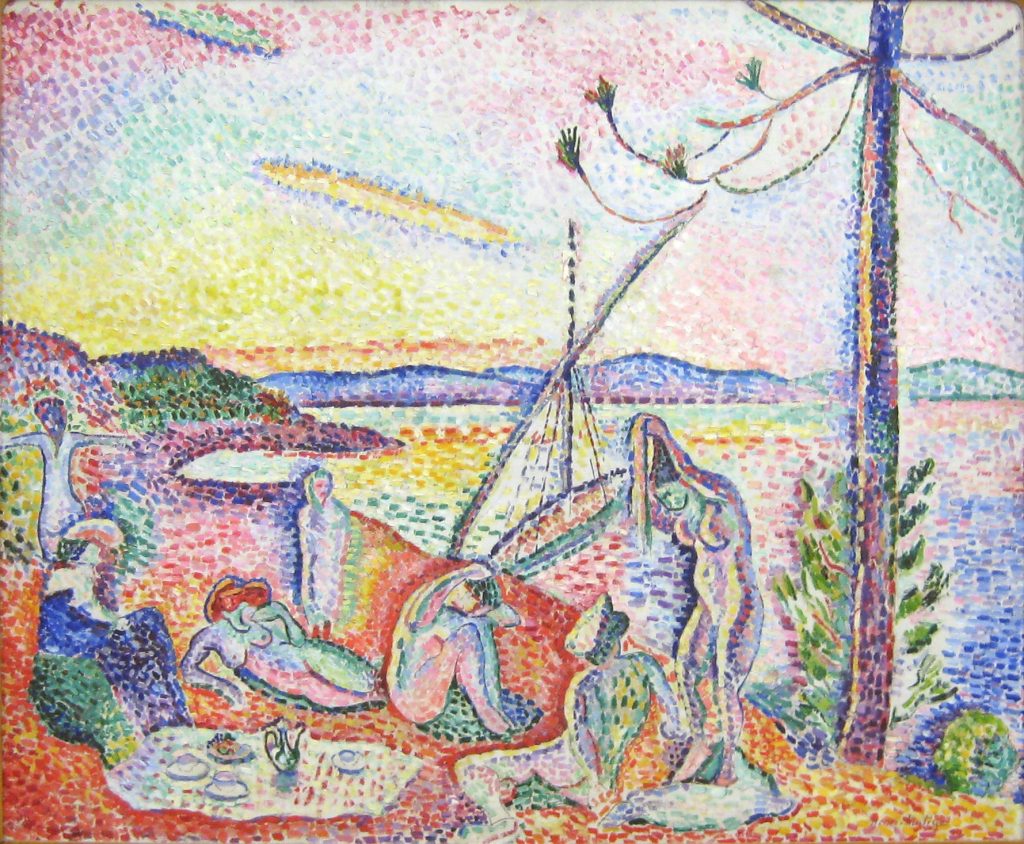
Luxe, Calme et Volupté: before Fauvism fully arrived
Luxe, Calme et Volupté, painted by Matisse in 1904, is often seen as a key step towards Fauvism.
The title comes from a line by Charles Baudelaire and can be translated as luxury, calm and pleasure. The painting shows figures near water, arranged in a loose landscape. It uses small touches of colour influenced by Neo-Impressionism, but the overall effect is more lyrical and free than strict pointillism.
This painting matters because it shows Matisse moving from colour theory towards colour freedom. The colours are strong, but not yet as wild as the works of 1905. The composition still has a calm, decorative quality, but it is already moving away from naturalistic colour.
What to notice:
- The small colour marks
- The warm and cool contrasts
- The simplified bodies
- The dreamlike setting
- The shift from optical colour towards expressive colour
Where to see it:
Luxe, Calme et Volupté is in the Musée d’Orsay, Paris.
The Joy of Life: Fauvism becomes ambitious
The Joy of Life, painted between 1905 and 1906, is one of Matisse’s most ambitious Fauvist works. It shows nude figures in a landscape, resting, embracing, playing music and dancing.
The painting is large in ambition, not only in size. Matisse takes the old subject of figures in nature and remakes it with modern colour and simplified form. The bodies are not anatomically detailed. The landscape is not realistic. The colours create a world of sensation.
The small dancing circle in the background is important because it points towards The Dance, one of Matisse’s later masterpieces.
What to notice:
- The warm orange, pink and yellow bodies
- The curved outlines
- The flat landscape
- The balance between rest and movement
- The dance circle in the background
The Joy of Life shows Fauvism moving beyond shock. It becomes a complete vision of painting as colour, rhythm and pleasure.
Where to see it:
The Joy of Life is in the Barnes Foundation, Philadelphia.
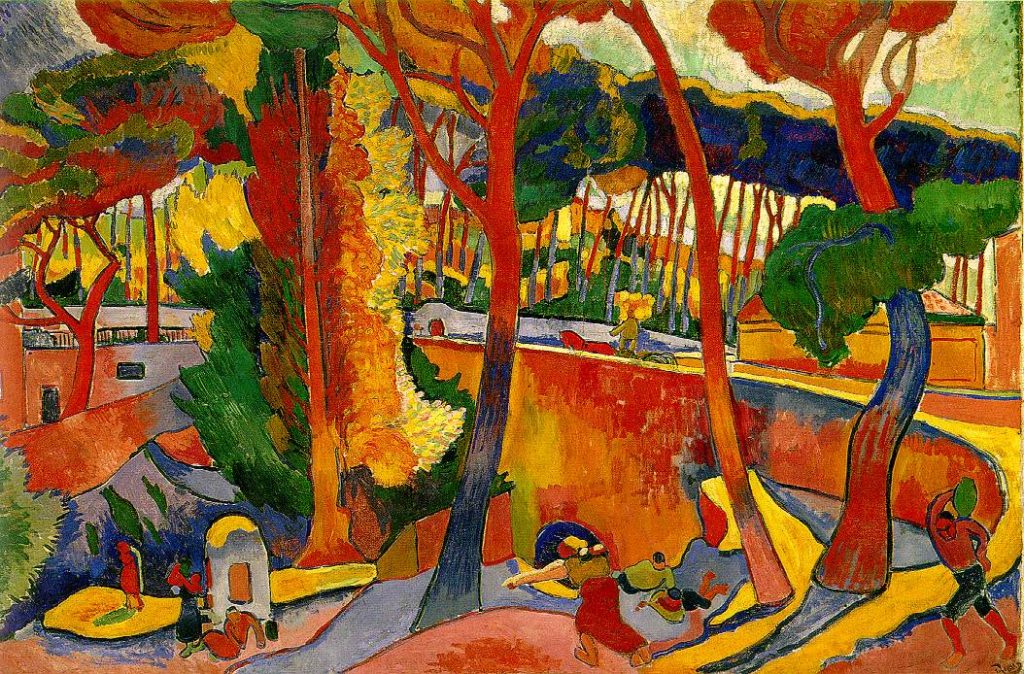
Fauvism and landscape
Landscape was one of the main subjects of Fauvism. The Fauves painted harbours, roads, trees, bridges, beaches, hills and villages, but they did not paint them as neutral views.
In Fauvist landscapes, nature becomes expressive. Trees can be red or blue. Roads can curve like painted ribbons. Water can become turquoise, purple or orange. Buildings can tilt or flatten. The whole scene becomes an arrangement of colour.
This was not simply fantasy. Many Fauvist landscapes were based on real places, especially in the south of France, the Mediterranean coast, Chatou, Collioure and other locations. But the artists were not interested in topographical accuracy. They wanted to convey sensation.
Fauvist landscape often feels hot, direct and physical. You can sense the artist standing in front of the scene, responding quickly to light and colour.
What to look for:
- Strong sunlight
- Simplified trees and buildings
- Colour used in large patches
- A shallow sense of space
- Brushwork that stays visible
- A feeling of immediacy
If Impressionist landscape captures light passing across a scene, Fauvist landscape turns that scene into colour pressure.
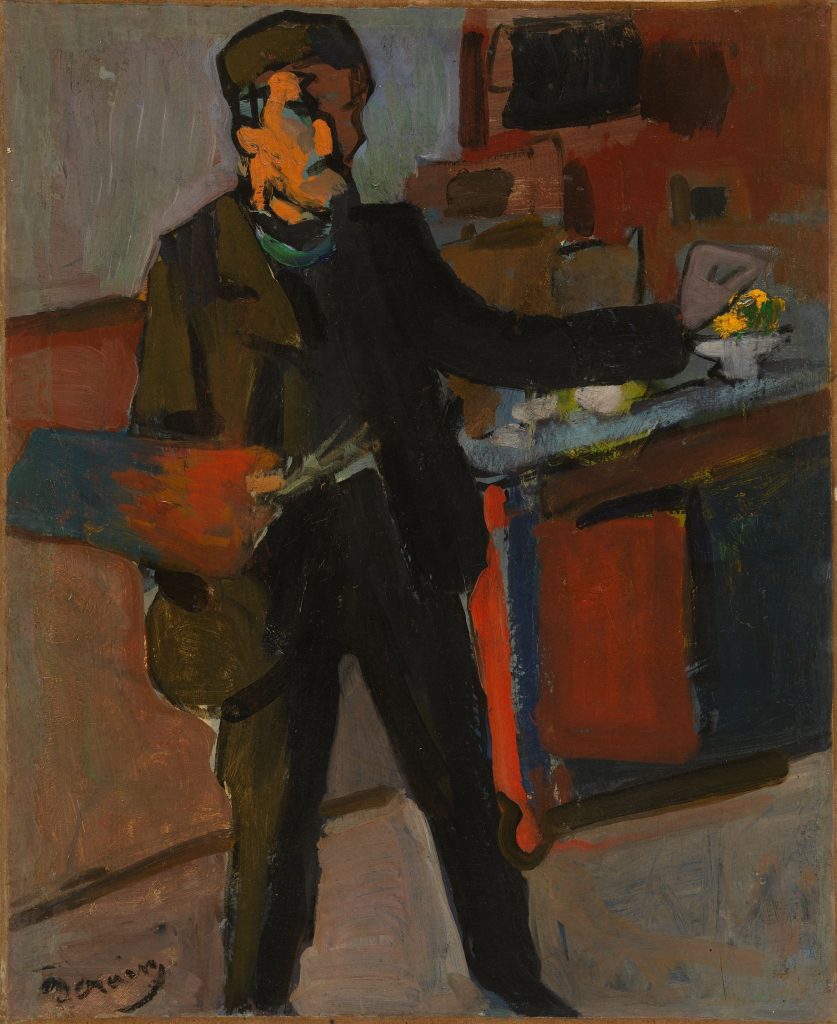
Fauvism and portraits
Fauvist portraits are some of the most striking works of the movement. They often use non-naturalistic colours, strong outlines and simplified features.
The aim is not always psychological depth in the traditional sense. Instead, Fauvist portraits make the sitter present through colour. A face becomes a field of contrasts. Hair, skin, clothing and background may all be pushed into unnatural tones.
This can make the portrait feel more alive, not less. The sitter becomes part of a colour structure, but still holds presence.
Key examples include:
- Matisse, Woman with a Hat
- Matisse, The Green Stripe
- Vlaminck, Portrait of André Derain
- Derain, portraits of Matisse and other artists
- Kees van Dongen’s portraits and figures
What to notice:
- Colour used to divide the face
- Strong outlines
- Simplified features
- A background that competes with the figure
- A sense of directness rather than polish
Fauvist portraiture changed the rules by showing that likeness could be emotional and painterly rather than photographic.
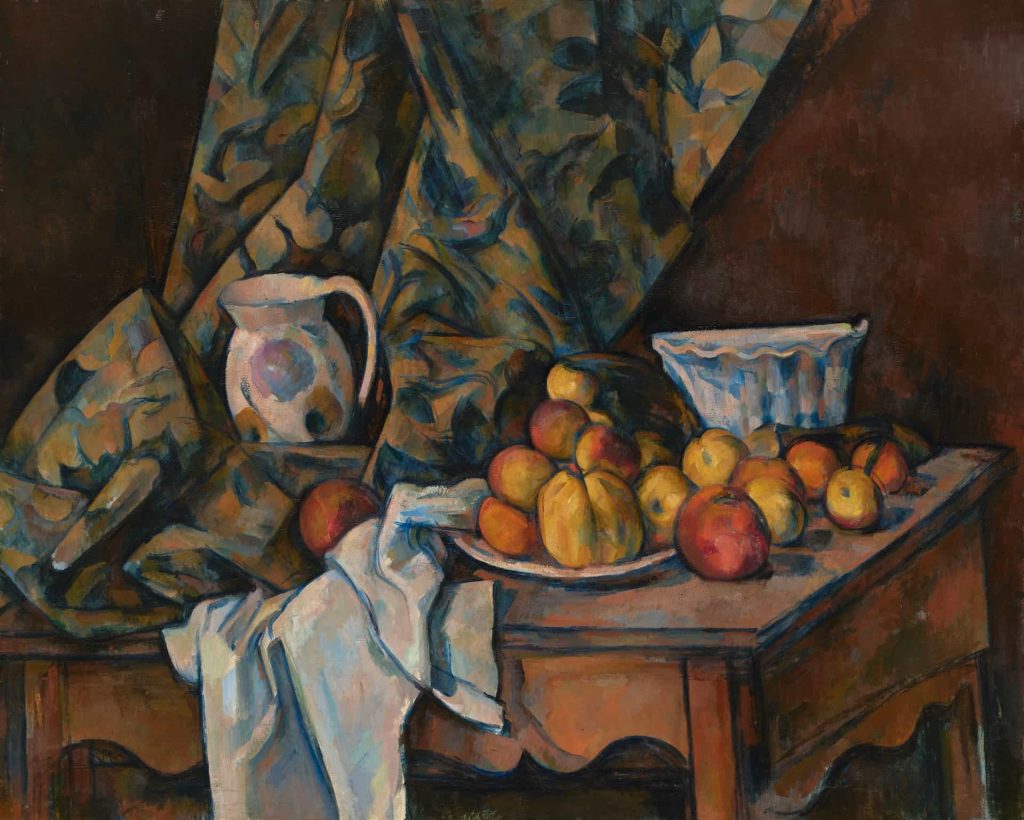
Fauvism and still life
Still life may seem quieter than portrait or landscape, but Fauvist artists used it to test colour, pattern and space.
A still life gives the artist a controlled arrangement: fruit, flowers, bowls, bottles, tables, fabrics and walls. Matisse used these subjects throughout his career because they allowed him to study colour relationships without needing dramatic narrative.
In Fauvist still life, objects are often simplified and flattened. A table may tilt towards the viewer. Pattern may spread across a cloth or wall. Fruit may become patches of pure colour.
What to notice:
- Objects outlined strongly
- Tables flattened or tilted
- Pattern used actively
- Bright colour contrasts
- Little concern for realistic shadow
Still life helped Matisse move towards his later interiors, where rooms, objects, fabrics and windows become complete colour environments.
Fauvism vs Impressionism
Fauvism and Impressionism are connected, but they are not the same.
Impressionism focused on light, atmosphere and modern life. Impressionist painters often worked outdoors and used broken brushwork to capture the changing effects of light. Their colour could be bright, but it usually remained tied to observation.
Fauvism took some of that freedom and pushed it further. Fauvist artists were less concerned with recording light accurately. They used colour to express sensation, feeling and structure.
A simple comparison:
Impressionism asks: how does light change what I see?
Fauvism asks: how can colour express what I feel and organise the painting?
Impressionist colour is often observational.
Fauvist colour is often expressive and non-naturalistic.
Impressionism opened the door. Fauvism walked through with stronger paint.
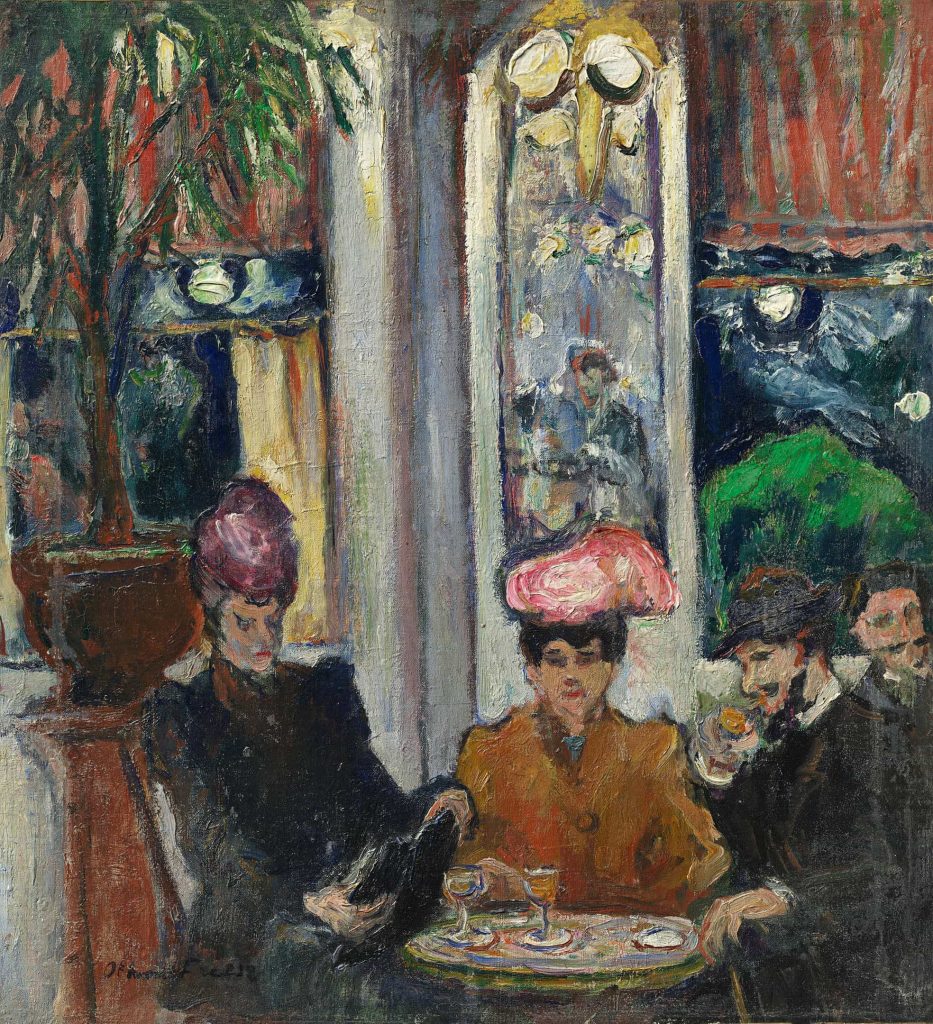
Fauvism vs Expressionism
Fauvism and Expressionism are often linked because both use strong colour and distortion. But they are not identical.
Fauvism developed in France and was often concerned with colour, pleasure, landscape, portraiture and the structure of painting.
Expressionism developed strongly in Germany and other parts of Europe, often with more emotional, psychological, social or spiritual intensity.
A simple comparison:
Fauvism often uses colour to create sensation and harmony.
Expressionism often uses colour and distortion to express anxiety, conflict or inner experience.
There is overlap. Fauvism helped influence later Expressionist art. Artists in groups such as Die Brücke and Der Blaue Reiter saw that colour could carry emotional force. But Fauvism, especially in Matisse, often retains a concern with balance and visual order.
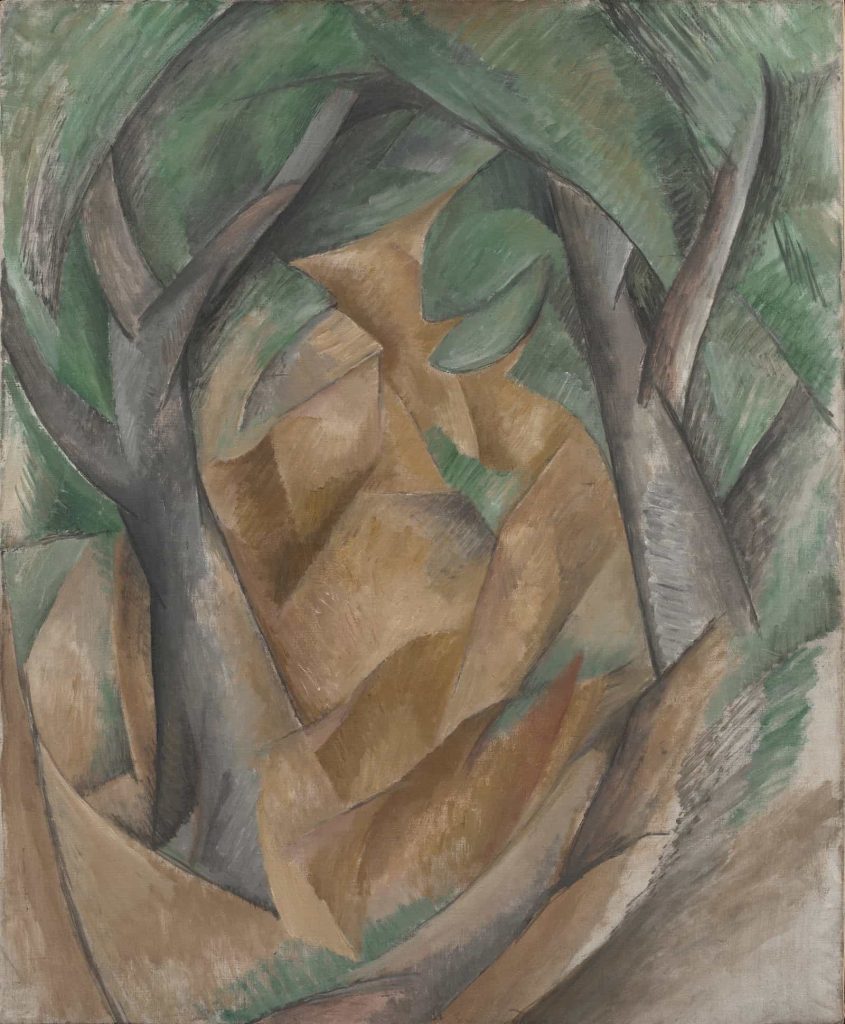
Fauvism vs Cubism
Fauvism and Cubism both changed modern art, but they moved in different directions.
Fauvism focused on colour.
Cubism focused on form, structure and multiple viewpoints.
Fauvist paintings often feel hot, bright and immediate. Cubist paintings often feel analytical, fragmented and restrained in colour, especially in early Analytic Cubism.
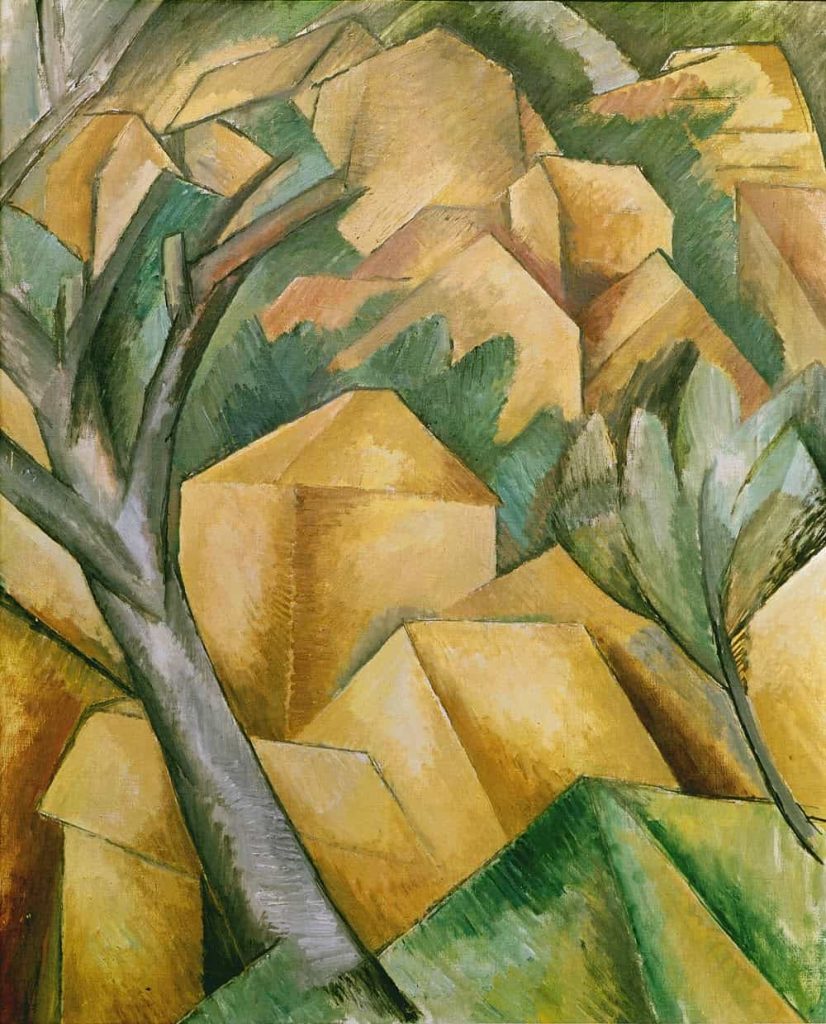
Georges Braque is an important link because he had a Fauvist period before becoming one of the key Cubist artists with Picasso. His move from Fauvism to Cubism shows how quickly modern art changed in the years after 1905.
A simple comparison:
Fauvism asks what colour can do.
Cubism asks how form can be broken and rebuilt.
Both movements rejected older realism, but they did so through different means.
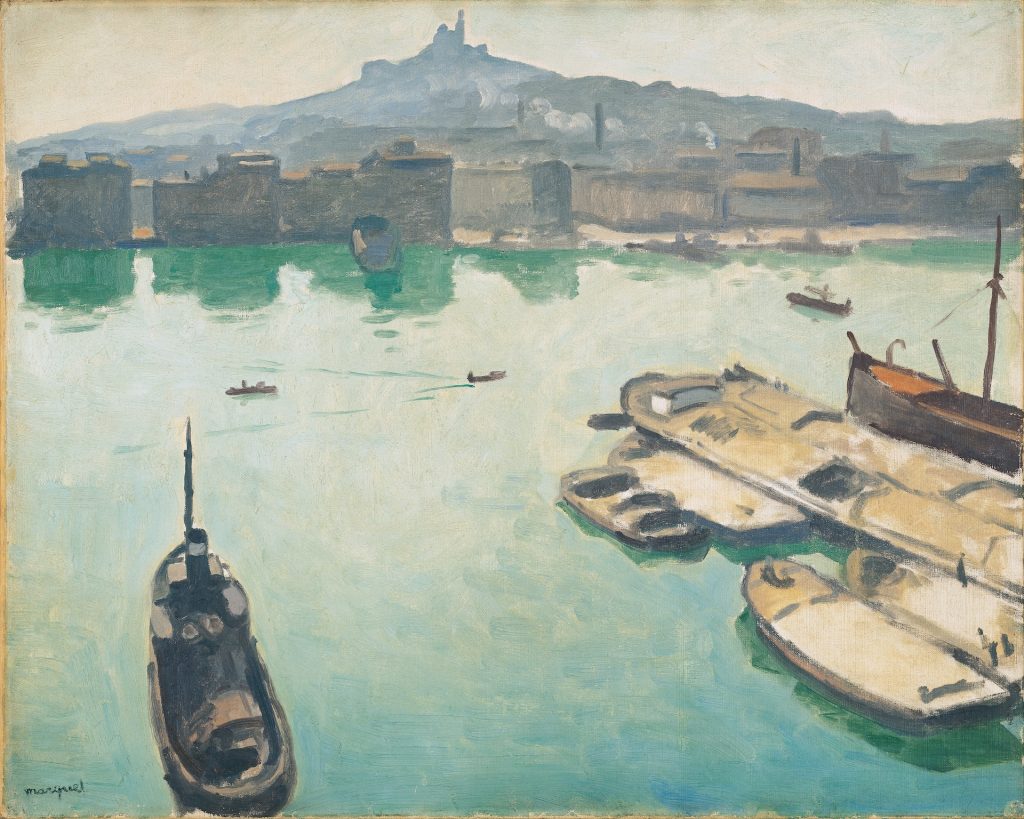
Why Fauvism lasted such a short time
Fauvism as a movement lasted only a few years, roughly from 1905 to 1908, although Fauvist colour continued beyond that.
There are several reasons it was brief.
The artists were never a formal group with a shared manifesto.
Many of them quickly moved in different directions.
Cubism soon became the dominant radical movement in Paris.
Some artists felt pure colour alone could become limiting.
Matisse himself developed beyond Fauvism into a wider practice.
This short lifespan does not make Fauvism less important. Some art movements matter because they last for decades. Others matter because they open a door quickly and change what becomes possible.
Fauvism did the second. It was a brief but decisive liberation of colour.
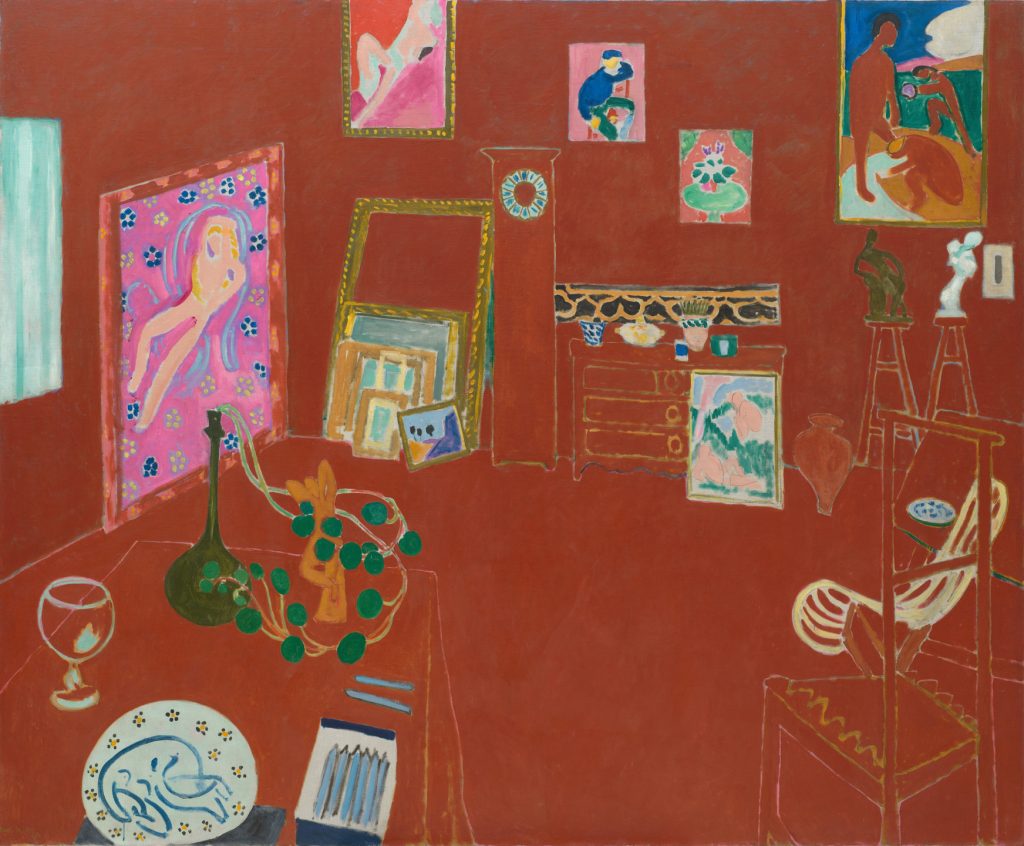
Why Matisse remained central
Many artists passed through Fauvism, but Matisse remained its central figure because he turned the movement’s colour freedom into a lifelong artistic language.
He did not stay fixed in the exact style of 1905. His work changed through interiors, portraits, odalisques, drawings, prints, sculpture, book design, stained glass and late cut-outs. Yet colour and line remained central.
Matisse understood that colour could do more than shock. It could create calm, energy, rhythm, balance and feeling. His later cut-outs show this clearly. They are not Fauvist paintings in the strict historical sense, but they carry Fauvism’s great lesson: colour can be the main event.
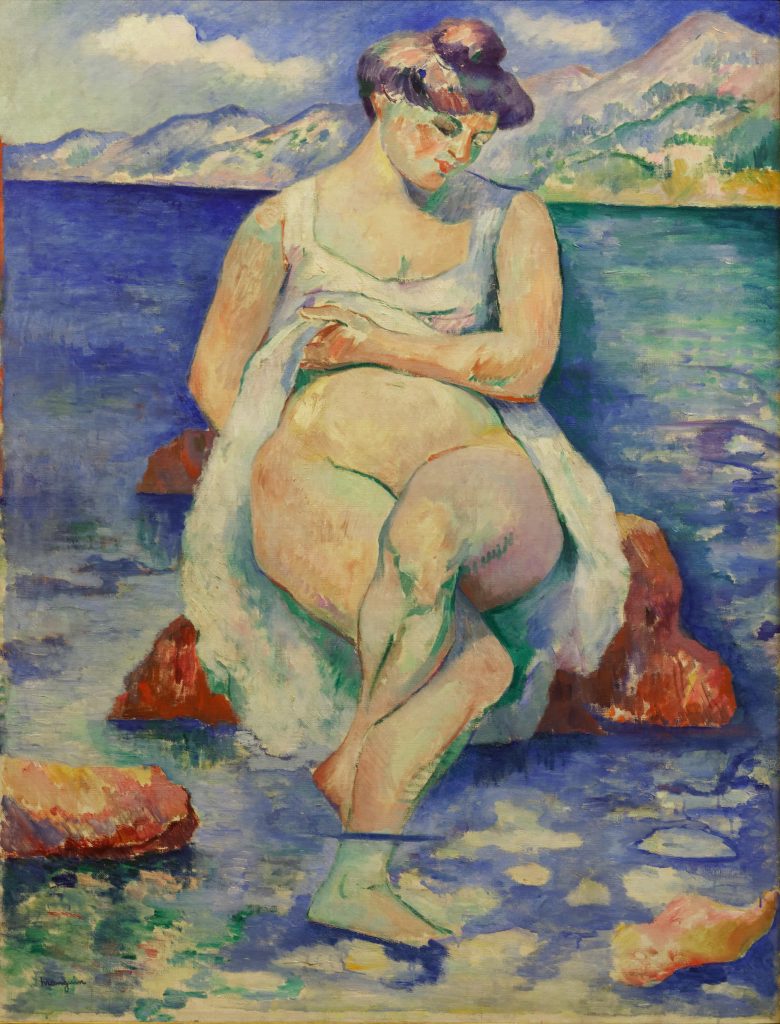
That is why the title “Matisse’s colour revolution” is fair. He did not invent strong colour alone, but he gave it one of its most complete modern forms.
What artists can learn from Fauvism
Fauvism is useful for artists because it gives practical lessons, not only art history.
First, colour does not have to copy nature.
A face can contain green, blue or orange if those colours make the image stronger.
Second, contrast matters.
A colour becomes powerful because of what sits beside it. Red changes beside green. Blue changes beside orange. Yellow changes beside violet.
Third, simplification can strengthen a painting.
Fauvist artists often removed detail so that colour and shape could carry more weight.
Fourth, brushwork can stay visible.
The surface of the painting does not need to be hidden. Marks can show energy and decision.
Fifth, a painting can be expressive without becoming chaotic.
Matisse proves this best. His colour is bold, but his compositions are carefully balanced.
Sixth, ordinary subjects can become radical.
A window, a harbour, a table, a face or a room can become modern if the artist changes how colour and form work.
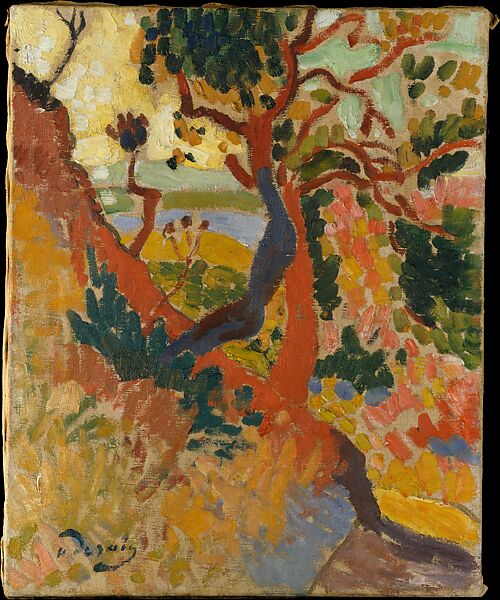
How to try Fauvist colour in your own work
You do not need to copy Matisse to learn from Fauvism. A better approach is to use Fauvist questions.
Choose a simple subject:
- A chair
- A bowl of fruit
- A window
- A plant
- A street corner
- A self portrait
- A coastal view
- A table with objects
Then paint or draw it using colour that expresses mood rather than realism.
Ask:
What colour does this subject feel like?
What colour would make the shadow more alive?
What happens if the background is stronger than the object?
Can I remove detail and keep the image clear?
Can one unexpected colour hold the whole work together?
Try limiting yourself to five or six colours. Fauvism is not about using every bright colour at once. It is about making colour relationships work.
A useful exercise:
Paint the same subject twice. In the first version, use naturalistic colours. In the second, use Fauvist colour. Compare which version feels stronger and why.
This helps you understand Fauvism from inside the process, not only as a style to look at.
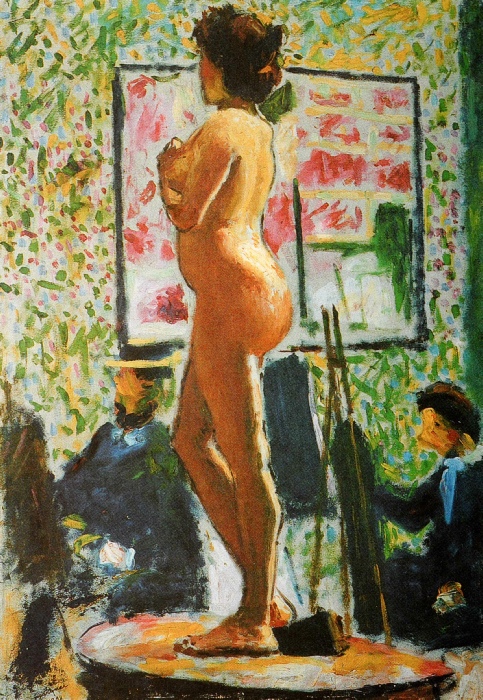
How to look at a Fauvist painting in a gallery
When standing in front of a Fauvist painting, do not begin by asking whether the colours are realistic. That is the wrong question.
Instead, ask:
Where does my eye go first?
Which colour is strongest?
Which colours are fighting or balancing each other?
How has the artist simplified the subject?
Is the space deep or flat?
Are the brush marks calm, rough, fast or controlled?
Would the painting still work if the colours were realistic?
What feeling does the colour create?
Step close and look at the brushwork. Then step back and see how the colours lock together. Fauvist paintings often depend on that movement between near and far.
Also notice edges. Fauvist artists often use outlines, colour borders and sharp contrasts to hold the image together.
A Fauvist painting may look spontaneous, but it often has more control than first appears.

Where to see Fauvist art
Fauvist works are held in many major museums. Display status changes, so always check museum websites before travelling.
Good places to start include:
Centre Pompidou, Paris
Musée d’Orsay, Paris
Musée Matisse, Nice
Museum of Modern Art, New York
The Metropolitan Museum of Art, New York
National Gallery of Art, Washington, DC
San Francisco Museum of Modern Art
Tate, London
Statens Museum for Kunst, Copenhagen
The Hermitage Museum, St Petersburg
Important works to look for include:
Matisse, Woman with a Hat
Matisse, Open Window, Collioure
Matisse, The Green Stripe
Matisse, Luxe, Calme et Volupté
Matisse, The Joy of Life
Matisse, The Dance
Derain, Charing Cross Bridge
Derain, Boats at Collioure
Vlaminck, Restaurant de la Machine at Bougival
Braque, Houses at L’Estaque
Van Dongen, Fauvist portraits and figures
If you are in the UK, Tate is a good starting point for understanding Matisse and modern colour, even when specific Fauvist works are not on display.
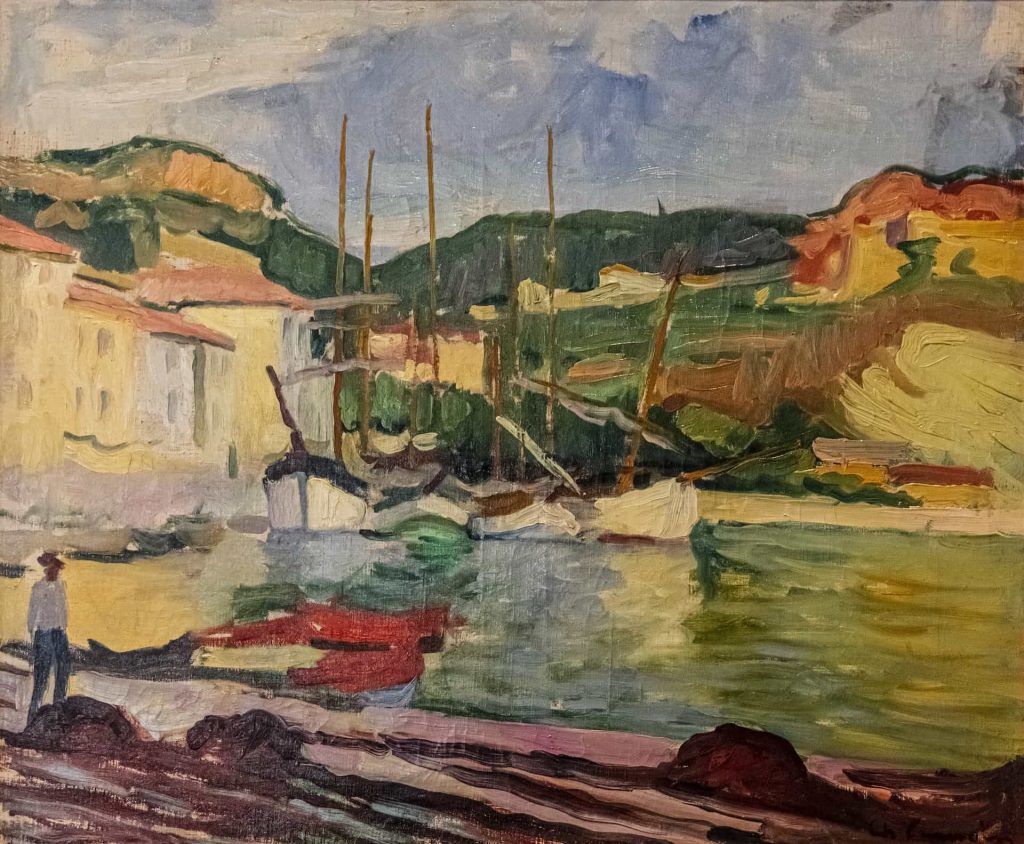
Why Fauvism still matters now
Fauvism still matters because colour remains one of the most direct ways art reaches people.
A viewer can feel colour before naming the subject. A red wall, green face or blue shadow can work faster than explanation. This is why Fauvism still feels fresh in galleries, books, classrooms and digital images.
It also matters because it challenges timid looking. Fauvism reminds us that art is not only about accuracy. It is about choices. A painting can be truthful without being realistic. A colour can be wrong in nature but right in the picture.
For contemporary artists, Fauvism remains useful because it offers permission. It says that colour can lead, that pattern can be serious, that simplification can be powerful and that pleasure can have intelligence.
For collectors and gallery visitors, Fauvism offers a way to look beyond subject. Instead of asking only “what is this a picture of?”, you begin to ask “how does this painting work?”
That shift changes everything.
Common myths about Fauvism
One myth is that Fauvism was childish because the colours are bright. In fact, Fauvist colour is often carefully structured. Matisse’s colour choices are deliberate, even when they look wild.
Another myth is that Fauvist artists could not draw realistically. Many of them were skilled draughtsmen. Their simplification was a choice, not a failure.
A third myth is that Fauvism was only about Matisse. Matisse was central, but Derain, Vlaminck, Marquet, Dufy, Braque and others all helped shape the movement.
A fourth myth is that Fauvism had no influence because it lasted only a few years. Its short life is exactly why it mattered. It changed colour quickly and permanently.
A fifth myth is that Fauvism is only decorative. Fauvist paintings can be beautiful, but their beauty often comes from risk, tension and a serious rethinking of painting.
Fauvism in simple terms
Fauvism is modern art that uses bold, expressive colour instead of realistic colour.
It began in France in the early 1900s.
Henri Matisse was its leading artist.
Van Gogh, Gauguin, Seurat and Cézanne helped shape its roots.
The name comes from “les fauves”, meaning “the wild beasts”.
Fauvist paintings often show portraits, landscapes, harbours, interiors and still lifes.
The movement was short, but it changed modern art.
Its main lesson is simple: colour can be free.
FAQs about Fauvism
What is Fauvism?
Fauvism is a modern art movement from early twentieth-century France. It is known for bold colour, expressive brushwork, simplified form and non-naturalistic colour choices. Henri Matisse was its leading figure.
Why is it called Fauvism?
The name comes from the French phrase “les fauves”, meaning “the wild beasts”. It was linked to a critical response to paintings shown at the Salon d’Automne in Paris in 1905.
Who started Fauvism?
Fauvism developed through a loose group of artists rather than one person alone. Henri Matisse is usually seen as the leading figure, with André Derain and Maurice de Vlaminck among the most important early Fauves.
How did Van Gogh influence Fauvism?
Van Gogh influenced Fauvism through his expressive colour, visible brushwork and emotional use of paint. The Fauves learned from his example that colour could express feeling rather than simply describe appearance.
What are the main features of Fauvism?
The main features of Fauvism are vivid colour, non-realistic colour choices, loose brushwork, simplified shapes, flattened space, bold outlines and emotional directness.
What is the most famous Fauvist painting?
There is no single answer, but Matisse’s Woman with a Hat, Open Window, Collioure, The Green Stripe and The Joy of Life are among the most famous Fauvist works.
How is Fauvism different from Impressionism?
Impressionism focuses on light and atmosphere, usually based on observation. Fauvism uses colour more freely and expressively, often ignoring naturalistic colour to create emotional and visual force.
How is Fauvism different from Expressionism?
Fauvism often uses colour for sensation, harmony and pictorial structure. Expressionism often uses colour and distortion for psychological, emotional or social intensity. The two movements overlap, but they are not the same.
When did Fauvism happen?
Fauvism developed in the early twentieth century and was most active from around 1905 to 1908. Its influence continued long after the movement itself faded.
Why is Fauvism important?
Fauvism is important because it changed the role of colour in modern art. It helped free colour from realism and influenced later movements including Expressionism, abstraction and modern colour painting.
Fauvism was brief, but it changed the course of modern art. It took lessons from Van Gogh, Gauguin, Seurat and Cézanne, then pushed colour into a new role. Colour became expressive, structural and independent.
Matisse gave Fauvism its clearest voice. Derain gave it Mediterranean heat and modern city views. Vlaminck gave it raw force. Other artists carried its colour into portraits, landscapes, interiors and still life.
The movement’s great achievement was not simply making paintings brighter. It changed what colour could mean. After Fauvism, colour did not have to stay inside the lines of reality. It could lead the whole painting.
For anyone learning to look at art, Fauvism is a powerful place to begin. Look at the colour first. Then look at how it holds the painting together. The wildness is there, but so is control. That balance is what makes Fauvism more than a burst of bright paint. It is one of the great turning points in modern art.
Leave a Reply