
No products in the cart.
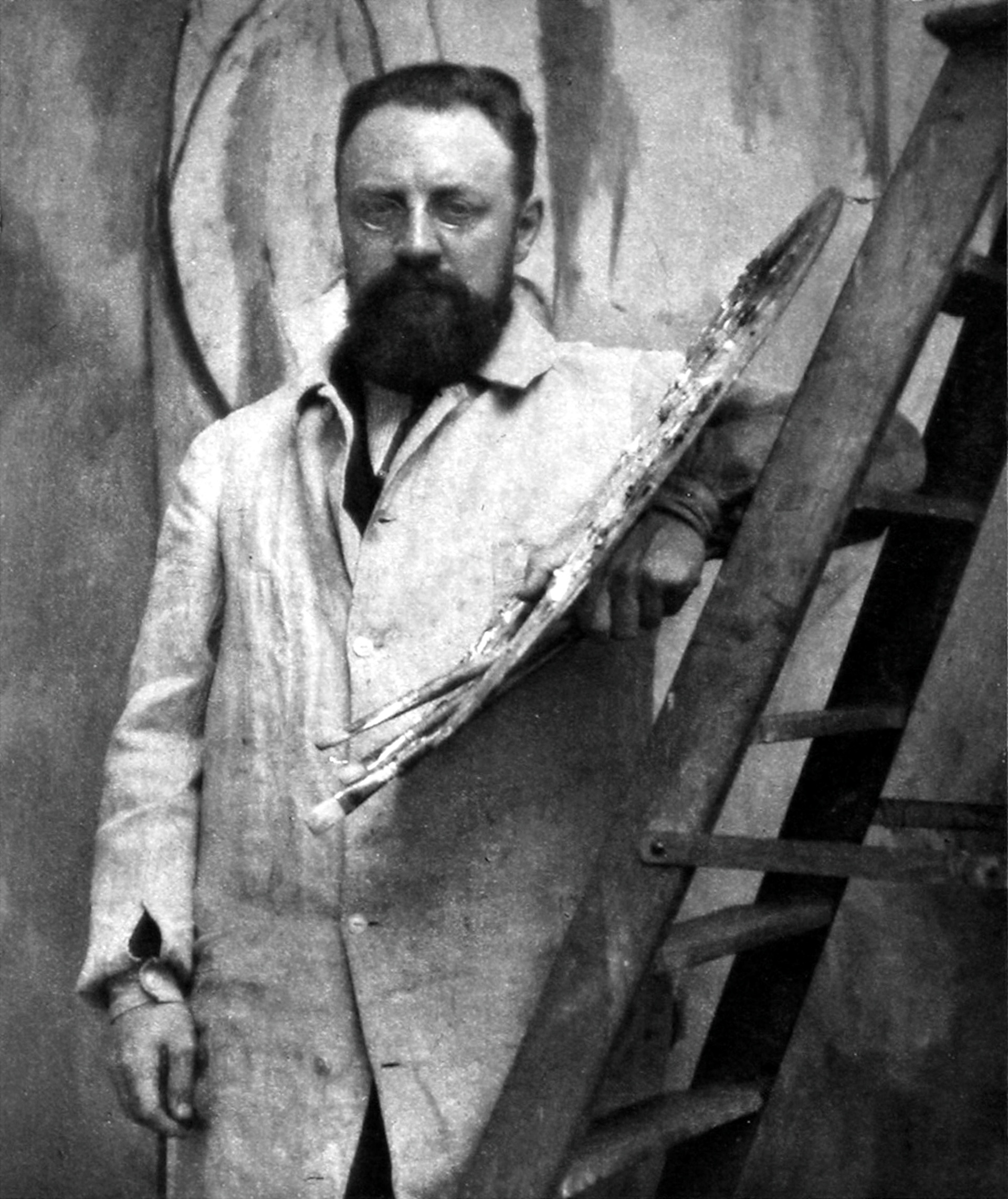
Top Artist of History: Henri Matisse, Colour Maestro
Henri Matisse is one of the artists people often think they know before they have really looked at him. Bright colour, loose shapes, dancers, interiors, paper cut-outs, blue nudes, goldfish and patterned rooms all come to mind. Yet behind that easy recognition is an artist who spent more than fifty years questioning how painting works.
Matisse was not simply a painter who liked strong colour. He used colour as structure. He used line as movement. He treated a room, a body, a window, a bowl of fruit or a paper shape as if each could become a complete world. He wanted art to feel clear, alive and balanced, but that clarity came from hard work, repeated looking and constant revision.
For beginners, Henri Matisse is one of the best artists to study because his work is open, generous and direct. You do not need specialist knowledge to respond to a Matisse painting. A red wall, a green stripe, a curved body or a blue paper shape can reach the eye immediately. But the more you look, the more deliberate the work becomes.
This guide looks at Matisse’s life, his famous paintings, his role in Fauvism, his use of colour, his late cut-outs and why his work still matters to artists, collectors, gallery visitors and anyone learning how to look at modern art.
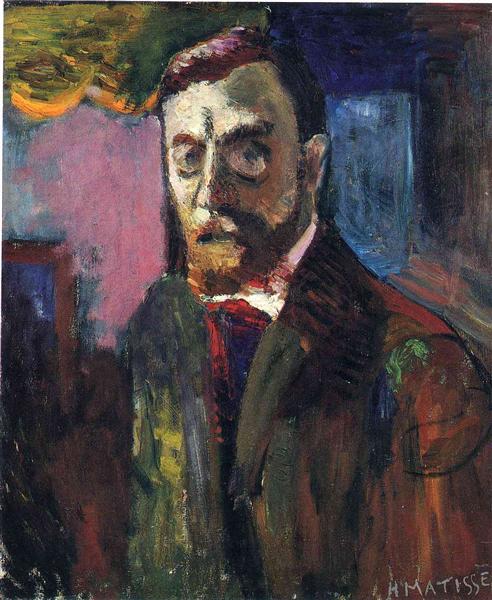
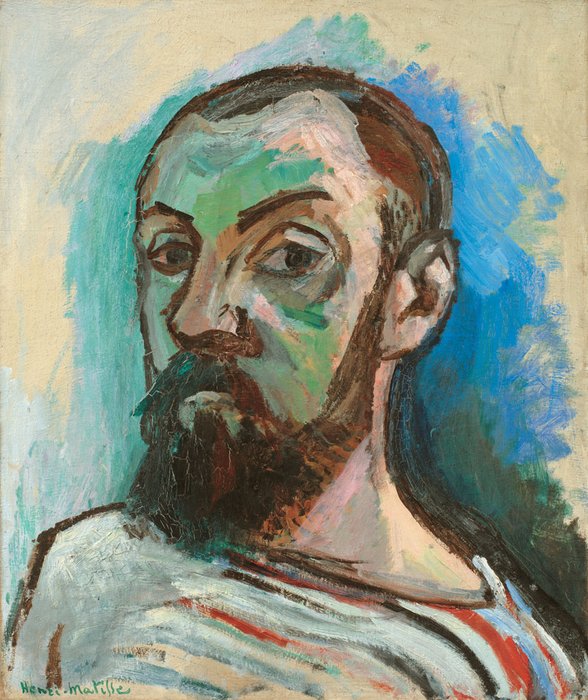
Quick facts about Henri Matisse
Henri Matisse was born on 31 December 1869 in Le Cateau-Cambrésis, in northern France. He died on 3 November 1954 in Nice.
He is best known as a painter, but he also made drawings, prints, sculptures, book designs, stained glass, textiles and paper cut-outs.
Matisse became a leading figure in Fauvism, a short but radical modern art movement known for bold colour and simplified form.
His major subjects include interiors, portraits, figures, still lifes, windows, gardens, dancers, odalisques, plants, flowers and studio spaces.
His famous works include Woman with a Hat, Open Window, Collioure, The Joy of Life, The Dance, The Red Studio, Goldfish, The Snail, The Swimming Pool and the Blue Nude cut-outs.
His late cut-outs were made from paper painted with gouache, then cut into shapes and arranged into large compositions.
Matisse believed colour and line could do more than describe the world. They could create feeling, rhythm and order.
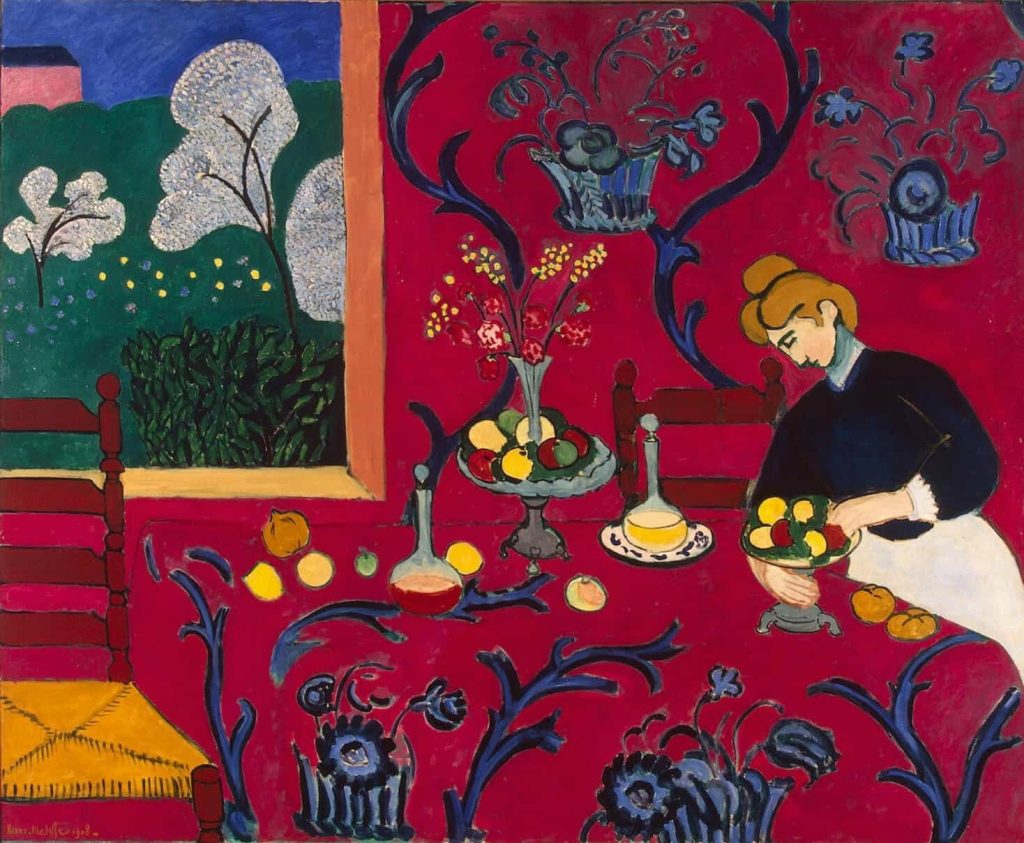
Why Henri Matisse matters
Matisse matters because he changed what colour could do in modern art.
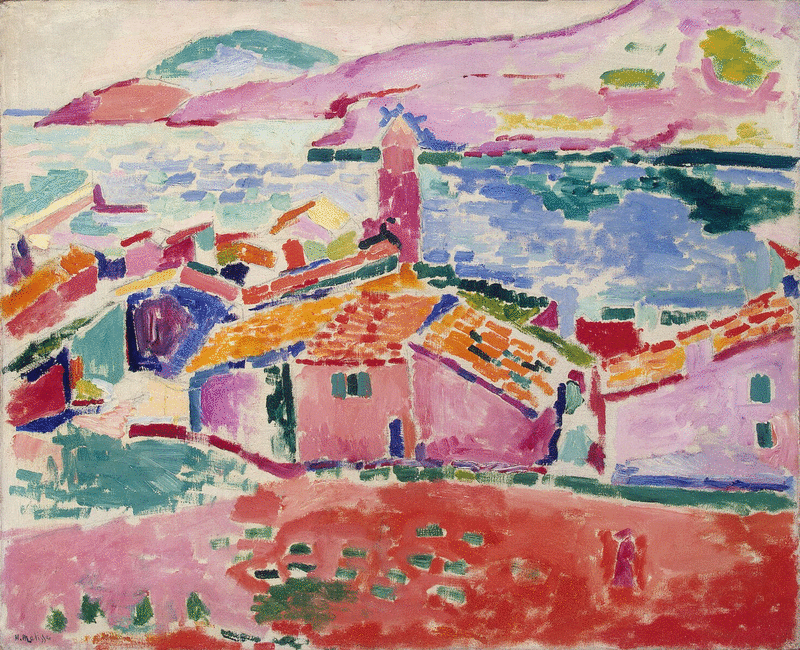
Before Matisse, colour was often expected to describe things: green grass, blue sky, brown furniture, pink skin. Matisse broke that rule. In his paintings, colour does not always obey nature. A face might contain green, blue, orange and pink. A room might be flooded with red. A window might open onto flat blocks of sea, sky and architecture. Colour becomes independent, expressive and structural.
This was not careless painting. Matisse knew exactly what he was doing. He simplified forms so that colour could carry more weight. He reduced detail so the whole image could work as one arrangement. He treated a painting almost like a piece of music, where each colour responds to the others.
Matisse also matters because his work makes pleasure serious. Some modern art asks to be admired for difficulty. Matisse asks us to take joy, balance and visual pleasure seriously. His paintings are often beautiful, but they are not shallow. Their beauty comes from decisions about space, rhythm, line, surface and tension.
He also helped expand the idea of what an artist could do late in life. After serious illness and surgery in 1941, Matisse could no longer work in the same physical way. Instead of repeating old habits, he developed his cut-outs. With scissors, painted paper and assistants who helped pin the shapes in place, he made some of the most direct and memorable works of his career.
That late reinvention is one of the reasons Matisse still feels so relevant. He did not treat limitation as the end of making. He found another route.
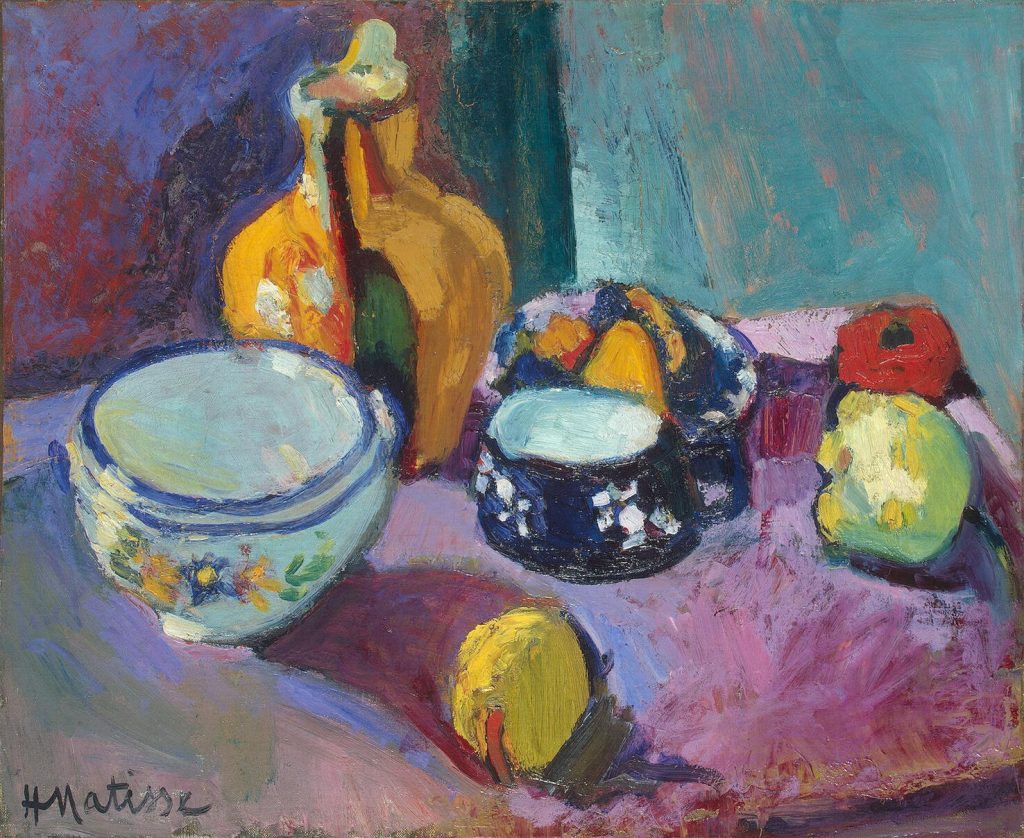
The early life of Henri Matisse
Matisse did not begin as a child prodigy heading straight for art school. He first trained in law and worked as a legal clerk. Painting came later, after illness led him to spend time recovering. During that period, he began to paint and found a direction that changed his life.
This late start matters. Matisse’s art often looks effortless, but his career was built on study and discipline. He trained in Paris, copied old masters, studied drawing and absorbed lessons from many artists before finding his own voice.
He was interested in colour from early on, but the Matisse most people recognise did not appear immediately. He passed through periods of darker painting, naturalism, Impressionist influence, Post-Impressionist influence and experiments with pointillism before arriving at the explosive colour of Fauvism.
This gradual development is worth remembering. Artists do not usually arrive fully formed. Matisse had to learn what to keep, what to reject and what kind of painter he wanted to become.
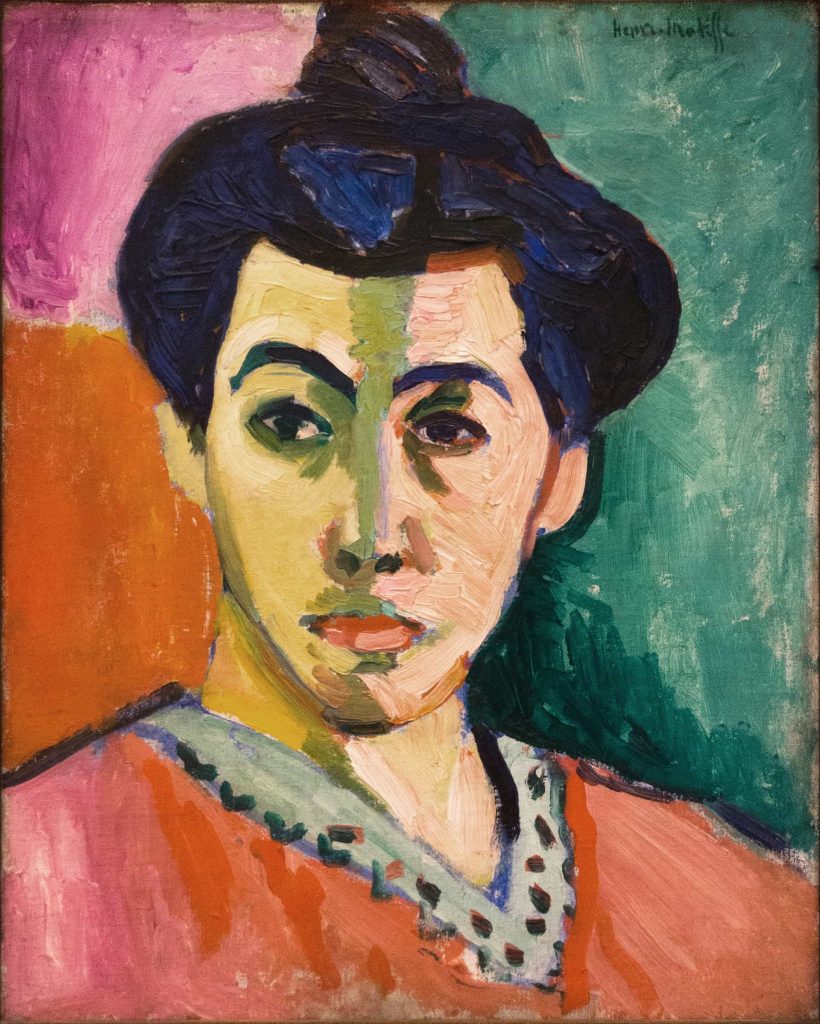
Fauvism: when colour became wild
Fauvism is one of the key terms linked with Henri Matisse. The word comes from the French word “fauves”, meaning “wild beasts”. It was used after critics saw the bold colour and rough energy of paintings by Matisse, André Derain and others at the Salon d’Automne in Paris in 1905.
Fauvism did not last long as a formal movement, but its effect was huge. The Fauves used colour in ways that seemed shocking at the time. They were not trying to copy the natural appearance of the world. They wanted colour to express sensation, mood and force.
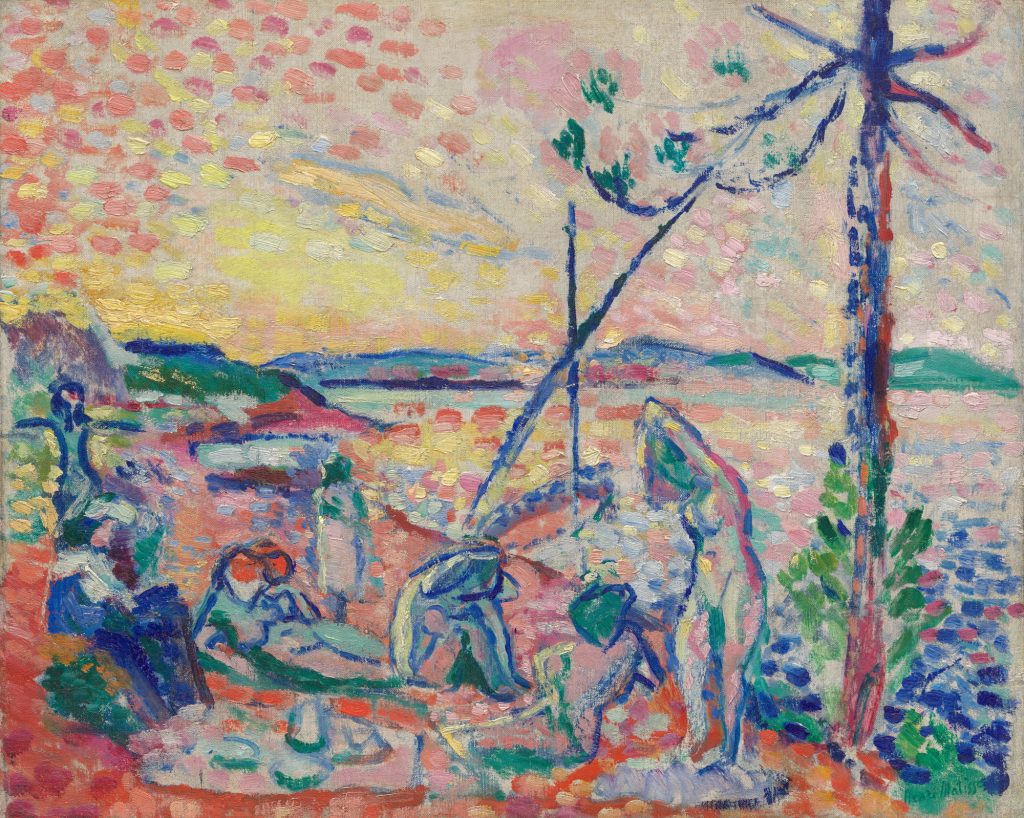
For Matisse, Fauvism was not only about brightness. It was about freedom. He discovered that colour could flatten space, intensify emotion and make a painting feel more alive. In works such as Open Window, Collioure and Woman with a Hat, colour is no longer tied to realism. It becomes the engine of the picture.
Look at a Fauvist painting by Matisse and you may see green shadows, pink walls, orange faces, blue trees or red outlines. These choices are not mistakes. They are decisions. Matisse is asking us to feel the scene rather than measure it.
Fauvism helped open the door to later modern art because it gave artists permission to separate colour from natural description. Without that shift, much twentieth century painting would look very different.
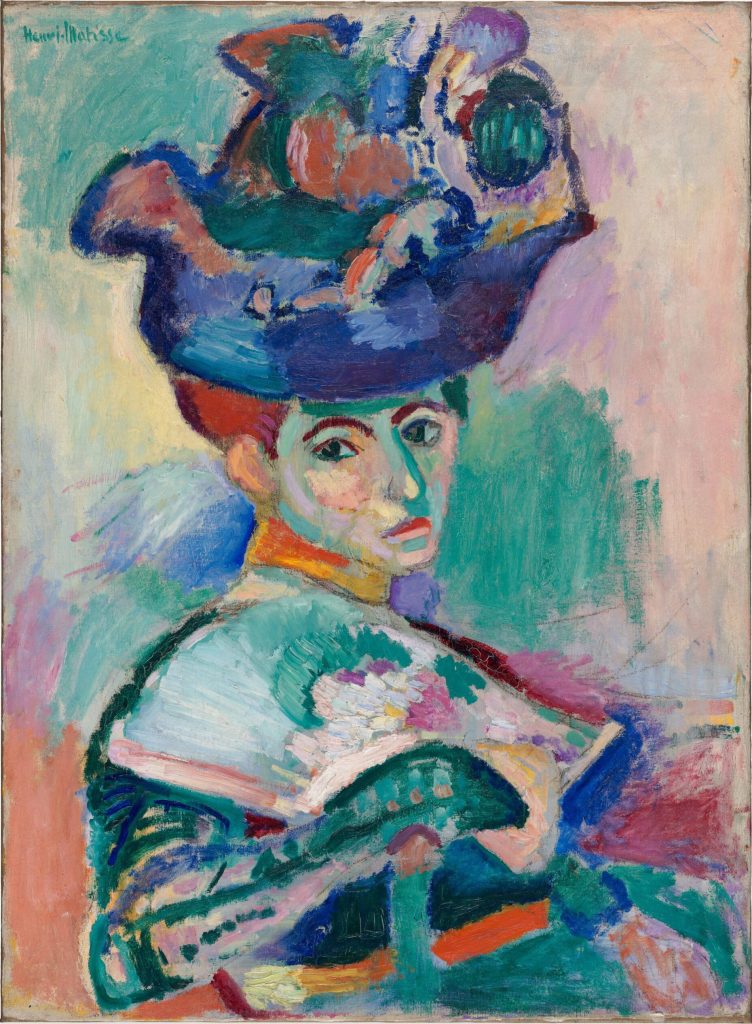
Woman with a Hat: a portrait that broke the rules
Woman with a Hat, painted in 1905, is one of Matisse’s most famous early works. The sitter was his wife, Amélie. At first glance, it is a portrait. But it refuses the usual expectations of portrait painting.
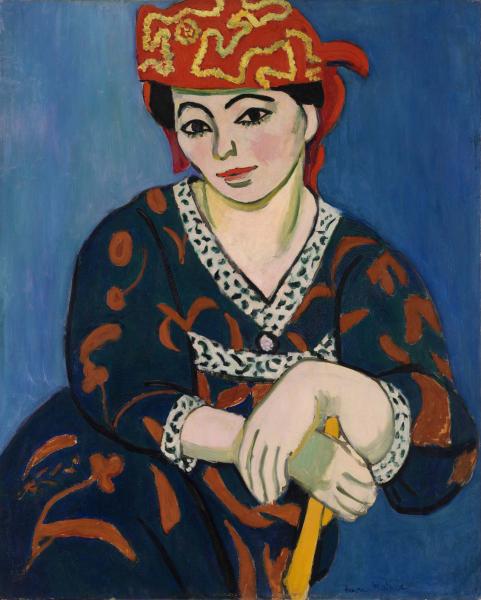
The face is built from strong, unexpected colours. Greens, blues, pinks and yellows sit beside one another. The brushwork is visible. The hat is theatrical. The background does not settle into a quiet supporting role. Everything seems active.
The painting caused strong reactions when it was shown. Some viewers thought it looked unfinished or ugly. But the shock is part of its importance. Matisse was not trying to flatter the sitter in a conventional way. He was using portraiture to test the expressive power of colour.
What to notice:
The green running through the face.
The way the hat dominates the image.
The visible brush marks.
The refusal to smooth the surface.
The balance between elegance and visual attack.
This is a painting about seeing differently. It does not ask whether the skin really looked green or yellow. It asks whether colour can create presence.
Where to see it:
Woman with a Hat is in the collection of the San Francisco Museum of Modern Art.
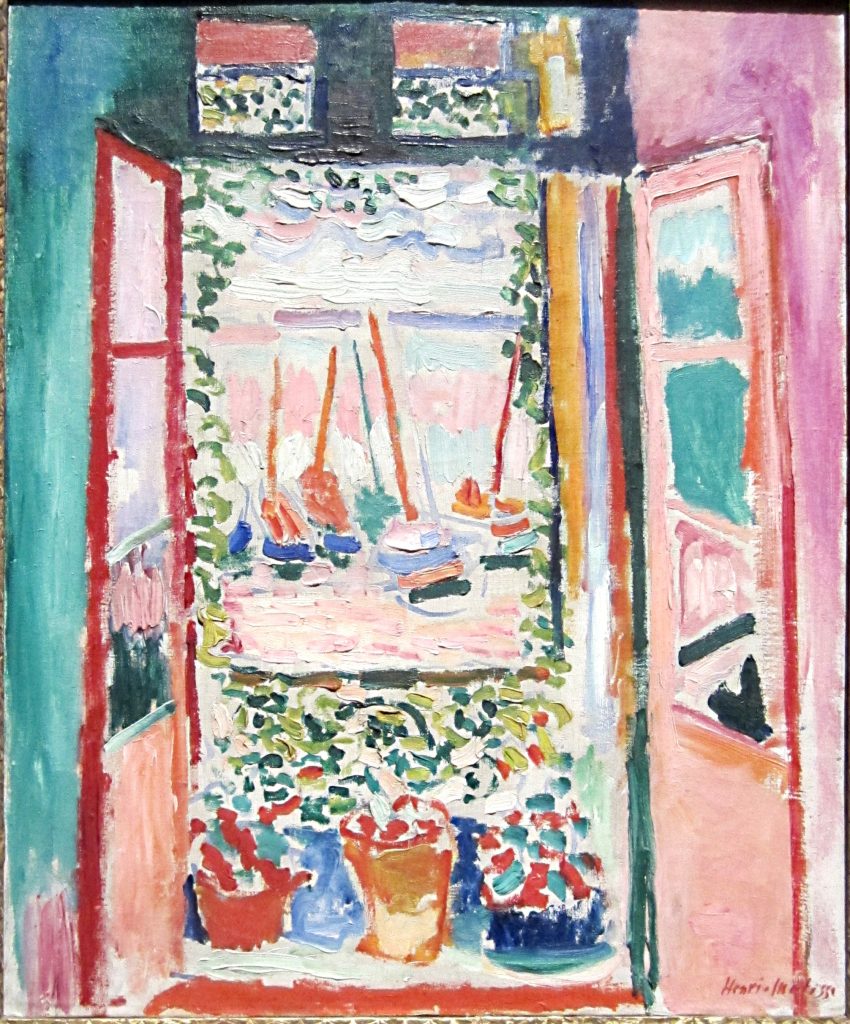
Open Window, Collioure: colour, air and the view outside
Open Window, Collioure, painted in 1905, is one of the great Fauvist paintings. It shows a window opening onto boats, sea and sky. The subject is simple, but the colour is radical.
The painting has several spaces at once: the interior room, the open window, the balcony, the harbour and the view beyond. Matisse flattens these spaces so that the whole image becomes a pattern of colour. The window is not only a window. It is a frame inside the painting.
This idea became important across Matisse’s career. He often painted rooms with windows, interiors with outside views, or spaces where fabric, wall, table and landscape sit close together. The window gave him a way to connect private space and the wider world.
What to notice:
The pink and green walls.
The simplified boats.
The blue and turquoise areas of water.
The way the window frame divides the image.
The feeling that the painting is both flat and open.
Open Window, Collioure is a useful painting for beginners because it shows how Matisse could make a familiar subject feel new. He does not need drama. He needs colour, structure and a clear sense of looking.
Where to see it:
Open Window, Collioure is in the collection of the National Gallery of Art, Washington, DC.
The Joy of Life: bodies, landscape and rhythm
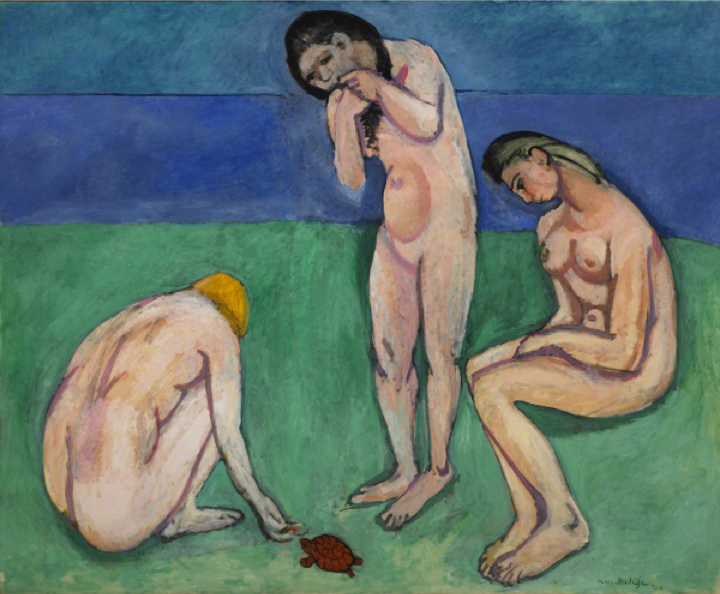
The Joy of Life, painted between 1905 and 1906, is one of Matisse’s most ambitious early works. It shows nude figures in a landscape, some reclining, some embracing, some playing music and some dancing in a circle.
The painting connects Matisse to a long tradition of pastoral art, where bodies appear in an imagined natural setting. Yet his treatment is modern. The colours are heightened. The space is shallow. The bodies are simplified. The landscape feels more like a mental place than a realistic scene.
One of the most important parts of the painting is the group of dancing figures in the background. That circular rhythm later becomes central to The Dance.
The Joy of Life matters because it shows Matisse thinking about art as a complete environment. Colour, line, body and landscape work together. The painting is not a snapshot. It is an arrangement of pleasures: music, touch, movement, rest and looking.
What to notice:
The curved outlines of the bodies.
The warm and cool colour contrasts.
The circular dance in the background.
The way the landscape seems invented rather than observed.
The balance between calm and movement.
Where to see it:
The Joy of Life is in the Barnes Foundation, Philadelphia.
The Dance: movement reduced to its simplest force
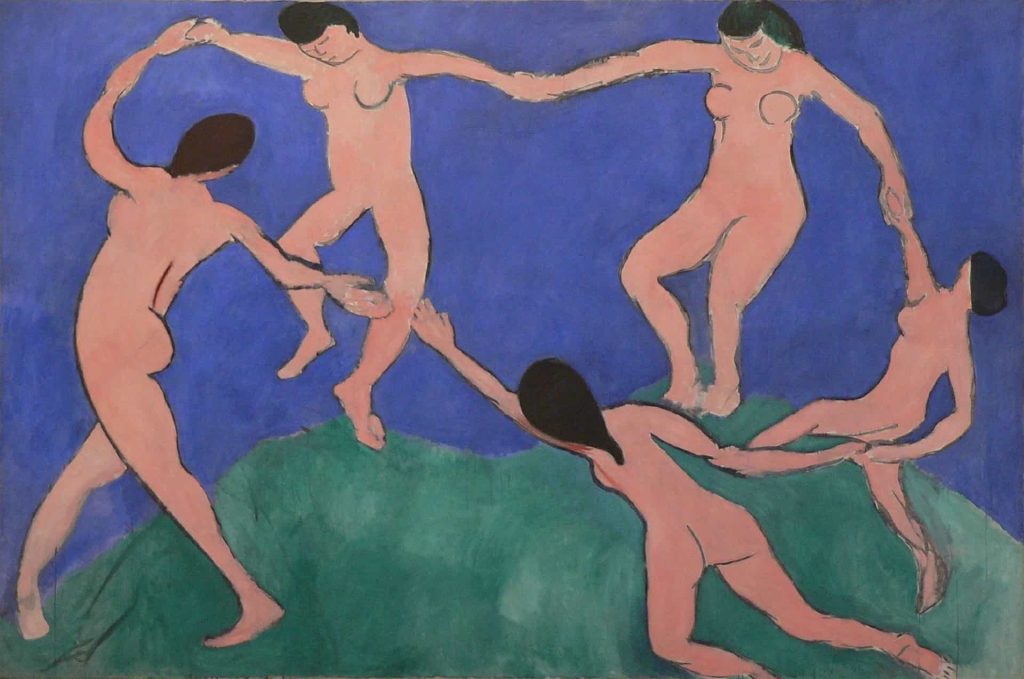
The Dance is one of Matisse’s most widely recognised images. There are different versions, including a 1909 version at MoMA and a larger version made for the Russian collector Sergei Shchukin.
The image is simple: five nude figures hold hands and dance in a circle. The ground is green. The sky is blue. The bodies are reddish orange. The composition is reduced almost to essentials.
That simplicity is the power of the work. Matisse does not describe individual faces, muscles or setting. He shows movement as rhythm. The dancers form a living circle. Their bodies pull and stretch across the picture. The painting feels ancient and modern at the same time.
The Dance is often discussed as a symbol of joy, but it is not soft or sentimental. The figures are forceful. The circle is slightly unstable. One pair of hands seems barely connected. That small break gives the painting tension.
What to notice:
The limited colour palette.
The curve of the bodies.
The pressure between joined hands.
The large areas of flat colour.
The way the dancers create the whole structure.
Where to see it:
The 1909 version of The Dance is in the Museum of Modern Art, New York. The later large version is held by the State Hermitage Museum, St Petersburg.
The Red Studio: painting a room as a mind
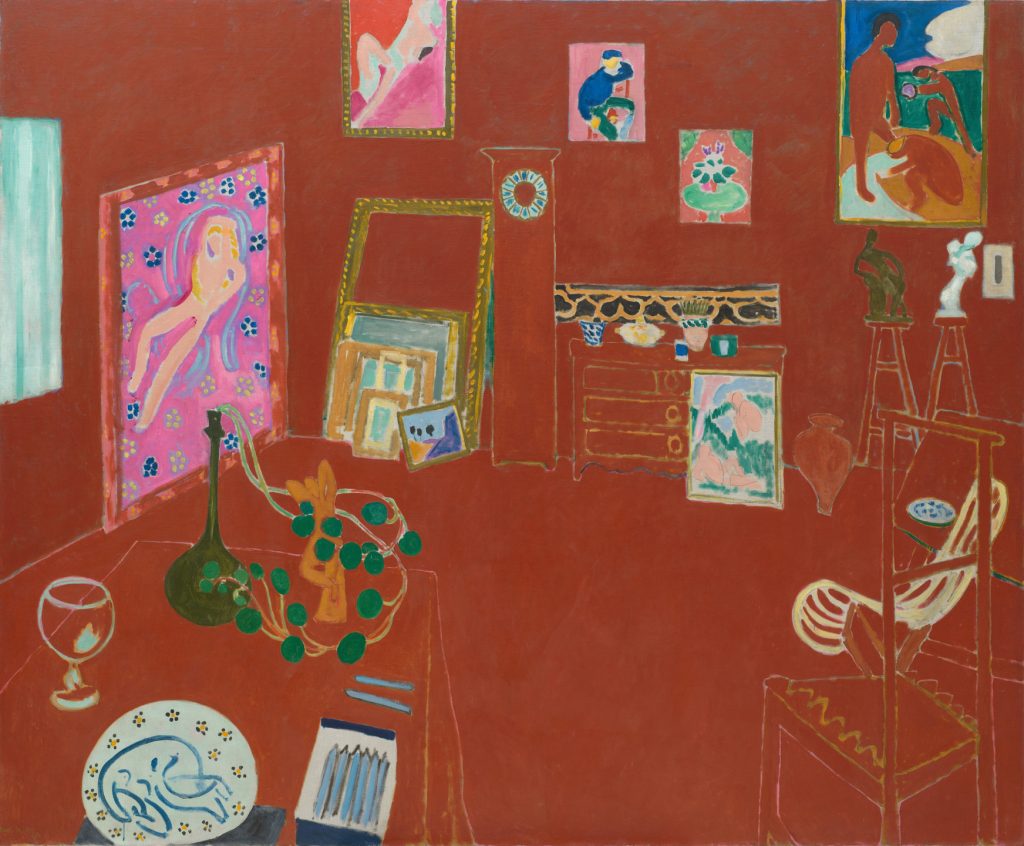
The Red Studio, painted in 1911, is one of Matisse’s most important paintings. It shows the artist’s studio, but almost everything is absorbed into a field of red.
The painting includes furniture, artworks, a clock, a table, a chair, a chest of drawers and objects from the studio. Yet the room does not behave like a normal interior. The red surface flattens space. The objects are described with thin lines and small areas of colour. The studio becomes both a place and a mental space.
This painting is important because it pushes colour beyond description. Red is not just the colour of the walls or floor. It becomes the atmosphere of the whole picture. The studio feels suspended, as if the artist’s work, tools and thoughts have been held inside one colour.
For gallery visitors, The Red Studio is a useful lesson in how Matisse paints space. He does not rely on traditional perspective. He builds the room through colour relationships, outlines and placement.
What to notice:
The red field.
The thin yellow lines.
The paintings within the painting.
The objects floating in the room.
The way the studio feels both flat and spacious.
Where to see it:
The Red Studio is in the Museum of Modern Art, New York.
Goldfish: still life with quiet tension
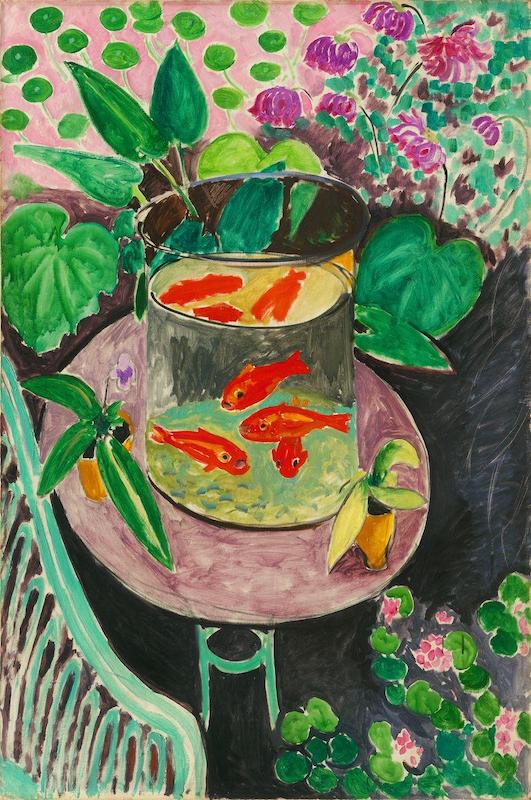
Goldfish became one of Matisse’s recurring subjects in the early 1910s. The paintings often show fish in a glass bowl, surrounded by plants, tables, patterns or interior details.
At first, the subject seems calm and decorative. But Matisse uses the bowl to play with looking. The fish are seen through glass and water. The bowl reflects and distorts. The orange fish become bright points within a larger arrangement of greens, pinks and blues.
Goldfish are useful for understanding Matisse because they show how he could make a still life feel alive without needing dramatic subject matter. The painting is about attention. The round bowl, the small fish, the table and the surrounding plants all create a rhythm of shapes.
What to notice:
The orange fish against cooler colours.
The curve of the bowl.
The reflections and distortions.
The contrast between stillness and movement.
The way the table and plants frame the subject.
Where to see it:
Different Goldfish paintings by Matisse are held in major collections, including the Pushkin State Museum of Fine Arts and other museums. Check current collection pages before planning a visit.
Matisse and interiors: pattern, fabric and the room as a world
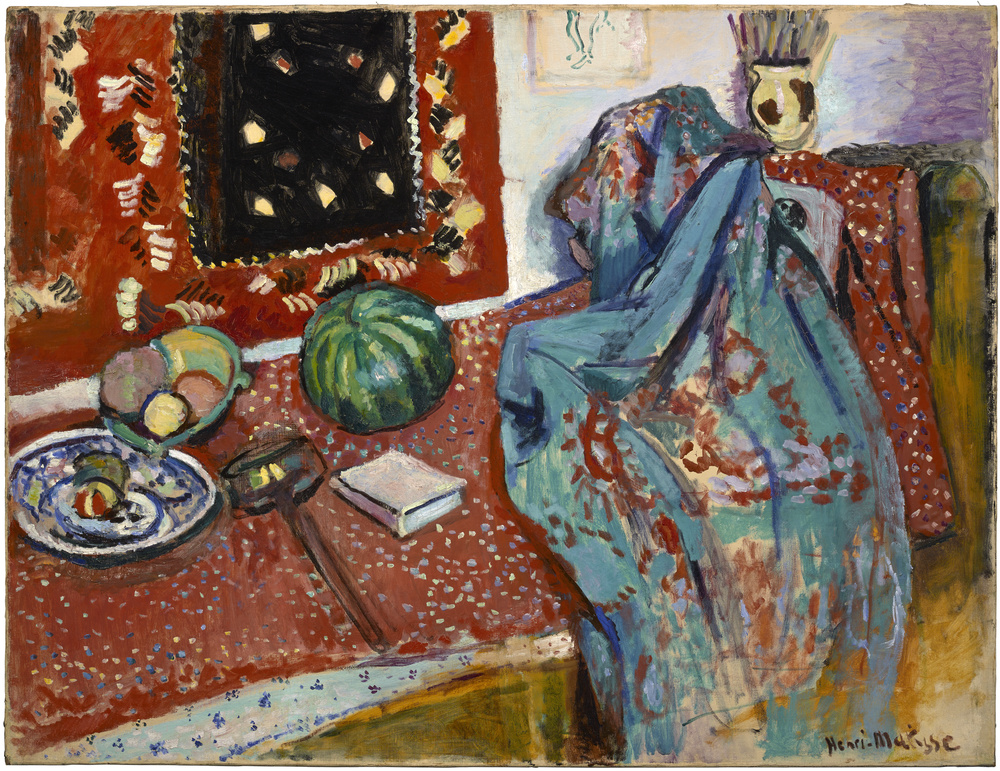
Matisse returned again and again to interiors. Rooms, tables, windows, patterned fabrics, screens, rugs, flowers, fruit and figures appear throughout his work.
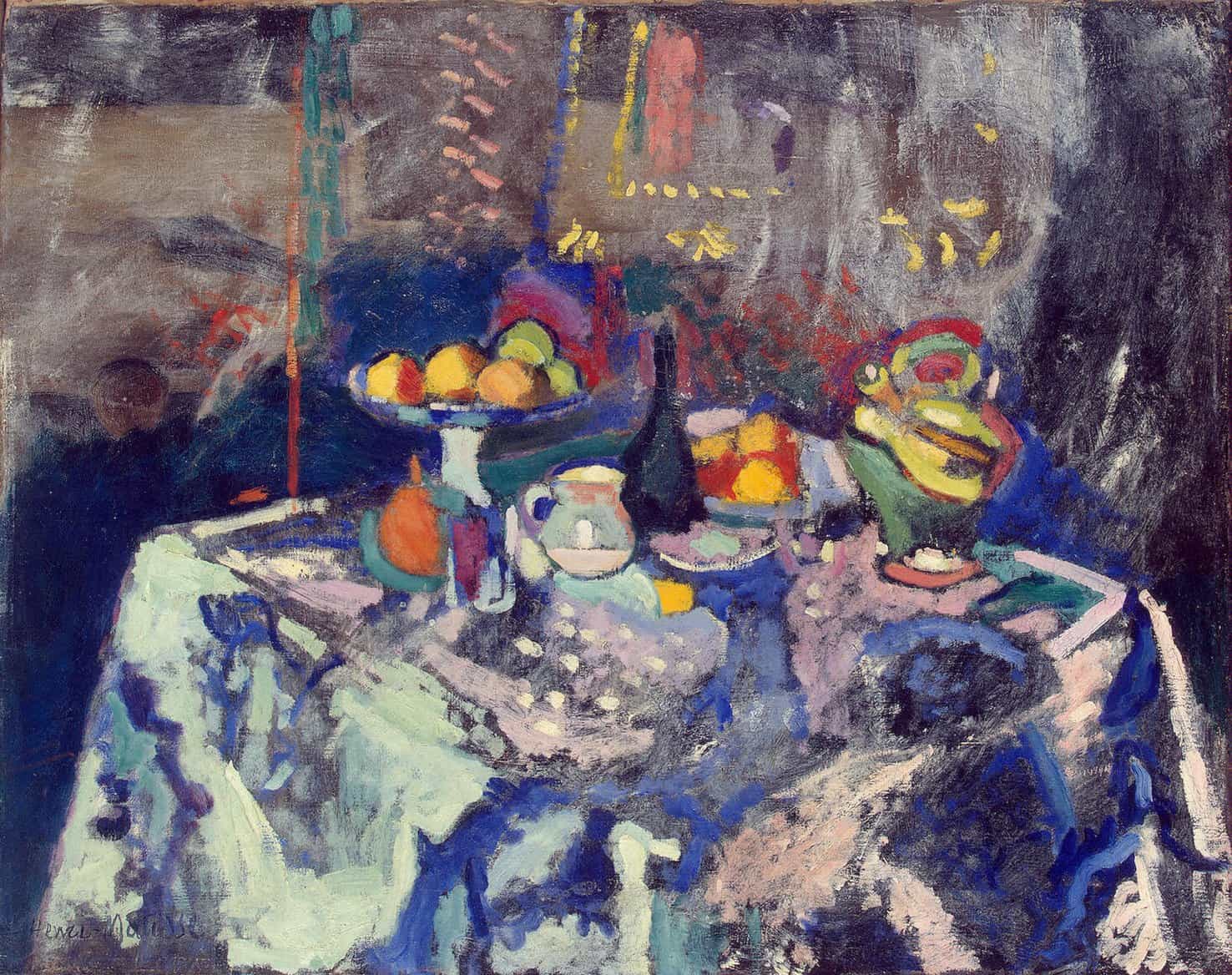
This is not just decoration. The interior gave Matisse a controlled stage where he could arrange colour, pattern and space. A room allowed him to bring many surfaces together: wall, floor, tablecloth, dress, curtain, window and painting. Each surface could carry pattern. Each pattern could compete or cooperate with the others.
Matisse was deeply interested in textiles and decorative objects. Islamic art, North African interiors, ceramics, screens and fabrics all shaped his thinking. He did not treat pattern as background. He made it active.
This is one reason his work remains important for contemporary artists, designers and collectors. Matisse showed that pattern can be intelligent. A decorative surface can hold structure, tension and feeling.
What to notice in Matisse interiors:
A table that tilts towards the viewer.
A wall pattern that refuses to stay in the background.
A window that opens onto another colour field.
A figure that blends with fabric or furniture.
A room that feels flat but still breathable.
His interiors are not simply places to live. They are places where colour thinks.
Odalisques: beauty, discomfort and context
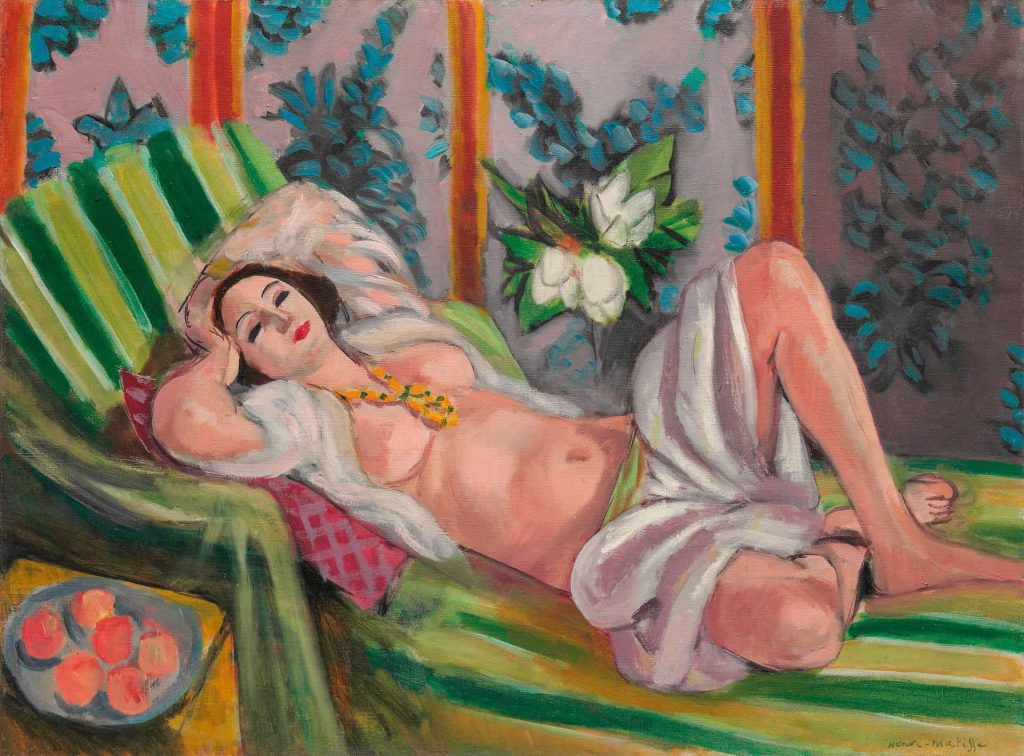
In the 1920s, Matisse made many works featuring odalisques, often showing reclining or seated women in richly patterned interiors. These works are visually striking: fabrics, screens, cushions, patterned walls and strong colour fill the space.
They are also works that need context. The odalisque was a long-standing subject in European art, tied to fantasies of the so-called “Orient”. For modern viewers, these works raise questions about exoticism, power, looking and the way European artists imagined North Africa and the Middle East.
Matisse’s odalisques are important because they show both his gifts and the cultural limits of his time. The paintings are brilliant studies in colour, pattern and space, but they also belong to a history of representation that should be looked at carefully.
This does not mean dismissing them. It means looking with more attention. We can admire Matisse’s handling of colour and pattern while also recognising the historical frame around the subject.
What to notice:
The relationship between figure and fabric.
The flattening of space.
The decorative overload.
The pose of the model.
The way the viewer is positioned.
These paintings are often some of the most visually seductive works in Matisse’s career, but they also invite a more thoughtful kind of looking.
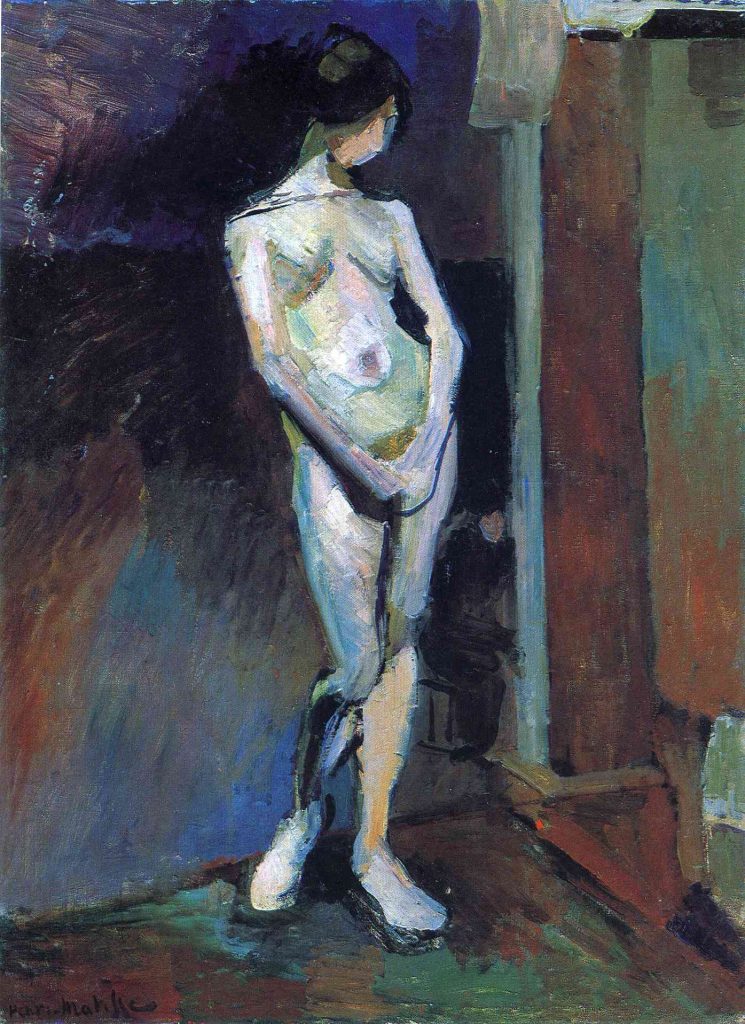
Drawing and line: Matisse’s quiet discipline
Matisse is known for colour, but his drawing is just as important. His line can be spare, fluid and exact. A few marks can suggest a face, body, flower or hand.
This simplicity was not laziness. It came from repeated practice. Matisse often drew the same subject many times, removing what he did not need. He wanted the line to feel natural, but that naturalness was earned.
His drawings are useful for artists because they show how much can be done with less. A line does not need to describe every detail. It can carry weight, speed, mood and touch.
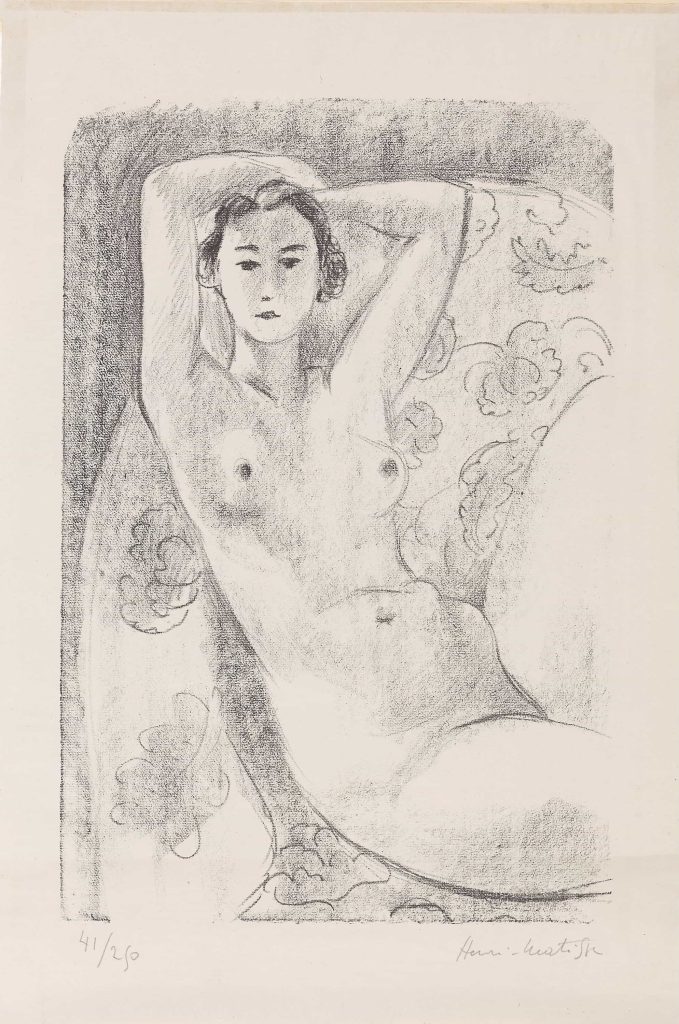
In some drawings, Matisse uses a continuous line that seems to move across the page without hesitation. In others, he builds form through repeated marks. Either way, the drawing has a strong relationship to the body. You can almost feel the hand moving.
What to notice:
The economy of line.
The space left empty.
The balance between speed and control.
The way a face can appear from very few marks.
The confidence of curved contours.
Matisse’s drawings remind us that simplicity is not a starting point. It is often the result of years of looking.
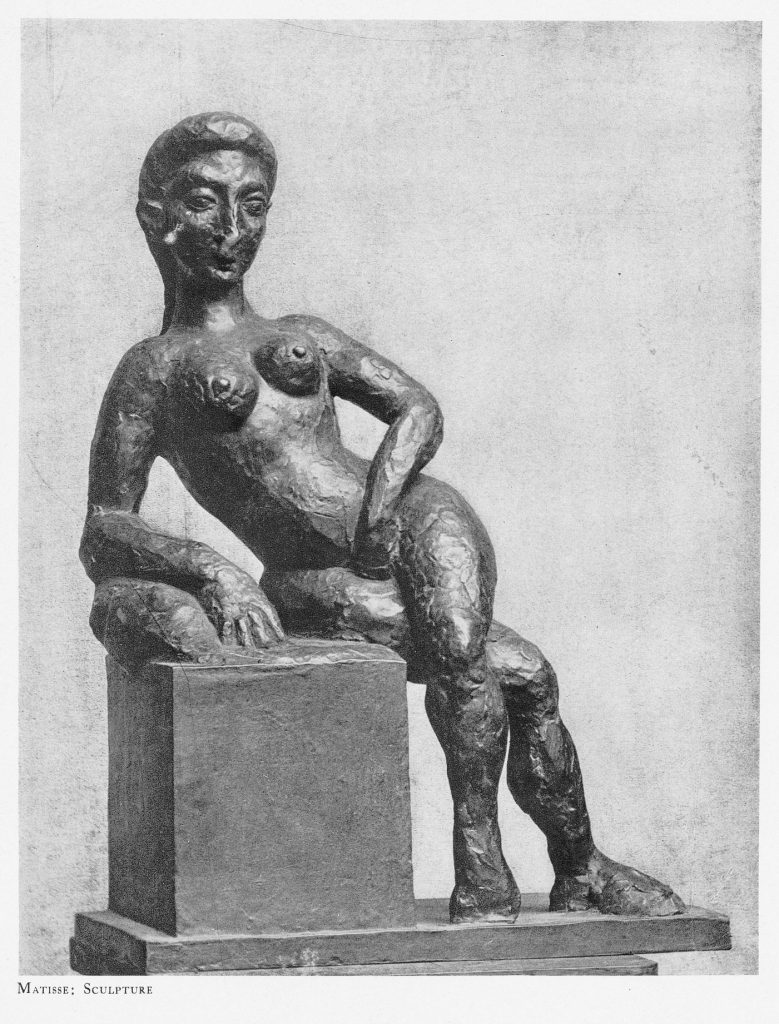
Sculpture and printmaking: the less familiar Matisse
Matisse is best known as a painter, but he also made sculpture and prints. These parts of his practice are sometimes less familiar to general audiences, but they help explain his art.
His sculptures often focus on the figure. They are solid, simplified and tactile. Instead of delicate realism, Matisse looks for structure and presence. The same interest appears in his paintings: how much can be simplified before the form loses life?
His prints also show his confidence with line. Lithographs, etchings and other works on paper gave him ways to study faces, bodies and interiors with speed and directness.
For collectors and gallery visitors, this matters because Matisse’s art is not only about famous paintings. Works on paper, prints and sculpture reveal the thinking behind the larger works. They show the artist testing, repeating and refining.
They also make Matisse useful for understanding how artists build a whole practice. A painting may be the best-known result, but drawing, printmaking and sculpture can sit underneath it like a working grammar.
The late cut-outs: painting with scissors
The late cut-outs are among the most loved works by Henri Matisse. After serious illness and surgery in 1941, he found painting at an easel increasingly difficult. Rather than stop, he began working with paper painted in gouache. He cut shapes from the paper and arranged them into compositions.
Matisse described this method as cutting directly into colour. That phrase matters. In the cut-outs, colour and shape are created at the same moment. The scissors do what the brush once did. The edge of the cut becomes the line.
The cut-outs include plants, swimmers, dancers, birds, stars, leaves, bodies and abstract shapes. Some are small. Others are large enough to transform a room.
These works are often joyful, but they are not childish. They are the result of a lifetime of learning how to simplify. Matisse had spent decades studying colour, line, pattern, figure and space. In the cut-outs, he brings those concerns together with remarkable economy.
What to notice:
The sharp edges.
The balance of colour.
The sense of movement.
The relationship between positive and negative shapes.
The way the paper shapes seem to float.
The cut-outs are not a retreat from painting. They are one of Matisse’s great inventions.
Jazz: colour, text and performance
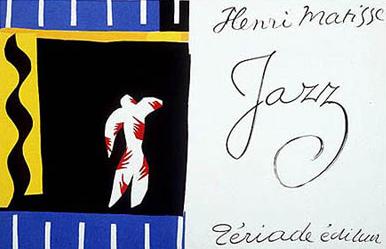
Jazz, published in 1947, is one of Matisse’s most famous artist books. It includes images based on cut-paper designs, accompanied by handwritten text.
The title suggests music, rhythm and improvisation. The images include circus figures, swimmers, knives, stars and the famous Icarus. The book has a feeling of performance, but also danger and control. The colour is intense. The shapes are simple. The pages feel direct, almost like signs.
Jazz is useful because it shows how Matisse thought across image and book form. The cut-outs were not only wall works. They could become printed pages, sequences and rhythms.
What to notice:
The contrast between image and handwritten text.
The bold blocks of colour.
The repeated use of black.
The sense of movement across the book.
The way simple shapes create strong emotional charge.
Where to see it:
Copies and plates from Jazz are held in major museum collections, including MoMA, the Met and other institutions.
The Snail: colour arranged as movement
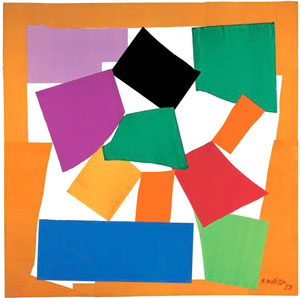
The Snail, made in 1953, is one of the most famous cut-outs. It is large, square and built from blocks of coloured paper. The title gives the viewer a clue. The arrangement suggests the spiral shape of a snail shell, but the work is not a naturalistic picture of a snail.
The work is a lesson in abstraction. Matisse takes an observed form and turns it into colour, movement and rhythm. The result feels simple, but the balance is careful. Each coloured shape has a relationship to the others.
The Snail is also a good example of how Matisse’s late work can appeal to children and serious art historians at the same time. A young viewer may enjoy the colour and shape. A more experienced viewer may see the years of formal thinking behind it.
What to notice:
The spiral movement.
The strong colour blocks.
The rough cut edges.
The square format.
The way the title changes how you see the image.
Where to see it:
The Snail is in Tate’s collection.
The Swimming Pool: bringing the sea indoors
The Swimming Pool was made in 1952 after Matisse visited a swimming pool in Cannes. He later created a long cut-out frieze for his dining room in Nice. Blue swimmer shapes move across white and brown paper, surrounding the room with the feeling of water and motion.
This work is one of the best examples of Matisse turning a space into an artwork. It is not just a picture of swimming. It creates a rhythm that the viewer experiences physically. The blue bodies seem to dive, float and turn across the walls.
The Swimming Pool also shows how Matisse could turn a memory into an environment. He did not need to reproduce the pool accurately. He translated the sensation of swimming into colour and shape.
What to notice:
The repeated blue bodies.
The long horizontal format.
The sense of movement around a room.
The contrast between simple colour and physical energy.
The way the work sits between drawing, painting and installation.
Where to see it:
The Swimming Pool is in the collection of the Museum of Modern Art, New York.
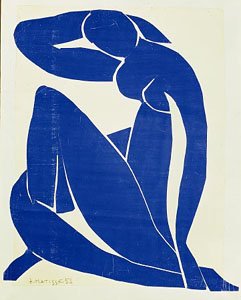
Blue Nudes: the body reduced to colour and curve
Matisse’s Blue Nude cut-outs are among his most recognisable late works. The bodies are made from blue paper shapes placed against a pale ground. They are simplified, but not empty. Each figure has weight, posture and feeling.
These works connect back to Matisse’s lifelong interest in the human figure. He had painted and drawn bodies for decades. In the Blue Nudes, he reduces the figure to curved pieces of colour. The cuts carry the memory of drawing. The body is both fragmented and whole.
The blue is important. It gives the figures unity and force. Instead of modelling flesh with light and shadow, Matisse builds the body from flat colour.
What to notice:
The cut edges.
The joins between paper shapes.
The pose of the body.
The balance between flatness and physical presence.
The emotional force of one colour.
The Blue Nudes show how much Matisse could say with very little.
The Chapel of the Rosary in Vence
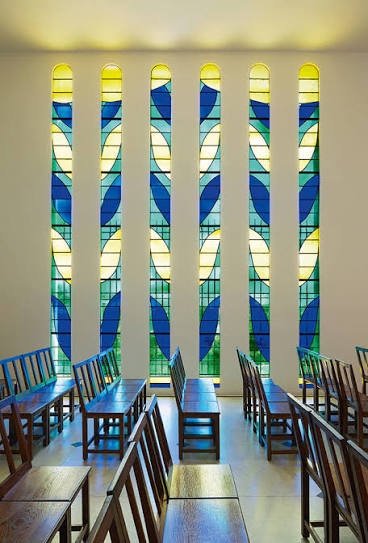
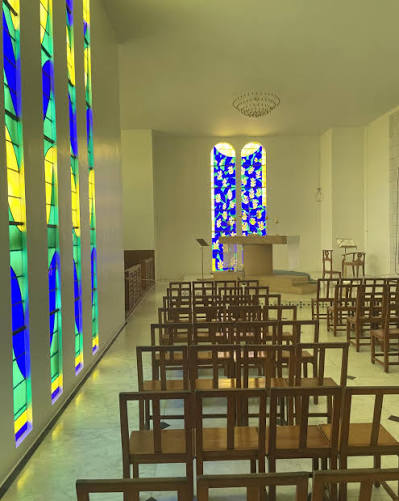
Late in life, Matisse designed the Chapel of the Rosary in Vence, in the south of France. The project included stained glass, ceramic murals, vestments and the wider visual setting of the chapel.
For Matisse, it was a major late work rather than a side project. The chapel brought together his interests in colour, line, light, pattern and spiritual space. The stained glass fills the interior with colour. The black line drawings on white ceramic tiles have the simplicity of his late drawing.
Whether viewed religiously or artistically, the chapel shows Matisse thinking at the scale of architecture. Colour is no longer only on a canvas. It enters the room through light.
What to notice:
The stained glass.
The simple line drawings.
The relationship between colour and daylight.
The calm of the white walls.
The way the whole space becomes one artwork.
Where to see it:
The Chapel of the Rosary is in Vence, France.
Matisse and Picasso: rivalry, respect and difference
Henri Matisse and Pablo Picasso are often discussed together. They knew each other, watched each other’s work and understood that they were two of the central artists of their time.
Their differences are useful. Picasso often broke forms apart with sharp analysis, especially in Cubism. Matisse simplified forms through colour, line and rhythm. Picasso can feel restless, aggressive and inventive in a dramatic way. Matisse can feel calm, sensuous and ordered, even when the work is radical.
This contrast is sometimes made too simple. Matisse was not merely decorative, and Picasso was not merely intellectual. Both artists were ambitious. Both changed modern art. But Matisse’s special contribution was to make colour, pleasure and balance feel as serious as rupture and fragmentation.
For beginners, comparing the two can help. Picasso often asks, “How can form be broken and remade?” Matisse often asks, “How can colour and line create harmony without losing force?”
Both questions still matter.
What artists can learn from Henri Matisse
Matisse is useful for artists at every level because his work gives practical lessons.
First, colour can build structure. Do not use colour only to fill shapes. Ask what each colour is doing in relation to the whole image.
Second, simplify with care. Matisse removed detail, but he did not remove life. Simplification should make the work stronger, not emptier.
Third, line can carry movement. A single curved line can suggest a body, plant, face or gesture if it has enough confidence.
Fourth, pattern is not background. Fabric, wallpaper, rugs and decorative surfaces can become active parts of a composition.
Fifth, repetition helps. Matisse returned to interiors, figures, windows and still lifes many times. He did not need a new subject every day. He found new possibilities inside repeated subjects.
Sixth, limitation can lead to invention. The late cut-outs came from physical difficulty, but they became one of his greatest achievements.
Seventh, joy can be rigorous. A painting can be pleasurable and serious at the same time.
What collectors can learn from Matisse
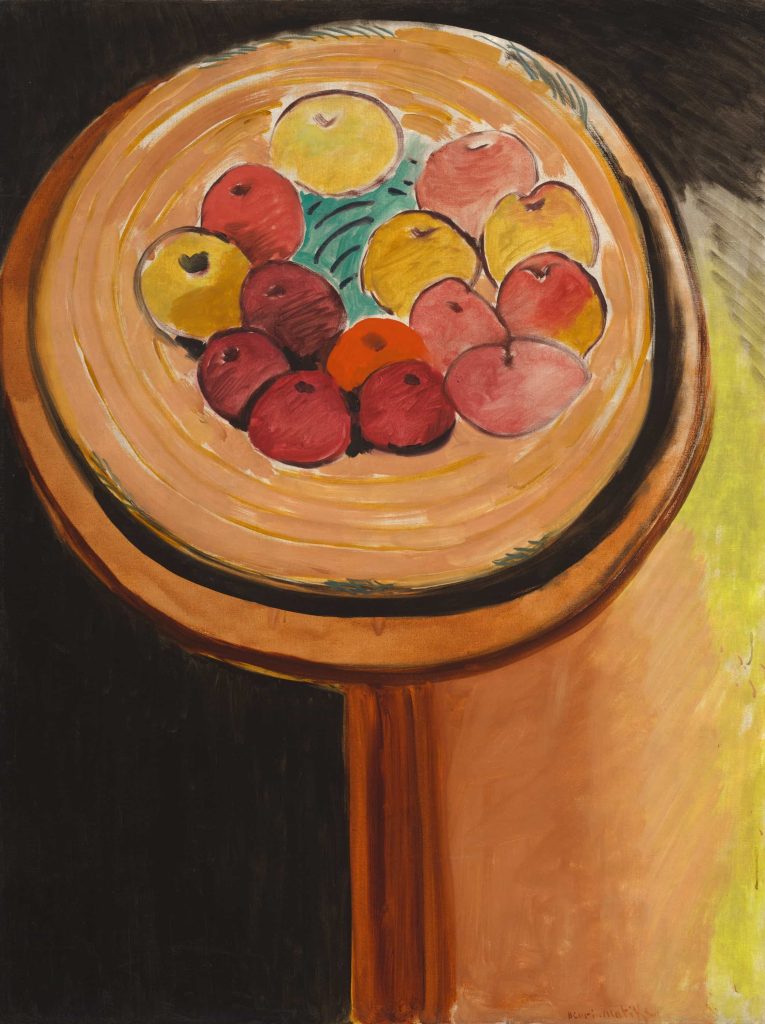
Collectors can learn from Matisse by looking beyond subject. A picture of flowers may be less about flowers than about colour relationships. A figure may be less about anatomy than about rhythm. An interior may be less about furniture than about space, pattern and feeling.
Matisse also shows why works on paper matter. Drawings, prints and cut-outs are not secondary to painting. They can hold an artist’s thinking in a very direct way.
For anyone collecting contemporary art, Matisse offers a useful way to look:
Does the work understand colour?
Does it have a strong relationship between line and form?
Does it hold together from a distance?
Does it reward close looking?
Does it feel alive without relying on too much detail?
Is there a clear sense of decision?
These questions are useful whether you are looking at a painting, print, collage, textile or mixed media work.
Where to see Henri Matisse artworks
Matisse’s work is held in major museum collections around the world. Display status changes, so it is always worth checking the museum website before travelling.
Tate, London
Tate holds important works by Matisse, including The Snail. It is one of the best UK collections to check for Matisse cut-outs and related works.
Museum of Modern Art, New York
MoMA has major works by Matisse, including The Red Studio, The Dance and The Swimming Pool. It is one of the strongest places to study his role in modern art.
National Gallery of Art, Washington, DC
The National Gallery of Art holds Open Window, Collioure, one of the key Fauvist paintings.
Barnes Foundation, Philadelphia
The Barnes Foundation holds The Joy of Life and has a major Matisse presence.
Musée Matisse, Nice
This museum is especially important because Matisse spent so much of his later life in Nice. It holds a rich collection connected to his work and development.
Centre Pompidou, Paris
The Centre Pompidou has major modern art holdings and regularly includes Matisse in its wider story of twentieth century art.
The Met, New York
The Metropolitan Museum of Art has Matisse paintings, drawings and works on paper, and its collection helps place him within a wider art historical context.
Why Henri Matisse still feels modern
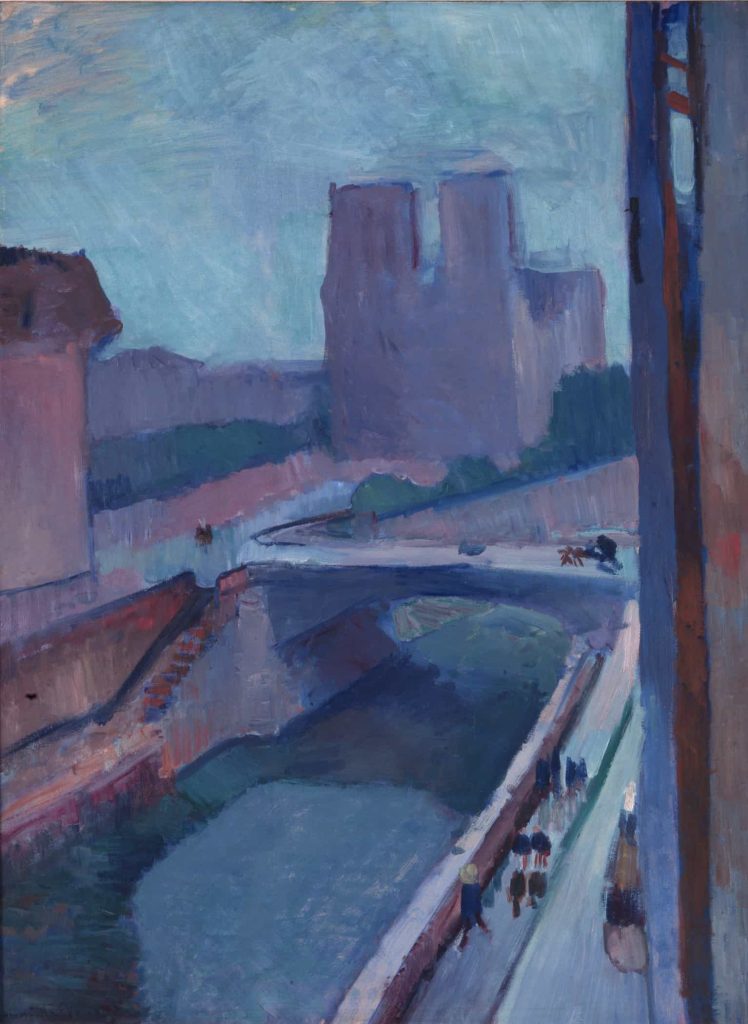
Matisse still feels modern because artists and viewers are still working through many of the questions he asked.
How much detail does an image need?
Can colour carry emotion without becoming obvious?
Can a room become a whole world?
Can pattern be serious?
Can pleasure have depth?
Can an artist begin again late in life?
Can a simple shape hold feeling?
These questions have not gone away. They appear in painting, printmaking, textiles, graphic design, interiors, collage, illustration and contemporary installation. Matisse’s influence can be felt wherever artists use colour as structure and simplification as strength.
His work also suits the way many people look now. In a world full of fast images, Matisse still asks for slow attention. His paintings may be instantly attractive, but they are not used up quickly. They hold you through balance, colour and rhythm.
Common misunderstandings about Matisse
One misunderstanding is that Matisse was only decorative. This misses the discipline behind the work. Decoration in Matisse is not surface filler. It is a way of organising the whole image.
Another misunderstanding is that the late cut-outs are simple because they look simple. In fact, they are the result of decades of work. Matisse could cut directly into colour because he had spent a lifetime studying form.
A third misunderstanding is that Matisse avoided difficulty. His art often seeks balance and pleasure, but it was made across periods of illness, war, personal strain and artistic risk. The calm in the work is not the absence of struggle. It is something made against struggle.
A fourth misunderstanding is that Matisse’s colour is random. His colour can be surprising, but it is carefully judged. Each colour affects the next. The whole image depends on those relationships.
FAQs about Henri Matisse
Who was Henri Matisse?
Henri Matisse was a French artist born in 1869 and best known for his use of colour, fluid drawing and major role in modern art. He worked as a painter, draughtsman, printmaker, sculptor and maker of paper cut-outs.
What is Henri Matisse famous for?
Henri Matisse is famous for Fauvist paintings, bold colour, simplified figures, patterned interiors and late paper cut-outs. His famous works include Woman with a Hat, Open Window, Collioure, The Dance, The Red Studio, The Snail and The Swimming Pool.
What is Fauvism?
Fauvism was a modern art movement associated with strong, expressive colour and simplified form. Matisse was one of its leading figures. Fauvist artists used colour for feeling and structure rather than strict realism.
Why did Matisse use such bright colours?
Matisse used strong colour because he believed colour could create emotion, rhythm and structure. He did not use colour only to copy nature. He used it to organise the painting and shape the viewer’s experience.
What are Matisse’s cut-outs?
Matisse’s cut-outs are works made from paper painted with gouache, cut into shapes and arranged into compositions. He developed this method fully in the final decade of his life, when illness made traditional painting harder.
What is The Snail by Matisse?
The Snail is a large cut-out made in 1953. It uses blocks of coloured paper arranged in a loose spiral form, suggesting the shape of a snail shell. It is held by Tate.
What is The Red Studio about?
The Red Studio shows Matisse’s studio as a room filled with artworks and objects, unified by a strong red field. It is about space, colour and the artist’s working environment.
Where can I see Matisse’s work in the UK?
Tate holds works by Matisse, including The Snail. Display status changes, so it is best to check Tate’s website before visiting.
Did Matisse only paint?
No. Matisse also made drawings, prints, sculptures, artist books, stained glass, textiles and paper cut-outs. His wider practice helps explain his interest in line, shape and colour.
Why is Henri Matisse important today?
Henri Matisse is important because he changed how artists use colour, line, pattern and space. His work continues to influence painting, printmaking, collage, design, textiles, interiors and contemporary art.
Henri Matisse changed modern art by making colour think. He showed that a painting does not need to imitate the world in order to feel true. It can create its own order through line, rhythm, pattern and colour.
His work is often joyful, but it is not simple-minded. The joy comes from discipline. The calm comes from revision. The clarity comes from years of looking.
From Fauvist portraits to red studios, from patterned interiors to blue paper bodies, Matisse kept asking how much could be removed while keeping the work alive. That question gives his art its lasting force.
For anyone learning to look at art, Matisse offers a generous way in. Start with the colour. Stay for the structure. Look at the edges, the curves, the empty spaces and the way one colour changes another. The more time you spend with Matisse, the less decorative he becomes. You begin to see the intelligence behind the pleasure.
Leave a Reply