
No products in the cart.

Artist of History: Claude Monet – Father of Impressionism
Claude Monet stands as one of the most influential figures in the history of modern art. Widely regarded as the founding father of Impressionism, Monet changed the way the world saw painting. Rather than striving for photographic realism, he turned his focus to the fleeting qualities of light, atmosphere, and movement elements that traditional art often overlooked.
Monet’s approach was revolutionary. Using short, broken brushstrokes and vivid, unmixed colours, he captured the shimmering effects of sunlight on water, the haze of early morning fog, and the subtle shift of shadows through the day. His technique encouraged artists to leave the studio behind and paint en plein air, directly in nature, responding to the world in real time.

The movement itself takes its name from one of Monet’s early masterpieces Impression, Sunrise (Impression, soleil levant), painted in 1872. The work, depicting the port of Le Havre at dawn, was exhibited in 1874 during a group show by artists later known as the Impressionists. When a critic derisively referred to the group’s work as “impressions” rather than finished paintings, the label stuck and eventually defined one of the most beloved movements in Western art.
Today, Monet’s paintings remain timeless examples of how art can transform perception. His legacy is not just in the paintings he left behind, but in the way he taught generations to see the world in new light vibrant, ever-changing, and full of wonder.
Early Life and Artistic Beginnings
Claude Monet was born on 14 November 1840 in Paris, France. However, it was the coastal town of Le Havre in Normandy where his family moved when he was five that would have a profound influence on his early artistic development. The changing skies and shimmering waters of the Normandy coast would later become a recurring theme in his most iconic works.
Early Talent: From Caricatures to Curiosity
As a young schoolboy, Monet showed a strong independent streak and little interest in formal education. What he did have, however, was a sharp eye and a talent for drawing. By the age of fifteen, he had gained a local reputation for his caricatures humorous, sharply observed portraits of teachers and townsfolk, which he sold for a few francs apiece. These early drawings displayed not only his observational skills but also a growing confidence in expressing personality through line and form.
A Pivotal Encounter with Eugène Boudin
Monet’s life took a decisive turn when he met landscape painter Eugène Boudin in the early 1850s. Boudin, a forerunner of Impressionist ideals, recognised the young artist’s potential and invited him to join in painting outdoors. This method, known as plein-air painting, was unconventional at the time. Rather than working from sketches in a studio, Boudin believed in capturing nature directly and spontaneously and he passed this philosophy on to Monet. It was a revelation. Monet later credited Boudin with teaching him “how to really see” and understand light in a way that would shape his entire approach to art.
Studies at the Académie Suisse
In 1859, at the age of 19, Monet moved to Paris to pursue formal artistic training. He enrolled at the Académie Suisse, a progressive school that offered life drawing without the rigid structure of traditional academies. There, he mingled with other young artists, including Camille Pissarro, who would later become a close collaborator in the Impressionist movement. While Monet respected the technical training he received, he quickly grew frustrated with the academic style, which he felt stifled creativity and failed to represent the vibrant, shifting nature of real life.
Shaping a New Vision
During this period, Monet also spent time at the Louvre, not to copy the old masters as most students did, but to sketch what he saw out the window the real world in motion. It was an early indication of his desire to move beyond tradition and explore new ways of seeing. His preference for natural light and colour over historical or mythological themes marked a break from convention and laid the foundation for a revolutionary career.
By his early twenties, Monet had not only developed a strong technical foundation but also begun to question the very definitions of art that governed his era. His fascination with capturing atmosphere, movement, and fleeting moments would soon lead him and others toward a movement that would transform art forever.
Personal Life and Influences
A Growing Partnership: Camille Doncieux and Family Life
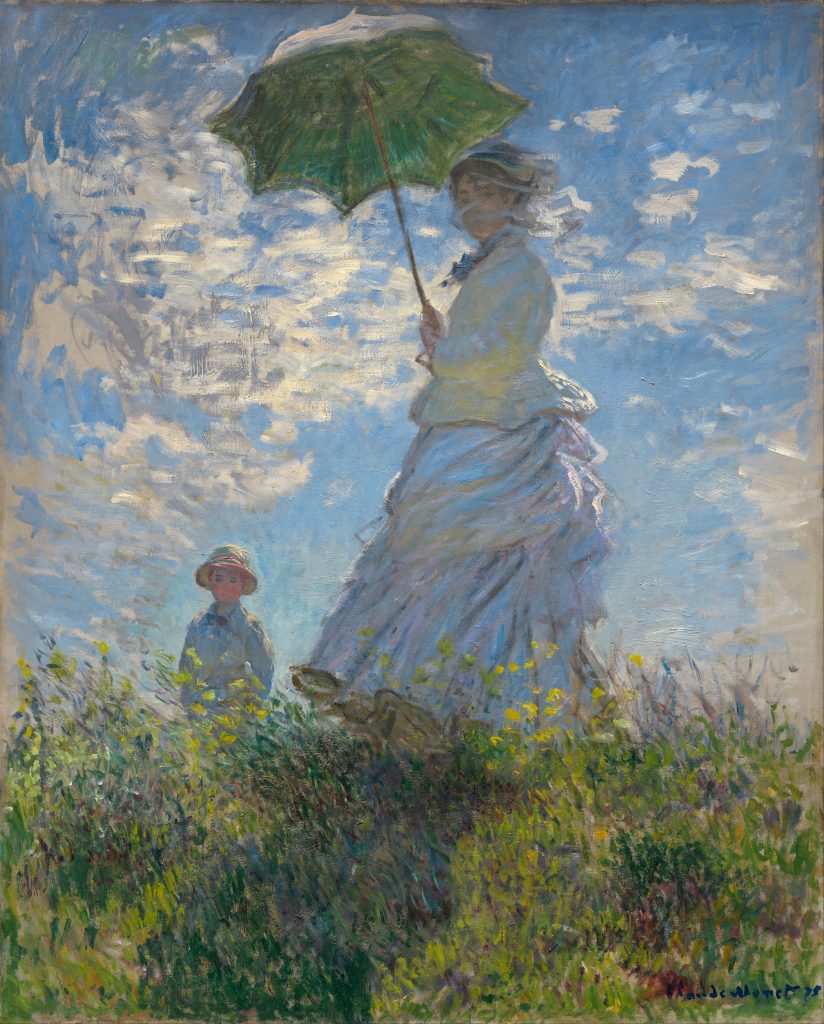
In the early 1860s, Claude Monet’s life became increasingly intertwined with that of Camille Doncieux, a young woman who would go on to play a vital role both personally and artistically. Camille initially modelled for Monet, and their bond soon blossomed into a romantic relationship. Despite resistance from Monet’s family who disapproved of Camille’s background and their unmarried status she became his muse, appearing in many early works including Camille (also known as The Woman in the Green Dress) painted in 1866.
Their son Jean was born in 1867, and the couple married three years later in 1870. These years were marked by financial struggle, yet Monet’s devotion to Camille and their growing family was evident not only in his life but also in his work. His portraits of Camille intimate, unguarded, and tender remain among his most emotionally resonant paintings.
The Franco-Prussian War and Exile in England
The outbreak of the Franco-Prussian War in 1870 disrupted Monet’s life significantly. To avoid military service and the instability of the conflict, Monet fled France with Camille and their young son, settling in London. This period, though born of turmoil, proved crucial to his artistic development. In England, Monet encountered the works of J. M. W. Turner and John Constable, whose light-filled landscapes inspired him deeply.
While in London, Monet also connected with art dealer Paul Durand-Ruel, who would become a key supporter throughout his career. The experience broadened his perspective and affirmed his belief in painting directly from nature an approach that would become a central tenet of Impressionism.
Building a Circle: Artistic Friendships and Collaborations
Upon returning to France after the war, Monet became part of a vibrant circle of emerging painters who were challenging the rigid rules of academic art. His close friendships with fellow artists such as Édouard Manet, Camille Pissarro, Alfred Sisley, and Pierre-Auguste Renoir helped to shape what would soon become known as the Impressionist movement.
These artists shared a commitment to capturing modern life in its fleeting, atmospheric moments. They painted outdoors, often side by side, studying the changing effects of light and experimenting with new brushwork and compositions. Pissarro, in particular, was a steady influence and collaborator, and their correspondence reveals mutual encouragement and artistic exchange.
Monet’s friendships extended beyond the canvas. His camaraderie with Manet was marked by admiration and occasional tension, as both men pursued parallel paths in revolutionising painting. Meanwhile, Renoir and Sisley joined him in laying the foundation for group exhibitions that would give birth to the Impressionist name notably the famous 1874 show where Monet’s Impression, Sunrise would coin the term.
This era filled with experimentation, shared struggle, and artistic breakthroughs set the stage for Monet’s eventual success and cemented his role not only as a painter of nature but as a central figure in one of art history’s most transformative movements.

The Birth of Impressionism
A Defining Moment: The 1874 Exhibition
The birth of Impressionism as a named movement can be traced directly to one bold and unconventional exhibition held in Paris in April 1874. A group of independent artists frustrated by repeated rejections from the official Salon and the rigid academic rules governing art decided to organise their own show. Held at the former studio of photographer Nadar, the exhibition featured works by Claude Monet, Edgar Degas, Pierre-Auguste Renoir, Camille Pissarro, Alfred Sisley, and others.
Among the paintings on display was Monet’s now-iconic Impression, Sunrise (Impression, soleil levant), a softly brushed view of Le Havre’s harbour at dawn. Unlike traditional landscape paintings that aimed for clarity and detail, Monet’s piece focused on atmosphere the haze of morning light over water, the faint silhouettes of boats and chimneys, all rendered in loose strokes and washed colours.
A Movement Named (Unflatteringly)
The title of Monet’s painting, intended as a casual descriptor, gave rise to the very name “Impressionism” though not in praise. A critic named Louis Leroy, writing for the satirical newspaper Le Charivari, coined the term sarcastically, mocking what he saw as unfinished, sketch-like art. He accused the painters of displaying mere “impressions” rather than fully realised works. His commentary was scathing, but the term stuck and the artists, recognising its aptness, embraced it.
Despite the critical backlash, the 1874 exhibition marked a turning point. It laid the foundation for a radical departure from tradition. Rather than following academic expectations of historical or mythological subject matter and polished technique, these painters focused on everyday scenes, fleeting light, and open-air landscapes. They captured life as it was experienced dynamic, immediate, and emotionally resonant.
Monet’s Pivotal Role in the Movement
While Impressionism was a collective effort, Claude Monet emerged as its spiritual leader. His commitment to painting en plein air (outdoors), his interest in light’s changing effects throughout the day and seasons, and his stylistic experimentation became hallmarks of the style.
Monet’s approach influenced his contemporaries deeply, and he became a driving force in both artistic innovation and the organisation of further group exhibitions. His willingness to resist institutional norms and pursue artistic freedom helped define Impressionism not just as a visual style, but as a broader artistic philosophy.
Monet’s paintings during this time from The Boulevard des Capucines to La Grenouillère continued to push boundaries, and although acceptance came slowly, his work eventually won acclaim. By the end of the 19th century, what had once been dismissed as “unfinished” was being recognised as revolutionary.
Signature Works and Series
Claude Monet’s lasting influence on the art world is perhaps most vividly expressed through his extraordinary series paintings ambitious explorations of light, weather, and perspective that redefined how artists engaged with their environment. Rather than capturing a single, definitive view of a subject, Monet painted the same motif repeatedly, each time under different atmospheric conditions, times of day, or seasons. These series are among the most celebrated and innovative bodies of work in art history.
Water Lilies: A Garden Transformed into a Masterpiece
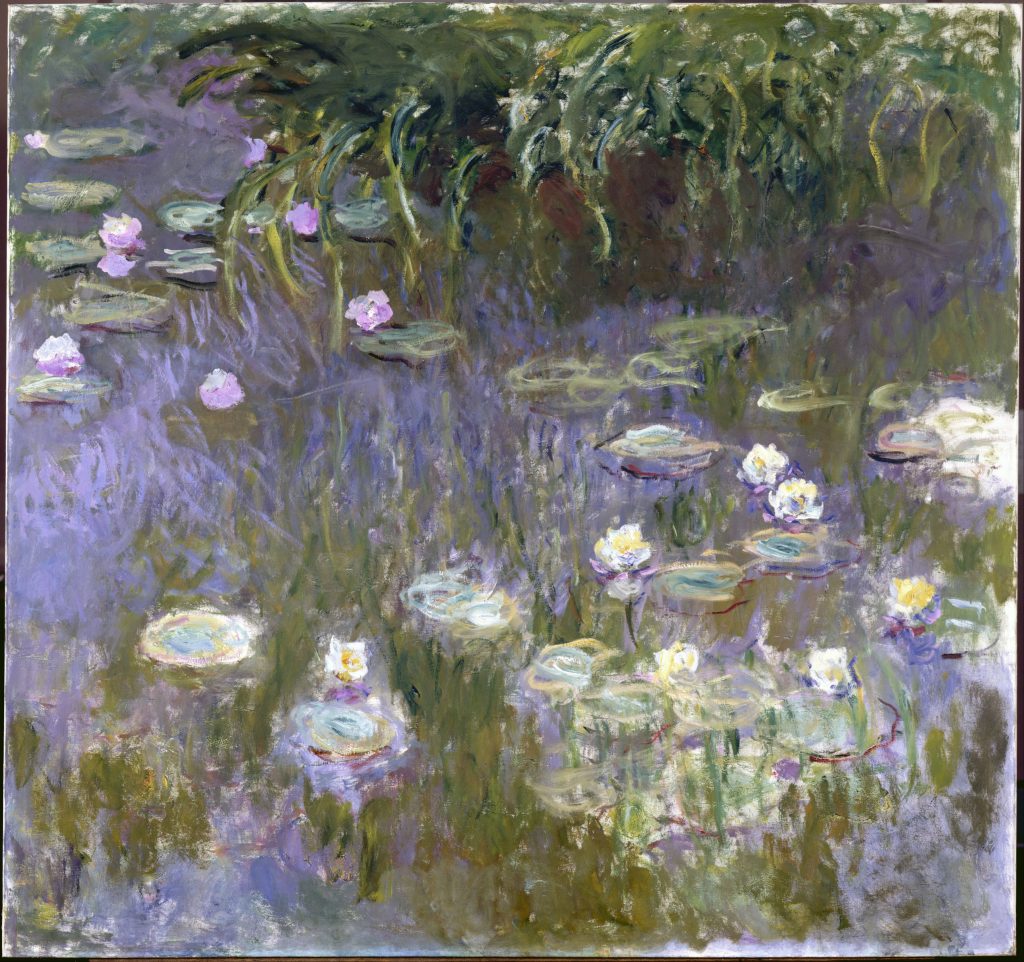
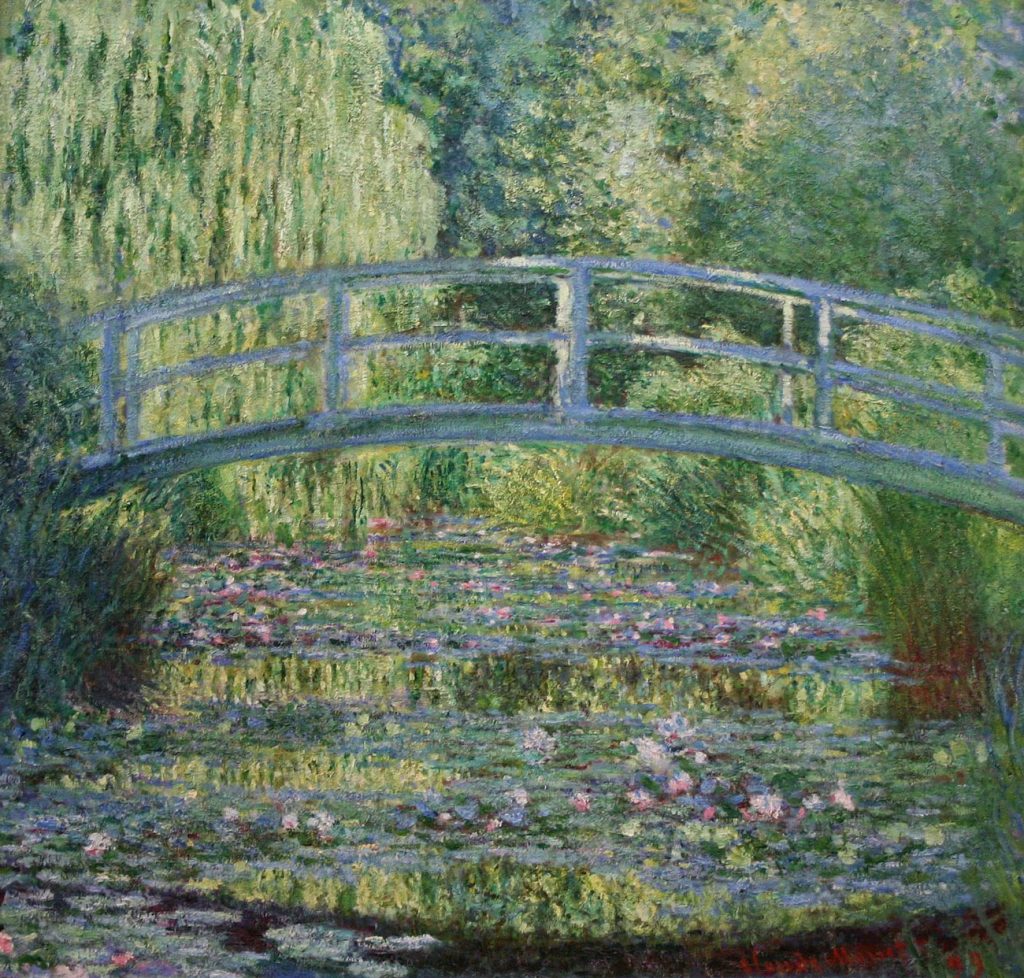
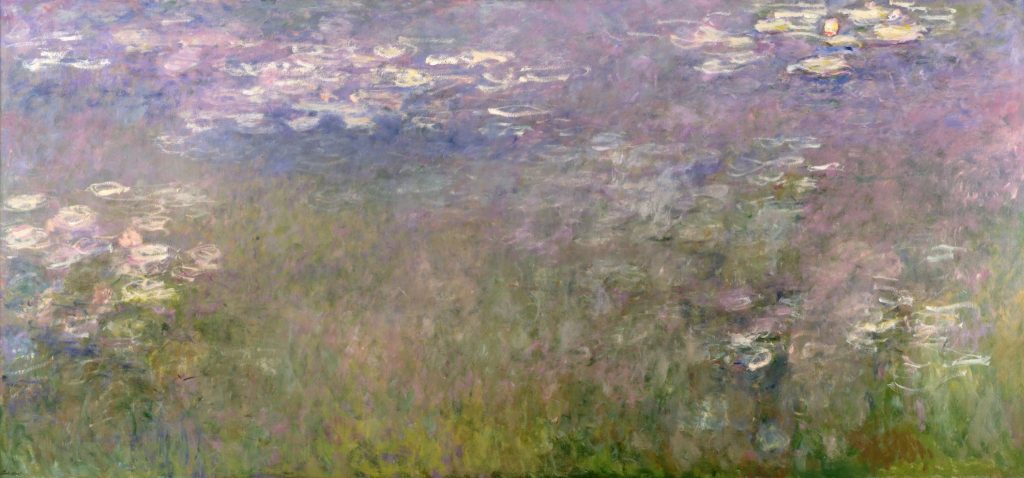
Perhaps Monet’s most iconic and enduring works are his Water Lilies (Nymphéas) a series inspired by the garden he cultivated at his home in Giverny. Monet began the water lily series in the late 1890s and continued to revisit the subject until his death in 1926. His Japanese-style garden, complete with a pond and arched bridge, became both his sanctuary and his studio.
What makes these works remarkable is how they abandon traditional perspectives. The horizon is often removed, and the focus shifts to reflections on the water’s surface clouds, sky, flowers, and light all merge in a dreamlike interplay of colour and movement. The brushwork becomes increasingly loose over time, verging on abstraction, which has led many to consider these late paintings as precursors to modern abstract art.
Some of the most celebrated pieces from this series can be seen at the Musée de l’Orangerie in Paris, where monumental canvases encircle the viewer in immersive panoramas of floating colour and shifting light.
Rouen Cathedral: Light as Subject
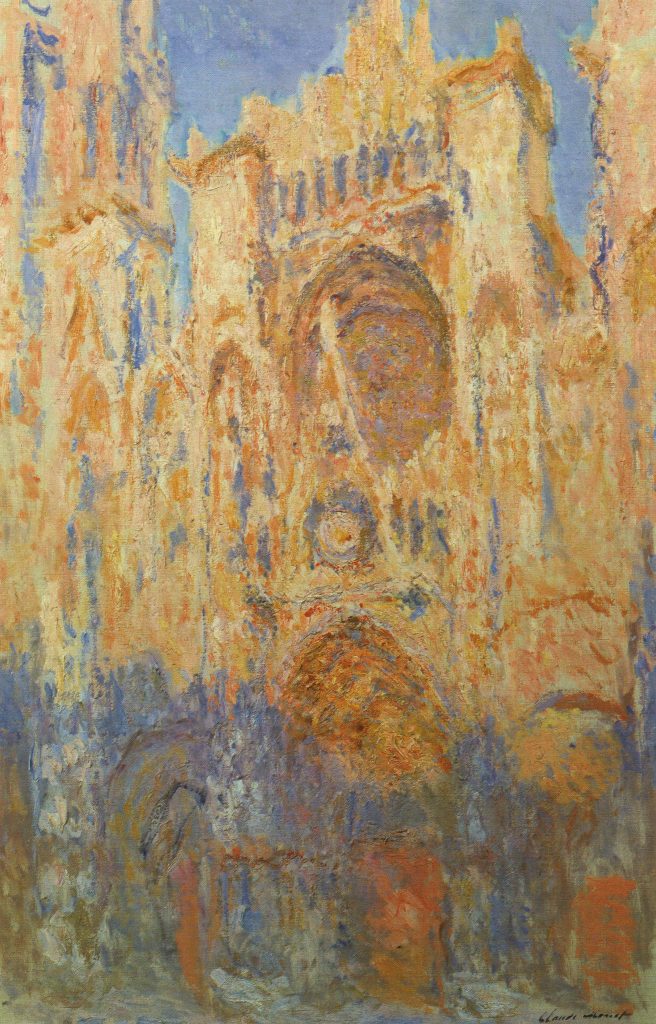
Between 1892 and 1894, Monet painted more than thirty versions of the Rouen Cathedral, each under different lighting conditions and weather patterns. Rather than focusing solely on the architecture, he treated the cathedral façade almost as a canvas for light itself. Morning fog, golden midday sun, the cool blue of late afternoon each painting in the series captures how the structure transforms visually throughout the day.
Monet rented rooms across from the cathedral to ensure a consistent vantage point. His goal was not simply to reproduce the building’s appearance but to depict the transient, shifting quality of light and shadow as they danced across the ornate stone.
Haystacks: Seasons in Sequence
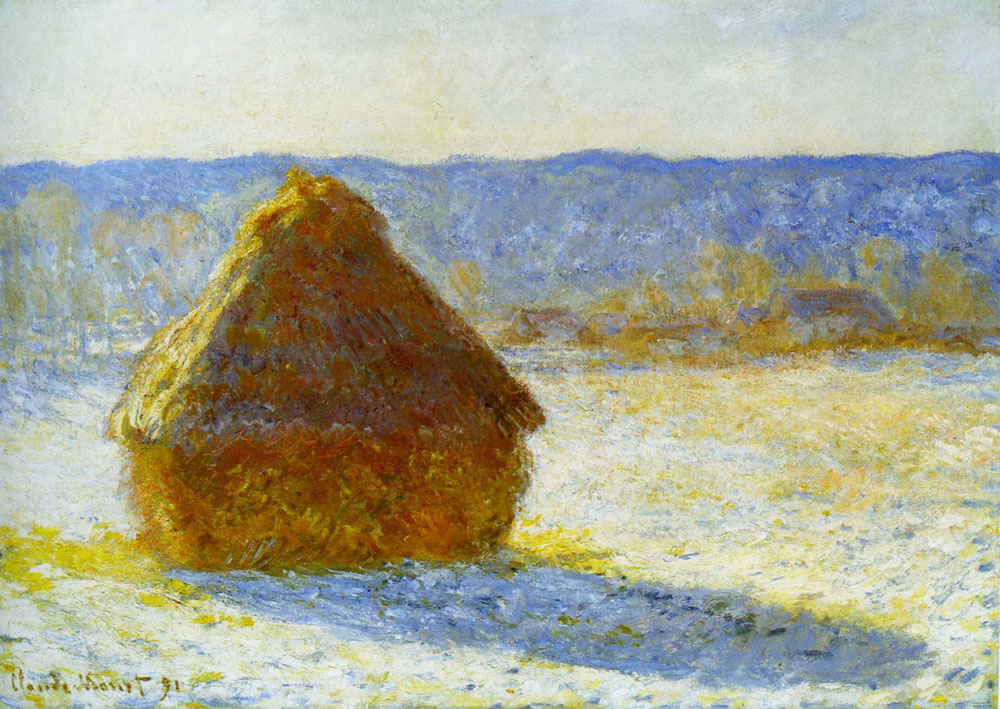
Monet’s Haystacks series, painted primarily between 1890 and 1891, is a masterclass in observation and patience. The series depicts stacks of harvested wheat in the fields near Giverny. At first glance, the subject matter might seem mundane. But through Monet’s lens, these agricultural forms became radiant studies in the effects of seasonal and temporal changes on colour and form.
Each canvas offers a subtle variation dawn mist, evening glow, fresh snow, or late summer haze. Collectively, they highlight how one simple shape can shift endlessly under nature’s influence. These paintings were not only artistic experiments but also commercial successes that helped Monet secure financial stability.
The London Series: Atmosphere Over Architecture
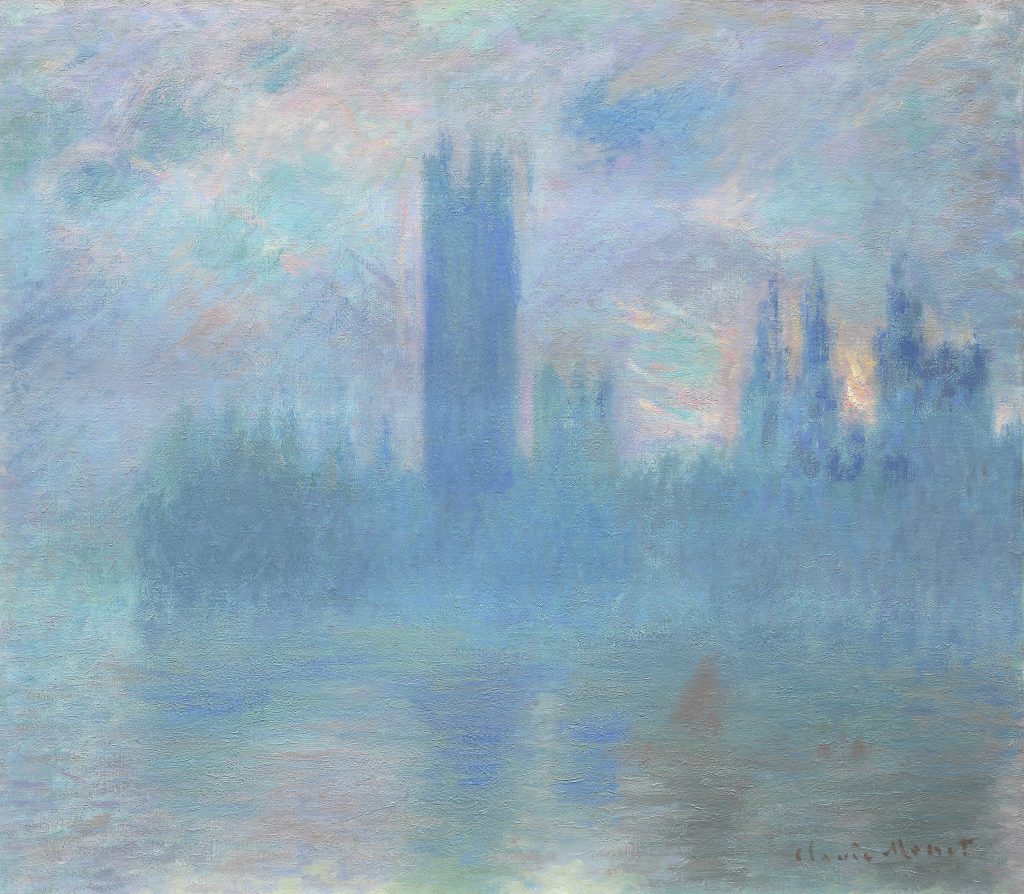
In the early 1900s, Monet made several trips to London, captivated by the city’s dense fog and dramatic skies. From his room at the Savoy Hotel and later from St Thomas’ Hospital, he painted the Houses of Parliament, Charing Cross Bridge, and Waterloo Bridge not as stark architectural monuments, but as ghostly silhouettes bathed in diffused light.
These works capture the interplay between the manmade and the elemental, with fog and light shaping the viewer’s perception as much as the structure itself. Monet was particularly intrigued by London’s unique atmospheric conditions, which allowed him to experiment further with colour harmony and abstraction.
The London Series reflects a more introspective and poetic phase of Monet’s career, and many of the paintings are now housed in collections across the UK, France, and the US.
Later Years and Legacy
In his later years, Claude Monet entered a deeply personal and prolific phase of his career, marked by reflection, introspection, and an unwavering commitment to capturing the fleeting beauty of nature. His move to Giverny, a small village in northern France, proved to be one of the most transformative decisions of his life artistically and emotionally.
Giverny: A Living Canvas
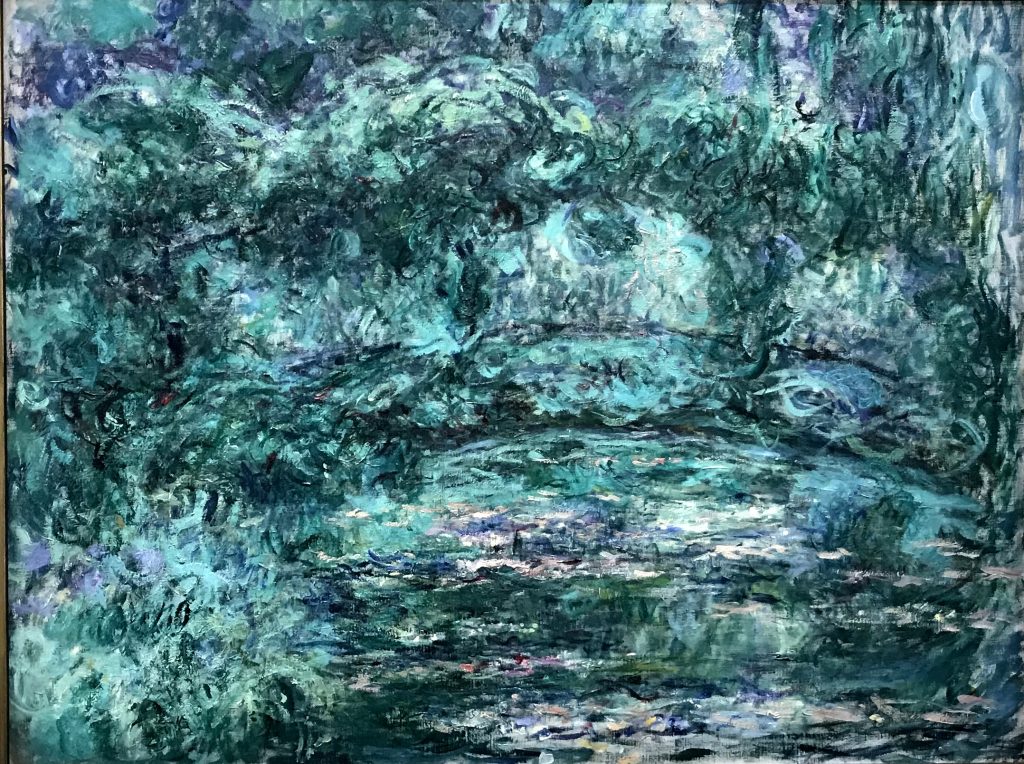
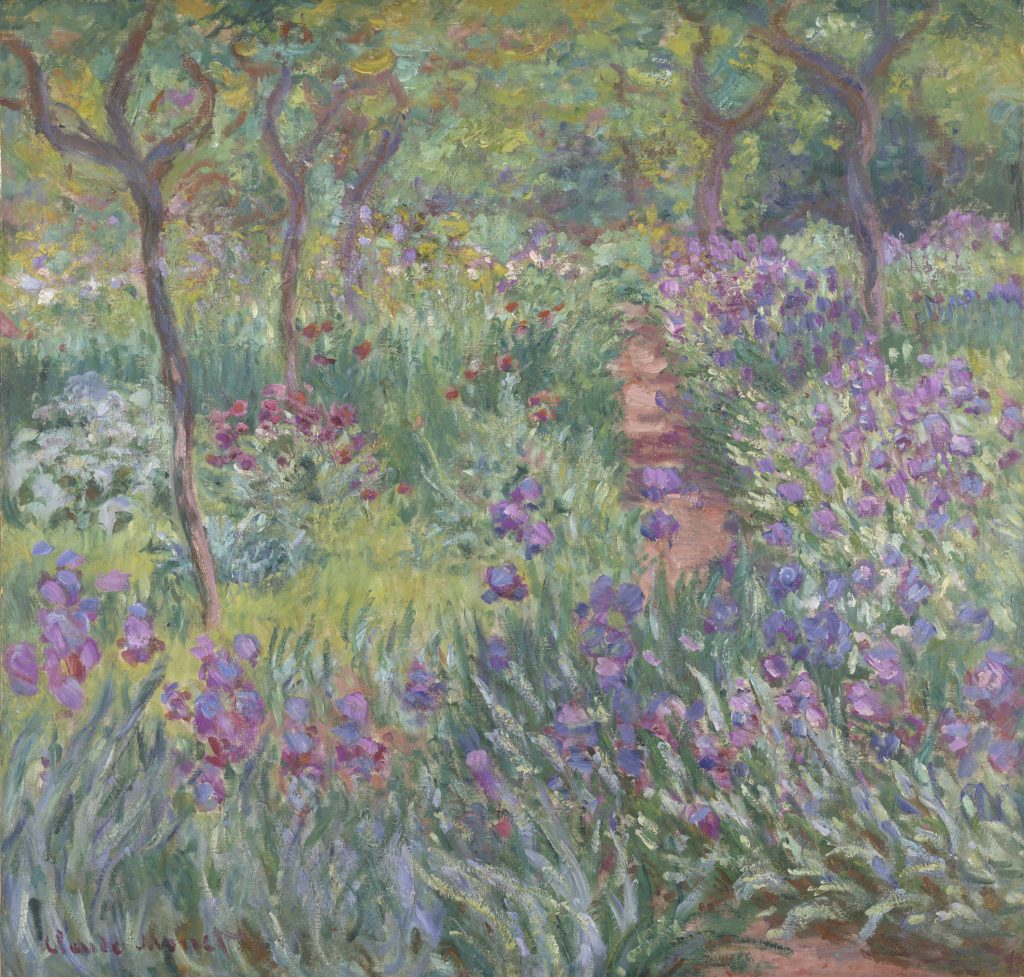
Monet settled in Giverny in 1883 and would remain there for the rest of his life. What began as a simple country retreat gradually evolved into a carefully designed artistic environment. With the help of gardeners, Monet transformed the grounds around his home into an expansive and enchanting garden, complete with flowerbeds, archways, and most famously a water lily pond spanned by a Japanese-style bridge.
This garden became both muse and model for some of his most celebrated works. Unlike traditional landscape painters who travelled to find new vistas, Monet created his own in Giverny, returning to the same views again and again, documenting the subtle interplay between plant life, water, and shifting light. The garden was more than a backdrop it was a living, breathing extension of Monet’s artistic vision.
Cataracts and Artistic Transformation
In the early 1910s, Monet began to suffer from cataracts, a condition that clouded his vision and gradually altered his perception of colour and form. This had a noticeable effect on his work. His palette grew darker, contrasts became more pronounced, and his brushwork looser and more expressive.
Some critics noted a shift towards abstraction in these later pieces, while others speculated on the impact of his impaired vision. Monet, ever the perfectionist, resisted undergoing surgery for some time. Eventually, he underwent two operations in 1923, which partially restored his sight. This experience led to a period of reevaluation and, in some cases, repainting of earlier canvases he no longer considered satisfactory.
These late works particularly his large-format Water Lilies reflect both physical limitation and remarkable adaptation. They showcase an artist who, despite challenges, continued to push the boundaries of visual expression.
Death and Artistic Immortality
Claude Monet died on 5 December 1926 at the age of 86, in his beloved home at Giverny. He was buried in a modest ceremony at the local church cemetery, surrounded by family and close friends. Though his passing marked the end of an era, his legacy only continued to grow.
Today, Monet is universally recognised as the father of Impressionism a movement that forever changed the course of Western art. His revolutionary approach to light, atmosphere, and perception inspired not only his contemporaries but countless modern and contemporary artists. From museums in Paris and London to New York and Tokyo, Monet’s work continues to draw millions of admirers each year.
The house and gardens at Giverny, lovingly restored and maintained, remain open to the public offering visitors the chance to step inside the world that Monet so vividly painted. His impact endures not just in galleries, but in the way we think about looking at the world.
Monet’s Influence on Modern Art
Claude Monet was more than just the pioneer of Impressionism he was a catalyst for an artistic revolution. His relentless focus on light, colour, and perception laid the groundwork for many movements that followed, and his techniques remain influential in the way artists think about seeing and representing the world.
A Gateway to Modernism
Monet’s work marked a definitive break from the academic conventions of his time. By painting outdoors (en plein air), using loose brushstrokes, and capturing fleeting moments of light and atmosphere, he challenged the notion that art had to be polished, composed, or historically themed. This approach directly influenced the rise of modernism, a movement characterised by its rejection of tradition and its embrace of innovation.
Artists of the early 20th century saw in Monet’s paintings a bold reimagining of what art could be. His emphasis on sensory experience over literal representation encouraged a shift towards abstraction. The late Water Lilies panels, in particular, with their immersive scale and dissolving forms, are often viewed as early stepping stones toward abstract expressionism.
Colour and Emotion: A Lasting Legacy
Monet’s nuanced handling of colour influenced generations of artists. Henri Matisse, one of the leaders of Fauvism, drew on the vibrant palette and expressive potential of Monet’s work. Like Monet, the Fauves used colour not just to depict, but to evoke emotion. The idea that colour could be liberated from its descriptive role that it could be felt, not just seen owes much to Monet’s innovations.
Similarly, Mark Rothko and other abstract painters of the mid-20th century acknowledged the emotive power of colour fields, something Monet had explored decades earlier in his late garden paintings. The fluidity and atmospheric quality of Monet’s brushwork resonated with abstract artists who sought to convey mood through form and tone rather than through recognisable imagery.
Bridging the Past and Present
Monet’s work also prefigured the immersive installations and experiential art that are now common in contemporary practice. His large-scale Water Lilies series, especially those now housed at the Musée de l’Orangerie in Paris, envelop the viewer in a continuous horizon of shifting light and watery reflections. These installations were revolutionary in their scale and effect not merely paintings to observe, but environments to enter and experience. In many ways, they anticipate today’s digital and experiential art spaces.
Artists like Yayoi Kusama, Olafur Eliasson, and even contemporary landscape painters continue to channel Monet’s desire to immerse viewers in a sensory world. His philosophy to paint what one truly sees and feels continues to resonate in an age where perception, environment, and emotion intersect in new forms.
A Timeless Touch
Perhaps Monet’s greatest influence lies in the accessibility of his work. Despite his technical brilliance and radical approach for his time, Monet’s art remains universally appealing. His paintings transcend language and culture, offering a universal invitation to pause, observe, and feel. Whether it’s the golden haze of a haystack at dusk or the shimmering surface of a lily pond, Monet captures something timeless the quiet poetry of the everyday.
In today’s fast-paced visual culture, where digital images are often consumed in seconds, Monet’s art encourages a different kind of looking slower, deeper, more contemplative. That ethos has left an indelible mark on the art world and continues to shape how we create and consume visual experiences.
Experiencing Monet Today
Although Claude Monet passed away in 1926, his paintings remain as alive and luminous as ever on display in world-class museums across the globe. Whether you’re strolling through a gallery in Paris or exploring an online archive from your own living room, there are many opportunities to engage with his breathtaking works.
Where to See Monet’s Work in Person
Musée d’Orsay, Paris
Home to an extensive collection of Impressionist and Post-Impressionist art, the Musée d’Orsay houses several of Monet’s key works, including versions of his Rouen Cathedral and Haystacks series. Housed in a grand former railway station, it offers a stunning setting for viewing his atmospheric masterpieces.
https://www.musee-orsay.fr/en
Musée Marmottan Monet, Paris
This museum boasts the largest collection of Monet’s paintings in the world, including the legendary Impression, Sunrise the painting that gave the Impressionist movement its name. It also features many works from his later years in Giverny, offering insight into the full arc of his career.
https://www.marmottan.fr/en/
The National Gallery, London
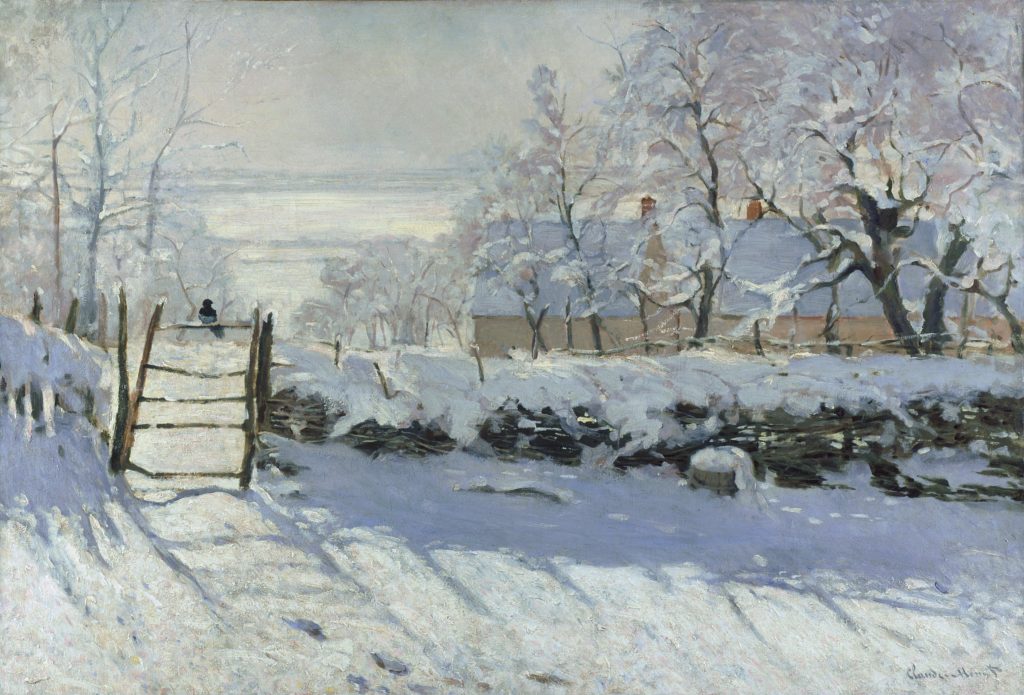
The National Gallery’s collection includes several important Monet works, including The Water-Lily Pond and Snow Scene at Argenteuil. It’s a must-visit for those exploring Impressionism in the UK.
https://www.nationalgallery.org.uk/
The Metropolitan Museum of Art, New York
With over 30 Monet paintings, the Met offers a comprehensive look at his evolution as an artist, from early studies to his grandest visions of light and water.
https://www.metmuseum.org/
The Art Institute of Chicago
The Art Institute is home to one of the most beloved Monet pieces in the United States: Stacks of Wheat. The museum also features several of his Water Lilies and offers thoughtful curatorial context for his work.
https://www.artic.edu/
Explore Monet Virtually
For those who can’t visit in person, many major institutions have opened their collections to virtual tours and high-resolution online archives. Whether you want to zoom into the brushstrokes of Water Lilies or trace the evolution of Monet’s style over time, these digital experiences make his art more accessible than ever.
Some great starting points:
- Google Arts & Culture’s Claude Monet Collection
https://artsandculture.google.com/entity/claude-monet/m01j9_?hl=en - Musée d’Orsay’s Online Collection
https://www.musee-orsay.fr/en/collections - The Met’s Monet Archive
https://www.metmuseum.org/art/collection/search?q=Claude+Monet
Monet’s Enduring Brilliance
Claude Monet forever changed the landscape of modern art. His fearless dedication to painting what he saw not with photographic accuracy, but with emotional truth gave rise to Impressionism and opened the door to new ways of seeing.
From the quiet intimacy of Water Lilies to the architectural grandeur of Rouen Cathedral, Monet’s paintings continue to captivate audiences with their play of light, vibrant colour, and subtle movement. His work invites us to pause and take in the beauty of fleeting moments an invitation that remains powerful over a century later.
Whether in a gallery, online, or within the pages of an art book, discovering Monet’s art is a deeply rewarding experience. For newcomers and seasoned art lovers alike, his legacy offers a masterclass in perception, perseverance, and poetic vision.
Take the time to explore his world, and you may never look at a garden, a sunrise, or a shifting shadow in the same way again.
Leave a Reply