
No products in the cart.

Coastal Art In Britain: How Artists Capture The Sea, Weather And Light
Britain has always looked seaward. As an island nation, the coast is never far away, either geographically or imaginatively. It appears in British art as a place of work, danger, memory, leisure, trade, solitude and wonder. Artists have long been drawn to it not only because of what it means culturally, but because it offers some of the most changeable and demanding visual conditions in painting. Light skims across water and disappears. Skies darken in minutes. Mist softens distance. Waves break into patterns that seem impossible to fix. The same stretch of shore can look theatrical at dawn, bleak at midday and almost abstract by evening.
That instability is one of the reasons coastal art in Britain remains so compelling. The coast gives artists a subject that is both familiar and elusive. It can be described, but never fully pinned down. It asks for close observation, yet it also pushes artists towards atmosphere, feeling and experiment. British painters, printmakers, photographers and sculptors have returned to the coast again and again because it lets them explore more than topography. It lets them explore movement, weather, labour, time, memory and the relationship between human life and the natural world.
For readers looking for a beginner friendly guide, coastal art in Britain is also a useful way into art history. It brings together major names such as J. M. W. Turner, John Constable, the Newlyn School and artists associated with St Ives, while also opening onto wider questions about seascape painting, marine art, British landscape art, coastal light, changing weather and the emotional pull of the sea. Searchers looking for British coastal painting, seascape art, artists inspired by the sea, Cornwall art, Turner seascapes, or paintings of British weather are all really circling the same subject. They want to know how artists turn an unstable world of tide, cloud and horizon into art that feels alive.
This guide explores that question in depth. It looks at why the coast has mattered so much in British art, how artists have painted sea, weather and light differently over time, why places like Newlyn and St Ives became such important artistic centres, and how coastal art continues to influence contemporary practice. The goal is not simply to list famous paintings, but to help you see what British artists have really been doing when they stand in front of water and weather with a sketchbook, a brush, a camera or a studio full of remembered light.
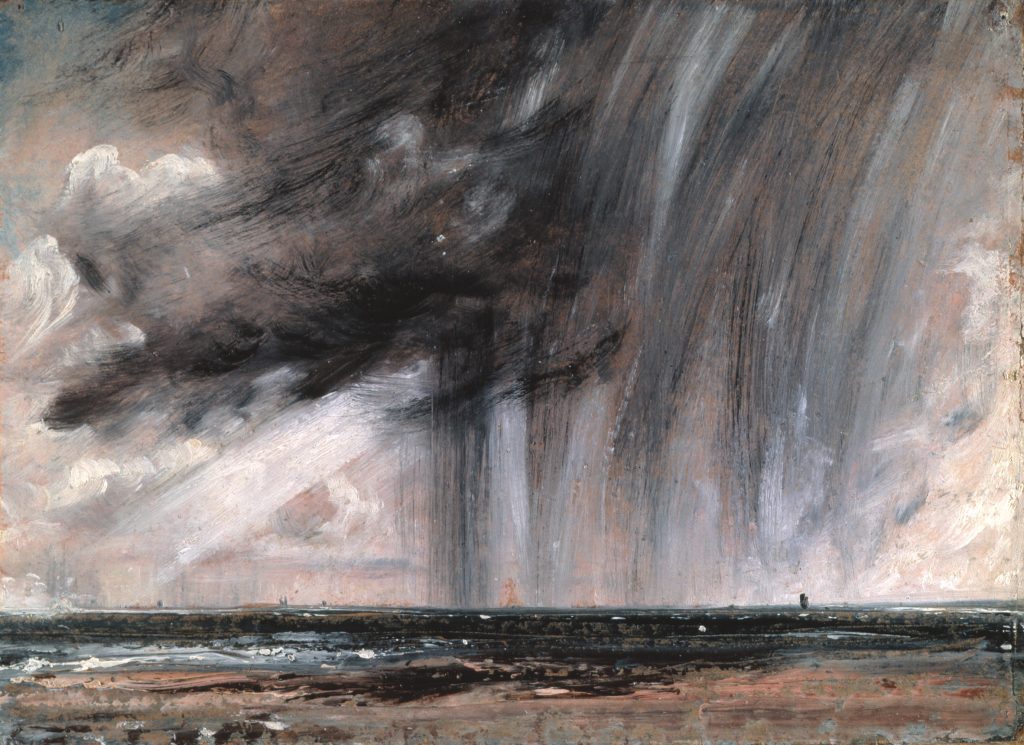
Why the British coast became such a powerful artistic subject
The British coastline offers artists an unusual combination of visual drama and cultural meaning. It is both edge and meeting point. It marks the boundary between land and sea, but it also connects Britain to trade, migration, empire, fishing, naval history and tourism. A coastal painting can therefore hold several kinds of meaning at once. It can be about the look of the sea, but also about industry, danger, travel, class, work or national identity.
For artists, the coast also solves a practical problem. It provides endless variation. Inland landscape can be full of subtle beauty, but the coast often changes faster and more visibly. Clouds move across open sky. Reflections shift second by second. Wind alters the surface of the water. Tide redraws the edge of the land. These conditions make the coast an ideal subject for painters interested in atmosphere and time. They also explain why so many British artists became obsessed with weather.
This is especially clear in the work of Turner. Tate notes that Turner was fascinated by the sea’s darker side and painted storms, shipwrecks and terrifying atmospheres repeatedly, while the National Gallery describes him as becoming known as the painter of light because of his increasing interest in brilliant colour as the main constituent of his landscapes and seascapes.
The coast is also a place where people can appear both central and small. A fishing boat against rough water, a harbour under changing sky, or figures walking along a promenade can all suggest something bigger than the immediate scene. In British coastal art, human life is often shown in tension with vast systems of weather and tide. That tension gives the subject both visual energy and emotional depth.
What coastal art in Britain actually includes
When people hear the phrase coastal art, they often think first of seascapes, paintings of waves, beaches, cliffs and harbours. That is certainly part of it, but British coastal art is broader than pure marine painting. It includes fishing communities, harbour life, estuary scenes, shipping, storms, piers, holiday beaches, working ports and sculptural or abstract responses to the sea.
This matters because British artists have not all approached the coast in the same way. Some have focused on precise observation, trying to capture a recognisable place and moment. Others have used the coast more symbolically, turning sea and sky into carriers of emotion. Others still have moved towards abstraction, using the rhythms of waves, horizons and reflected light as formal structures rather than literal description.
A nineteenth century painting of Cornish fisherfolk, a Turner storm, a modernist St Ives abstraction and a contemporary installation made in response to tidal movement may all belong under the umbrella of coastal art. What connects them is not a single style, but a recurring engagement with sea, shore, weather, light and the human life that gathers around them.
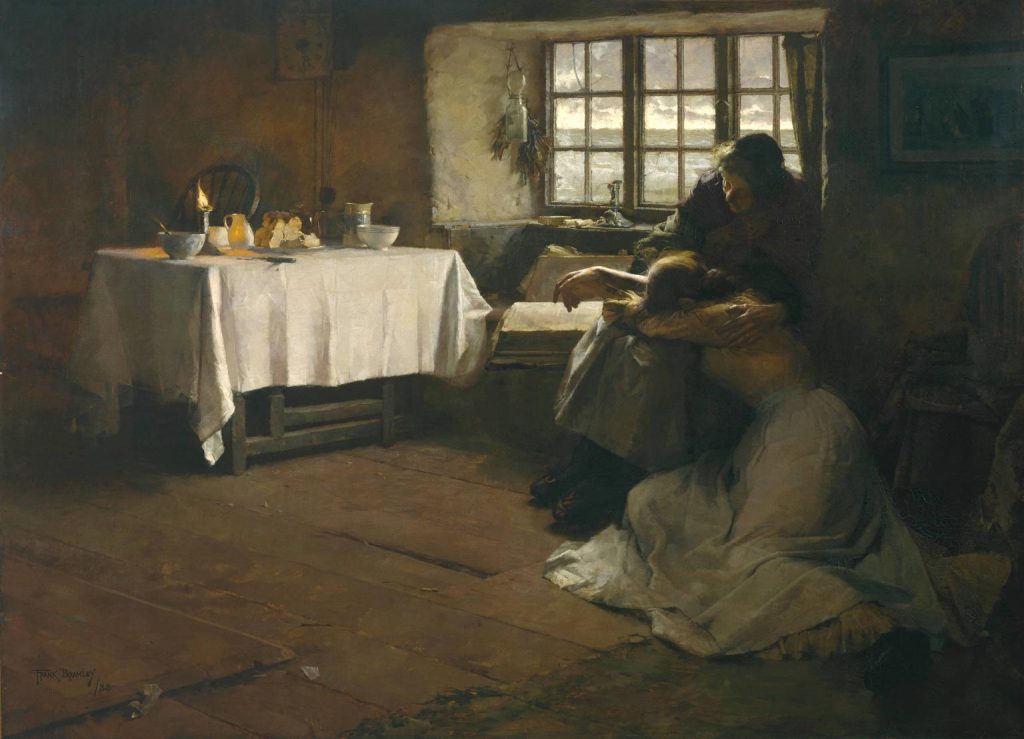
Turner and the sea, terror, atmosphere and light
No artist towers over British coastal art more completely than J. M. W. Turner. Tate states that Turner painted the sea more than any other subject, and his work again and again returns to marine weather, shipwreck, spray, mist, coastline and dangerous water.
Turner matters not just because he painted the sea often, but because he transformed how it could be painted. In earlier marine painting, ships and topographical detail often carried the main weight. Turner absorbed that tradition, but pushed it further into atmosphere. Water, cloud, smoke and light begin to blur into one another. The sea is no longer just setting. It becomes the active force of the image.
The Tate display on Turner’s sea paintings highlights storms, shipwrecks and terrifying atmospheres as recurring subjects, and Tate Papers notes that his depictions of sea water became a means of conveying sublime experience, with drowning and danger at stake rather than safe mastery over nature.
That helps explain why Turner still feels so modern. His coastal paintings are not only records of what the shore looked like. They are experiments in how paint can evoke movement, light and instability. Works such as The Fighting Temeraire, Dutch Boats in a Gale, and the many late seascapes in which coast, weather and light seem to dissolve into each other show an artist less interested in tidy description than in sensation itself. The National Gallery’s account of The Fighting Temeraire, for example, anchors the work in a specific Thames journey, but its lasting power comes from how Turner turns a maritime event into a vision of fading light, industrial change and emotional grandeur.
Turner is also central because he understood that British coastal weather is not a background feature. It is the subject. Mist, storm, glare, dusk and sea spray are what make the coast visually alive. His work teaches later artists that weather is not an obstacle to painting. It is one of the main reasons to paint at all.
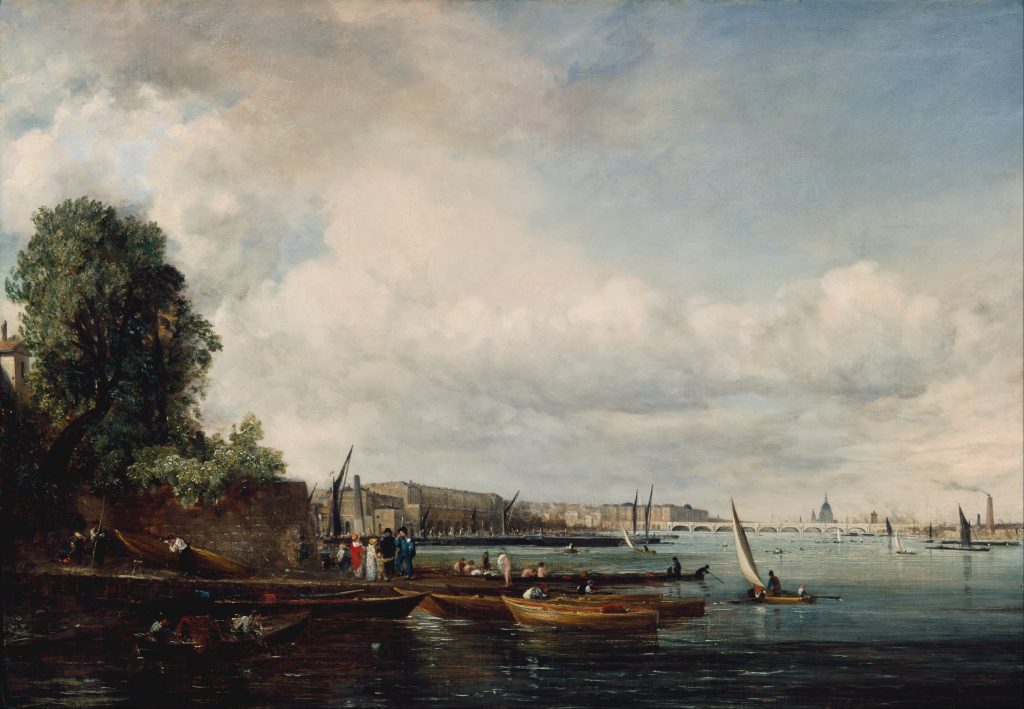
Constable and the quieter edge of coastal vision
Turner dominates the story of British seascape, but John Constable also matters to coastal art, even if he is more often associated with inland landscape. Tate’s exhibition guide on Turner and Constable emphasises that Constable was deeply attentive to atmosphere and weather, and Tate’s student resource on weather makes clear how seriously artists of the period studied changing conditions in the sky.
Constable’s importance here is less about dramatic marine spectacle and more about observation. He reminds us that coastal art in Britain is not always storm driven. Sometimes its power comes from looking carefully at cloud, humidity, air and changing light. That sensitivity becomes crucial in later coastal painting, especially among artists working in Cornwall, where light itself became a subject.
If Turner teaches the lesson of the sublime coast, Constable helps establish the lesson of attentive atmosphere. Together, the two artists make it easier to understand why British painters became so committed to the effects of weather. They also show that coastal art in Britain is not one mood. It can be violent, luminous, meditative or quietly exacting.
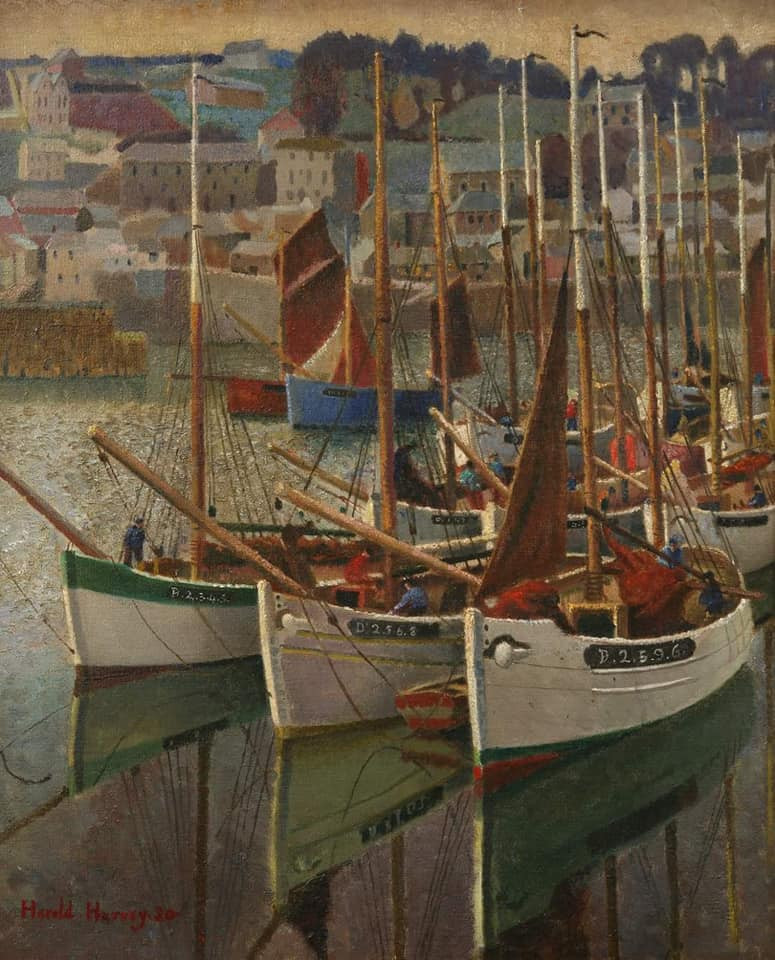
The Newlyn School and the working coast
If Turner made the sea a site of awe and danger, the Newlyn School brought British coastal art closer to everyday life and labour. Penlee House, which holds major Newlyn School collections, notes the close connection between Newlyn painting and fishing, while Art UK’s curation on Bringing Home the Catch shows how baskets, beaches and working routines became central motifs in images of the Cornish fishing community.
This is an important shift. Coastal art in Britain is not only about sublime nature or dazzling light. It is also about the social reality of coastal communities. Late nineteenth century artists in Newlyn painted fisherwomen, harbour work, auctions, children, boats and daily routines with a seriousness that placed coastal labour at the centre of British art. The sea was not simply scenery. It was livelihood, risk and structure.
Newlyn artists were drawn to outdoor painting, local life and the visible realities of the fishing economy. Their pictures often carry strong narrative content, but they are also studies in coastal light and atmosphere. The beach at Newlyn is not a neutral stage. It is a changing, working surface shaped by tide, weather and season.
This matters for searchers and readers because it broadens what coastal painting means. If you are interested in British coastal art, you are not only looking at views of cliffs and sunsets. You are also looking at how art records coastal communities and the economic lives built around the sea. In Newlyn, the coast becomes both visual subject and social world.
St Ives, modernism and the special quality of light
If Newlyn represents one major strand of British coastal art, St Ives represents another. Tate states that west Cornwall’s special quality of light has drawn painters to St Ives since the beginning of the nineteenth century, and its visitor information notes that artists were attracted to the beauty of the landscape and the quality of natural light, especially from the 1940s onwards.
That special light has become almost legendary, but it is worth explaining why it matters. St Ives offers artists unusual clarity and reflection because of its position, open sea views and changing Atlantic weather. Light there does not simply illuminate form. It breaks across water, bounces from sand, shifts through sea mist and transforms colour hour by hour. For painters and sculptors alike, this creates a landscape that feels both solid and unstable.
Tate’s St Ives School overview and its selection of artworks inspired by St Ives show how this environment shaped a wide range of artists. Some remained attached to landscape description, while others moved towards abstraction. What they shared was a sense that the coast could be translated into form, rhythm, colour and structure, not just depicted literally.
This is one of the great contributions of British coastal art. In places like St Ives, the coast becomes a bridge between observed landscape and modernist abstraction. Sea and weather are no longer only painted as recognisable scenes. They begin to influence the shape of the artwork itself.
Barbara Hepworth and the coastal imagination in sculpture
Barbara Hepworth is essential to this story because she shows that coastal art in Britain is not only about painting. Tate Papers discusses Hepworth’s work in relation to figure and landscape, while Tate writing on her life and work emphasises the depth of her response to landscape.
Hepworth’s sculpture does not depict waves or beaches in any literal way, yet the forms she developed in St Ives are inseparable from the coastal environment around her. Openings, curves, tension, balance and carved surfaces all carry an awareness of wind, stone, sea and horizon. Coastal experience enters the work through form rather than picture making.
This matters because it reveals something important about British coastal art as a whole. The coast is not only something artists look at. It is also something they internalise. It can shape how they think about space, mass, rhythm and relation. In Hepworth’s case, the coast becomes almost bodily. It is a way of understanding the relationship between inner and outer space, between the human form and the landscape beyond it.
That is why a broad guide to coastal art in Britain should not stop at seascape painting. The coastal imagination runs through sculpture, abstraction and installation as well as through literal marine scenes.
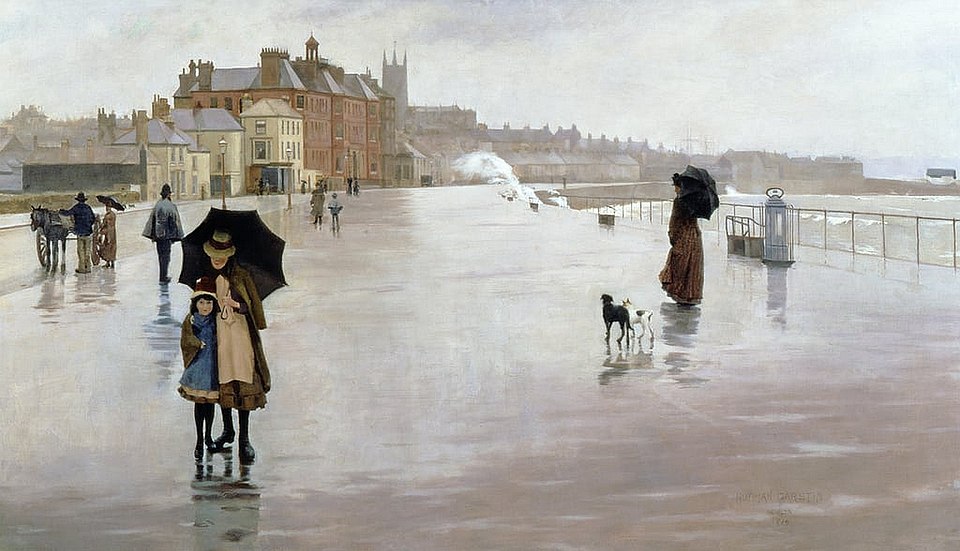
Weather as subject, not background
One of the strongest threads running through British coastal art is the treatment of weather as a central subject. Tate’s educational materials on weather make clear that artists such as Turner studied atmospheric conditions closely, and its resources on Turner repeatedly emphasise how deeply engaged he was with changing sea and sky.
British weather is famously unsettled, and the coast heightens that instability. Open horizons make cloud formations more visible. Sea light can flatten space or sharpen it dramatically. Mist can erase detail. Rain can create reflective surfaces and altered colour relationships. Wind changes not only the subject but the artist’s method, pushing painters towards speed, memory or abbreviated notation.
This helps explain why British coastal art often feels emotionally charged even when little appears to be happening. A beach under a low sky can feel tense. A harbour in pale light can feel hushed. A bright estuary can feel fleeting because the artist knows the illumination will vanish within minutes.
Weather also gives coastal art its temporal quality. These works are often about a passing condition rather than a fixed view. That is one reason they remain so engaging. They record not simply place, but time felt through atmosphere.
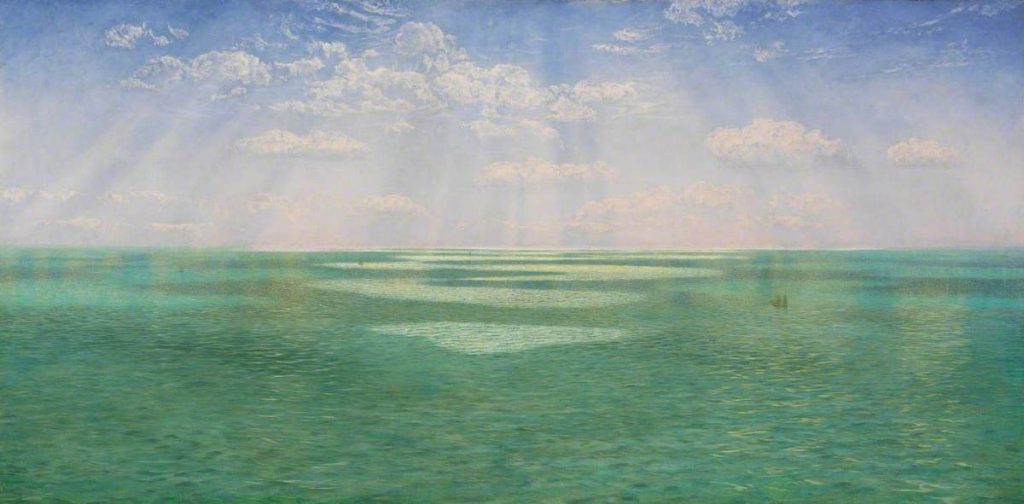
How artists paint the sea itself
Painting the sea is not as simple as painting blue water. British artists have had to solve a series of visual problems whenever they approach it. Water has no stable form. It reflects and absorbs colour. It changes according to weather, time of day, tide and viewing angle. Near shore it can look green, brown, silver or slate grey. In rough conditions it breaks into fragments of light and shadow too complex for straightforward realism.
Artists solve this in different ways. Some focus on pattern, painting wave rhythm and repeated motion. Some focus on surface texture, showing chop, foam and reflection. Some focus on tonal contrast, setting dark water against bright sky or vice versa. Others reduce the sea almost to bands of colour and atmosphere, allowing mood to do more work than detail.
Turner often painted the sea as a living force, full of dissolution and energy. The Newlyn painters anchored it more firmly in daily life, where water is approached through boats, labour and coastline. St Ives artists often used it as a source of structure and colour, allowing the sea to feed abstraction and spatial thinking.
These different methods matter because they show there is no single right way to paint the coast. British coastal art thrives on variation. Calm seas, heavy seas, estuary mud, harbour reflections and Atlantic rollers all demand different pictorial solutions.
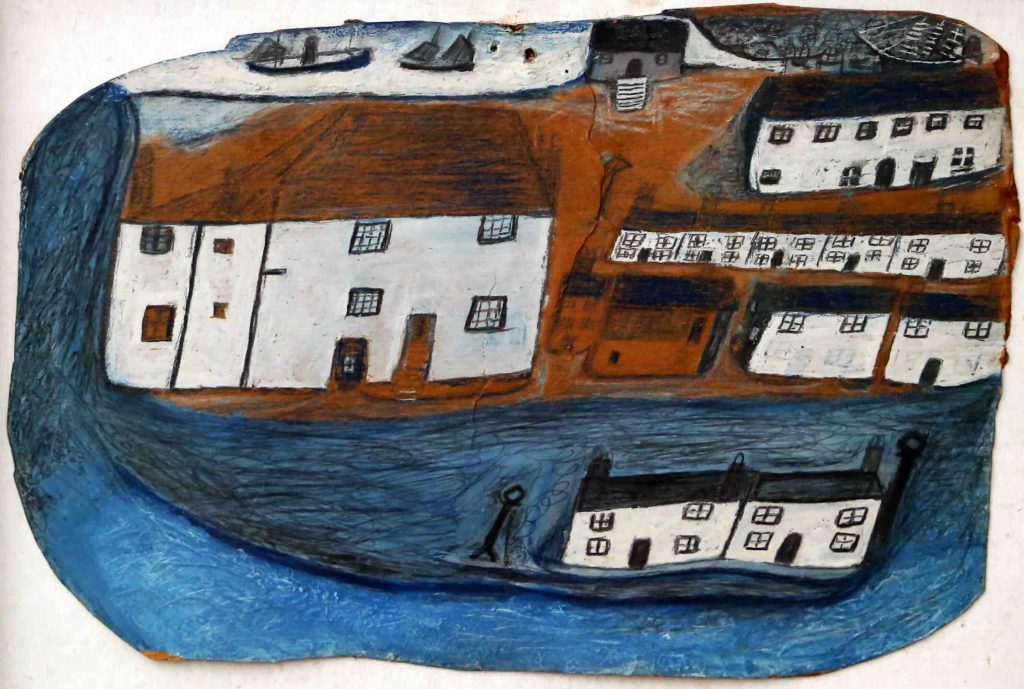
How artists capture light on the coast
If the sea is difficult to paint, light is even more difficult. British coastal artists are often really painters of light conditions. The coast intensifies these conditions because water reflects brightness upward, clouds move fast, and horizons remain open.
The National Gallery notes that Turner became known as the painter of light because of his increasing interest in brilliant colour as the main constituent of his landscapes and seascapes. In St Ives, Tate emphasises that the special quality of natural light drew artists to west Cornwall. These are not small observations. They point to a major truth about British coastal art: light is often the real subject.
Artists capture coastal light by paying attention to contrast, reflection, transparency, haze and colour shift. Dawn light may bleach detail. Noon light can flatten forms. Evening light can dissolve horizon lines into warm mist. Sea light often arrives indirectly, bouncing off water or sand. That is one reason coastal painting can feel so luminous. The brightness seems to come from within the scene rather than from an external spotlight.
In modern and contemporary art, this concern with light often pushes artists away from detailed representation and towards broader fields of colour, looser brushwork or reduced forms. Once again, the coast becomes a route from observation to experiment.
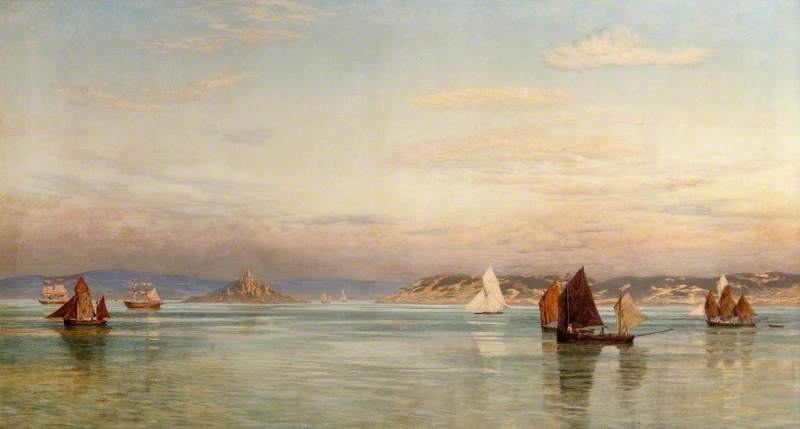
The coast as memory, mood and identity
Not all coastal art in Britain is about direct observation. The sea also works as memory, mood and identity. For some artists, the coast represents home. For others, it suggests departure or loss. Harbours, breakwaters, beaches and piers can feel emotionally loaded because they are places where people wait, work, leave or return.
This emotional register helps explain why coastal subjects remain powerful even when styles change. A contemporary painting of a grey sea may still carry echoes of Turner’s drama, Newlyn’s labour or St Ives’s light, even if it looks very different on the surface. The coast gives artists a vocabulary of horizon, weather, exposure and edge that can support many kinds of feeling.
Art UK’s overview of the British seaside shows how artists across periods have tried to capture the character of Britain’s coast, from weather and leisure to changing social life. The seaside is not one thing. It can be romantic, industrial, bleak, festive or introspective. British coastal art remains rich because it allows all of these meanings to coexist.
Why coastal art still matters now
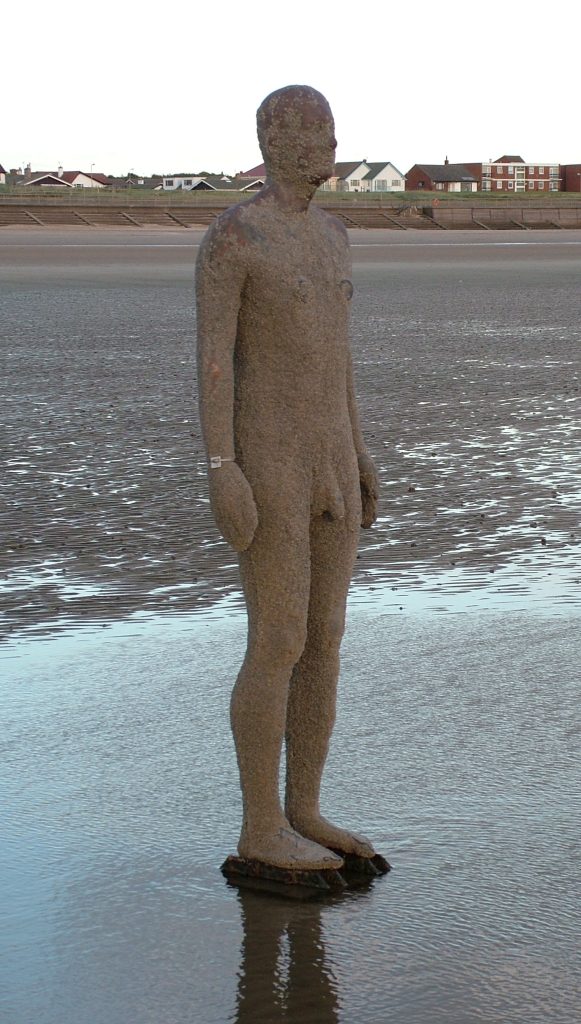
Coastal art in Britain is not a closed historical chapter. It remains relevant because the coast itself remains urgent. Today the shoreline is tied to tourism, housing pressure, climate anxiety, erosion, flood risk, marine ecology and changing local economies. Contemporary artists approaching the coast often inherit the visual traditions of Turner, Newlyn or St Ives, but they do so in a world shaped by new concerns.
That does not mean every contemporary coastal artwork has to be overtly political. It does mean that looking at sea, weather and light now carries extra charge. The coast is still beautiful, but it is also fragile. It is still atmospheric, but it is also contested. Contemporary artists can therefore use coastal motifs to explore environmental uncertainty, memory, place attachment and the changing life of British shore communities.
This continuity matters for readers because it keeps the subject alive. Coastal art is not merely about famous old paintings. It is a long conversation about how artists make sense of the edge of the land and the shifting world beyond it.
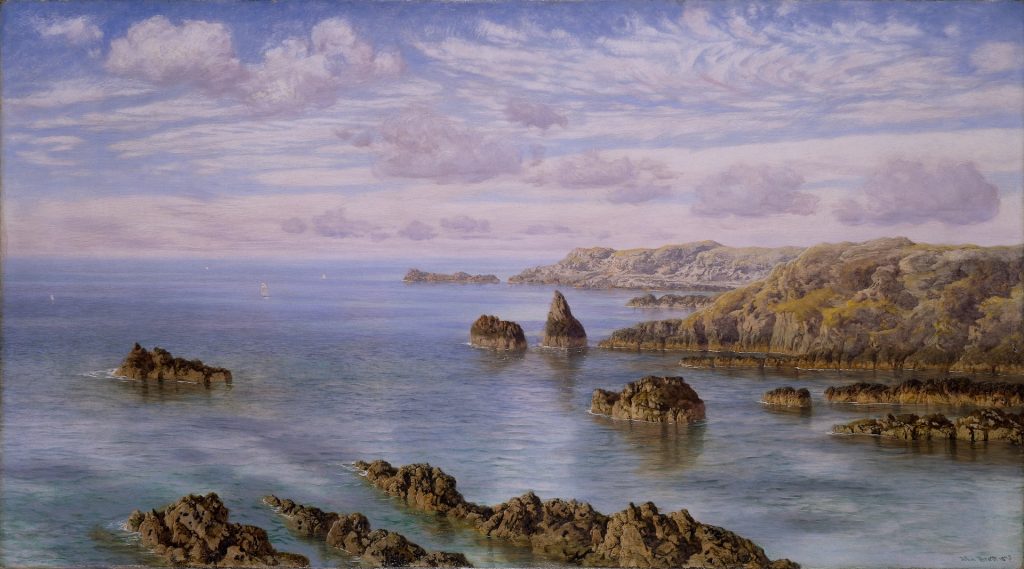
How to look at coastal art in a gallery
If you want to get more from coastal art in a gallery, begin with three questions.
First, what is the artist really focusing on? Is it the sea itself, the weather, the people, the boats, the harbour structure, or the changing light? Many coastal works only become clear when you identify the true centre of attention.
Second, what kind of coast is this? Is it a working coast, a holiday coast, a dangerous coast, a remembered coast, an abstracted coast? British coastal art changes dramatically depending on whether the artist is looking at labour, leisure, atmosphere or form.
Third, how is time being handled? Does the work capture a passing weather moment, a tidal shift, a dusk glow, a storm event, or a more timeless sense of place? Coastal art is often strongest when it makes you aware that the scene is changing even as you stand in front of it.
These questions help you move beyond saying simply that a painting looks nice or dramatic. They allow you to see how the work is built.
Why this subject remains so strong for British artists
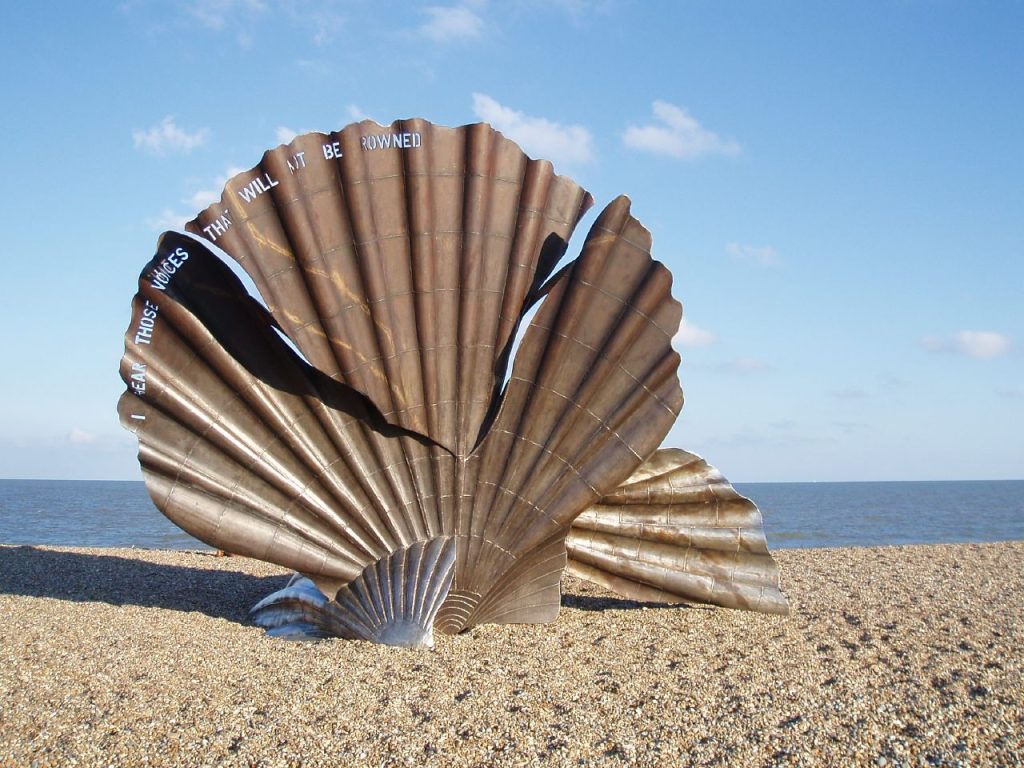
British artists keep returning to the coast because it offers everything at once. It gives them movement and stillness, drama and emptiness, labour and leisure, observation and abstraction. It lets them paint atmosphere without losing the structure of landscape. It lets them think about history while staying rooted in immediate sensation. It gives them light that changes constantly and weather that refuses to stay still.
Tate’s accounts of Turner’s fascination with the sea and of St Ives’s exceptional natural light, together with Penlee House’s focus on art and fishing in Newlyn, show just how central sea, weather and light have been to British art across very different movements and regions
That range is the real strength of coastal art in Britain. It is not one narrow genre. It is a broad and evolving field in which artists test how to capture movement, atmosphere, labour, structure and feeling. Some do it through storm and sublime terror. Some do it through fishing communities and harbour work. Some do it through abstraction and sculpture. All of them are wrestling with the same fundamental challenge: how to make sea, weather and light hold still long enough to become art, without losing the fact that they never really hold still at all.
Coastal art in Britain endures because the coast itself never stops offering artists something to solve. The sea changes too fast, light slips away too quickly, and weather refuses to behave. Yet those very difficulties are what make the subject so rewarding. From Turner’s storms and luminous dissolving horizons, to the Newlyn School’s grounded images of coastal labour, to the modernist transformations of St Ives and Barbara Hepworth’s sculptural response to sea and landscape, British artists have used the coast to test what art can do.
To look at coastal art well is to notice more than boats, beaches or pretty skies. It is to notice how artists handle uncertainty. How they paint wind you cannot see. How they suggest light that will be gone in minutes. How they turn a shoreline into a place of work, memory, abstraction or awe.
That is why coastal art in Britain still feels fresh. It speaks to history, but it also speaks to the present. The coast remains one of the richest subjects in British art because it is never only a view. It is an experience of change, and artists have been trying, brilliantly and imperfectly, to catch that change for centuries.
Leave a Reply