
No products in the cart.
Conceptual Art For Beginners: When The Idea Matters More Than The Object
If you have ever walked into a gallery, seen a sentence on a wall, a pile of paper on the floor, a plain chair, or a short instruction pinned to a panel, and wondered how this counts as art, you have already met the central challenge of conceptual art. It does not always greet you with obvious beauty, traditional skill, or a dramatic subject. Instead, it asks you to notice something else first: a thought taking shape.
That shift can feel confusing at the start, especially if your idea of art has been shaped by painting, sculpture, portraiture, landscape, or craft. Many people are taught to judge art by what it looks like. Is it detailed? Is it beautiful? Is it realistic? Is it technically impressive? Conceptual art changes the terms of that conversation. It suggests that the idea behind the work can matter more than the physical object in front of you.
That does not mean the object is irrelevant. It means the object is often just one part of the artwork’s meaning. In conceptual art, the central work may be the question being asked, the system being tested, the instruction being followed, the definition being challenged, or the context being exposed. Sometimes the thing you see is evidence of the work rather than the whole work itself.
For visitors to a contemporary gallery such as Town Quay Studios, conceptual art matters because it helps explain a huge amount of what modern and contemporary artists do. Even artists who do not label themselves conceptual often work from a concept first. They may build a series around memory, archives, climate, language, identity, labour, systems, repetition, or participation. The materials may vary, but the engine is often the idea.
This guide is designed for beginners, curious gallery visitors, and anyone who has ever stood in front of conceptual art and felt slightly unsure of what they were supposed to be doing. It will explain what conceptual art is, where it came from, why it emerged so powerfully in the 1960s and 1970s, what it looks like in practice, and how to approach it without feeling shut out. Along the way, it will explore key examples, common misconceptions, and simple ways to make sense of a movement that changed the definition of art itself.

What is conceptual art
The clearest way to define conceptual art is this: it is art in which the idea or concept behind the work is more important than the finished art object. That definition appears in many museum and educational contexts because it captures the movement’s essential shift. The emphasis moves away from the handmade object as the final point of value, and towards thought, language, structure, and meaning.
In traditional painting or sculpture, the object often feels like the destination. In conceptual art, the object may be the vehicle. What matters most is what the work proposes, questions, reveals, or sets in motion. A conceptual artwork might appear as text, a photograph, a found object, a list, a map, an archive, a recording, a performance, a diagram, a set of instructions, or a temporary action that survives only through documentation.
This is why conceptual art is not a single style. There is no one visual look that always tells you, yes, this is conceptual. Some conceptual works are visually spare. Some are messy. Some are elegant. Some are almost invisible. Some look like office paperwork. Others resemble philosophy, poetry, or administration more than traditional art. What unites them is not surface appearance but the priority given to the concept.
A useful way to think about it is to imagine two questions. In one kind of art, the first question is, what am I looking at? In conceptual art, the more useful question is often, what is this work doing? If you can begin there, the whole field becomes easier to navigate.
Why conceptual art can feel difficult at first
Conceptual art has a reputation for being difficult, pretentious, or inaccessible. Sometimes that reputation is unfair. Sometimes it is understandable. One reason it feels difficult is that it disrupts ordinary habits of looking. Most viewers arrive at art expecting to respond through sight first and thought second. Conceptual art often reverses that order.
You may need to read the title. You may need to look at the wall text. You may need to understand the context. You may need to notice what is absent as much as what is present. The artwork may not reward a quick glance. It may ask for patience, curiosity, and a willingness to sit with uncertainty.
That can feel irritating if you are expecting immediate visual pleasure. But it can also be liberating. Conceptual art invites viewers to become active participants rather than passive admirers. Instead of simply receiving an image, you are asked to think through a proposition. Your interpretation matters. Your confusion may even be part of the point, because the work is trying to expose an assumption you did not realise you were carrying.
A simple example helps. Imagine standing in front of an ordinary object in a gallery. If the work were purely formal, you might think about shape, balance, texture, and proportion. If the work is conceptual, you may need to ask why that object is here, who chose it, what happens when it enters a gallery, how it is named, and why this framing changes its meaning. The object has not changed materially. The idea around it has changed everything.

Where conceptual art came from
Conceptual art is most strongly associated with the 1960s and 1970s, when artists across Europe, the United States, and elsewhere began to challenge long held assumptions about art. They questioned whether art had to be a precious object. They questioned whether the artist’s hand was the main source of value. They questioned the authority of museums, the power of markets, and the systems that decide what deserves attention.
The movement did not appear from nowhere. It has roots in earlier modern art, especially in the work of Marcel Duchamp. His readymades opened a path that would become central to conceptual thinking. By presenting ordinary manufactured objects as art, Duchamp shifted attention away from craftsmanship and towards selection, framing, and definition. Once that move had been made, it became much easier for later artists to ask whether a sentence, an instruction, or a proposal might also count as art.
There were wider cultural reasons for the rise of conceptual art too. The mid twentieth century was shaped by mass media, bureaucracy, political unrest, new forms of consumer culture, and expanding scepticism towards authority. Artists were living in a world increasingly structured by language, information, systems, and institutions. It made sense that they would respond by treating those things as artistic material.
Conceptual art also emerged alongside other major shifts in modern art. Minimalism had already reduced form to essentials. Performance art was challenging the object based logic of galleries. Photography and film were changing how reality could be recorded and staged. New political movements were pushing artists to think about power, identity, institutions, and public space in more critical ways. Conceptual art pulled many of these energies together.

The big idea: the concept is the medium
One of the most useful ways to understand conceptual art is to realise that the idea itself becomes the medium. In painting, the medium may be oil paint. In sculpture, it may be bronze, stone, or wood. In conceptual art, the working material is often the concept itself, shaped through language, structure, systems, documentation, and context.
This is why conceptual artists so often use words. Language can define, instruct, classify, describe, mislead, reveal, and destabilise. It can be precise or slippery. It can function like a material that reshapes the viewer’s experience. A sentence on a wall is not always a label. It may be the artwork.
This also helps explain why conceptual art can feel intellectual without needing to be cold. Ideas are not emotionally neutral. A concept can be playful, angry, tender, unsettling, political, absurd, intimate, or mournful. The difference is that the emotional charge is carried through meaning rather than through traditional visual drama.

Dematerialisation and why the object stopped being the point
A phrase often used in discussions of conceptual art is the dematerialisation of the art object. That can sound intimidating, but the basic idea is straightforward. The object becomes less important than the plan, action, thought process, or system behind it.
This does not mean conceptual art always abandons objects completely. Plenty of conceptual works involve physical things. But the value no longer sits mainly in the crafted uniqueness of the object. A work might exist as a set of instructions that can be carried out repeatedly. It might survive through photographs, notes, diagrams, or certificates. It might exist as an event that has already happened. In each case, the object is no longer the unquestioned centre.
This shift had major consequences. It challenged the art market, because markets prefer ownable things. It challenged museums, because museums are built to collect, preserve, and display objects. It challenged audiences, because many viewers instinctively look for skill and finish as signs of seriousness. Conceptual art pushed against all of those habits.
Instructions, rules, and systems
One of the most distinctive features of conceptual art is its use of instructions. Some works are essentially scores, prompts, or rules. The artist creates a system, and the work can then be carried out by others. In these cases, the execution matters, but it is not the deepest source of the work’s identity. The thinking has already happened.
This approach is often associated with artists such as Sol LeWitt, whose writings are central to how conceptual art is understood. His work helped clarify the idea that decisions made in advance could form the true content of an artwork. A drawing on the wall might be executed by assistants following his directions, yet the work remained his because the concept and system originated with him.
This model changed how people thought about authorship. It suggested that the artist did not always need to make the object directly. Just as a composer writes a score that others can perform, a conceptual artist could devise a work that others bring into being.
It also created a fascinating tension between freedom and control. A conceptual work may seem open because it can be remade, but it can also be highly structured because every step is determined by the underlying rules.

Language as art
Conceptual art is deeply tied to language. Artists used words not only to explain works but to make works. A statement, a proposition, a question, or a definition could become the art itself.
This opened up an entirely different relationship between seeing and reading. A viewer might encounter a work that asks them to imagine something that is not physically present. Another work might consist of a description of an action that may or may not ever happen. Another might expose the gap between an object and the language used to define it.
This is one reason conceptual art often feels close to philosophy, literature, poetry, and critical writing. It does not always separate art from thought. Sometimes it collapses that distinction on purpose.
Art & Language, the English conceptual art group founded in the late 1960s, is particularly important here. The group questioned mainstream assumptions about art and used writing itself as a central medium. Their work reminds us that conceptual art is not just about sparse objects in white rooms. It is also about argument, conversation, and the struggle over meaning.
A famous example: One and Three Chairs
If you want one artwork that explains conceptual art in a single gesture, Joseph Kosuth’s One and Three Chairs is one of the best examples. The work presents a real chair, a photograph of that chair, and a dictionary definition of the word chair.
At first glance, it can seem almost too simple. But that simplicity is exactly what makes it powerful. The work asks where meaning resides. Is the real chair the most authentic version? Is the photograph another form of the chair? Does the dictionary definition tell us something more essential than either the object or the image?
Instead of presenting a chair as a useful object, the work turns chairness into a philosophical problem. It makes visible the relationship between object, representation, and language. Once you begin to see that structure, the work opens up far beyond its simple appearance.
Kosuth’s piece is also useful because it shows that conceptual art is not random. Every element is doing something precise. The economy of means is part of the intelligence.

What conceptual art looks like in practice
Because conceptual art is not a single style, it helps to think in terms of recurring formats.
Text based works
Some conceptual art uses text as the primary medium. This may appear as a sentence on a wall, a printed statement, a list, or a poetic instruction. In these works, language is not supporting the art. It is the art.
Text based conceptual art can be direct or elusive. A work might describe an action that never takes place. It might set up a contradiction. It might create an image in your mind more vivid than anything placed in front of you. The point is that words become materials with shape, rhythm, and force.
Instruction pieces
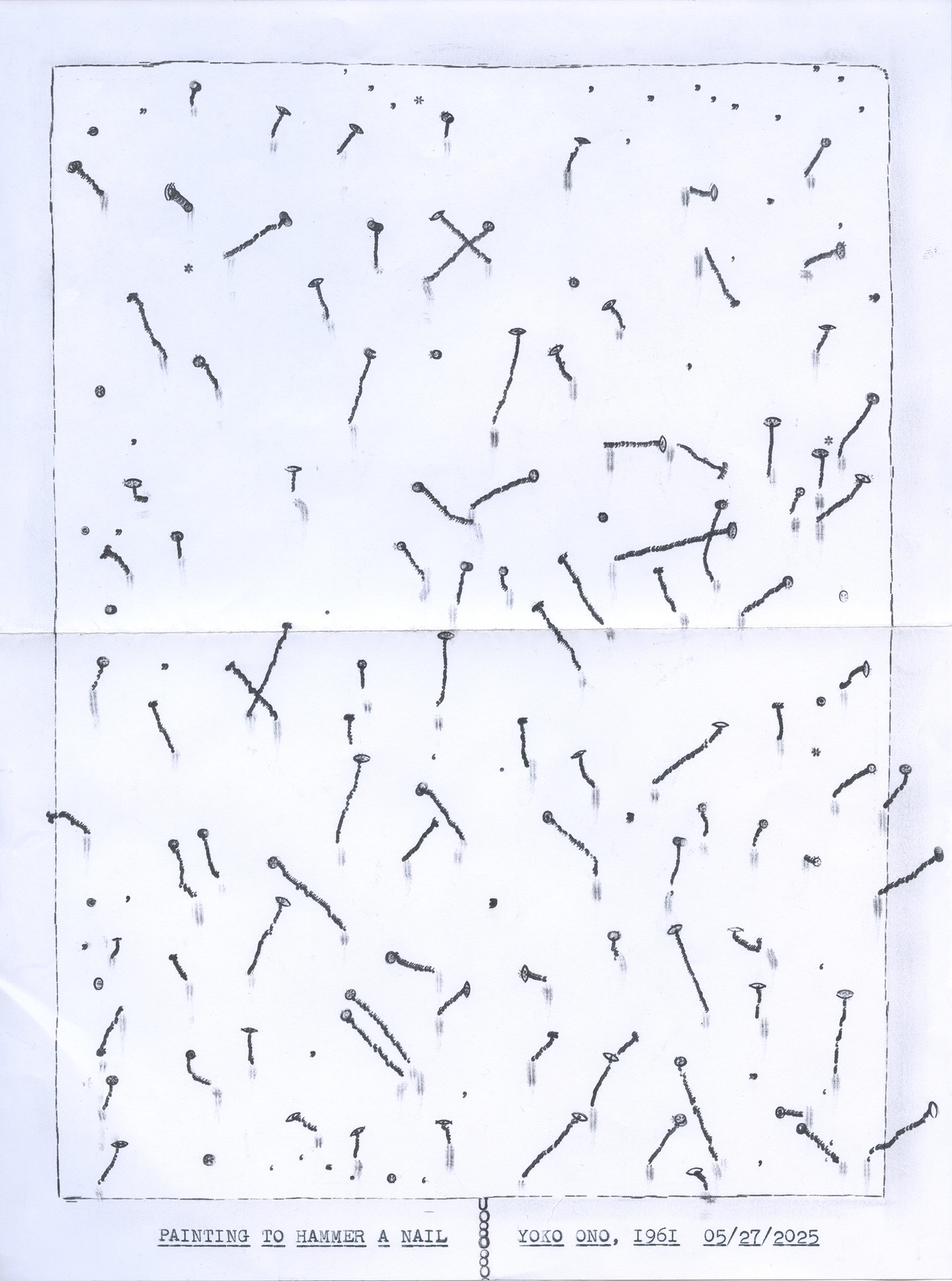
Instruction based works are a major strand of conceptual art. They can function like scores, recipes, scripts, or prompts. Some are executed physically. Others remain imaginary. Yoko Ono’s instruction works are a classic example of how conceptual art can be poetic, intimate, and expansive rather than dry or academic.
What matters in these works is not just what happens, but the invitation to imagine what could happen. Conceptual art often thrives in that gap between reality and possibility.
Readymades and found objects
The readymade remains a key conceptual strategy. A found object placed in an art context can ask difficult questions about value, taste, labour, selection, and power. Why should one object be ignored while another is framed, titled, and collected? What changes when an everyday thing enters a museum or gallery?
These questions are still alive today, which is why conceptual art continues to shape contemporary practice.
Documentation and archives
A great deal of conceptual art survives as documentation. You may see photographs, maps, diagrams, notes, letters, administrative records, lists, recordings, or certificates. Sometimes this material documents an action that already happened. Sometimes the documentation is the final form of the work.
This is one reason conceptual art often overlaps with archives and research based practice. The artist may not be making an object in the traditional sense. They may be organising evidence, tracing a system, or exposing the politics of record keeping itself.
Performance and participation
Conceptual art also overlaps with performance. A work might consist of an action, a conversation, a task, or a viewer’s participation. In these cases, the artwork may exist only when activated. The viewer is not outside the work. They help produce it.
This can make conceptual art feel unusually alive. The meaning is not fixed entirely in advance. It emerges through the encounter.
Conceptual art versus minimalism
One of the most common points of confusion is the difference between conceptual art and minimalism. They can sometimes look similar because both may involve simple forms, repetition, and restraint. But their priorities are often different.
Minimalism usually emphasises form, material, scale, repetition, and the viewer’s bodily experience of objects in space. Conceptual art may borrow similar simplicity, but it tends to focus more on the idea, the rule, the proposition, or the context surrounding the work.
A simple test can help. If removing the title, instructions, or wall text would destroy most of the work’s meaning, it is often conceptual. If the work would still operate fully as an experience of form, material, and space, it may lean more towards minimalism.
This distinction is not perfect, and some artists move across both fields. But it helps beginners notice what kind of attention the work is asking for.

How to understand conceptual art in a gallery
The best way to approach conceptual art is not to ask whether you like it immediately. Start by asking what it is trying to do.
First, read slowly. In conceptual art, titles, statements, and labels are often part of the work’s structure. Reading is not cheating. It is part of the encounter.
Second, describe what you literally see. Keep it plain and factual. A chair, a photograph, a sentence, a stack of paper, a map, a list of dates. This helps ground your thinking.
Third, ask what the work is doing. Is it comparing categories? Challenging a definition? Drawing attention to a hidden system? Turning administration into art? Questioning authorship? Exposing institutional power?
Fourth, look for stakes. The best conceptual art does not just play a game. It risks something. It challenges a convention. It reveals a contradiction. It asks a real question.
Fifth, notice your own response. Confusion, amusement, irritation, boredom, interest, discomfort, admiration. These are not wrong reactions. They are information. Use them.
Sixth, think about context. Why is this in a gallery? Why is it titled this way? What changes because it is displayed here and not somewhere else?
A practical question that helps in almost every case is this: what would be lost if this work were taken out of this context? The answer often leads you directly to the concept.
Common misconceptions about conceptual art
It is just lazy
This is one of the most frequent complaints. But conceptual art is not lazy simply because it does not always display traditional skill. Strong conceptual work often requires intense planning, research, writing, editing, and structural precision. The labour is real. It is just not always where people expect to find it.
Anyone could do it
Sometimes anyone could physically make the object. But that is not the same as inventing the concept. Many conceptual works look simple only after the key idea has been found. That does not make the thinking less significant.
It is only intellectual
Conceptual art can be cerebral, but it is not limited to cold analysis. It can be funny, sad, intimate, unsettling, political, lyrical, or absurd. The feeling comes through the idea, context, or situation rather than through conventional image making.
It is all a joke
Some conceptual art uses humour, but humour does not cancel seriousness. In many cases, wit is part of how the work opens a deeper question. A joke can be one of the sharpest tools an artist has.
Conceptual art and contemporary art
People often ask whether conceptual art is the same as contemporary art. The answer is no, but conceptual thinking is deeply woven into contemporary practice.
Conceptual art refers to a specific movement and set of approaches that became especially visible in the 1960s and 1970s. Contemporary art is a much broader category covering many mediums, styles, and concerns today. Yet much contemporary art inherits conceptual strategies.
A painting today may still be strongly conceptual if it is driven by an archive, a rule, a system, a political idea, or a critical framework. A sculpture may be concept led even if it is beautifully made. A photograph may function conceptually if it is part of a larger argument rather than a standalone image.
This is why conceptual art remains such an important foundation for understanding what happens in contemporary galleries. It changed the questions artists are allowed to ask.
Why conceptual art still matters
Conceptual art still matters because the world we live in is structured by concepts, systems, categories, institutions, and language. We move through contracts, algorithms, databases, labels, rules, and forms every day. Much of what shapes our lives is invisible until someone makes it visible.
Conceptual art is good at doing exactly that. It can expose systems. It can question authority. It can reveal the politics hidden inside ordinary language. It can challenge assumptions about labour, ownership, knowledge, and value. It can also make room for forms of art that do not fit neatly into painting and sculpture.
That matters for audiences and artists alike. For audiences, conceptual art offers tools for thinking critically about the world. For artists, it opens up a huge range of possible mediums and methods. It says that art can be made through research, writing, participation, administration, performance, archives, or social relations, not just through traditional image making.
How to talk about conceptual art in plain English
One of the best things you can do with conceptual art is drop the pressure to sound clever. You do not need dense jargon to talk about it well.
Start with simple sentences. This work compares an object with a definition. This piece turns a set of instructions into the artwork. This installation seems to be about bureaucracy and control. This work only makes sense because it is in a gallery.
Then say what the work makes you think or notice. That is often enough. Conceptual art is full of complexity, but it does not need inflated language to be meaningful.
In fact, the clearer your language is, the easier it becomes to tell whether the work itself is strong. If you cannot describe what the artwork is doing without hiding behind vague phrases, it may not be as successful as it first seemed.
Conceptual art asks us to take ideas seriously as artistic material. It shifts attention away from the object as the final source of meaning and towards thought, language, systems, instructions, and context. That shift can feel unsettling at first, but it is also what makes conceptual art so important.
It changed the boundaries of art. It expanded the tools available to artists. It challenged museums, markets, and audiences to rethink what counts as a work of art and why. It also gave viewers a more active role. Instead of simply admiring an object, we are asked to think with it.
Once you get comfortable with that shift, conceptual art becomes far less intimidating. It can still be frustrating. It can still be uneven. Not every conceptual work succeeds. But the best examples are sharp, memorable, and genuinely transformative. They make you notice things you had not noticed before. They show that art can happen not only on the wall or pedestal, but in the space between object, idea, and viewer.
The next time you encounter a sentence on a gallery wall, a found object under bright lights, a set of instructions framed like a work, or a pile of documents presented as an artwork, pause before dismissing it. Ask what the work is really doing. Ask what has changed because it is here. Ask what idea is being put under pressure.
That is where conceptual art begins. And once you see that, a great deal of contemporary art starts to open up around it.
Leave a Reply