
No products in the cart.
Top Artist of History: Edgar Degas – Ballet’s Brilliant Chronicler
A ballerina bends forward to adjust her shoe. Another rests against a wall, waiting for her turn. In the background, a teacher watches a rehearsal while dancers practise steps they have performed hundreds of times before.
These are the moments Edgar Degas chose to paint.
Not the grand finale. Not always the perfect pirouette or the applause.
He was interested in everything that happened before the performance, when dancers were tired, distracted, concentrating or simply waiting.
Today, Edgar Degas is one of the most recognisable artists associated with ballet. His paintings of dancers in white tutus have become familiar images, reproduced in books, prints and posters around the world.
But look closely, and they reveal something more interesting than the elegance of classical dance.
They show how a painter could turn ordinary movements into remarkable works of art.
Who Was Edgar Degas?
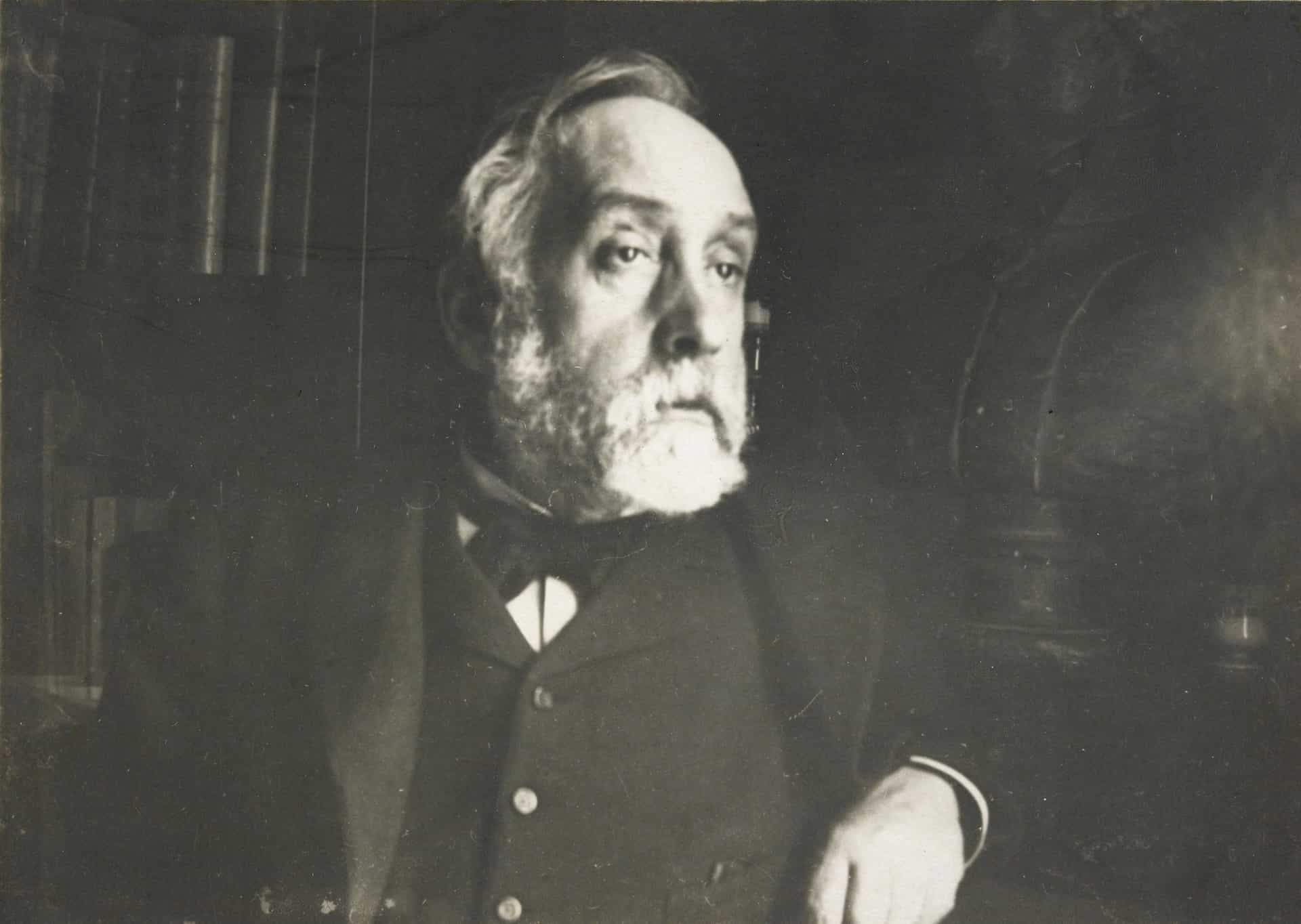
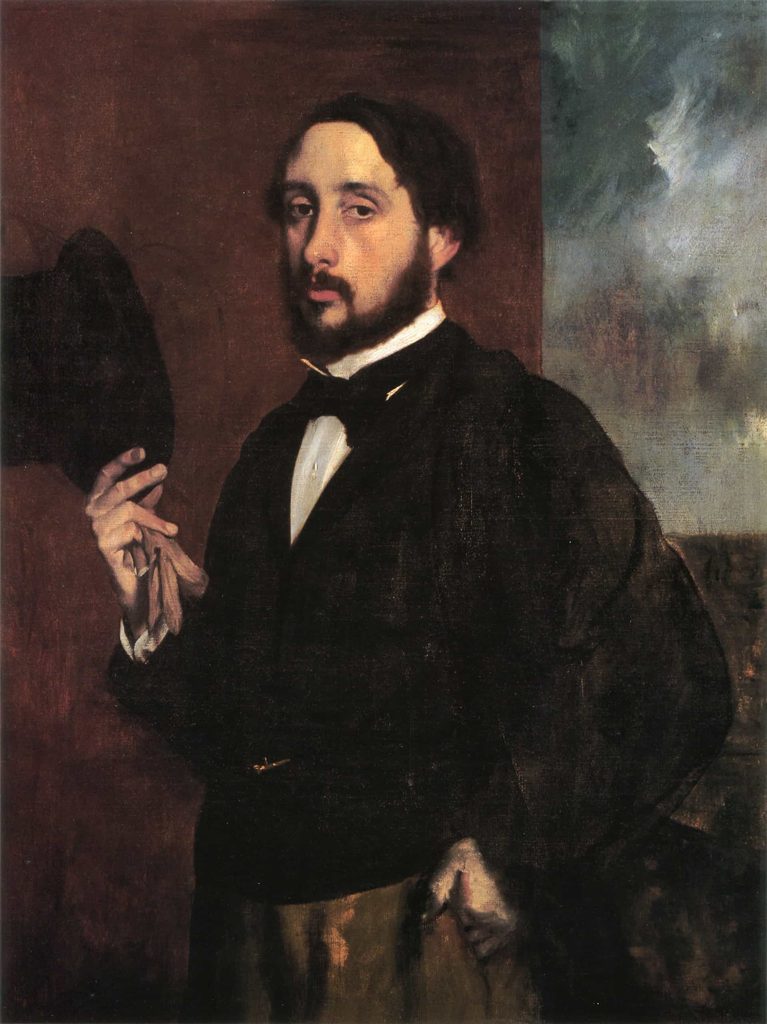
Edgar Degas was a French artist born in Paris in 1834. He died in the same city in 1917, leaving behind an extensive body of paintings, drawings, prints and sculptures.
He was born into a prosperous banking family and received a traditional artistic education. He studied drawing, copied paintings by earlier masters and spent time in Italy examining Renaissance art.
His early ambitions included history painting, a prestigious subject in nineteenth-century French art.
But as his career developed, he became increasingly interested in modern Paris.
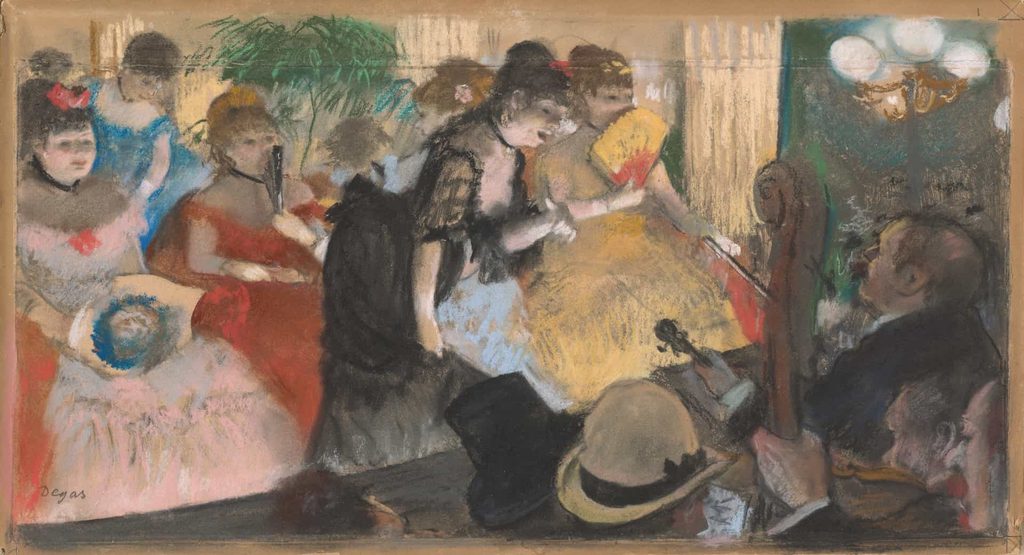
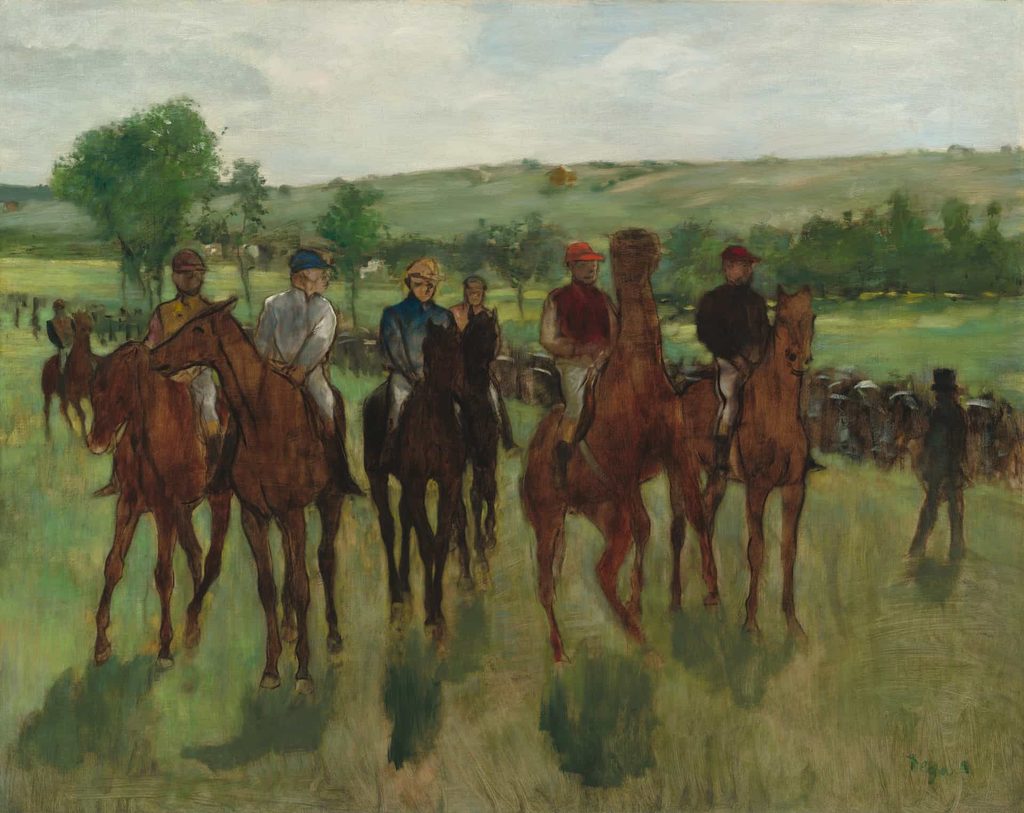
Horse racing, cafés, theatres, laundresses, musicians and ballet dancers offered him subjects drawn from contemporary life.
Degas became closely associated with the Impressionists and participated in six of their independent exhibitions between 1874 and 1886.
Yet he differed from artists such as Claude Monet.
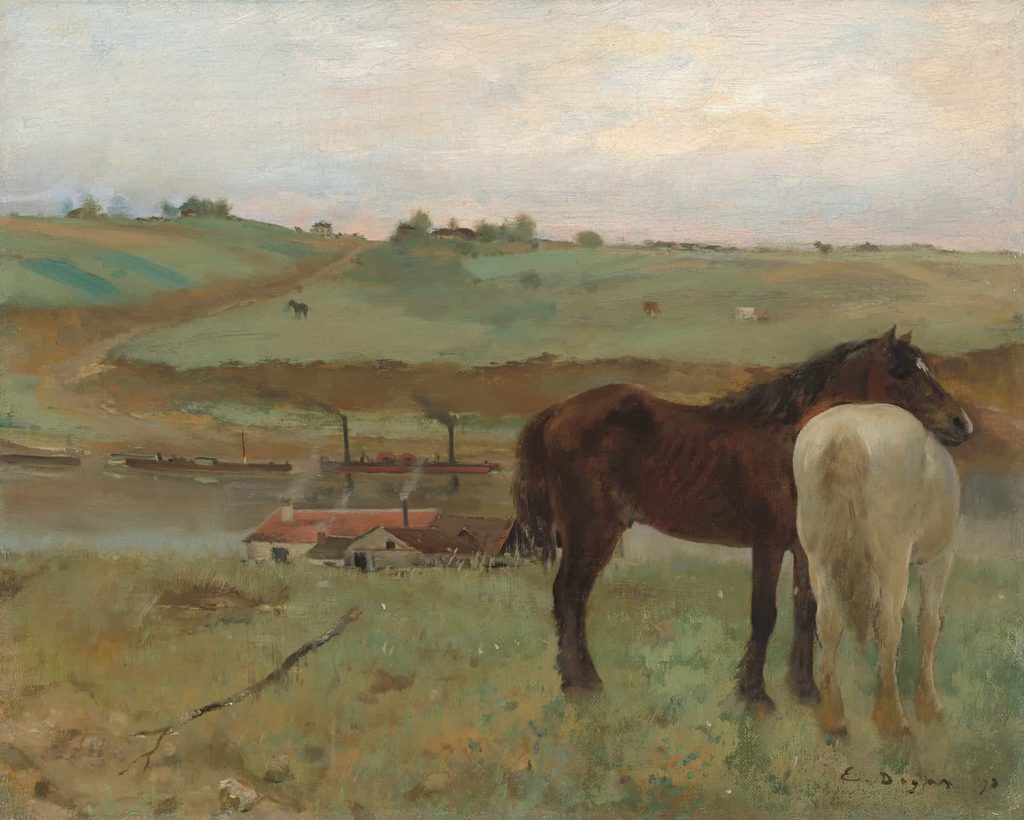
While Monet often painted outdoors, observing the effects of natural light, Degas preferred carefully constructed compositions, indoor settings and the study of human movement.
He reportedly preferred to describe himself as a realist.
Drawing remained central to his practice throughout his life.
This combination of rigorous training and unusual subject matter helped him develop an artistic approach that was both traditional and strikingly modern.
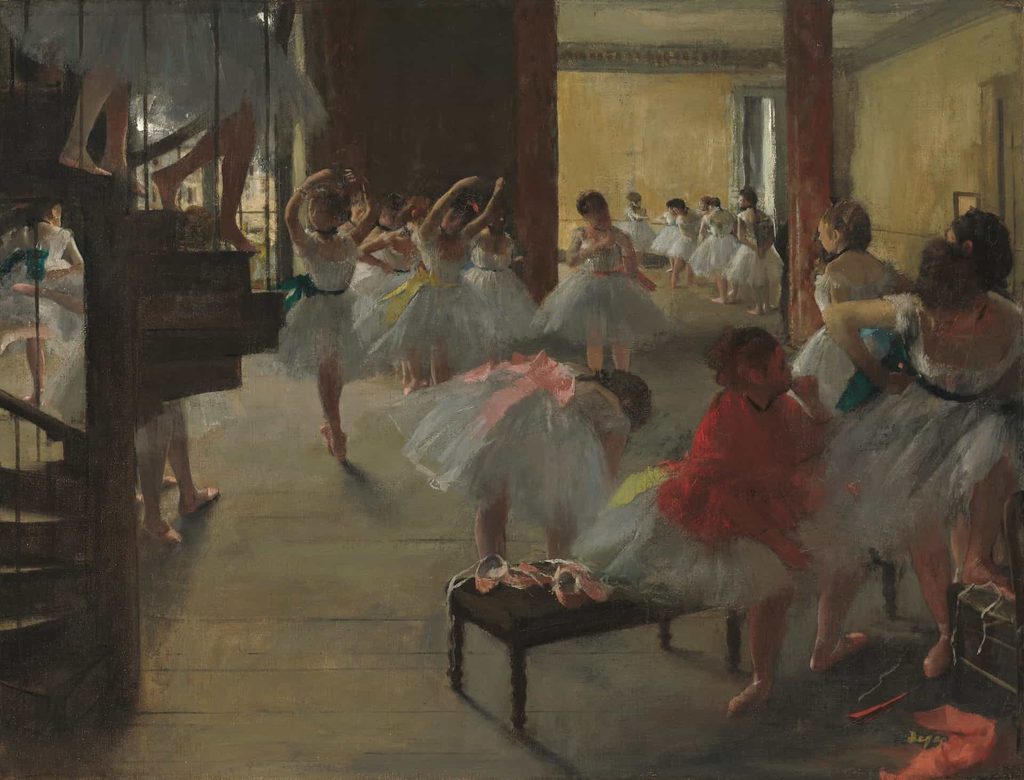
Why Did Degas Paint So Many Ballet Dancers?
By the late 1860s, Degas had become interested in the Paris Opéra and the world of classical ballet.
The theatre offered something particularly valuable to an artist fascinated by the human figure.
Dancers were constantly moving, balancing, stretching, bending and repeating complicated physical actions.
Their training demanded control of the body, but the effort was not always graceful.
Degas noticed this.
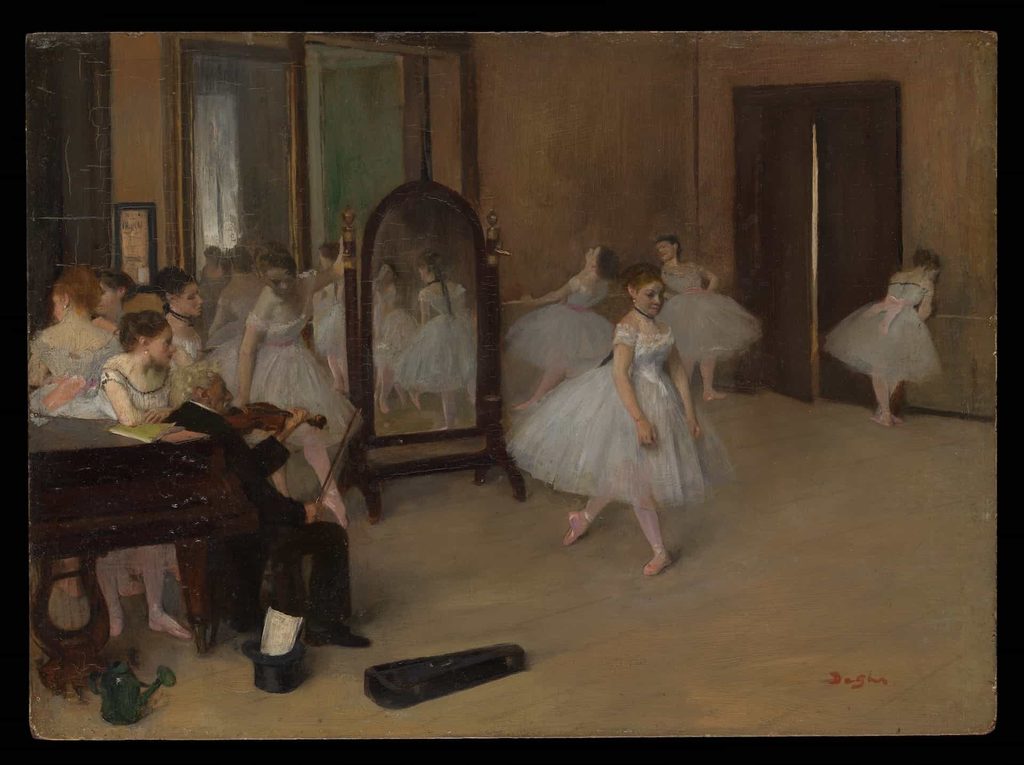
In The Dancing Class, painted around 1870, young ballerinas occupy a rehearsal room rather than a grand stage.
Some practise while others stand or wait. A mirror reflects the room, and the figures seem absorbed in their own activities.
The scene feels spontaneous, but its apparent informality was carefully constructed.
Degas did not initially have unrestricted access to rehearsals. He arranged for dancers to pose in his studio and used drawings to develop his compositions.
Later, his familiarity with the Opéra allowed him to explore its working environment more closely.
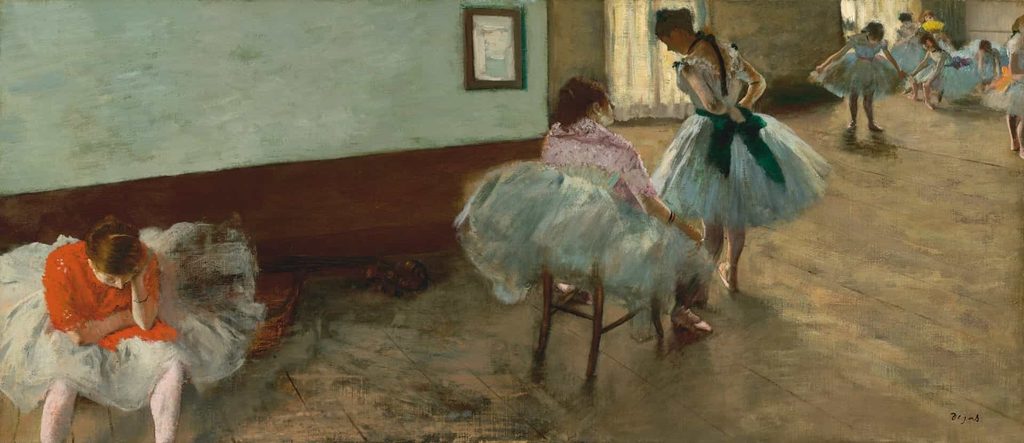
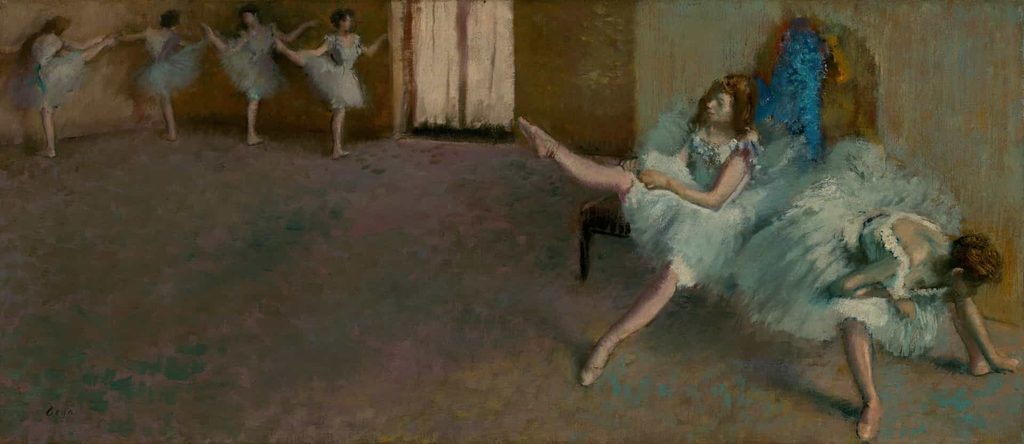
Paintings such as The Dance Lesson and Before the Ballet show dancers preparing, stretching and passing time.
Their poses are not the heroic movements normally associated with ballet.
That was precisely what interested Degas.
He found artistic possibilities in movements that other painters might have considered too ordinary to record.
The Reality Behind the Beautiful Costumes
At first glance, a Degas ballet painting can look romantic.
The delicate tutus, pale colours and theatrical settings suggest a world of elegance.
But ballet in nineteenth-century Paris could be an unforgiving profession.
Many young dancers came from working-class families and entered the Paris Opéra’s training system at an early age.
The work involved long rehearsals, strict discipline and uncertain prospects.
The Opéra also had a social world beyond the performances.
Wealthy male subscribers could obtain privileged access to backstage areas, where young performers might face unwanted attention and pressure.
Degas occasionally included these men in his paintings.
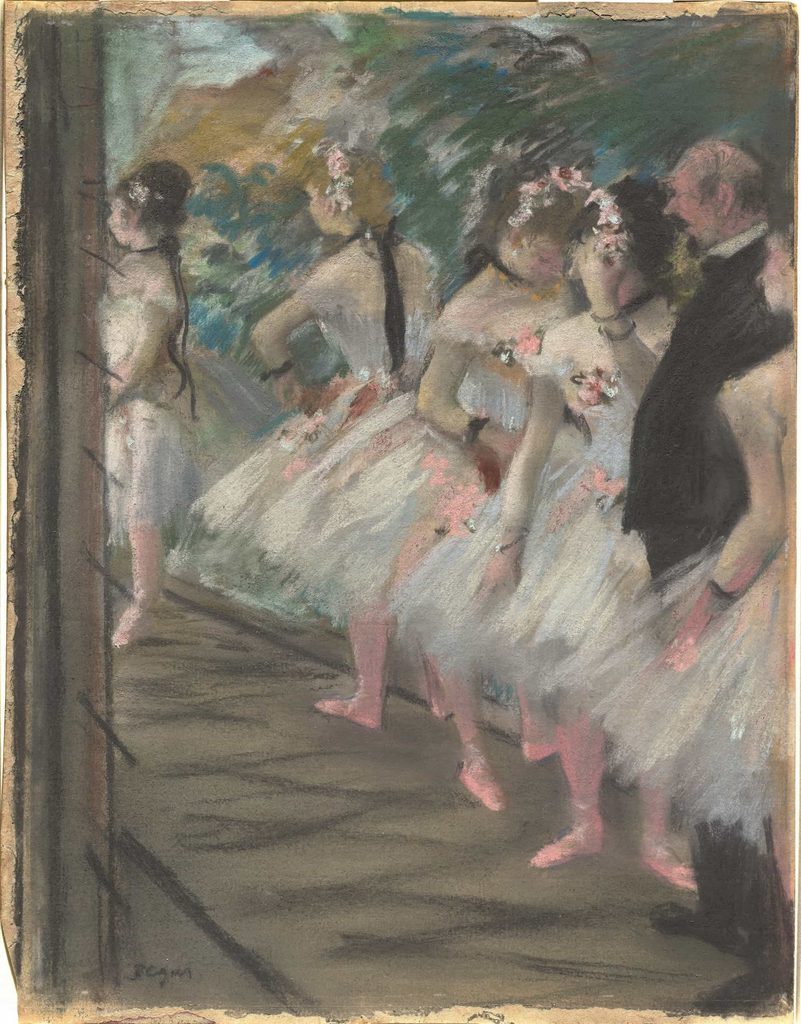
In Dancers Backstage, a dark-clothed male figure appears near the women preparing to perform.
His presence changes the scene.
What initially looks like an informal moment among dancers also suggests the unequal relationships surrounding the theatre.
Elsewhere, Degas concentrated on physical exhaustion.
In Three Dancers Resting, the dancers sit and stretch rather than perform.
They are not presented as idealised figures. They are people whose bodies have been subjected to demanding work.
It would be too simple to suggest that every Degas painting was intended as a criticism of the ballet world.
His interest in the dancers was artistic, and his own position as a wealthy male observer deserves consideration.
But his work preserves aspects of their lives that polished images of performance often leave out.
How Degas Changed the Way Movement Was Painted
One of the most distinctive things about Degas’s paintings is how they are composed.
Look at a traditional painting of a stage performance.
The main subject is often placed in the centre, with the surrounding figures arranged to support it.
Degas frequently did the opposite.
He placed dancers at the edges of the picture, cut off parts of their bodies or left large areas of floor visible.
Sometimes the viewer seems to be standing in the wings.
In other works, the scene is observed from an unusually high or low position.
These decisions can make a painting resemble a moment caught by chance.
Photography and Japanese woodblock prints helped introduce new possibilities for cropping and unusual viewpoints, although Degas also drew on much older artistic traditions.
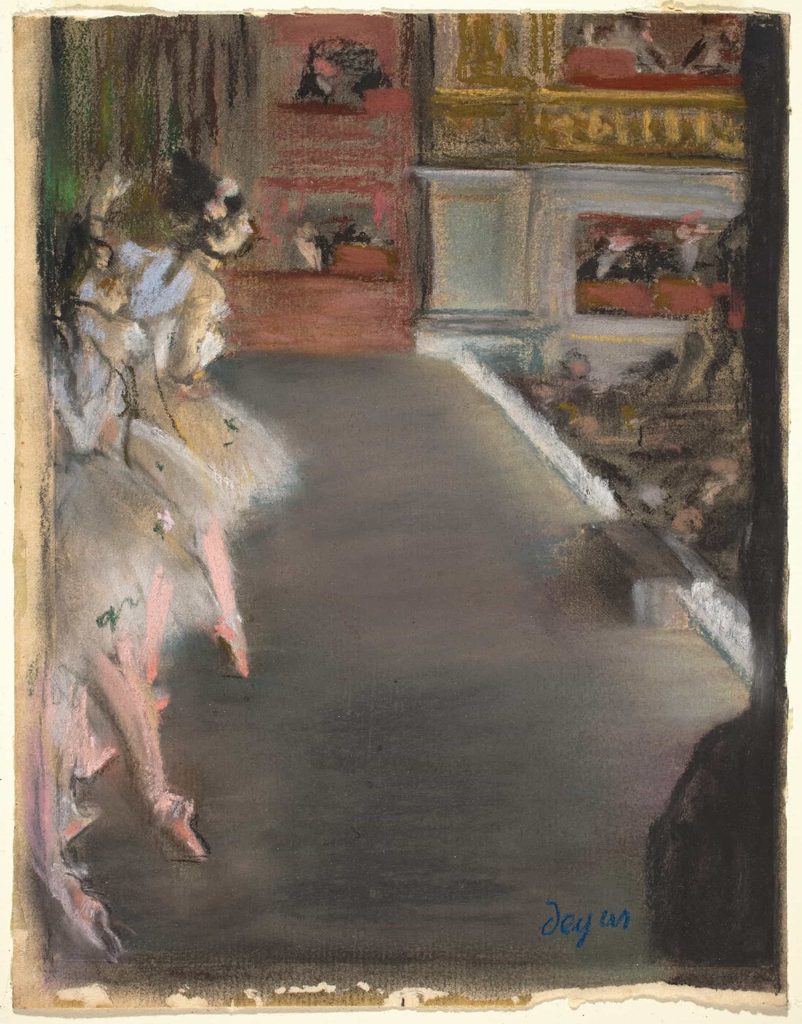
Consider The Ballet.
A line of dancers extends away from the viewer, with the nearest figure partly cut off by the edge of the image.
The effect is not that of a carefully arranged group portrait.
Instead, the viewer feels positioned close to the action.
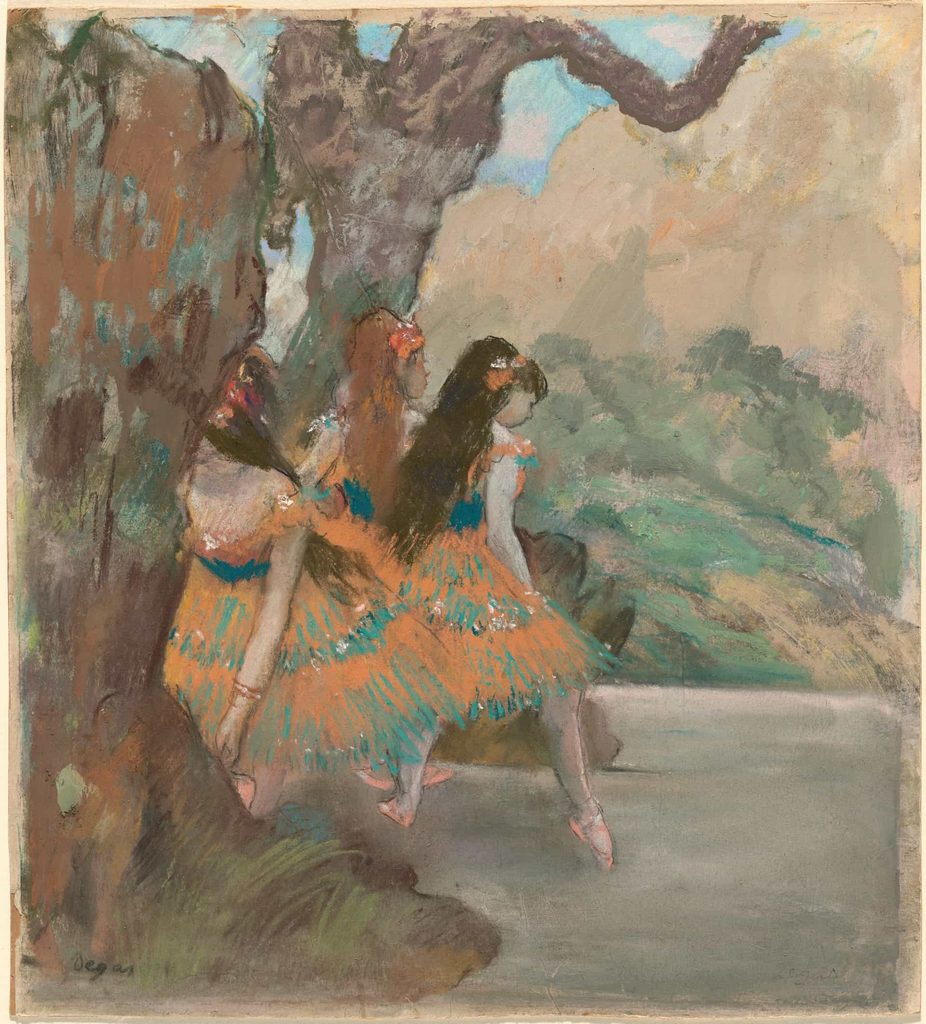
In Ballet Scene, figures stretch and prepare across the composition, creating a rhythm of repeated gestures.
Degas understood that a painting does not have to show a dancer in full movement to suggest motion.
A bent arm, extended foot or shifting balance can imply what happened a moment before and what is about to happen next.
This approach helped make his images feel different from more formal nineteenth-century figure painting.
Why Pastels Became So Important to Degas
Degas worked in oils, but pastel became increasingly important to him during the later nineteenth century.
Pastel combines drawing and colour in a particularly direct way.
The artist works with sticks of dry pigment, often building up the surface through overlapping marks, rubbing, blending and hatching.
Degas used these qualities to describe the movement of fabric, the weight of a body and the changing appearance of artificial light.
Look at The Dancers, a work made with pastel and charcoal.
The figures are defined through overlapping strokes and areas of colour.
Some details are precise. Others remain loose and unresolved.
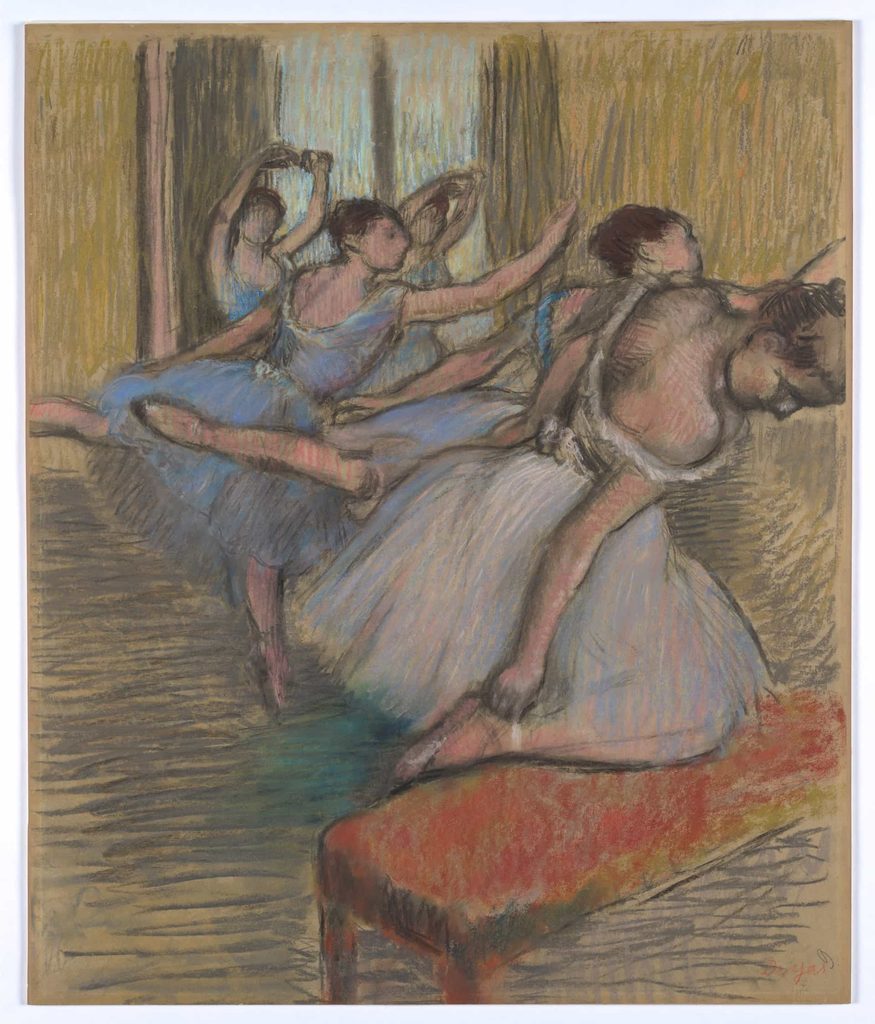
This mixture of control and apparent spontaneity is characteristic of much of his later work.
Degas also experimented with monotype printing.
In this process, an image is made with ink or paint on a smooth surface and transferred onto paper, usually producing a single principal impression.
Degas sometimes worked over these impressions using pastel or other materials.
Ballet Dancers, in the National Gallery of Art, combines gouache and pastel over a monotype.
The printed foundation and added drawing work together to produce an image that feels energetic and immediate.
These experiments reveal an artist who did not regard drawing, painting and printmaking as entirely separate activities.
He moved between techniques, often returning to the same subjects to explore different possibilities.
The Little Dancer Who Shocked Paris
One of Degas’s most remarkable works is not a painting.
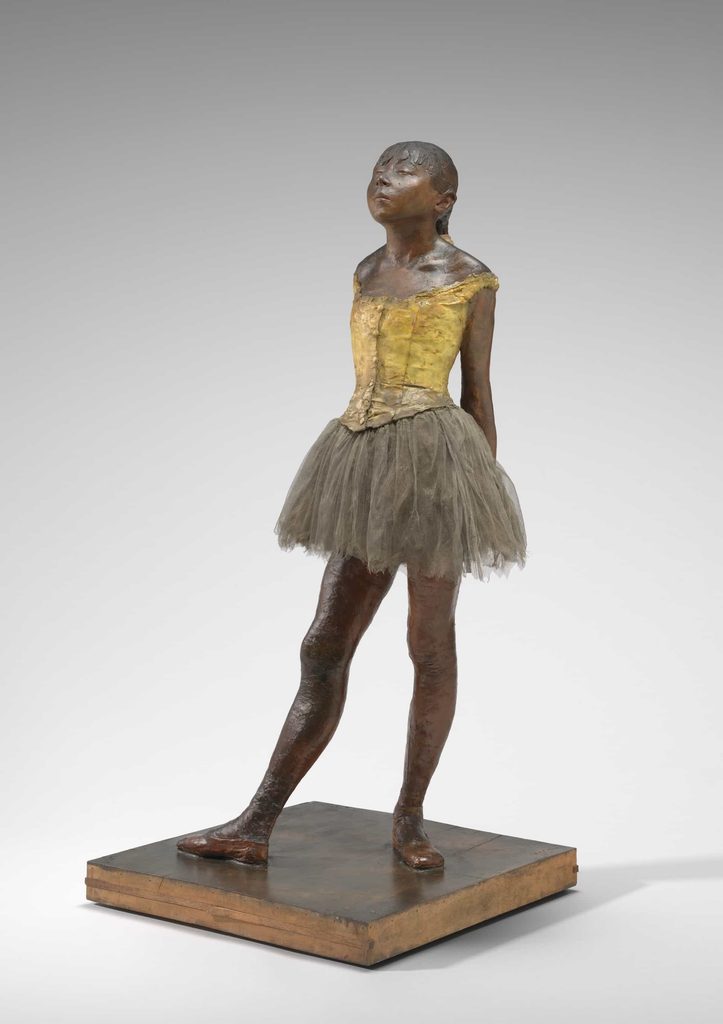
It is a sculpture called Little Dancer Aged Fourteen, made between 1878 and 1881.
The figure depicts Marie van Goethem, a young student at the Paris Opéra.
Degas constructed the sculpture using wax and other materials, adding real hair, a fabric costume and ballet slippers.
When it appeared at the Impressionist exhibition of 1881, it caused considerable controversy.
Some critics disliked its realism and unconventional materials.
The young dancer was not presented as an ideal classical figure.
Her posture suggests the discipline of ballet training, but also something of the physical strain involved.
She stands with her head raised and her hands clasped behind her back.
The effect is both proud and vulnerable.
The original wax sculpture is now held by the National Gallery of Art in Washington.
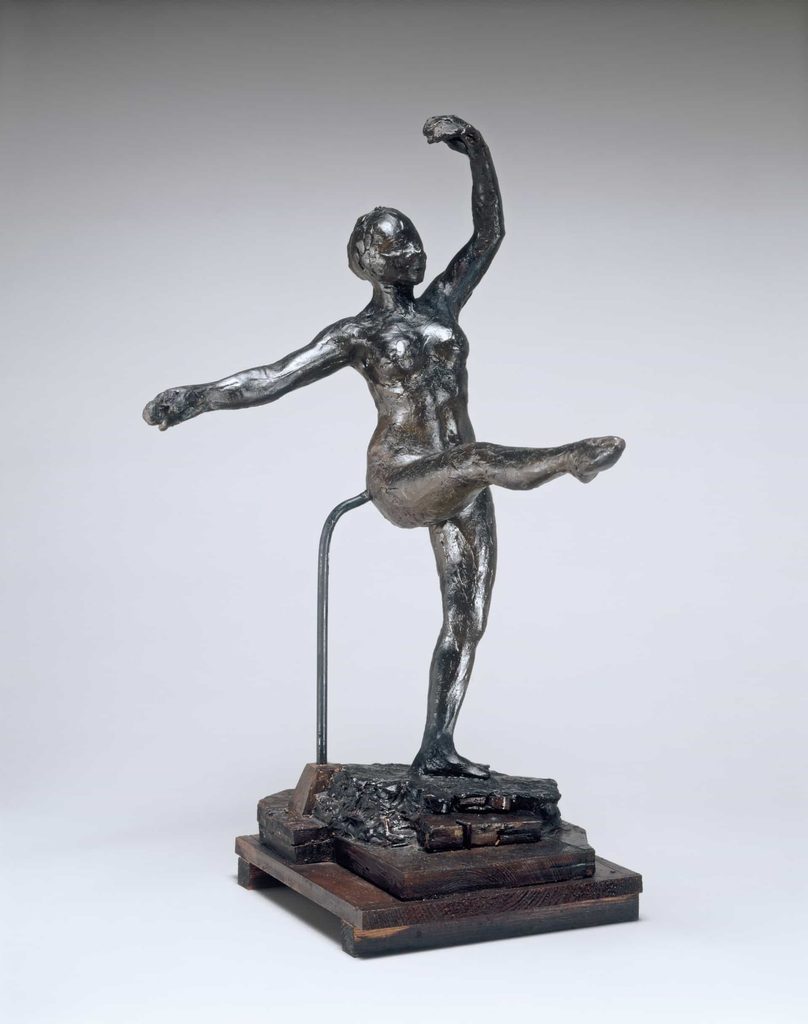
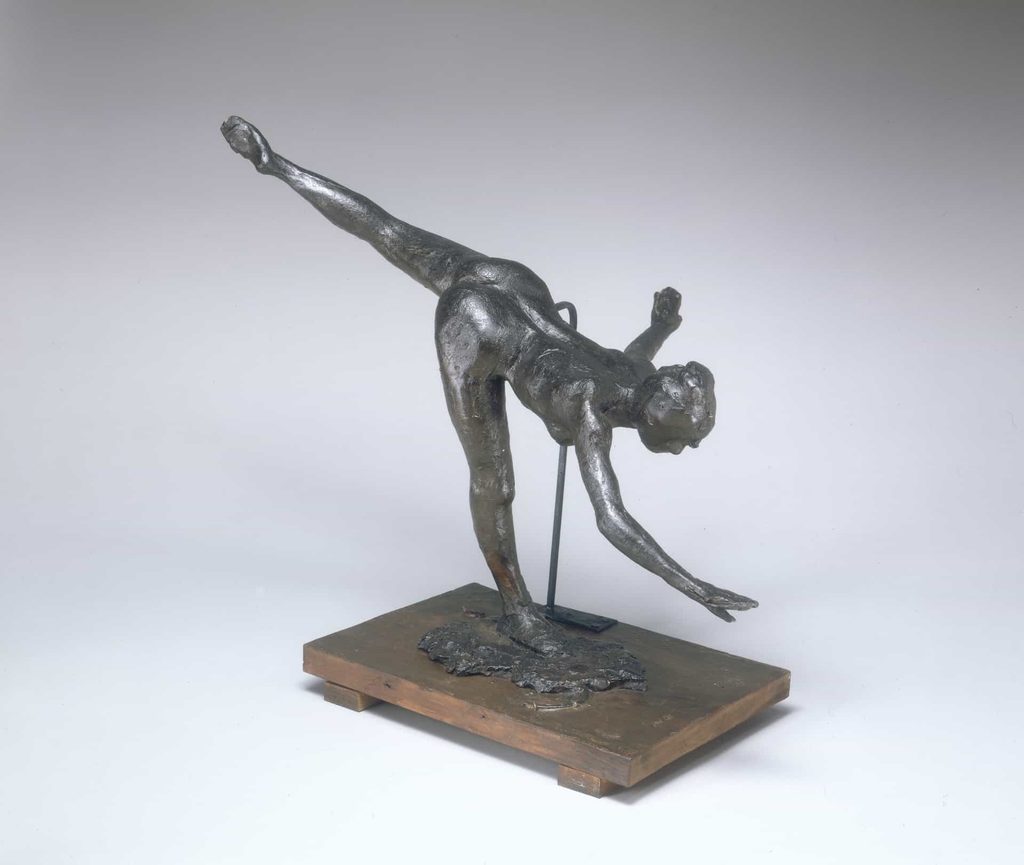
After Degas died, many of his sculptures were reproduced in bronze, which explains why bronze versions can be seen in several collections.
The original Little Dancer remains particularly important because of its unusual combination of sculpture and real materials.
It also brings us back to the young people behind Degas’s ballet pictures.
Marie van Goethem was not simply an invented symbol of elegance. She was a working-class girl whose appearance and circumstances became part of a major work of art.
Why Degas Still Matters to Artists Today
More than a century after his death, Degas’s work remains relevant because of how he chose to look at familiar subjects.
He did not need to invent an extraordinary scene.
Instead, he returned repeatedly to the same environments, gestures and movements.
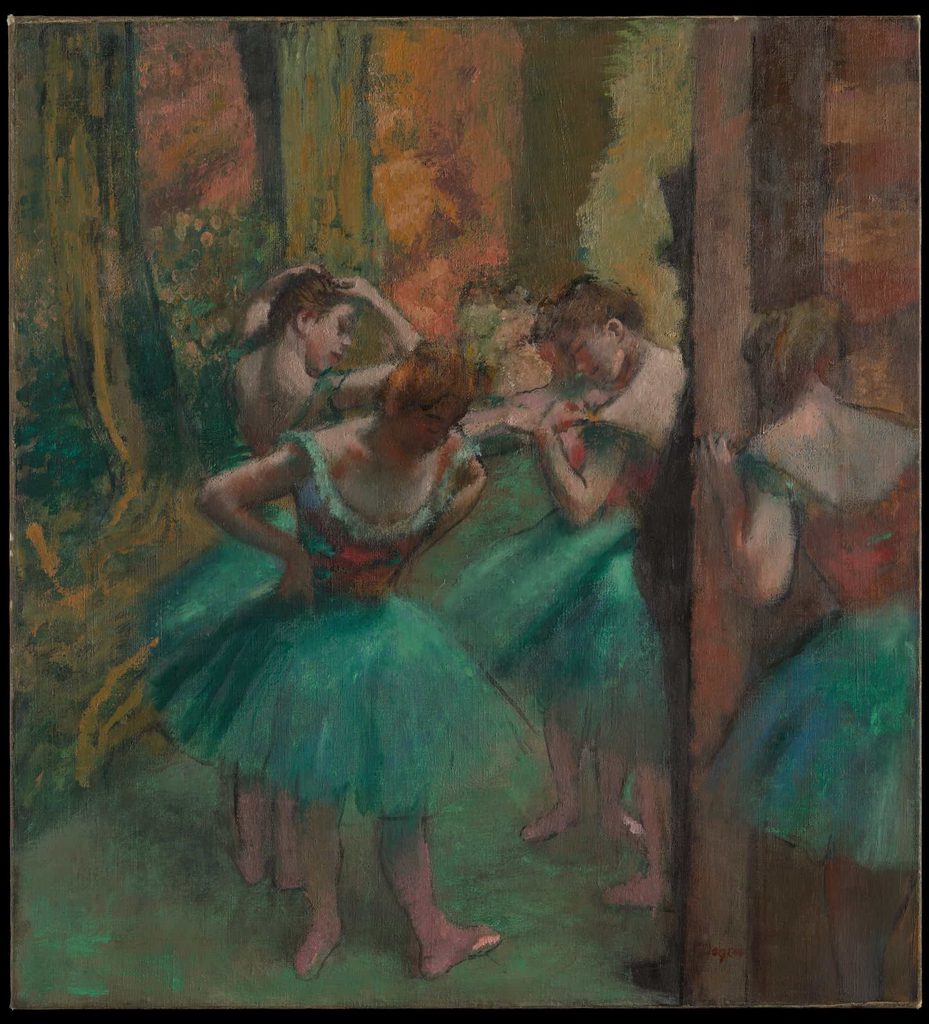
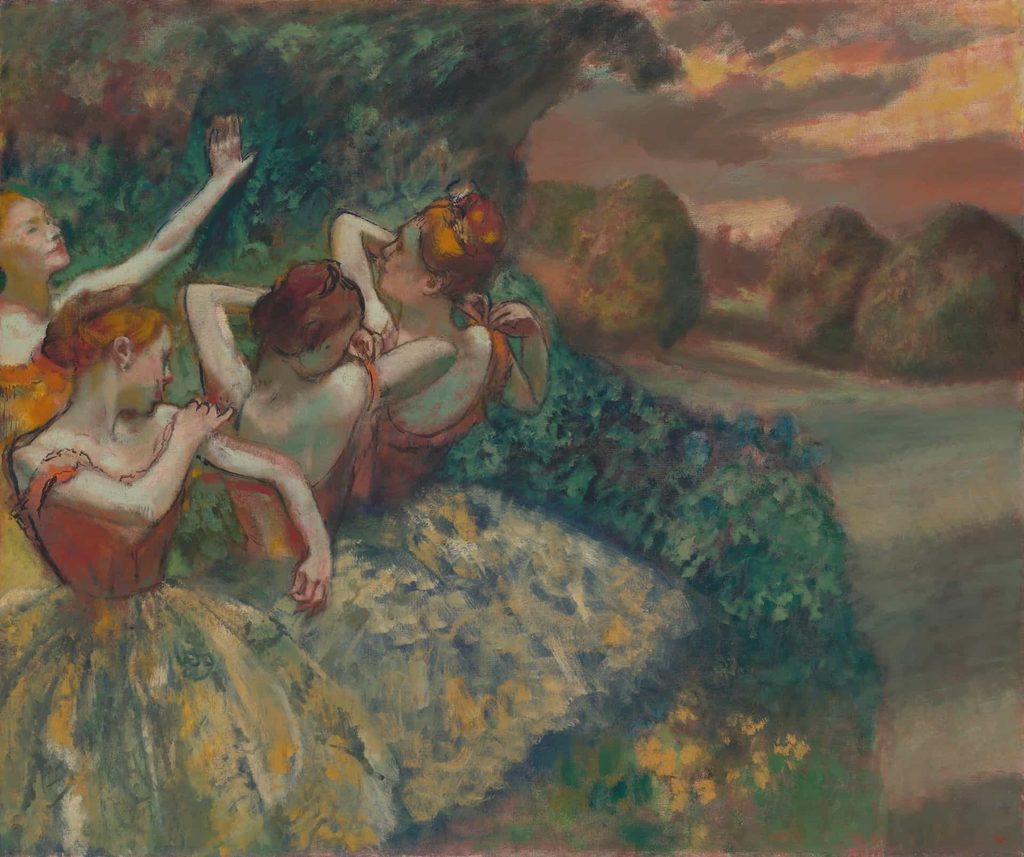
A dancer adjusting a ribbon could become a study of shape and colour.
A rehearsal room could become an experiment in perspective.
A figure bending forward could reveal the balance and structure of the human body.
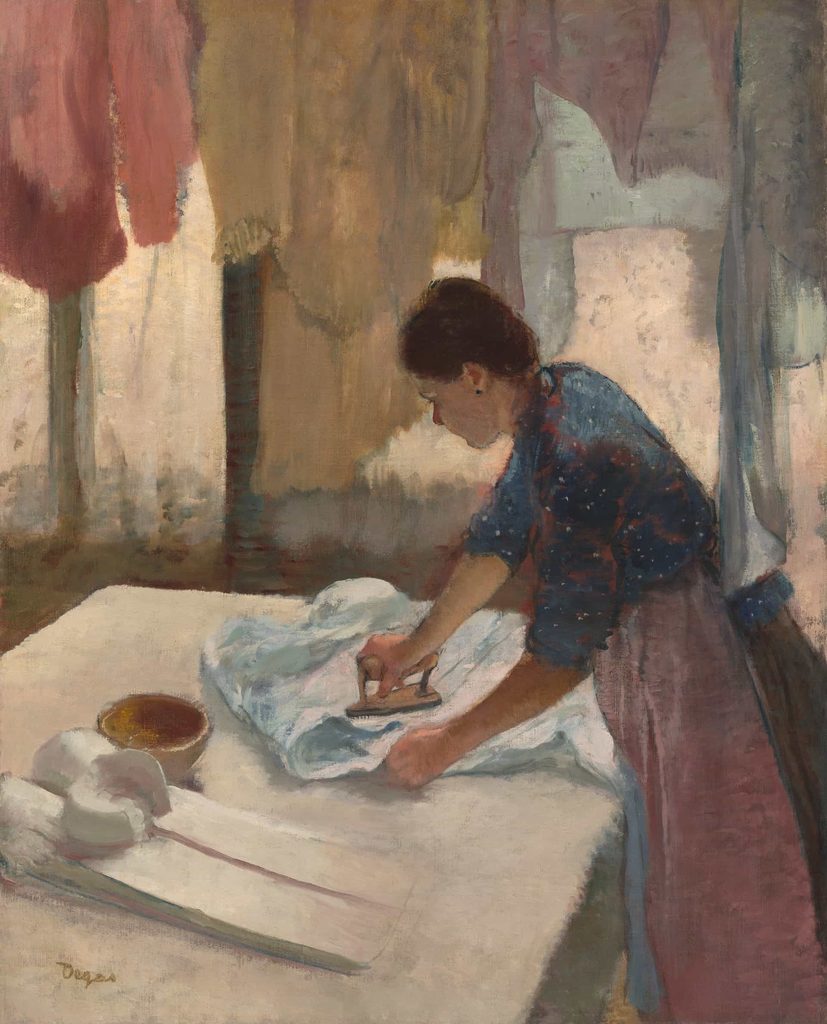
His drawings also show how much preparation could lie behind an apparently spontaneous image.
Positions were studied, repeated and altered.
Compositions changed.
Materials were tested.
This is an important part of Degas’s work that can be overlooked when his ballet paintings are treated simply as decorative images.
He was not merely recording what he saw.
He was deciding how much of a scene to show, where to position the viewer and which small movement deserved attention.
That is a useful lesson for anyone interested in painting, drawing or looking at art.
A familiar subject is not necessarily an exhausted subject.
Sometimes the difference lies entirely in how carefully the artist observes it.
Frequently Asked Questions About Edgar Degas
Why is Edgar Degas famous?
Degas is best known for his paintings, pastels and sculptures depicting ballet dancers, as well as his innovative compositions and studies of movement. He was also an important figure in the Impressionist exhibitions.
Was Edgar Degas an Impressionist?
Yes, Degas is closely associated with Impressionism and participated in six Impressionist exhibitions. However, he preferred a more drawing-based and carefully constructed approach than many of his contemporaries and identified more closely with realism.
What is Edgar Degas’s most famous painting?
The Dance Class of 1874, held by the Metropolitan Museum of Art, is among his most recognisable paintings. Other famous works include The Ballet Class, The Star and Dancers, Pink and Green. His sculpture Little Dancer Aged Fourteen is also widely recognised.
Why did Degas paint dancers so often?
Ballet provided opportunities to study posture, movement, balance and the human body. Degas was especially interested in rehearsals and informal moments rather than concentrating solely on finished performances.
What materials did Edgar Degas use?
He worked with oil paint, pastel, charcoal, graphite, printmaking techniques, wax and other sculptural materials. His experiments with pastel and monotype became particularly important in his later career.
Looking Beyond the Ballet
The next time you see a painting by Degas, look past the tutu.
Notice the dancer waiting in the corner.
Look at the position of her hands, the angle of her shoulders or the way the artist has cut off part of the scene.
Then look at the marks themselves.
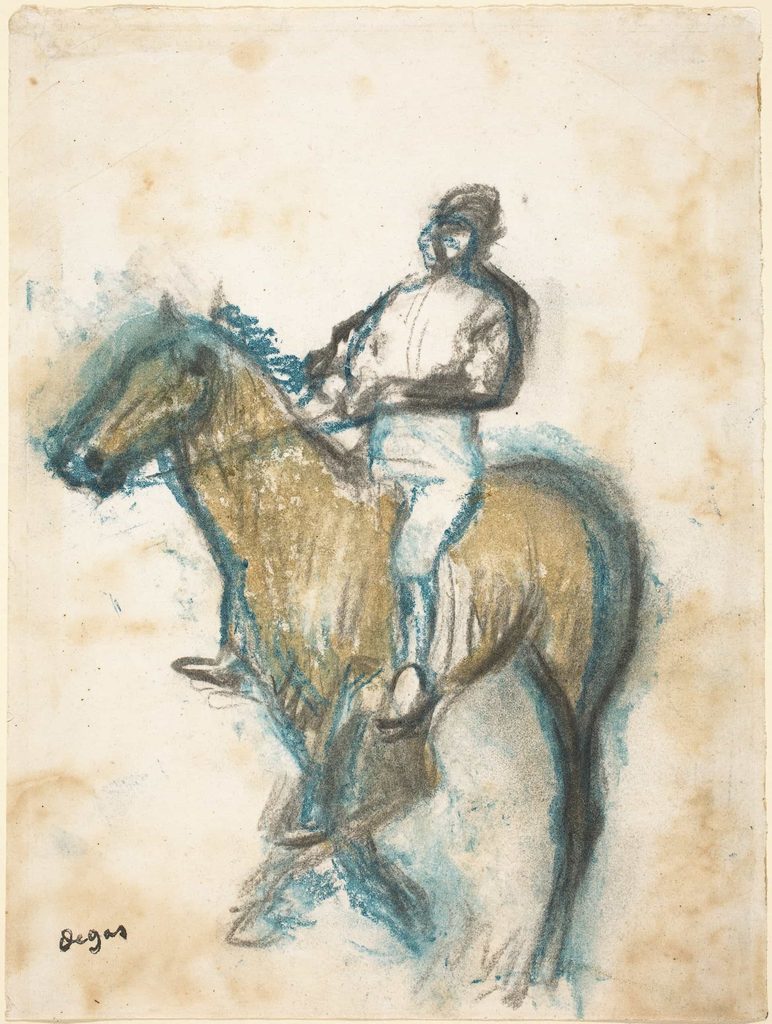
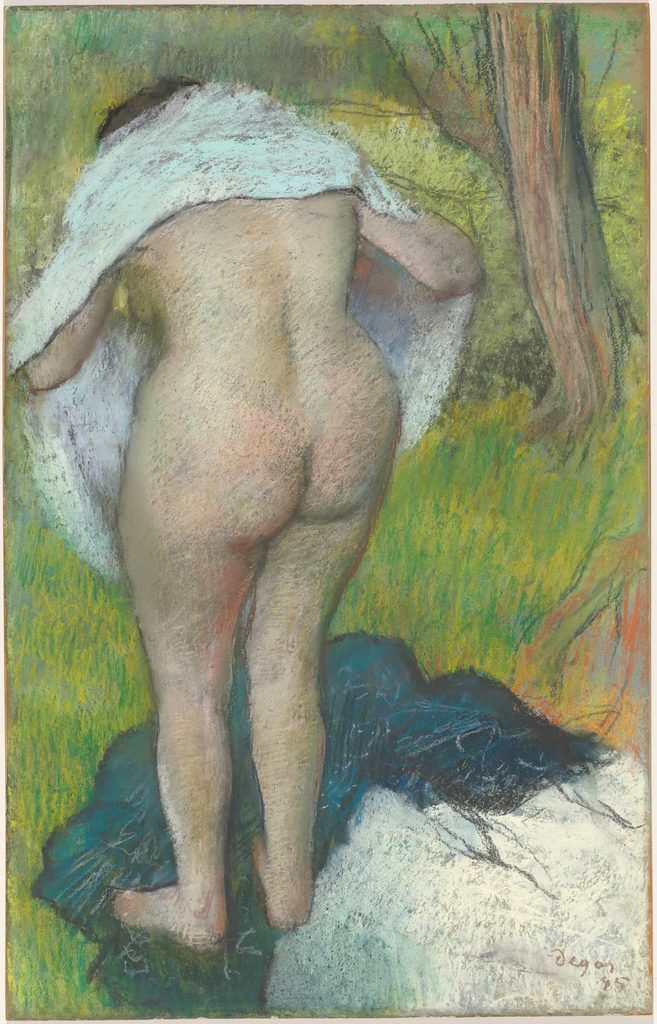
A few lines of charcoal can suggest an entire movement. A patch of pastel can describe fabric, light and the changing position of a body.
Degas spent much of his career returning to these small observations.
He understood that the moments between performances could be as visually interesting as the performance itself.
That is why his dancers continue to hold our attention.
Not because they are always graceful, but because they seem unmistakably human.
Leave a Reply