
No products in the cart.
How Artists Turn Everyday Materials Into Meaningful Art
Artists have always worked with more than paint, canvas, marble and bronze. A chair, a bed sheet, a broken tool, a bottle top, a newspaper cutting, a piece of fabric or a cardboard box can all become part of an artwork. The material may look ordinary at first, but in the hands of an artist it can begin to carry memory, humour, politics, place, labour, loss or beauty.
That is the power of everyday materials in art. They bring the world into the artwork. They remind us that art does not always begin in a specialist shop or studio. Sometimes it begins with something found, saved, used, discarded or overlooked.
This guide looks at how artists turn ordinary materials into meaningful art. It explains found objects, readymades, assemblage, collage, mixed media and installation in a clear way. It also looks at famous artworks made from everyday materials, what those materials mean, where you can see examples, and how artists can use similar thinking in their own practice.
What are everyday materials in art?
Everyday materials are objects or substances that were not originally made as fine art materials. They may come from the home, street, workplace, shop, garden, kitchen, studio floor, recycling bin or local landscape.
They can include:
- Newspapers
- Cardboard
- Fabric
- Clothing
- Bottle tops
- String
- Wood
- Plastic
- Metal
- Furniture
- Household tools
- Food packaging
- Ceramic fragments
- Photographs
- Tickets
- Receipts
- Maps
- Books
- Toys
- Hair
- Soap
- Rope
- Broken objects
- Natural materials such as stones, leaves, soil or twigs
These materials are often described as found objects, found materials or readymade objects. In collage and assemblage, artists bring different pieces together to make a new image or structure. In installation art, everyday materials may fill a whole room or change how the viewer moves through a space.
The key point is this: the material is not neutral. A newspaper has public history. A shirt has traces of the body. A chair suggests sitting, waiting, labour or domestic life. A bottle top may speak about trade, waste, celebration or consumption. A cardboard box can suggest delivery, storage, moving home or temporary shelter.
Artists use everyday materials because they already carry associations. The artwork begins before the artist touches them.
Why do artists use everyday materials?
Artists use everyday materials for many reasons. Sometimes they want to challenge what counts as art. Sometimes they want to bring daily life into the gallery. Sometimes they are working with memory, poverty, protest, humour or care. Sometimes the material simply has the right texture, colour, weight or history.
The reasons often overlap.
An artist might use old clothing because it holds the shape of the body.
They might use newspapers because they contain fragments of public life.
They might use bottle tops because they point to trade, waste and collective labour.
They might use a bed because it speaks about privacy, illness, sleep or intimacy.
They might use a chair because it carries the memory of a person who is absent.
They might use cardboard because it is cheap, temporary, practical and easy to reshape.
These choices matter. A painted picture of a chair and a real chair placed in a gallery do not feel the same. The real chair brings its use with it. It has height, weight, scale and a relationship to the viewer’s body. It may look familiar, but that familiarity can become strange once the object is removed from its normal setting.
Everyday materials also challenge the old idea that art must be made from expensive or noble materials. They allow artists to say that meaning is not only found in rare things. It can be found in the ordinary objects that surround us.
Found objects, readymades and assemblage
Several art terms are useful here.
A found object is an object found or selected by an artist and used in an artwork. It may be shown almost unchanged, or it may be altered, combined, painted, cut, suspended or placed in a new setting.
A readymade is an ordinary manufactured object chosen by an artist and presented as art. Marcel Duchamp made the readymade famous in the early twentieth century. The artist’s choice became part of the work.
Assemblage is art made by assembling different objects or materials together. It is like collage in three dimensions, although assemblage can also include flat elements.
Collage usually involves cutting and pasting paper, photographs, fabric, printed material or other flat fragments onto a surface.
Mixed media means the artist has used more than one material or technique. A mixed media work might include paint, paper, thread, wood, print, ink and found objects.
Installation art often uses objects, materials, sound, light or space to create an environment that the viewer enters or moves around.
These terms are helpful, but they are not strict boxes. Many artists move between them.
How does an ordinary object become art?
An ordinary object becomes art through selection, context, placement and thought.
Selection matters because the artist chooses one object rather than another. That choice directs our attention.
Context matters because an object changes when it moves from a kitchen, street, bedroom or shed into a gallery.
Placement matters because the artist decides how the object is seen. It might be placed on the floor, hung on a wall, suspended in the air, repeated many times, hidden, lit, wrapped or broken apart.
Thought matters because the object is not only there as itself. It is there to raise questions.
A bottle top in the street is litter.
Thousands of bottle tops joined together can become a sculpture about trade, colour, labour and history.
A bed at home is furniture.
A bed hung on a wall, painted and shown in a museum becomes a question about the line between painting, object and private life.
A piece of newspaper on the pavement is rubbish.
A newspaper fragment in a collage can become evidence of time, place, politics or urban life.
The artist does not erase the object’s earlier meaning. They make that meaning visible in a new way.
1. Pablo Picasso: chair caning, rope and the birth of collage
One of the most important early examples of everyday materials in modern art is Pablo Picasso’s Still Life with Chair Caning, made in 1912.
At first, the work looks like a small Cubist still life. Then you notice something unusual. Picasso used printed oilcloth that imitates chair caning, and he framed the oval canvas with rope. These were not traditional fine art materials. They belonged to cafes, furniture, tabletops and daily life.
This was a turning point. Picasso did not only paint the appearance of an object. He brought the material world directly into the artwork. The rope is not an illusion of rope. It is rope. The chair caning is not painted chair caning. It is printed material that already carried the look of chair caning before Picasso used it.
That changes the way the viewer looks. The work asks where painting ends and object begins. It also introduces a kind of visual wit. The viewer is asked to look, read, guess and connect fragments.
Why it matters: Picasso helped make collage one of the central languages of modern art. He showed that everyday materials could sit beside painted marks and still belong to serious art.
Material used: oilcloth, rope, painted canvas and pasted paper.
What to notice: the edge of the work, the rope frame, the printed chair caning and the way real material and painted illusion sit together.
Where to see it: Musée Picasso, Paris.
2. Marcel Duchamp: the readymade and the question of choice
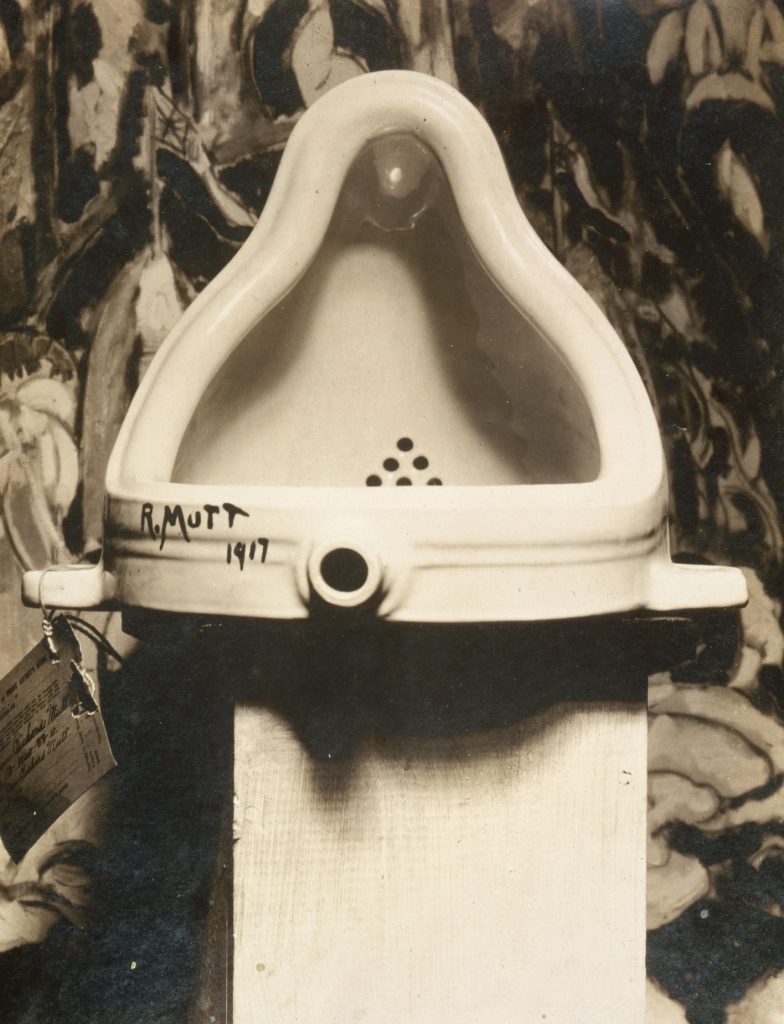
Marcel Duchamp changed the meaning of everyday materials by doing something very simple and very difficult: he selected ordinary manufactured objects and presented them as art.
His readymades included a bicycle wheel, a bottle rack, a snow shovel and, most famously, Fountain, a porcelain urinal signed with the name R. Mutt. The original Fountain from 1917 is lost, but later authorised versions exist in museum collections.
Duchamp’s point was not that the object was beautiful in a traditional way. His work asked a sharper question: if an artist chooses an object, gives it a title and places it in an art context, can that choice be part of the artwork?
This idea still shapes contemporary art. It shifted attention from craft alone to decision, context and thought. It also made viewers argue, which is part of why Duchamp remains so important.
Some people still respond to readymades by saying, “Anyone could do that.” But that misses the point. Duchamp’s work is not about technical difficulty. It is about changing the rules of looking. Once an everyday object enters the gallery, it stops being only useful. It becomes something to think with.
Why it matters: Duchamp opened the door for conceptual art, installation, found object sculpture and many later forms of contemporary art.
Material used: manufactured objects.
What to notice: the title, the placement, the loss of practical function and the way the object becomes both familiar and strange.
Where to see it: authorised versions of Fountain are held by several museums, including SFMOMA. MoMA has important Duchamp readymades, including Bicycle Wheel in its collection.
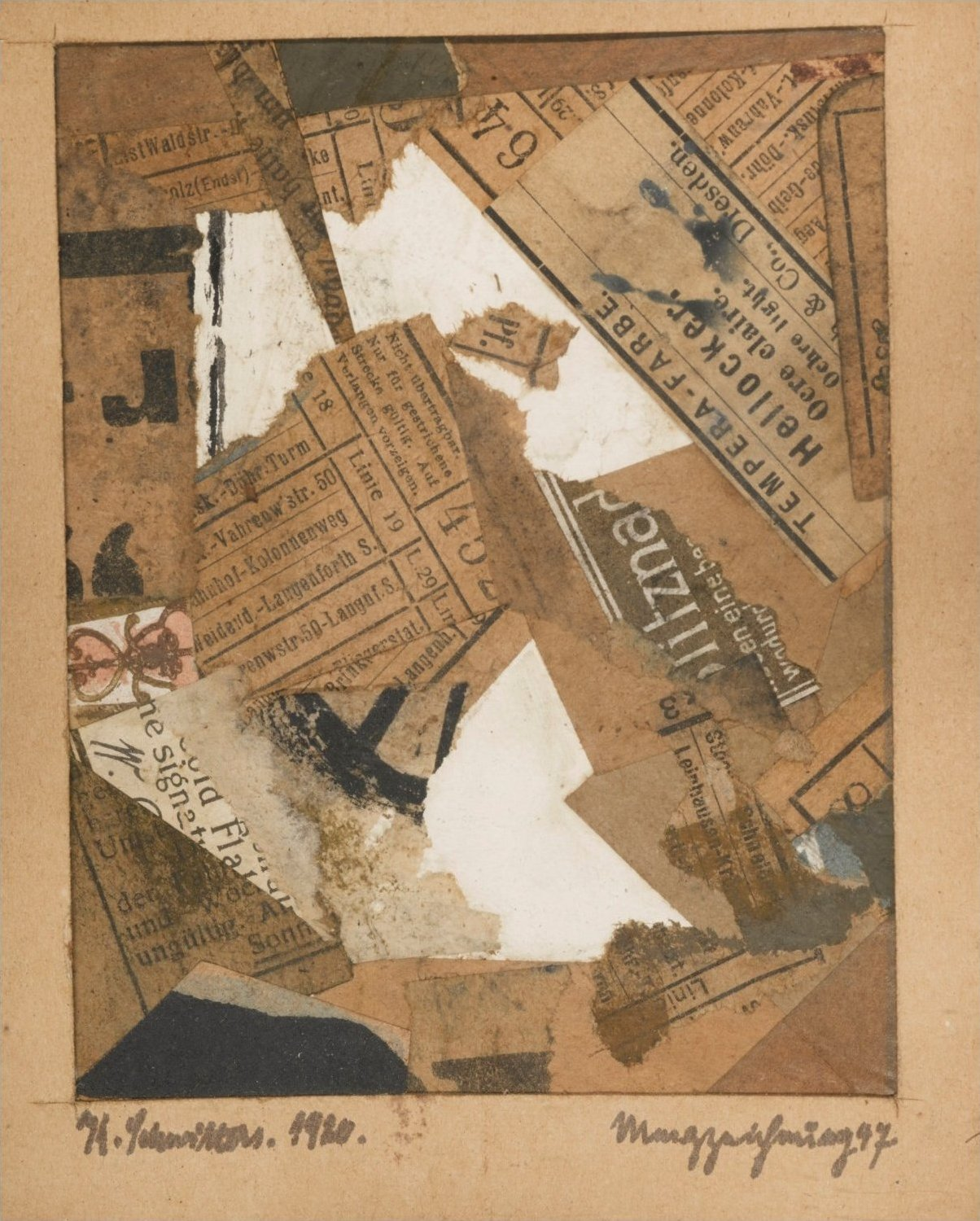
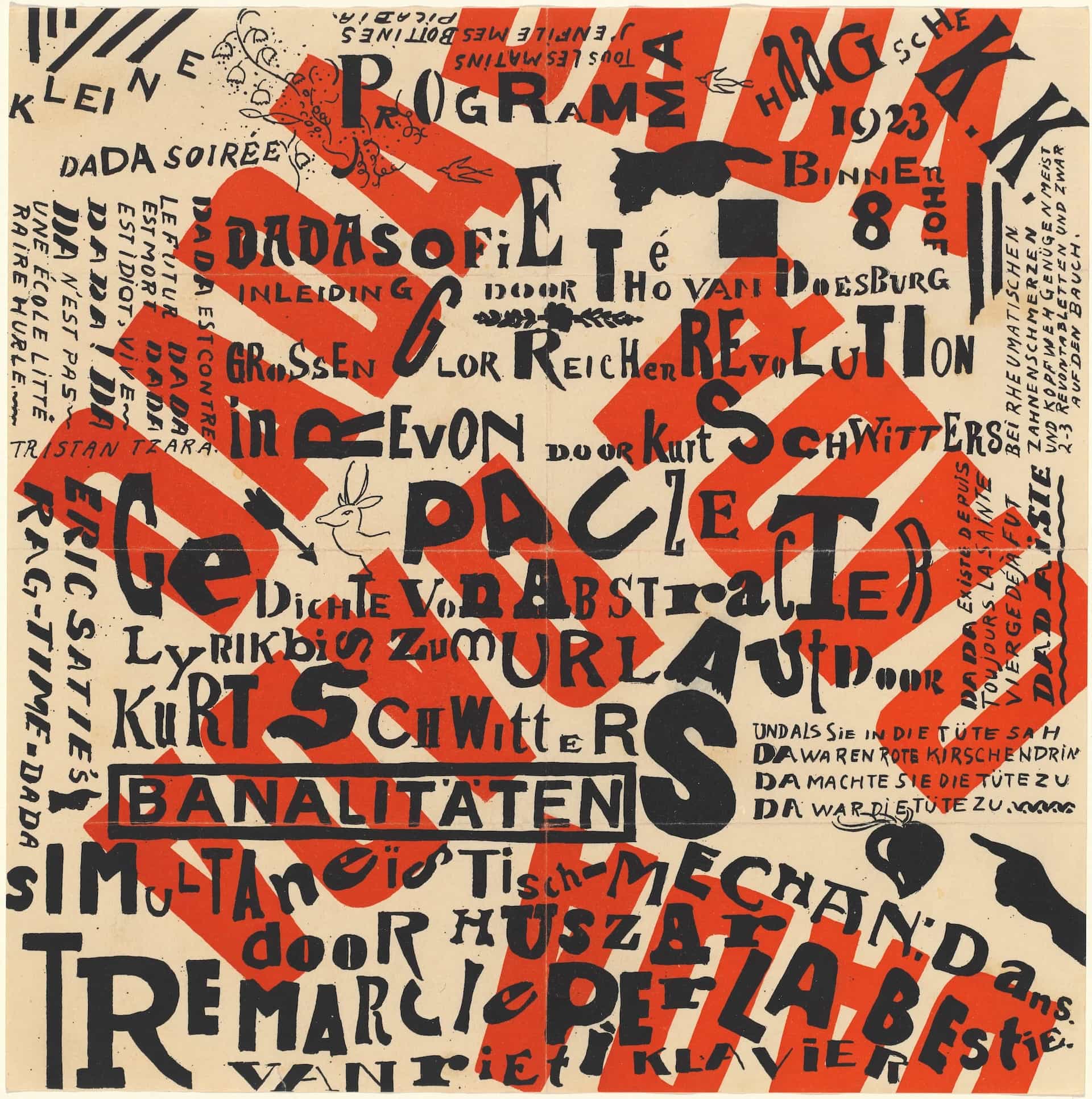
3. Kurt Schwitters: scraps, street fragments and Merz
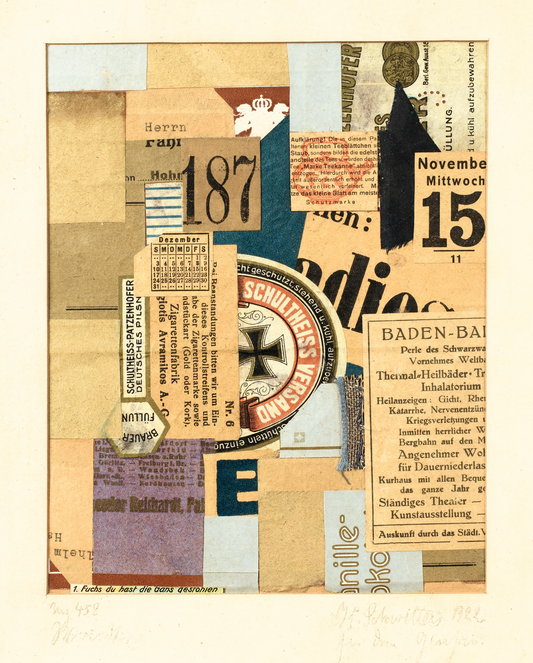
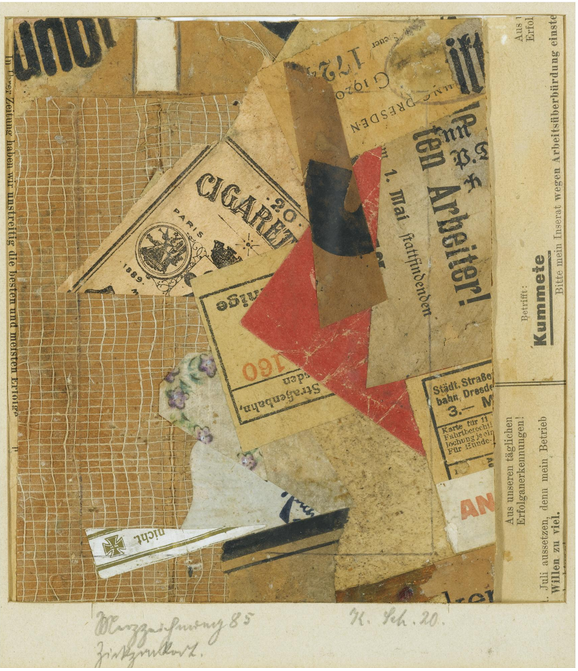
Kurt Schwitters used scraps from everyday life to create collages and assemblages that he called Merz. The word came from a fragment of printed text and became his name for a whole way of working.
Schwitters collected tickets, paper, cardboard, labels, bits of wood, string and other small discarded materials. These fragments came from the street and from daily life. In his hands, they became carefully composed works of art.
His Merz pictures are important because they treat scraps as serious material. A torn ticket, a stained paper edge or a printed letter can become as important as a brushstroke. The work is abstract, but it still carries traces of ordinary life.
Schwitters lived through war, political upheaval and exile. His use of fragments can be read formally, as a way of building abstract composition, but it also feels connected to broken modern life. The materials are damaged, partial and reassembled.
Why it matters: Schwitters showed that rubbish, paper and street fragments could become a new visual language. His work influenced collage, assemblage, installation and later artists who used found materials.
Material used: paper scraps, tickets, labels, cardboard, wood, string and found fragments.
What to notice: the balance between accident and control. The materials may be found, but the composition is carefully made.
Where to see it: MoMA holds Merz Picture 32 A, The Cherry Picture. Tate and other major museums also hold works by Schwitters.
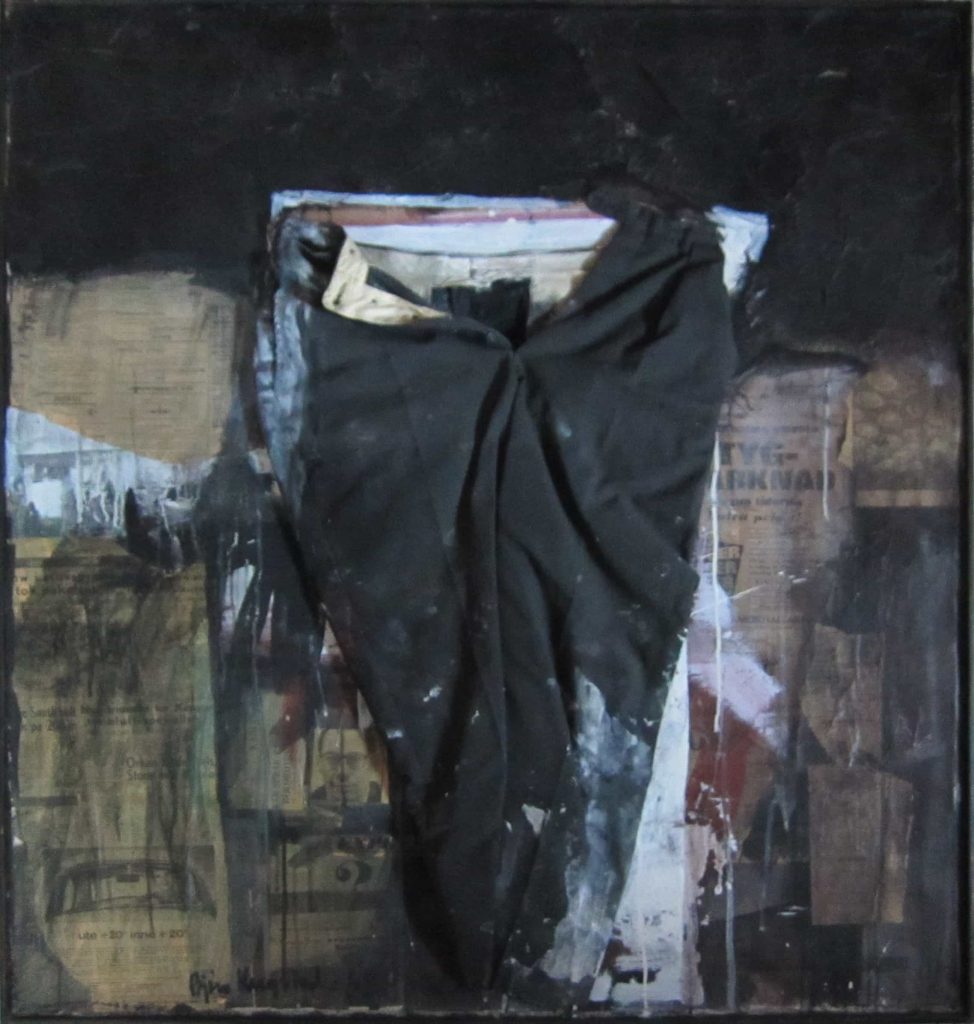
4. Robert Rauschenberg: bedding, paint and the combine
Robert Rauschenberg blurred the line between painting and object. He called some of his works Combines because they combined painting, sculpture and found materials.
His 1955 work Bed is one of the clearest examples. Rauschenberg used a real pillow, sheet and quilt, then added paint and pencil. The bed is hung vertically on the wall like a painting, but it still looks like a bed.
That simple shift creates tension. A bed is private. It suggests sleep, illness, sex, dreaming, tiredness and domestic life. On the wall of a museum, it becomes public. The viewer is placed in an odd position, looking at something that feels intimate but has been turned into art.
The paint also matters. It connects the work to Abstract Expressionism, especially the gestural painting of the 1950s. But the quilt and pillow resist becoming pure painting. They keep pulling the artwork back towards the body and the home.
Why it matters: Rauschenberg made everyday materials equal to paint. He showed that modern art could include the real stuff of life without losing complexity.
Material used: pillow, sheet, quilt, paint, pencil and support.
What to notice: the vertical hanging, the relationship between bed and canvas, and the clash between private object and public artwork.
Where to see it: Museum of Modern Art, New York.
5. Joseph Beuys: fat, felt and symbolic material
Joseph Beuys used materials such as fat, felt, copper, honey and wood to create objects and actions loaded with symbolic meaning. His work can be difficult, partly because the materials are simple but the ideas around them are dense.
In Fat Chair, Beuys placed fat on a wooden chair. The title is direct, almost blunt. The work is not trying to hide what it is made from. A chair is one of the most familiar objects in daily life. Fat is bodily, unstable and organic. It can melt, change and decay.
Beuys often linked materials to energy, warmth, healing and transformation. Whether viewers accept his personal mythology or not, the material force of the work remains. Fat and felt are not elegant materials in the traditional sense. They are physical, awkward and hard to ignore.
Why it matters: Beuys showed that material could work almost like a symbolic language. Everyday and bodily substances could speak about care, survival, energy and vulnerability.
Material used: chair, fat, felt and other organic or industrial materials across his practice.
What to notice: the contrast between the hard chair and soft fat, the instability of the material and the way the work resists easy beauty.
Where to see it: Tate has Fat Chair in its collection, though display status may change.
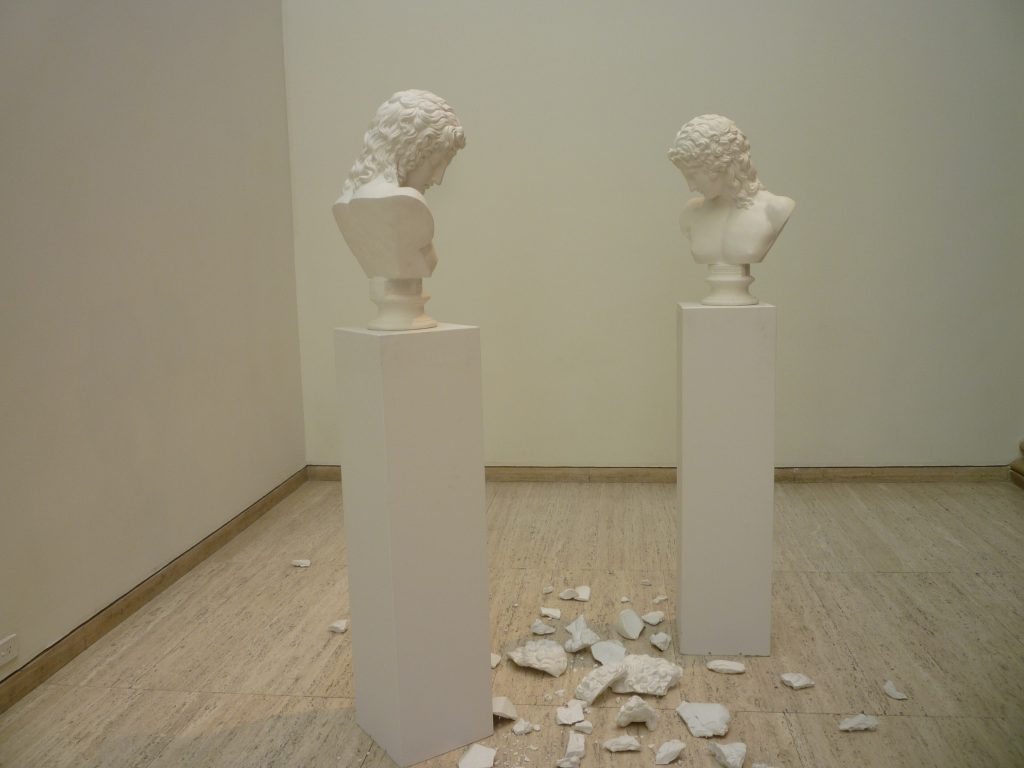
6. Arte Povera: poor materials with serious force
Arte Povera was an Italian art movement that emerged in the 1960s. The name means “poor art”, but the work is not poor in thought. Artists associated with Arte Povera used materials such as soil, rags, twigs, stone, cloth, metal, wax, rope, glass and industrial fragments.
The movement challenged polished commercial art objects. It brought raw, temporary and humble materials into the gallery. Many Arte Povera works ask viewers to think about nature, industry, time, energy and value.
Artists such as Michelangelo Pistoletto, Jannis Kounellis, Mario Merz, Alighiero Boetti and Giovanni Anselmo used materials in ways that made process visible. A work might change, decay, lean, burn, stretch or suggest balance. The materials were not passive. They were active parts of the meaning.
For artists today, Arte Povera remains useful because it shows how simple materials can carry large ideas. Soil can speak about land. Rags can speak about labour. Glass can speak about fragility. Rope can speak about tension and support.
Why it matters: Arte Povera challenged the value system of the art market and made raw materials central to contemporary art.
Material used: soil, rags, stone, twigs, rope, wax, metal, glass and industrial materials.
What to notice: the physical presence of materials, the sense of process and the refusal of polished finish.
Where to see it: Tate, Castello di Rivoli in Turin and major European collections hold important Arte Povera works.
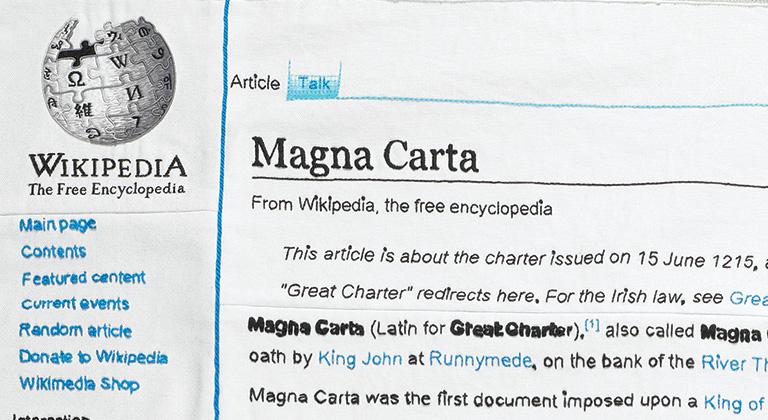
To celebrate the 800th anniversary of Magna Carta, Parker created Magna Carta (An Embroidery), a hand-embroidered representation of the Wikipedia
7. Cornelia Parker: destruction, suspension and the life of objects
Cornelia Parker often works with ordinary things that have been crushed, exploded, stretched, burned, flattened or suspended. Her materials are familiar, but she changes their state.
Cold Dark Matter: An Exploded View is one of her best known works. Parker arranged for a garden shed and its contents to be blown up by the British Army. She then suspended the fragments around a light source, freezing the explosion in space.
The work is powerful because the shed is such an ordinary structure. It belongs to gardens, tools, storage and private habits. Once exploded and suspended, its broken pieces become almost cosmic. A domestic object becomes a field of fragments and shadows.
Parker’s Thirty Pieces of Silver used flattened silver objects such as teapots, candlesticks and tableware. Again, the objects carry domestic and cultural memory. By crushing and suspending them, Parker changes their function while keeping their history visible.
Why it matters: Parker shows that everyday materials can hold violence, memory, humour and beauty at the same time. She often makes objects speak by putting them under pressure.
Material used: shed fragments, silverware, household objects, wire, light and suspension.
What to notice: shadows, spacing, damage, stillness and the difference between object and trace.
Where to see it: Tate holds Cold Dark Matter: An Exploded View in its collection, though it may not always be on display.
8. El Anatsui: bottle tops, labour and global history
El Anatsui is known for large hanging sculptures made from thousands of discarded metal bottle tops and fragments. From a distance, they can look like rich textiles, curtains or abstract paintings. Up close, the viewer sees flattened, folded and joined pieces of metal.
The material is crucial. Bottle tops are connected to drinking, trade, waste, manufacture and social life. Anatsui links them to histories of exchange, including colonial trade and the movement of goods and people. The work is beautiful, but the beauty does not erase the material’s past.
His sculptures are often flexible. They can be hung in different ways depending on the space. This means the work is not fixed forever. It changes through installation, light and architecture.
The labour is also visible. Thousands of small parts are joined by hand with wire. A single discarded object becomes part of something much larger. This gives the work a collective feeling, as if many small histories have been gathered into one surface.
Why it matters: Anatsui turns discarded metal into work that sits between sculpture, textile, painting and installation. He shows how waste material can carry global history.
Material used: aluminium bottle tops, metal fragments and copper wire.
What to notice: the shift between distance and detail, the textile like surface, the fragments of printed branding and the way the work hangs.
Where to see it: The British Museum has Man’s Cloth in its collection, though it is not always on display. The Met holds works by El Anatsui, including Dusasa II and Between Earth and Heaven.
9. Song Dong: household objects and family memory
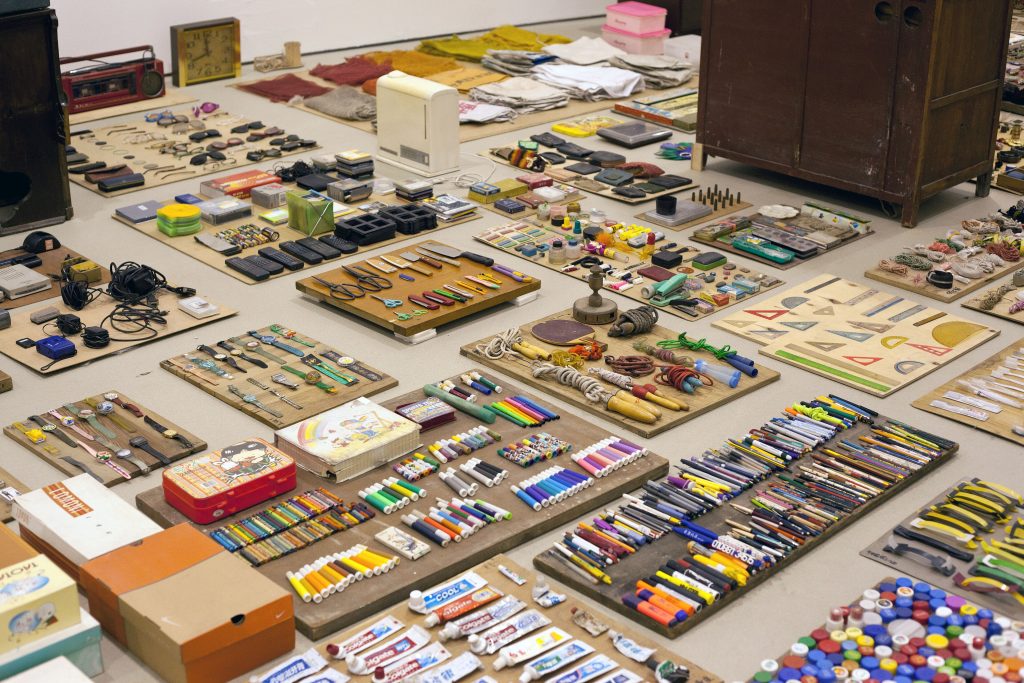
Song Dong’s Waste Not is an installation made from more than 10,000 household objects collected by his mother, Zhao Xiangyuan. These include furniture, kitchen items, bottles, fabric, shoes, toothpaste tubes, bags, books and many other ordinary things.
The work comes from a very specific family history. Song Dong’s mother lived through periods of hardship in China and saved objects because they might become useful later. After his father’s death, this habit became more intense. The installation turns one person’s accumulated domestic life into a public artwork.
Waste Not is moving because the objects are not glamorous. They are practical things, kept, sorted and saved. Together they become a portrait of a life, a family and a generation shaped by scarcity.
This is one of the clearest examples of how everyday materials can carry memory. The objects do not need to be rare. Their value comes from use, care and context.
Why it matters: Song Dong shows that ordinary household objects can become an archive. The work speaks about grief, thrift, family, history and survival.
Material used: household goods, furniture, containers, clothing, books, tools, packaging and the frame of a house.
What to notice: repetition, sorting, quantity and the way objects become a portrait without showing a face.
Where to see it: Waste Not has been shown at major venues including MoMA and the Barbican. Check current exhibitions before planning a visit, as large installations often travel or remain in storage.
10. Ai Weiwei: recovered materials and public memory
Ai Weiwei often uses materials that carry political and historical weight. One important example is Straight, a large installation made from steel reinforcement bars recovered after the 2008 Sichuan earthquake in China.
The bars were twisted by the disaster, then straightened by hand. Their material history is central to the work. They are not just metal. They are evidence of collapsed buildings, public loss and questions about construction, responsibility and memory.
The act of straightening matters. It is not only a physical repair. It becomes a gesture of attention and witness. The material holds trauma, but the artist’s process gives it a new form.
Ai Weiwei’s work shows that everyday or industrial materials can be tied to public accountability. A simple object can become difficult to look at when its history is understood.
Why it matters: Ai Weiwei uses material as evidence. His work shows how found and recovered materials can carry public grief and political force.
Material used: recovered steel reinforcement bars.
What to notice: repetition, weight, straightened forms and the gap between minimal appearance and painful history.
Where to see it: Straight is in the collection of the Royal Academy of Arts, London, though display status may change.
11. Mona Hatoum: kitchen tools made strange
Mona Hatoum often takes familiar domestic objects and makes them unsettling. Kitchen tools, furniture, maps, cages, wires and household forms appear across her work, but they rarely feel comfortable.
Her sculpture Grater Divide, for example, enlarges a kitchen grater until it resembles a folding room divider. The pun in the title matters, but so does the shift in scale. A small domestic tool becomes a large object that suggests cutting, separation and threat.
This is a strong lesson in how everyday materials work in art. The object does not need to be rare or dramatic. Its meaning can change through scale, placement and association. A kitchen tool, usually linked to food preparation and care, can become cold, sharp and architectural.
Hatoum’s work often speaks about home, displacement, control and vulnerability. Everyday objects become unstable because they carry both comfort and danger.
Why it matters: Hatoum shows how ordinary domestic objects can become psychologically charged. Her work proves that familiar materials can become strange without losing their recognisable form.
Material used: kitchen tools, steel, furniture, wire, glass and household forms.
What to notice: scale, danger, domestic reference and the emotional shift from useful object to threatening object.
Where to see it: Works by Mona Hatoum are held by Tate, Centre Pompidou, MoMA and other major collections. Display status varies.
12. Sarah Sze: small things, systems and the feeling of a world in motion
Sarah Sze creates detailed installations from small objects and materials such as paper, thread, tape, rulers, ladders, lamps, photographs, plastic, wire, tools and everyday fragments. Her works often feel like temporary systems, somewhere between a studio, a map, a laboratory and a model of the universe.
Sze’s use of everyday materials is different from Duchamp’s readymade. She does not usually present one object as a finished statement. Instead, she builds networks of things. The materials seem to measure, hold, connect, lean, frame and balance one another.
Her work suits the present because we live among systems: screens, images, data, tools, cables, packaging and temporary arrangements. Sze gives that condition a physical form.
Why it matters: Sze turns small everyday materials into complex spatial thinking. Her installations show how fragile systems can be built from humble parts.
Material used: paper, tape, tools, photographs, thread, plastic, wire, furniture and light.
What to notice: balance, fragility, repetition, small details and the way your eye moves from one object to another.
Where to see it: Sarah Sze’s works are held in major collections including Tate and MoMA. Many of her installations are temporary, so current exhibition listings are worth checking.
How to read everyday materials in an artwork
When you see an artwork made from everyday materials, try not to ask only, “What is it?” Ask, “What did this material used to do?”
- That question opens the work.
- A chair used to hold a body.
- A bottle top used to seal a drink.
- A newspaper used to carry public information.
- A shirt used to touch skin.
- A ticket used to mark a journey.
- A tool used to make or repair something.
- A cardboard box used to carry goods.
- A bed used to support sleep, illness, intimacy or rest.
Then ask what the artist has done to the material.
- Have they left it unchanged?
- Have they repeated it?
- Have they crushed it?
- Have they cleaned it?
- Have they hung it on a wall?
- Have they placed it on the floor?
- Have they lit it?
- Have they combined it with other materials?
- Have they enlarged it?
- Have they made it useless?
- Have they preserved it?
- Have they allowed it to decay?
The meaning often sits between the material’s original use and the artist’s new action.
Everyday materials and memory
Everyday materials are especially powerful when they carry memory. A family photograph, a worn coat, a chair from a childhood home or a saved receipt may not mean much to a stranger at first. But once placed in an artwork, it can invite broader questions about memory, class, family, migration, grief or identity.
This is why textiles, clothing and domestic objects appear so often in contemporary art. They hold traces of use. They belong to the body and home. They suggest care, labour and time.
Memory based artworks do not always need to be sentimental. They can be precise, quiet or difficult. The artist may use an object because it carries absence. An empty chair can suggest someone missing. A folded garment can suggest the body without showing it. A used tool can suggest work that has already happened.
When looking at these works, pay attention to wear. Stains, creases, tears, scratches, dents and fading are often part of the meaning.
Everyday materials and politics
Everyday materials can also be political. This happens when materials point to labour, trade, waste, migration, inequality, conflict or public history.
- A steel bar from a collapsed building is not just steel.
- A bottle top from a liquor trade is not just metal.
- A plastic bag is not just plastic.
- A newspaper cutting is not just paper.
- A piece of clothing may point to factory labour, gender, identity or migration.
- A map may point to borders, power and movement.
This does not mean every artwork using everyday materials is political. But many artists choose ordinary objects because they connect private life to larger systems.
The viewer does not need to understand everything immediately. A good material based artwork often works in stages. First you recognise the object. Then you notice how it has changed. Then you begin to think about where it came from and why the artist chose it.
Everyday materials and sustainability
Many artists today use everyday materials because they are interested in waste, reuse and environmental responsibility. This does not automatically make the work sustainable, but it can shift attention towards consumption and material life.
Using discarded materials can raise questions:
- Why was this object thrown away?
- Who made it?
- How long will it last?
- Can it be repaired?
- Can it be reused?
- What does waste say about society?
- How does the material change when it is gathered in large numbers?
Artists who use waste materials are not only recycling. They are asking viewers to look at the systems that produce waste in the first place.
For artists, this can be a useful way to begin. Instead of buying new materials, start by noticing what is already around you. Packaging, scraps, offcuts, broken tools and old paper can all become starting points.
The challenge is to avoid gimmick. Reused material becomes meaningful when the artist’s choice, process and idea are strong.
Practical guide: how to use everyday materials in your own art
If you are an artist, student or beginner, everyday materials can be a good way to start making. They are accessible, affordable and full of meaning. But the best work does not come from using random objects without thought. It comes from choosing materials carefully.
- Start with one material.
- Do not begin with everything in the room. Choose one material and ask what it already suggests.
- Newspaper might suggest news, time, politics and public memory.
- Fabric might suggest the body, home, care and repair.
- Cardboard might suggest moving, storage, delivery and temporary structures.
- Bottle tops might suggest waste, repetition and social habits.
- String might suggest tying, measuring, repair or tension.
- Old photographs might suggest memory, family and loss.
- A chair might suggest the body, waiting, work or absence.
Once you choose the material, handle it. Fold it, cut it, stack it, draw on it, suspend it, repeat it, soak it, tear it, sew it, wrap it or combine it with another material. Let the material tell you what it can and cannot do.
Practical exercise 1: make a material map
Choose one everyday material and write down everything connected to it.
For example, if you choose cardboard, your map might include:
- Delivery
- Moving house
- Storage
- Online shopping
- Fragility
- Cheapness
- Temporary use
- Brown colour
- Folding
- Packaging tape
- Labels
- Protection
- Waste
- Shelter
Then make a small work that uses at least three of those ideas. You might build a fragile structure, cut windows into a box, use labels as text, or make a small sculpture about temporary homes.
The aim is not to make a finished masterpiece. The aim is to understand how meaning grows from material.
Practical exercise 2: repeat one object
Choose an ordinary object and repeat it many times. This could be bottle tops, receipts, tea bags, envelopes, buttons, pencil shavings, thread, wrappers or small pieces of paper.
Repetition changes meaning. One receipt is a record of purchase. A hundred receipts become a portrait of habits, money and time. One button is small and practical. Hundreds of buttons can suggest clothing, repair, bodies and loss.
Arrange the repeated objects in different ways:
- Grid
- Pile
- Line
- Circle
- Stack
- Wall
- Hanging group
- Sorted by colour
- Sorted by size
- Sorted by date
Notice how the meaning changes with each arrangement.
Practical exercise 3: change the scale
Take a small everyday object and imagine it much larger. A key, spoon, label, comb, matchbox or grater can become strange when its scale changes.
You do not need to build it full size. Draw it large. Make it from cardboard. Photograph it close up. Place it beside a person or in an unexpected setting.
Scale changes power. A small object that fits in the hand may become architectural when enlarged. A harmless tool may become threatening. A private object may become public.
This is a useful way to understand artists such as Mona Hatoum, who often make familiar things feel charged through scale and context.
Practical exercise 4: keep the object almost unchanged
Not every object needs heavy alteration. Sometimes the strongest gesture is choosing, placing and titling.
Select one object from your home or studio. Do not choose the strangest thing. Choose something plain: a cup, a brush, a folded cloth, a worn shoe, a key, a broken handle.
Place it somewhere it does not belong. Give it a title. Photograph it.
Ask:
Does the title change the object?
Does the setting change it?
Does it become sad, funny, formal, awkward or poetic?
Would it work better alone or with another object?
This exercise helps explain the readymade. The artist’s decision can change how an object is read.
Practical exercise 5: combine memory and material
Choose an object with personal memory, but do not explain it directly. Instead, make choices that allow the viewer to sense something.
- You might wrap it.
- Cast it.
- Draw around it.
- Place it beside a related object.
- Repeat its shape.
- Photograph it from close up.
- Remove part of it.
- Use its shadow.
The aim is not to tell the whole story. Art often works better when it leaves space for the viewer. Personal material can become wider when it is handled with restraint.
How to avoid making everyday material art feel like a gimmick
The risk with everyday materials is that the work can feel like a trick. A shoe on a plinth, a pile of bottles or a wall of receipts will not automatically become interesting. The material needs a reason.
Ask yourself:
- Why this material?
- Why this quantity?
- Why this scale?
- Why this placement?
- What does the material already mean?
- What has changed?
- What should the viewer notice first?
- What should they notice after a longer look?
- Would the idea be weaker if made from traditional materials?
If the work only depends on surprise, it may not last. If the material, form and idea support each other, it has a better chance of holding attention.
Everyday materials in galleries and artist studios
Everyday materials can be especially interesting in smaller galleries and artist studios because viewers can often see the connection between object, process and finished work.
In an artist studio, you may see the offcuts, tools, tests and failed attempts that sit behind a final piece. This can make the finished artwork easier to understand. A stitched work looks different when you have seen thread, cloth and pin marks nearby. A collage feels different when you understand how many fragments were tested and rejected.
For galleries, works made from everyday materials can also help visitors feel less distant from contemporary art. The materials are familiar. That familiarity gives people a way in, even when the artwork is complex.
This is useful for art classes too. Beginners often think they need expensive materials to start. Everyday material work proves otherwise. What matters is attention, not cost.
How framing changes everyday material art
Framing can change how everyday materials are understood. A torn piece of paper in a drawer may look like rubbish. The same paper carefully mounted and framed may ask for close attention.
This does not mean framing magically makes something important. It means presentation guides the viewer. A frame can protect fragile materials, separate them from the wall and give them space.
Works on paper, collage, textiles and mixed media pieces often need careful framing. The wrong frame can flatten the work or make it look decorative in the wrong way. The right frame can respect the material without overpowering it.
For found material art, the frame should not hide the evidence of use. Creases, edges, marks and irregularities may be part of the work. A good framer will understand that not every artwork needs to look clean or perfect.
What collectors should know about everyday material artworks
If you are collecting art made from everyday materials, ask more questions than you might with a standard painting.
Ask:
- What materials are used?
- Are any materials fragile or unstable?
- Will the work change over time?
- Does it need specialist framing?
- Can it be hung safely?
- Should it be kept away from sunlight?
- Is dust a concern?
- Are there installation instructions?
- Is there a certificate or record of the artist’s intended display?
- Can damaged parts be repaired or replaced?
Some materials age naturally. Paper may yellow. Fabric may fade. Metal may tarnish. Organic materials may change. Sometimes that ageing is part of the work. Sometimes it is a conservation risk.
This does not mean you should avoid such work. It means you should understand it. Many powerful artworks are made from fragile materials. Care and documentation are part of collecting them responsibly.
Why everyday materials still matter now
Everyday materials matter because they bring art closer to life. They remind us that meaning is not only found in grand subjects or expensive media. A used object can carry more feeling than a flawless surface. A fragment can speak more clearly than a polished statement.
They also suit the way many people experience the world now. We live among packaging, screens, tools, deliveries, clothing, containers, cables, furniture, paper and waste. Artists who work with everyday materials are not stepping away from modern life. They are looking straight at it.
This is why found objects, collage, assemblage and installation continue to feel relevant. They give artists ways to think about home, labour, climate, memory, trade, identity and care without needing to illustrate those subjects directly.
The ordinary object becomes a meeting point. It belongs to the world, but it also belongs to the artwork.
FAQs about everyday materials in art
What are everyday materials in art?
Everyday materials in art are ordinary objects or substances used to make artworks. They might include newspaper, fabric, cardboard, furniture, bottle tops, household tools, packaging, clothing, plastic, metal, wood or found objects.
Why do artists use everyday materials?
Artists use everyday materials because they already carry meaning. They may suggest memory, labour, home, trade, waste, identity, politics or the body. They can also challenge the idea that art must be made from traditional materials.
What is found object art?
Found object art uses objects that were found, bought or collected by the artist and placed into an artwork. The object may be shown almost unchanged or altered through cutting, painting, wrapping, combining or display.
What is a readymade?
A readymade is an ordinary manufactured object selected by an artist and presented as art. Marcel Duchamp made the readymade famous in the early twentieth century.
What is assemblage art?
Assemblage art is made by putting different objects or materials together, often in three dimensions. It is related to collage but usually has a stronger sculptural presence.
Can everyday materials be used in serious art?
Yes. Many major modern and contemporary artists have used everyday materials. Picasso, Duchamp, Schwitters, Rauschenberg, Beuys, Cornelia Parker, El Anatsui, Song Dong, Mona Hatoum and Sarah Sze all show how ordinary materials can carry complex meaning.
Are everyday materials good for beginner artists?
Yes. Everyday materials are useful for beginners because they are accessible and full of associations. They help artists focus on choice, meaning, arrangement and process rather than relying only on technical skill or expensive supplies.
Jean Siméon Chardin
How do I choose everyday materials for my own art?
Start with one material and ask what it means, where it comes from, how it is used and what memories or systems it suggests. Then test how it behaves when folded, cut, repeated, wrapped, hung, stacked or placed in a new context.
Everyday materials in art change how we see the ordinary world. They show that a bottle top, chair, bed sheet, newspaper cutting, cardboard box or broken tool can hold more meaning than we first notice.
The artist’s task is not simply to use unusual materials. It is to choose well, think clearly and let the material speak. Some artists use everyday objects to question what art is. Others use them to speak about memory, politics, home, waste, labour or the body. Some make the familiar strange. Others make discarded things visible again.
For viewers, these works offer a useful lesson: look twice. The object in front of you may have had another life before it entered the artwork. That earlier life still matters. It is often where the meaning begins.
Leave a Reply